Washington Mountain Goat Permits
For many serious hunters in Washington, the dream of a mountain goat permit feels like chasing a ghost – an elusive, once-in-a-lifetime opportunity that few ever grasp. The reality is, drawing a goat tag here is one of the toughest challenges you'll face in the hunting world, fraught with incredibly low odds and a complex application process. This guide aims to demystify Washington's mountain goat permits, walking you through everything from understanding the population dynamics to the nitty-gritty of applying, boosting your chances, and preparing for the hunt of a lifetime.
Understanding Washington's Mountain Goat Population and Management
Washington's mountain goats are truly iconic, embodying the rugged spirit of our high country. These incredible animals thrive in some of the most unforgiving terrain imaginable, from the North Cascades to the Olympics, and their populations are managed with extreme care to ensure their long-term health. Before you even think about applying for a permit, it's crucial to understand the state of these herds and why WDFW manages them the way they do.
The Status of Washington Mountain Goat Herds
When we talk about Washington's mountain goat herds, we're really discussing a patchwork of populations spread across the state's most challenging peaks. Historically, strongholds have been in the Cascade Range, particularly the northern and central sections, as well as the Selkirk Mountains in northeast Washington. These native populations are incredibly sensitive to habitat changes, human disturbance, and even climate fluctuations. WDFW employs aerial surveys and other data collection methods to estimate herd sizes and track their health, which directly influences the number of permits issued each year.
The number of permits is always extremely limited, reflecting the precarious balance of these populations. Unlike deer or elk, which have much larger and more robust numbers, mountain goats are a truly specialized species. Their slow reproductive rate and preference for remote, high-alpine habitats mean they can't sustain high harvest numbers. This is why when you look at the WDFW hunting pamphlet, the number of goat tags often sits in the single or low double digits statewide, a stark contrast to the thousands of deer or elk tags available. For instance, some years, units like Chelan or Selkirk might only offer one or two permits, making them incredibly difficult draws. Understanding the delicate nature of these herds is the first step in appreciating the value and rarity of a mountain goat permit. If you're keen to learn more about where these majestic animals reside, you can delve deeper into Washington Mountain Goat Herds.
Unique Management Challenges and the Once-in-a-Lifetime Rule
Hunting mountain goats in Washington is considered a once-in-a-lifetime opportunity for a reason. Once you draw a permit and successfully harvest a goat, you cannot apply for another permit in Washington for the rest of your life. This rule is a cornerstone of the state's mountain goat management strategy, designed to distribute this extremely rare hunting experience among as many eligible hunters as possible over time, while minimizing overall harvest pressure on fragile populations.
The management challenges are immense. Mountain goat habitat is often remote, steep, and ecologically sensitive. Access can be difficult, and recovery efforts, like the well-known translocation project that moved goats from the Olympic Peninsula to the Cascades, highlight the intense focus on population health. These animals are susceptible to stress, and management aims to minimize impacts. Therefore, the few permits offered are a carefully calculated number, designed to provide a hunting opportunity without compromising the long-term viability of the herd. This thoughtful approach ensures that a draw for a Washington mountain goat permit truly signifies a rare privilege, reflecting the deep commitment to conserving these incredible animals. It’s also important to note that Washington shares this "once-in-a-lifetime" policy with other states for these rare species, as you'd find for other animals like bighorn sheep. You can explore Once-in-a-Lifetime Species in Washington to understand the full scope of these conservation-focused regulations.
The Washington Mountain Goat Permit Application Process
Successfully navigating the application process for a Washington mountain goat permit requires meticulous attention to detail and a clear understanding of the WDFW system. It's not just about filling out a form; it's about strategizing your choices and staying on top of deadlines. This is where most aspiring goat hunters either succeed or fail before they even get to the draw.
Key Dates and Application Requirements
The application window for all Washington special hunt permits, including mountain goats, is typically a fixed period, usually from April 20th to May 27th. Missing this window by even a single day means you're out of luck for the entire year, so mark your calendar, set reminders, and consider applying well in advance. The WDFW website or the annual hunting pamphlet are your official sources for exact dates, but this general timeframe has been consistent for years.
To apply, you first need to have a valid Washington hunting license. You don't necessarily need the big game tag itself before applying for a special permit, but you'll need the license. The application fee for a mountain goat permit is relatively modest, but it's an important detail to remember. Unlike general season tags, you're not purchasing a tag outright; you're applying for the opportunity to draw a tag. The application itself is done online through your WDFW WILD account, which is your personal portal for all things hunting and fishing in Washington. It's a good idea to ensure your WILD account is current and accessible well before the application window opens. Being prepared on the technical side can save a lot of headaches when deadlines loom. For a complete guide on how to navigate the WDFW system, refer to How to Apply for a Washington Special Hunt Permit.
Understanding Hunt Choices and Unit Specifics
When applying for a mountain goat permit, you'll be presented with a list of available hunt choices, each corresponding to a specific Game Management Unit (GMU) and a specific season (though goat seasons are usually quite long, often August through October or November). This is where your research really pays off. Each hunt choice will specify the GMU, the weapon type (typically "any legal weapon," but always double-check), and the number of permits available for that specific unit and year.
The number of permits varies greatly by unit. Some units might offer one or two permits, while others, perhaps with recent translocations or robust populations, might offer a few more. For example, units in the Chelan or Okanogan regions often have highly sought-after permits, as do specific areas within the Goat Rocks Wilderness or Selkirk Mountains. It's vital to research the success rates, terrain, and access for each unit before making your choices. Resources like the WDFW harvest reports and various hunting forums can offer insights, though specific information on mountain goat units can be scarce due to the low number of hunters. Remember, you typically get multiple choices on your application, but you only get one goat permit in your lifetime if you draw. Choose wisely, focusing on the units that best align with your physical capabilities, hunting style, and research. Many hunters use tools like those offered by GoHunt to sift through historical data and unit information, helping them make more informed decisions when choosing their hunt areas.
Maximizing Your Odds for a Washington Mountain Goat Permit
Drawing a Washington mountain goat permit is akin to winning a small lottery. The odds are stacked against you, but there are still strategic approaches you can take to give yourself the best possible chance. It's not about cheating the system, but rather about understanding how the system works and playing within its rules.
Washington's Random Draw System
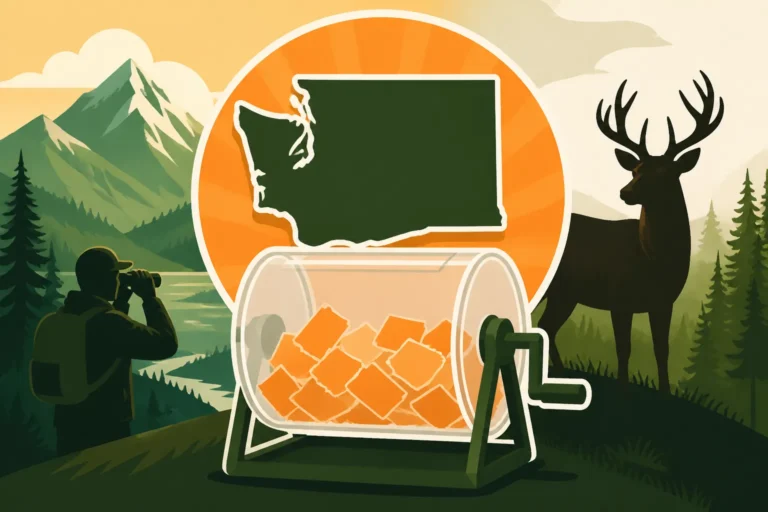
Unlike some states that employ a preference point or bonus point system, Washington utilizes a truly random draw for its special permits. This means that every applicant has an equal chance of drawing a permit each year they apply, regardless of how many times they've applied in the past. There's no accumulating points to increase your odds over time, which can be both frustrating and liberating. It means a first-time applicant has the same mathematical chance as someone who's applied for twenty years.
This random draw system, while fair, means that luck plays an enormous role. You can't "buy" better odds by consistently applying for years. However, this also means you shouldn't get discouraged. Every year is a fresh slate. The best you can do is ensure your application is submitted correctly and on time. Many hunters find themselves checking their WDFW WILD account around the time draw results are posted, usually in June, hoping for that golden notification. While some might find Washington's system less predictable, it does mean that anyone, regardless of their application history, could be the lucky one. For more information on how this system works, check out Washington's Random Draw and No Preference Points.
Strategic Application Choices
While you can't influence the random nature of the draw, you can make strategic choices about which units you apply for. This is where detailed research becomes paramount. The key is to analyze past draw odds for various units and consider less popular choices. WDFW often publishes draw statistics, which can give you a rough idea of how many applicants typically vie for a specific number of permits in each unit.
Consider the following:
- Look for "Higher" Permit Numbers: Even if a unit only offers 3-4 permits instead of 1-2, those slightly higher numbers can translate to marginally better odds, though still incredibly slim.
- Evaluate Unit Accessibility and Difficulty: Some units might be incredibly rugged, requiring significant physical exertion or specialized backcountry skills to access the goat country. These units might see slightly fewer applicants because of the perceived challenge. If you're physically prepared and have the necessary backcountry experience, these "harder" units might offer a tiny edge.
- Consider Raffle Permits: While not part of the standard draw, Washington also offers raffle permits for species like moose, sheep, and goat. Purchasing raffle tickets for a mountain goat can give you another, albeit separate, chance at a tag. These are often separate from the main draw and offer unique hunting opportunities. You can find more details on these special opportunities in Washington Raffle Permits for Moose, Sheep and Goat.
Using tools like those offered by GoHunt, you can often find historical draw data broken down by unit, helping you identify trends and potentially less competitive choices. While there's no magic bullet for such a rare permit, an informed application is always better than a blind one.
Here's a simplified example of how draw odds might look for a couple of hypothetical Washington Mountain Goat Units (actual numbers vary yearly):
| Unit Name | Permits Offered (Example) | Total Applicants (Example) | Approximate Draw Odds (Example) | Typical Terrain |
|---|---|---|---|---|
| Chelan West | 2 | 2,500 | 1 in 1,250 | Steep, rocky, high-alpine |
| Selkirk North | 1 | 1,500 | 1 in 1,500 | Remote, heavily forested peaks |
| Goat Rocks East | 3 | 3,800 | 1 in 1,266 | Rugged, volcanic rock, high elevation |
| Translocation Area Z | 2 | 2,000 | 1 in 1,000 | Mix of open slopes and timber, improving herd |
Note: These numbers are purely illustrative and do not reflect current or historical WDFW draw odds accurately. Always consult the official WDFW hunting pamphlet and draw statistics for real data.
What to Do if You Draw a Washington Mountain Goat Permit
Congratulations! If you're one of the incredibly few lucky hunters who draws a Washington mountain goat permit, the real work (and excitement) truly begins. This isn't a hunt you can wing; it requires extensive planning, physical preparation, and mental fortitude. This is a hunt of a lifetime, and treating it as such is paramount.
Extensive Research and E-Scouting
The moment you receive that coveted email or see the notification in your WILD account that you’ve drawn a mountain goat permit, you need to shift into high gear. The first step is an immediate deep dive into your assigned GMU. This is where your e-scouting skills will be put to the ultimate test. Utilize satellite imagery, topographic maps, and WDFW resources to identify potential goat habitat: steep, rocky faces, alpine basins, and areas with historical sightings.
Look for access points, potential camping locations, and water sources. Are there green dot roads that provide vehicle access, or is it strictly wilderness walk-in? Understanding the terrain is critical. Mountain goats are often found at or above timberline, so focus on the highest, most rugged parts of your unit. Pay attention to north-facing slopes in early season, which might hold snow longer, providing cooler bedding areas, or south-facing slopes later in the season for sun exposure. Consider using advanced mapping platforms, such as those integrated with GoHunt, that allow you to layer different data points like public vs. private land, historical fires, and even known game trails, which can be invaluable for identifying prime areas and planning your approach. Learning how to properly E-Scouting a Washington GMU From Home can give you a significant advantage.
Physical Preparation and Gear Selection
A mountain goat hunt is arguably one of the most physically demanding big game hunts available in Washington. You'll be climbing steep, often unstable terrain, frequently at high altitudes, and potentially packing out a heavy load over long distances. Your physical preparation should begin months in advance. Focus on cardiovascular fitness, strength training (especially legs and core), and hiking with a weighted pack on steep inclines. Don't underestimate the impact of elevation if you're not accustomed to it; spending time at higher altitudes beforehand can help.
Gear selection is equally critical. You'll need reliable, waterproof hiking boots that offer excellent ankle support and traction, suitable for scrambling over loose rock and scree. A robust backpacking setup is essential, including a quality internal or external frame pack capable of comfortably hauling heavy loads. Layering is key for unpredictable alpine weather, so invest in high-quality rain gear, insulating layers, and a versatile sleeping system suitable for cold nights, even in August. Optics are paramount for spotting goats from a distance, so a good set of 10x or 12x binoculars and a spotting scope are non-negotiable. Furthermore, a satellite communication device for emergencies is highly recommended, as cell service will be nonexistent in most goat habitats. For advice on setting up a remote camp, see Backcountry Camps in Washington Wilderness. If you're thinking about how to get that goat off the mountain, consider the insights from Packing an Elk Out of Washington's Backcountry, as many of the principles apply.
Ethical Hunting and Conservation of Washington's Mountain Goats
Drawing a mountain goat permit places a significant responsibility on your shoulders. Ethical hunting practices and a deep commitment to conservation are not just suggestions; they are fundamental requirements for this incredibly special opportunity. Respect for the animal, its habitat, and the future of the species must guide every decision you make in the field.
Responsible Shot Placement and Animal Recovery
Due to the inherent challenges of mountain goat terrain and the critical importance of minimizing impact on these sensitive populations, responsible shot placement and meticulous animal recovery are paramount. Mountain goats often inhabit incredibly steep, precipitous areas. A poorly placed shot can result in a wounded animal escaping into impossible terrain, leading to a lost animal and wasted resource. More so, a goat that expires and tumbles down a cliff face may become unrecoverable, which is a tragic outcome for such a rare tag.
Therefore, absolute confidence in your shooting abilities at extended ranges and steep angles is essential. Practice shooting uphill and downhill, accounting for ballistic differences. Use a rangefinder with angle compensation. Wait for a broadside or slightly quartering-away shot when the goat is in a relatively safe, recoverable position. If there's any doubt about your ability to make a clean kill or recover the animal, you must pass on the shot. This might mean patiently waiting hours or even days for the perfect opportunity. Once the shot is taken, immediate and diligent tracking is crucial. Be prepared to navigate difficult terrain, often in fading light, to ensure the animal is recovered quickly and efficiently.
Identifying Nannies Versus Billies
A crucial aspect of ethical mountain goat hunting in Washington, and one that WDFW heavily emphasizes, is the proper identification of nannies (females) versus billies (males) before taking a shot. Female goats often have kids with them, and mistakenly harvesting a nanny can severely impact the local population's reproductive potential. While WDFW regulations for goat hunts often specify "any goat," the ethical hunter strives to take a billy, especially if unaccompanied by a kid.
Distinguishing between nannies and billies can be challenging, particularly at a distance or in varied light conditions, but there are key indicators:
- Horns: Billie horns tend to be thicker at the base and have a more pronounced, often heavier curve backward. Nanny horns are typically more slender and straighter, tapering to a sharper point.
- Body Size: Billies are generally larger and more robust, with thicker necks and broader shoulders. Nannies appear more delicate.
- Urination Posture: This is often the most reliable field indicator. Billies will urinate forward, in a stream between their front legs, while nannies squat to urinate backward, between their hind legs. You'll need to observe them for a while to catch this behavior.
- Companions: Nannies are almost always accompanied by kids, sometimes one, sometimes two. Billies are more often solitary or in bachelor groups.
Spending time observing goats through your spotting scope, focusing on these subtle differences, is critical. Taking the time to properly identify your target ensures you're making a responsible decision that contributes to the sustainable management of these magnificent creatures. This is a skill that takes practice, and you can learn more about it in Telling a Billy From a Nanny.
Washington Mountain Goat Permit Draw Results and Post-Draw Actions
The period after the application deadline can feel like an eternity, filled with anticipation and endless checking of your email. Knowing when and how to check your results, and what steps to take if you’re successful, are crucial for any hopeful goat hunter.
Checking Draw Results and What Comes Next
Washington's special permit draw results are typically posted in mid-June. You won't receive a physical letter in the mail anymore; all notifications are digital. The most reliable way to check your results is to log into your personal WDFW WILD account online. If you've been successful, you'll see a notification indicating which special permit you've drawn. It's a moment of pure adrenaline and disbelief for many.
If you are one of the incredibly lucky few, the next step is to purchase your mountain goat tag. Unlike the application fee, this is the full tag cost, and it's essential to buy it before your season begins. WDFW will provide instructions on how to complete this purchase through your WILD account or at a licensed vendor. They will also provide the specific hunt regulations and any additional information pertinent to your unit, such as mandatory check-ins, reporting requirements, or special access instructions. It's imperative to read every piece of information thoroughly, as mountain goat hunts often have unique rules. Checking for results is a nervous ritual for many, and you can learn exactly when and how to do it in Washington Special Permit Results in Your WILD Account.
Mandatory Hunter Orientation and Reporting
Because of the extreme rarity and ecological sensitivity surrounding mountain goat hunts, WDFW typically requires successful applicants to participate in a mandatory hunter orientation. This orientation usually covers critical topics such as:
- Goat Identification: Reinforcing the differences between nannies and billies, often with visual aids and expert guidance.
- Habitat and Behavior: In-depth information about your specific unit's goats, their patterns, and likely locations.
- Safety and Ethics: Emphasizing safe hunting practices in challenging terrain, shot placement, and recovery protocols.
- Reporting Requirements: Detailing mandatory check-in/check-out procedures, harvest reporting deadlines, and sometimes even the requirement to submit biological samples (e.g., a horn plug for aging).
Attending this orientation is not just a formality; it’s an invaluable educational opportunity that can significantly contribute to a safe, successful, and ethical hunt. Missing it could potentially invalidate your permit. Furthermore, mountain goat hunters are almost always required to report their harvest in person to a WDFW biologist, often within a very specific timeframe (e.g., 48 hours of harvest). This allows WDFW to collect crucial biological data, which in turn informs future management decisions and helps ensure the long-term health of Washington's mountain goat populations. Be prepared for these requirements, as they are a vital part of the privilege of hunting this magnificent animal.
Disclaimer
Please remember that hunting regulations, season dates, and permit application processes can change. Always consult the official Washington Department of Fish and Wildlife (WDFW) regulations, pamphlets, and website for the most current and accurate information before planning any hunting activity. This guide is for informational purposes only and should not be considered a substitute for official WDFW publications.