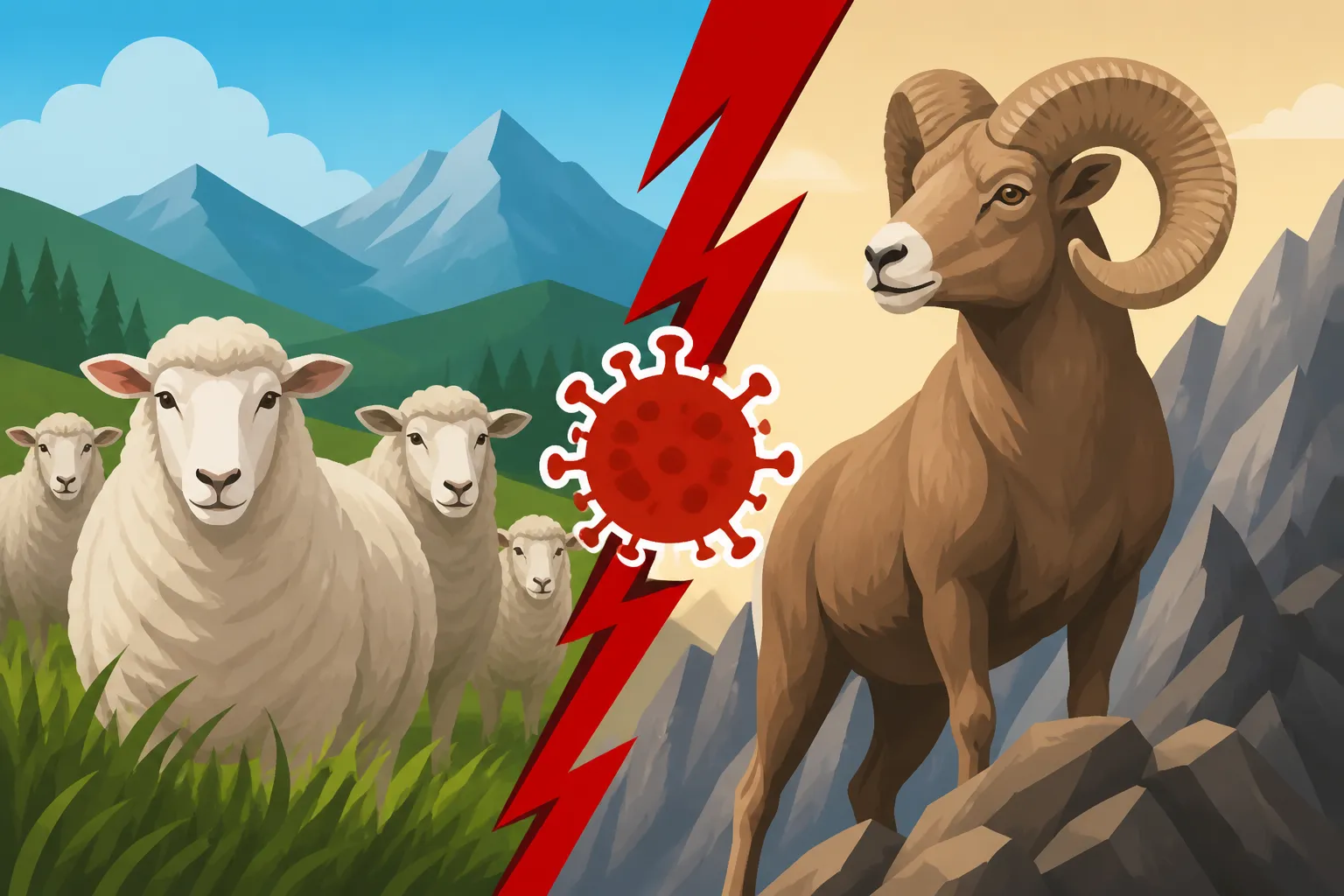
Why Domestic Sheep Threaten Bighorns
It’s a heartbreaking reality for anyone passionate about Washington’s wild places: our iconic bighorn sheep, with their majestic curling horns and incredible resilience, face an invisible but deadly threat from a source many might not expect – domestic sheep. This isn't just about competition for forage; it's about a silent killer, a microscopic enemy that can decimate an entire wild herd in a matter of weeks. This guide will walk you through the critical reasons why even a brief encounter between these two species can spell disaster for bighorns and what’s being done to protect them.
The Silent Killer: Disease Transmission Between Sheep
The core of the conflict between domestic sheep and bighorn sheep isn't about their size, their diet, or even direct aggression. It's a far more insidious threat: disease. While domestic sheep often carry various pathogens without showing severe symptoms, these same pathogens can be absolutely devastating to their wild counterparts. It’s a biological mismatch that bighorns simply aren't equipped to handle, and the consequences for wild populations are dire.
Specific Pathogens and Their Impact on Bighorns
The primary culprit in these devastating die-offs is often a bacterium called Mycoplasma ovipneumoniae, or M. ovi. This pathogen is commonly found in domestic sheep flocks, where it might cause mild respiratory issues or sometimes no noticeable symptoms at all. They’ve evolved with it, building up a certain level of immunity. For bighorn sheep, however, M. ovi acts like a rapidly spreading plague. Once introduced to a bighorn herd, it can trigger severe pneumonia, particularly in lambs, leading to high mortality rates. Entire generations can be wiped out, crippling a herd's ability to recover for years, even decades. It’s not just M. ovi; other respiratory pathogens can also be involved, often exacerbating the effects of the primary infection. When a bighorn comes into contact with domestic sheep, it's like a wild animal being exposed to a novel virus – they have no natural defense.
Imagine a small, isolated bighorn herd, perhaps just a few dozen animals strong, that has never encountered these particular bacteria before. A single domestic sheep, unknowingly carrying M. ovi, wanders into their range or is simply glimpsed across a fence line by a curious bighorn ram. That brief contact is all it takes. The bacteria can transfer through nasal secretions, saliva, or even aerosolized particles if the animals are close enough. Soon, the entire bighorn herd begins to sicken. Lambs, with their undeveloped immune systems, are usually the first and hardest hit. Hunters interested in Washington Wildlife Disease Surveillance often track reports of such events, highlighting the ongoing vulnerability of our wild sheep.
Why Bighorns Are So Vulnerable
The fundamental difference lies in their evolutionary history. Domestic sheep have been exposed to a concentrated, often sedentary existence for thousands of years, fostering an environment where pathogens can easily spread and where some level of resistance has developed over countless generations. Bighorn sheep, on the other hand, are creatures of wide-open, often rugged landscapes, where populations are naturally more dispersed. Their immune systems simply haven't evolved to cope with the types and concentrations of pathogens common in domestic livestock. It’s a classic case of a "naïve" population encountering a disease for which it has no immunity.
This vulnerability isn't just theoretical; it's been repeatedly observed across the American West, including instances that impact Bighorn Pneumonia Die-Offs in Washington. Even after an initial die-off, the problem doesn't simply disappear. Survivors in the bighorn herd can become chronic carriers, continuing to shed the bacteria and infect new lambs year after year. This means that even if the domestic sheep are removed, the disease can persist within the bighorn population, creating a long-term suppression of herd growth and recovery. It's a tragic cycle that highlights the importance of maintaining strict separation.
How Contact Happens: Overlap and Incursions
Given the dire consequences, you might wonder how contact between these two species, so distinct in their behavior and habitat preferences, actually occurs. It’s often not through intentional mixing but through accidental incursions, wandering animals, or overlapping land use. While agencies and ranchers strive to prevent it, the vastness of the landscape and the natural curiosity of animals can sometimes make complete separation incredibly challenging.
Grazing Leases and Shared Public Lands
In some parts of Washington, and indeed across the West, domestic sheep are grazed on public lands managed by entities like the Forest Service or Bureau of Land Management (BLM). These lands might also be designated as bighorn sheep habitat, or simply adjacent to it. Even if grazing allotments are physically separated by miles, there's always a risk. Domestic sheep herds can wander, individuals can stray from the flock, or wild bighorns, especially curious young rams, might venture beyond their traditional range to explore new territory. Public Land Hunting in Washington: Forest, DNR and BLM is a common activity, and hunters are often the eyes and ears on the ground who might observe potential overlaps.
The challenge lies in the complex mosaic of land ownership and use. A domestic sheep grazing allotment might appear distant from a bighorn herd on a map, but a single "breakout" individual, or a bighorn ram on a wide-ranging exploratory trip, can bridge that gap in a matter of hours or days. Agencies try to implement buffer zones and "allotment-free" areas around bighorn habitat, but these are never foolproof. Sometimes, it’s not the main herd, but a few wandering domestic sheep that escape fences or stray from their herder that cause the most problems. These individual animals become vectors, carrying disease directly into a vulnerable bighorn population.
Stray Domestic Sheep and Bighorn Exploratory Movements
It's not uncommon for domestic sheep, especially range sheep, to get separated from their flock. They might be spooked by a predator, wander through a broken fence, or simply get lost. These stray individuals, often unaware of their predicament, can travel surprising distances. A single stray sheep, wandering into bighorn territory, represents an enormous risk. Conversely, bighorn rams, particularly during the rut or when younger rams disperse to find new ewes or establish new territories, are known to make significant exploratory movements. A ram might travel far from its natal herd, encountering landscapes where domestic sheep might be present. California Bighorn Sheep in Washington are particularly sensitive to these incursions due to their often smaller, more isolated populations.
Consider a scenario where a few domestic sheep somehow breach their pasture fence and move into higher elevation country, a place bighorns frequent. Even if they are quickly found and returned, the damage could already be done. A bighorn ram might have smelled them, seen them, and out of curiosity or territorial instinct, approached for a brief sniff or head-butt. That's all it takes. For wildlife managers, constantly monitoring these boundaries and responding to reports of stray livestock is a critical, labor-intensive effort. Hunters who use resources like GoHunt to e-scout their chosen GMUs might inadvertently gain an understanding of these overlapping areas, becoming more aware of the potential for conflict.
The Devastating Impact on Bighorn Herds
When contact does occur and disease spreads, the consequences for Washington's bighorn sheep are nothing short of catastrophic. We’re not talking about a few sick animals; we’re talking about population crashes that can take decades to recover from, if they ever do.
Pneumonia Die-Offs and Population Decline
The most immediate and visible impact is mass mortality, primarily due to pneumonia. Once M. ovi or other pathogens get a foothold, they sweep through a bighorn herd with terrifying efficiency. Lambs are particularly susceptible, often succumbing within days or weeks of exposure. Adults can also die, especially older or weaker animals. The sight of dead or struggling bighorns, often with labored breathing and a lingering cough, is a devastating indicator of an outbreak. Rocky Mountain Bighorn Herds in Washington, while generally more robust than their California counterparts, are by no means immune to these devastating events.
The death toll in a single outbreak can be incredibly high, sometimes wiping out 70-90% of the lamb crop and a significant portion of the adult population. For herds that are already small or isolated, such a blow can push them to the brink of extinction. Recovering from such a massive loss isn't a quick process. Even if the immediate mortality subsides, the herd's genetic diversity can be reduced, and the chronic carrier state in surviving animals means lamb survival remains low for years. This persistent suppression of recruitment makes recovery painstakingly slow, often requiring intensive management intervention.
Long-Term Effects and Conservation Challenges
Beyond the initial die-offs, the long-term effects of disease transmission cast a dark shadow over bighorn conservation efforts. Herds can become chronically infected, meaning that even years after the initial outbreak, lamb survival rates remain drastically lower than healthy herds. Ewes that carry the disease can transmit it to their lambs, leading to repeated, smaller-scale die-offs that prevent the population from growing. This makes it incredibly difficult to meet management objectives, such as expanding bighorn ranges or establishing new herds through translocations. Hunters who participate in Washington Special Hunt Permits and How to Apply for bighorn tags are keenly aware of how few opportunities exist, a direct reflection of these conservation challenges.
The presence of domestic sheep, and the constant threat of disease, effectively acts as a barrier to bighorn recovery and expansion. It limits where bighorns can safely exist and prevents agencies from using crucial management tools like translocation to bolster small populations or introduce bighorns into historic habitats. When considering species like Washington Mountain Goat Translocations in Washington, the parallel challenges of disease risk from domestic livestock become clear. The need for pristine, disease-free habitat becomes paramount, but such areas are becoming increasingly scarce.
Here's a quick comparison of the two species in the context of disease:
| Feature | Domestic Sheep (Ovis aries) | Bighorn Sheep (Ovis canadensis) |
|---|---|---|
| Typical Environment | Farmed, pastures, rangelands | Wild, rugged, mountainous terrain |
| Disease Resistance | Evolved resistance, often chronic carriers | Highly susceptible, "naïve" immunity |
| Response to M. ovi | Mild symptoms, carrier status common | Severe pneumonia, high mortality, especially lambs |
| Population Impact | Generally stable health | Catastrophic die-offs, suppressed recruitment |
| Risk to Other Species | High risk to bighorn sheep | No known disease risk to domestic sheep |
| Management Objective | Livestock production | Wild population conservation |
Management Strategies and the Hunter's Role
Protecting Washington’s bighorn sheep from disease requires a multi-faceted approach, involving wildlife agencies, ranchers, conservation groups, and the public, including hunters. It's a complex dance of land management, policy, and vigilance, all aimed at ensuring these magnificent animals have a future in our state.
Spatial Separation and Agency Efforts
The most effective strategy to prevent disease transmission is spatial separation – simply keeping domestic sheep and bighorn sheep apart. This involves careful planning of grazing allotments, establishing buffer zones where domestic sheep are prohibited, and sometimes even acquiring grazing permits from willing ranchers to retire them in critical bighorn habitat. Wildlife agencies, like the Washington Department of Fish and Wildlife (WDFW), work closely with federal land managers (Forest Service, BLM) to delineate and enforce these separation zones. When E-Scouting Washington GMUs Before the Draw, hunters might notice specific areas where bighorn range is explicitly protected from certain types of land use.
These efforts aren't easy. They involve ongoing monitoring, policy negotiations, and sometimes difficult decisions about how land resources are allocated. For instance, WDFW might invest in fencing or even support ranchers in relocating their operations if an unavoidable overlap is identified. The goal is to minimize any chance of nose-to-nose contact, which is the primary mode of disease transfer. Public engagement, such as providing feedback when Commenting on a Washington Hunting Rule related to land use or bighorn management, plays a vital role in supporting these protective measures.
Hunter Vigilance and Reporting
Hunters, being out in the field and often deeply familiar with specific landscapes, are absolutely crucial allies in this conservation battle. They are often the first to notice unusual animal behavior, observe stray livestock in wild sheep country, or even spot bighorns venturing into areas where domestic sheep might be present. If you're out hunting, especially in units known for bighorn sheep, like those where Bighorn Pneumonia Die-Offs in Washington have occurred, keeping an eye out for domestic sheep or signs of illness in bighorns is incredibly important.
If you ever see a domestic sheep loose in bighorn habitat, or observe any bighorn sheep showing signs of illness – coughing, nasal discharge, lethargy – it’s imperative to report it immediately to WDFW. This information can be critical for wildlife managers to intervene quickly, prevent further spread, or respond to an emerging situation. Understanding your hunting area and using tools like GoHunt to research bighorn habitat within Washington Game Management Units Explained can help you recognize when something is amiss and how to report it effectively. Your vigilance is a direct contribution to the health and future of these magnificent wild sheep.
Disclaimer
This article is for general informational purposes only and does not constitute professional advice. Laws, prices and regulations vary by location and change over time. Consult a qualified professional for guidance on your specific situation.