Binocular Harness Versus Neck Strap
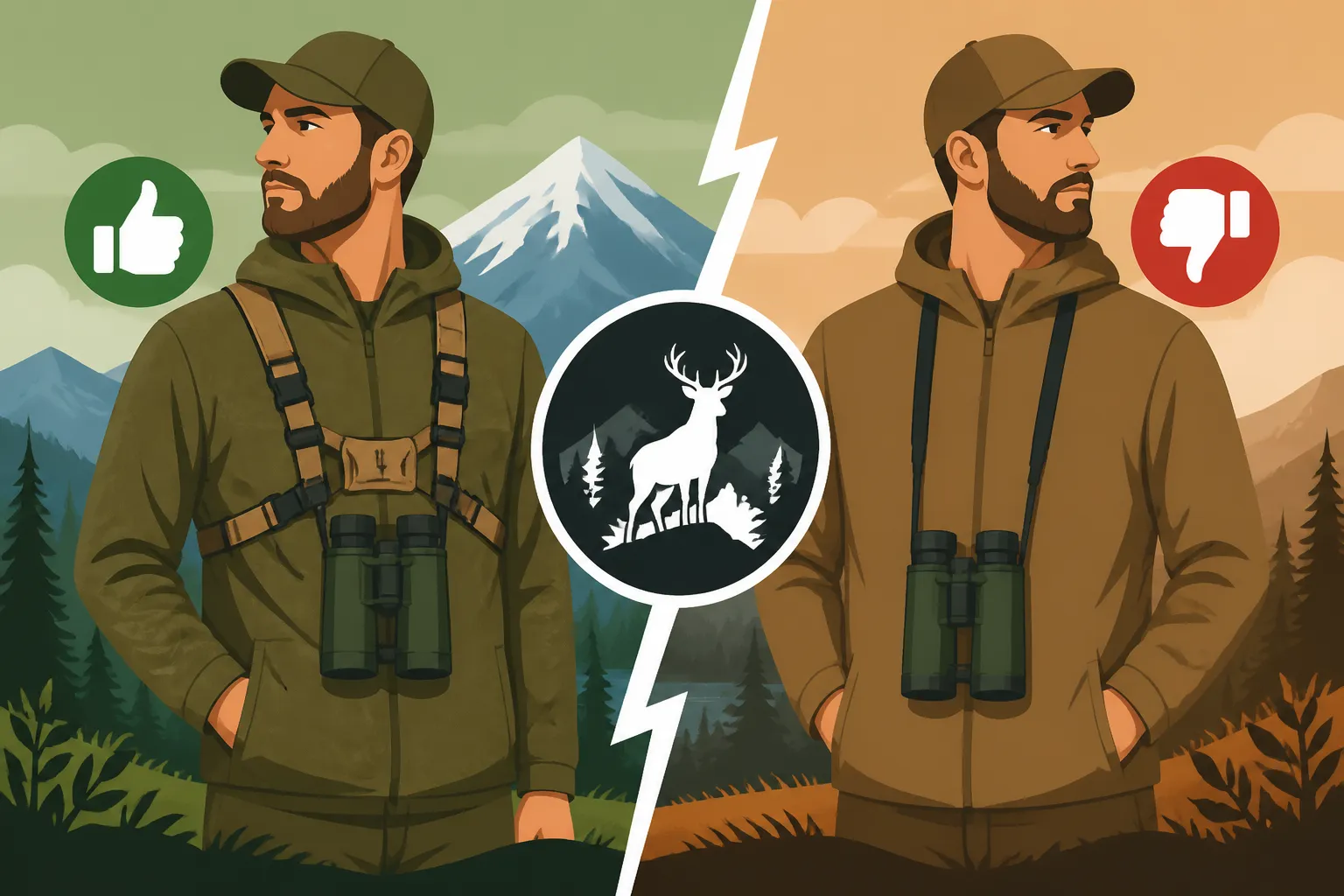
There’s nothing quite like the start of a Washington hunting season. You’ve put in the time scouting, maybe even practiced your calls, and now you’re finally out there, binoculars in hand, eager to find that bull or buck. But let's be honest, how many times have you felt that familiar ache in your neck after a few hours of glassing, or worse, cringed as your expensive optics swung wildly when you bent over to check a track? It’s a common frustration, and it's precisely why many of us are starting to ditch the old neck strap in favor of a more stable, comfortable, and protective binocular harness system. This guide will help you understand the real differences and why making the switch might just be the best gear decision you make this season.
The Traditional Neck Strap: Why Many Hunters Still Use It (and Its Pitfalls)
For decades, the simple neck strap was the go-to for carrying binoculars in the field. It’s what most of us started with, often coming right in the box with our new optics. There’s a certain nostalgia, and undeniable simplicity, tied to it. But just because something is traditional doesn't mean it’s the best tool for the job, especially when you’re pushing deep into the Washington backcountry.
The Allure of Simplicity
Let's face it, a neck strap is straightforward. You put it over your head, and your binoculars hang. Access is immediate; they're right there, swinging freely, ready to be brought to your eyes at a moment's notice. For a quick glance at a bird in the backyard or a casual wildlife viewing trip, this can seem perfectly adequate. You don't have to fiddle with buckles or release mechanisms; just grab and look. This directness appeals to many hunters who prefer minimalist gear or simply haven't considered alternatives.
Many seasoned hunters remember a time when a neck strap was the only option, so it became ingrained in their routine. It felt rugged, unpretentious, and part of the hunting tradition. It also often costs nothing extra, coming bundled with the binoculars themselves, which certainly adds to its perceived value. For those short jaunts from the truck to a nearby clearcut, where intense glassing isn’t the primary goal, a neck strap can get by.
The Reality of Discomfort and Damage
However, the reality of using a neck strap in serious hunting conditions, particularly the rugged and often steep terrain of Washington, quickly sets in. The most immediate and common complaint is discomfort. Hanging a pound or two (or more, if you've invested in quality, larger objective binoculars like those 15x56s for open country) from a thin strap directly on your neck for hours on end is a recipe for strain. That weight digs into your trapezius muscles, causing a dull ache that can quickly escalate into a sharp pain, distracting you from your hunt and draining your energy. Trying to focus on a distant game animal becomes a battle against your own discomfort.
Beyond the physical strain, neck straps leave your valuable optics vulnerable. Every time you bend over, scramble up an embankment, or navigate thick brush, your binoculars become a pendulum. They swing forward, banging against your chest, or worse, smacking into trees, rocks, or your rifle. This constant movement not only creates noise that can spook game but also puts your lenses and housing at serious risk of scratches, dents, or even internal damage. I've seen more than one hunt cut short because a pair of binos took a nasty tumble during a creek crossing or a clumsy fall in the Blacktail Deer Hunting in Western Washington Timber. This vulnerability is a major drawback, especially when you've invested significantly in high-quality glass for Optics for Washington Elk and Deer Hunting.
The Rise of the Binocular Harness: Comfort, Protection, and Efficiency
Enter the binocular harness system, a game-changer for serious hunters who demand more from their gear. What started as niche equipment has now become standard issue for anyone spending significant time in the field, and for good reason. These systems address virtually all the shortcomings of the traditional neck strap, offering a superior experience in terms of ergonomics, security, and accessibility.
Superior Weight Distribution and Comfort
The fundamental advantage of a binocular harness lies in its design for weight distribution. Instead of concentrating the weight on your neck, a harness spreads it across both shoulders and your upper back, often incorporating a chest plate or straps that distribute the load much more evenly. This simple change makes a monumental difference in comfort, especially during long days of hiking and glassing. You’ll find that you can carry heavier binoculars, like those powerful options discussed in Choosing Binoculars for Washington Glassing, for much longer periods without experiencing the typical neck fatigue.
Think about a steep climb in the Colockum or a trek across the Blues. With a harness, your binoculars feel almost weightless, allowing you to focus on your footing, scanning for game, and maintaining situational awareness. This improved comfort means you're less likely to be distracted by nagging aches, allowing you to stay in the field longer and remain more alert. It truly transforms the experience, making those extended glassing sessions over Glassing Eastern Washington Breaks for Mule Deer not just tolerable, but genuinely comfortable.
Enhanced Protection and Security
One of the most compelling reasons to switch to a binocular harness is the superior protection it offers your valuable optics. Most modern harness systems feature a primary compartment that fully encloses your binoculars, often with a magnetic or silent buckle closure. This protective pouch shields your lenses from dust, rain, snow, and the inevitable bumps and scrapes that come with hunting in rugged environments. Whether you're navigating dense thickets of salal in western Washington or scrambling over basalt rocks on the east side, your binoculars are snugly secured against your chest, minimizing movement and preventing accidental damage.
This secure, protected carry is particularly vital when you’re facing unpredictable Washington weather, from sudden downpours in the Olympic Peninsula to blowing snow in the late season. The enclosed design keeps moisture out, preventing fogging and protecting internal components. Furthermore, the snug fit means your binoculars aren’t swinging around, virtually eliminating the risk of them impacting your rifle, making noise, or being dropped. This security is peace of mind, allowing you to focus on the hunt rather than constantly worrying about your gear. Many hunters use resources like GoHunt to research potential units, and once they see the ruggedness of some of these areas, the need for this kind of protection becomes very clear.
Quick and Quiet Access
Despite the added protection, a well-designed binocular harness still allows for incredibly quick and quiet access to your optics. Manufacturers understand that stealth and speed are critical in hunting. Many harnesses feature one-handed operation, often with magnetic flaps or quick-release buckles that allow you to quietly open the compartment, retrieve your binoculars, and bring them to your eyes with minimal movement or sound. This is a huge advantage when you spot movement and need to confirm what you’re seeing instantly and silently.
Imagine still-hunting through a dense patch of reprod. You hear a twig snap, and need to quickly confirm if it's a deer or just a squirrel. With a neck strap, your binoculars might be bouncing, making noise, or you have to fumble to get them steady. With a harness, they're always right there, stable against your chest, ready for a fluid, quiet draw. This seamless access ensures you don't miss those fleeting opportunities, whether it's identifying a Roosevelt Bulls and Why They Bugle Less or counting points on a buck before the shot in a unit you researched on GoHunt.
Choosing the Right System for Your Washington Hunt
Deciding on the right binocular carrying system isn’t a one-size-fits-all solution, but for most Washington hunters, a harness will offer significant advantages. Your specific hunting style, the terrain you frequent, and even the type of binoculars you carry should all factor into your decision.
Considering Your Hunting Style and Terrain
Your choice really boils down to how and where you hunt. If you're a still-hunter, meticulously creeping through dense timber on the west side, a low-profile harness that keeps your binoculars tight to your body and prevents snagging on Hunting Blacktails in Fog and Rain is crucial. You need quick, silent access without exposing your optics to constant impact from branches. For those long days spent hiking mountainous areas or across vast eastern Washington sagebrush country, a harness with excellent weight distribution and additional storage capacity for a rangefinder or wind checker is invaluable.
Conversely, if your hunting involves minimal movement, perhaps from a fixed blind or a short walk to a known glassing knob overlooking a wheat field, the ergonomic benefits of a harness are still there, but the protection aspect becomes paramount. You want to ensure your investment is safe from dust, dew, or an accidental drop. Utilizing tools like GoHunt can help you scout and understand the specific terrain of your chosen GMU, which in turn informs the best gear choices for that particular environment. Knowing if you'll be navigating heavy blowdown or open hillsides will guide your harness selection.
Features to Look For in a Binocular Harness
When shopping for a binocular harness, there are several key features that can enhance your hunting experience:
- Padded Shoulder Straps: Look for wide, well-padded straps that distribute weight effectively. This is the primary driver of comfort.
- Adjustability: The harness should be highly adjustable to fit different body types and allow for layering changes throughout the season. You need to be able to cinch it down over a t-shirt or expand it over a heavy late-season jacket.
- Quiet Materials and Closures: Stealth is non-negotiable. Ensure the fabric is durable but doesn't make a lot of noise when rubbed. Magnetic closures are often preferred over velcro or loud plastic buckles for silent access.
- Integrated Protection: A main compartment that fully encases your binoculars, with a secure and weather-resistant lid, is essential. This protects against impact, dust, and moisture.
- Additional Storage: Many harnesses include small side pockets for calls, wind indicators, or a rangefinder (especially handy if you don't have Rangefinder Binocular Combos). A back pocket can be useful for licenses or maps.
- Compatibility: Make sure the harness is sized appropriately for your specific binoculars. Some models are designed for larger optics (like 10×42 or 15×56), while others are more compact.
When a Neck Strap Might Still Be Okay (Rarely)
Honestly, it’s hard to make a strong case for a neck strap in serious Washington hunting. However, for extremely short, non-strenuous excursions where you know you'll only be using your binoculars for a few minutes, or perhaps as a backup for a secondary pair of less expensive optics, a neck strap could suffice. Maybe you're just walking the dog and want to occasionally spot a bird, or you're doing a quick check of your backyard for deer sign. Even then, the risk of damage and discomfort still exists. For any hunt requiring significant walking, climbing, or any degree of physical activity, or when carrying valuable optics, a harness is overwhelmingly the superior choice. Don't let tradition or a few bucks saved compromise your comfort or your gear.
Binocular Harness vs. Neck Strap: A Quick Comparison
To help you visualize the differences, here's a quick breakdown of how these two carrying methods stack up:
| Feature | Binocular Harness | Neck Strap |
|---|---|---|
| Comfort | Excellent, weight distributed across shoulders/back | Poor, weight concentrated on neck |
| Optic Protection | High, enclosed compartment shields from elements/impact | Low, optics exposed and prone to swinging/bumping |
| Security/Stability | High, binoculars held snug against chest, no swinging | Low, binoculars swing freely, prone to snagging |
| Access Speed | Fast, one-handed operation with quiet closures | Fast, but often involves fumbling/stabilizing |
| Noise Reduction | Excellent, quiet materials, no banging against gear | Poor, binoculars can clatter against other gear |
| Additional Storage | Often includes small pockets for accessories | Rarely, if ever |
| Terrain Suitability | Ideal for all rugged terrain and active hunting | Only suitable for very short, flat walks |
| Long-Term Use | Comfortable for extended periods of glassing/hiking | Causes neck strain and fatigue over time |
| Cost | Moderate investment | Often free with binoculars |
Making the Smart Switch for Your Next Washington Adventure
Ultimately, your choice of binocular carrying system has a direct impact on your comfort, the longevity of your optics, and your effectiveness as a hunter. While the neck strap served its purpose for a time, modern binocular harnesses offer a clear upgrade in almost every measurable category. Investing in a quality harness is an investment in your physical comfort, the protection of your expensive glass, and ultimately, your overall hunting success. It’s a piece of gear that allows you to focus more on the hunt and less on nagging aches or worries about damaging your optics.
Before your next Washington hunting trip, whether you're planning for elk in the Washington Elk Herds and Where They Live or chasing Columbian Blacktail Deer in Western Washington, take an honest look at your current setup. If you’re still using a neck strap, consider making the switch. You’ll likely wonder how you ever hunted without a harness. And remember, resources like GoHunt can be invaluable in researching the specific conditions of your hunting area, helping you pick out gear that's perfectly suited to the terrain and challenges you'll face.
Disclaimer
This article is for general informational purposes only and does not constitute professional advice. Laws, prices and regulations vary by location and change over time. Consult a qualified professional for guidance on your specific situation.