Where Blacktails Bed in Reprod
Washington blacktail deer bedding habits in reprod timber, explaining where bucks rest and how to find them using tracks and micro-terrain.
Close the distance.
Archery, muzzleloader, and firearm techniques — calling, stand placement, still-hunting, spot-and-stalk, and the weapon rules that change at the state line.

Washington blacktail deer bedding habits in reprod timber, explaining where bucks rest and how to find them using tracks and micro-terrain.
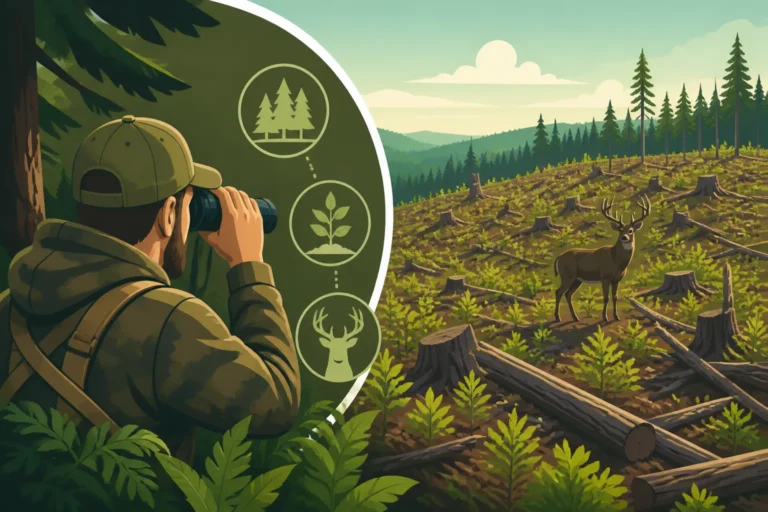
Washington blacktail deer hunting strategies explain how three-year-old clearcuts provide food, concealment, and secure escape routes for bucks.
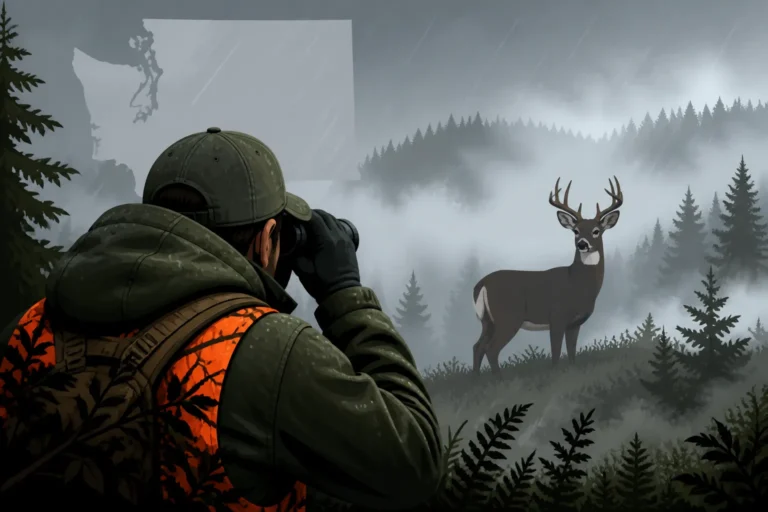
Fog and rain cut sight, mask sound and dampen scent, so blacktails seem to vanish even though they only shift their daily patterns in ways hunters can exploit.
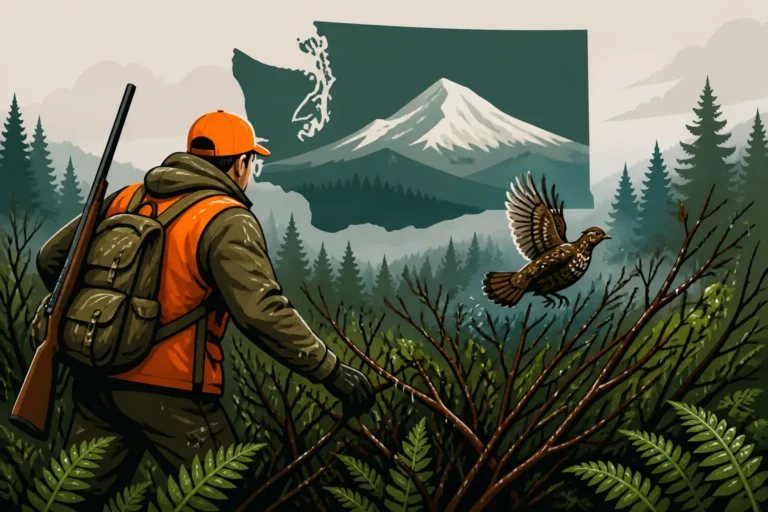
Still-hunting pace in Washington wet brush requires slow, deliberate movement to overcome amplified noise and limited visibility.

Roosevelt elk living in dense western forests bugle less because thick timber muffles sound and keeps herds in close quarters.
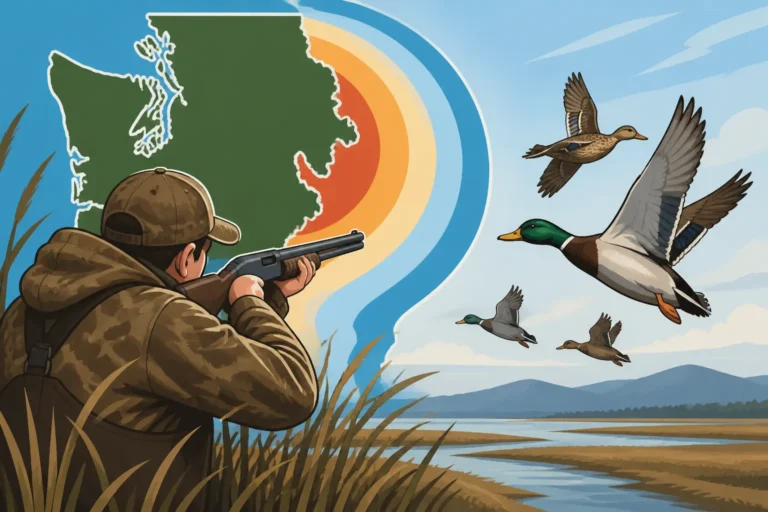
Young regenerated timber thick with Douglas fir, hemlock, salal and devil’s club cuts sight lines to 5 to 10 yards, so blacktail hunters must stalk close.

Two-man elk calling setups help Washington hunters draw wary bulls into shooting lanes by coordinating specific caller and shooter roles.

A herd bull guarding cows during the rut treats cow calls as secondary, especially in big herds like those in the Yakima or Colockum units.

Late archery elk hunting success requires adapting tactics when exhausted bulls stop bugling and prioritize recovery and security.

Early September elk bugle sequences in Washington help hunters attract bulls during the transitional pre-rut period using soft locate calls.