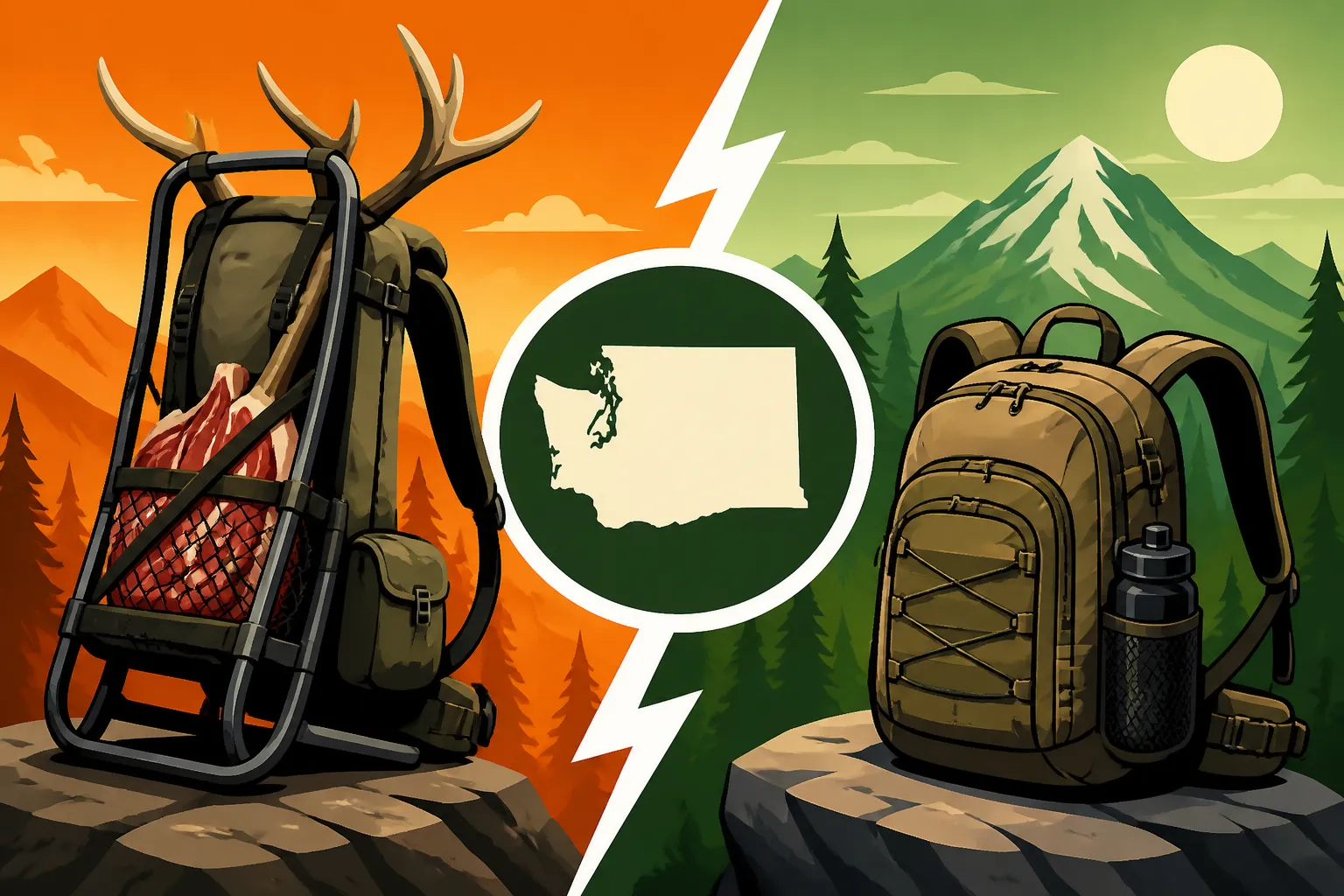
Frame Packs Versus Day Packs
Choosing the right pack for your Washington hunting adventure can feel like a daunting task, can't it? One minute you're thinking a small day pack for quick scouting, the next you're picturing hauling out a whole elk quarter and realizing your little bag just won't cut it. This guide is here to break down the real differences between frame packs and day packs, helping you understand which one best suits your specific hunt style and the diverse terrains we encounter here in Washington.
Understanding the Core Difference: Structure and Purpose
At its heart, the biggest distinction between a frame pack and a day pack lies in its underlying structure and the fundamental purpose for which it was designed. It's not just about size; it's about how the pack supports weight and how it integrates with your body as you move through the rugged Washington landscape.
The Backbone: External and Internal Frame Packs
Think of a frame pack as having a skeleton. This rigid structure, whether it's an external aluminum frame or an internal system of stays and load lifters, is the secret sauce for carrying heavy, bulky loads comfortably. It's designed to transfer weight directly to your hips, bypassing your shoulders and making those grueling pack-outs much more manageable. For anyone dreaming of a successful hunt in the steep, unforgiving terrain of the Colockum or the dense timber of the Olympic National Forest, understanding how a frame pack works is crucial.
Historically, external frame packs were quite common, featuring a visible metal frame to which the bag attached. These were often a bit clunky but incredibly robust for packing odd-shaped items or significant weight. Modern frame packs, particularly those with internal frames, have evolved significantly. They integrate the frame into the pack body, offering a sleeker profile while still providing superior load stability and weight distribution. When you're facing a multi-day trek or the prospect of packing out a substantial amount of meat, this rigid structure is literally what saves your back, allowing you to move efficiently and minimize fatigue. It's not just about capacity; it's about the engineering that enables you to carry that capacity without breaking down.
The Lightweight Champion: Day Packs
In contrast, a day pack is typically much simpler in construction. It often has minimal internal support, perhaps a light foam back panel, or sometimes no frame at all. These packs are the epitome of grab-and-go convenience, designed for shorter excursions where you're carrying only your immediate essentials. Their purpose is mobility and easy access, not heavy hauling.
Imagine a crisp morning hunt for blacktails in the thick brush of Western Washington. You don't need a massive pack; you need something that lets you slip quietly through the alders, carries your rain gear, a snack, water, and perhaps a small first-aid kit. A day pack excels in these situations because it's lightweight and less cumbersome. It allows for greater freedom of movement, which is critical when Still-Hunting Blacktails in Wet Washington Brush or navigating tight spaces. While they vary in size, from small lumbar packs to medium-sized bags around 2,000 cubic inches, their shared characteristic is their focus on agility and light loads, making them ideal for single-day trips where you're not planning on packing out a whole animal in one go.
When a Frame Pack Becomes Your Best Friend
There are certain hunting scenarios in Washington where a frame pack isn't just a good idea, it's practically a necessity. These are the hunts where you're not just carrying gear to your destination, but anticipating carrying significantly more from it.
Multi-Day Backcountry Hunts and Hauling Heavy Loads
If your hunting dreams involve a spike camp deep in the Pasayten Wilderness or chasing elk in the rugged Blue Mountains for several days, a frame pack is your undisputed champion. These hunts demand carrying a substantial amount of gear: tent, sleeping bag, food, cooking system, extra layers, water filter, and all your hunting essentials. A frame pack is built to distribute this substantial weight comfortably across your hips and shoulders, allowing you to cover miles with a load that would quickly break your spirit (and back) with a lesser pack.
The real magic happens after a successful harvest. Imagine dropping a bull elk miles from the nearest road in the Gifford Pinchot. A modern frame pack, especially one designed with a dedicated meat shelf or expandable main compartment, transforms into a beast of burden. It allows you to efficiently quarter the animal, load heavy chunks of meat, along with your cape and antlers, and begin the arduous journey back. Trying to accomplish this with a typical day pack would be a frustrating, inefficient, and potentially impossible task, forcing multiple trips or risking spoilage. This is where Packing an Elk Out of Washington's Backcountry really highlights the necessity of a proper frame pack.
Specialized Gear and Awkward Hauls
Beyond just meat and camp gear, frame packs truly shine when you need to carry specialized or awkwardly shaped items. Think about the serious glassing setups favored by Eastern Washington mule deer hunters: large spotting scopes, heavy tripods, and high-magnification binoculars. Many frame packs offer external lashing points or modular systems that allow you to attach these items securely to the outside, keeping them accessible while maintaining the pack's balance.
Some hunters might also use frame packs to carry in bulky items like portable tree stands or ground blinds, though these are less common for the typical Washington elk or deer hunter who often relies on spot-and-stalk or still-hunting methods. The inherent stability and customizable nature of a frame pack's external or internal attachments make it far superior for securing a rifle or bow, water bladders, or even extra clothing that might not fit neatly inside a smaller pack. The ability to compress the load or expand it as needed is a huge advantage, ensuring everything stays snug and balanced, even when you're scrambling over blowdowns or traversing steep sidehills.
The Day Pack's Domain: Speed, Agility, and Shorter Ventures
While frame packs are essential for big endeavors, day packs hold their own for the vast majority of hunting trips. They are all about efficiency for shorter, less demanding outings where weight and bulk are the enemies of success.
Quick Scouting Missions and Morning to Evening Hunts
For many Washington hunters, a typical day often involves a dawn-to-dusk hunt or a quick scouting trip before the season. This is where the day pack truly excels. You're not packing a sleeping bag or a week's worth of food; you're carrying water, snacks, perhaps a lightweight rain shell for unpredictable Washington weather, a rangefinder, binoculars, and a first-aid kit. The light weight and streamlined profile of a day pack mean you can move quickly and quietly without feeling encumbered.
Imagine heading out for a morning deer hunt in a local GMU, or a mid-season trip to check trail cameras and look for fresh sign. You want to be nimble, able to slip through thickets or scramble up an embankment without your pack snagging on every branch. A day pack is ideal for these scenarios. It keeps your essentials close at hand and allows you to focus on the hunt, not on managing an oversized burden. When you're Public Land Scouting in Washington Before Opening Day or simply trying to cover a lot of ground in a short time, the minimal design of a good day pack is your greatest asset.
Carrying Essentials for a Specific Task
Sometimes, your hunt is hyper-focused on a particular tactic or requires very specific gear. A day pack is perfect for this kind of mission-specific loadout. For instance, if you're planning an afternoon predator calling session, you might only need your calls, a varmint rifle, some extra ammo, and a seat cushion. A small day pack keeps these items organized and accessible without being overkill.
Consider a scenario where you're deep in the Okanogan, trying to locate a bugling bull during archery season, or perhaps you're setting up for a cougar. You're not planning on packing out an animal right then, but you need your immediate tools. A day pack allows you to carry your Calling Cougars With a Fawn Distress Sound setup, a thermos of coffee, a headlamp for the walk out, and perhaps a pair of lightweight binoculars. It's about having what you need, exactly when you need it, without any excess weight or bulk to slow you down. The simplicity of a day pack means you can quickly grab what's necessary and focus on the task at hand, whether it's setting up an ambush or covering ground efficiently.
Key Considerations for Washington Hunters
Washington's diverse landscapes present unique challenges and opportunities that directly influence your pack choice. What works in the dry, open breaks of the east side might be entirely impractical in the wet, dense forests of the west.
Terrain and Vegetation Challenges
The sheer variety of Washington's hunting environments demands careful consideration when selecting a pack. On the west side, you're often battling dense vegetation – think salal, huckleberry, and the infamous devil's club. Here, a low-profile day pack that doesn't snag or add bulk is a massive advantage. A large, bulky frame pack can be a nightmare, constantly catching on branches and hindering your movement, especially when Still-Hunting Blacktails in Wet Washington Brush. You need something that allows you to slip through the woods with minimal resistance and noise.
Conversely, in Eastern Washington's more open country, like the vast sagebrush flats or the timbered draws of the Colville National Forest, a larger frame pack might be less of a hindrance. Here, the challenge often involves long distances, steep climbs, and eventually, the need to carry heavy loads of meat. The ability to comfortably carry heavier glassing equipment, extra water for arid conditions, and then a substantial pack-out is paramount. The type of terrain you anticipate spending most of your time in should heavily dictate your pack's dimensions and external features.
Weather Variability and Pack Material
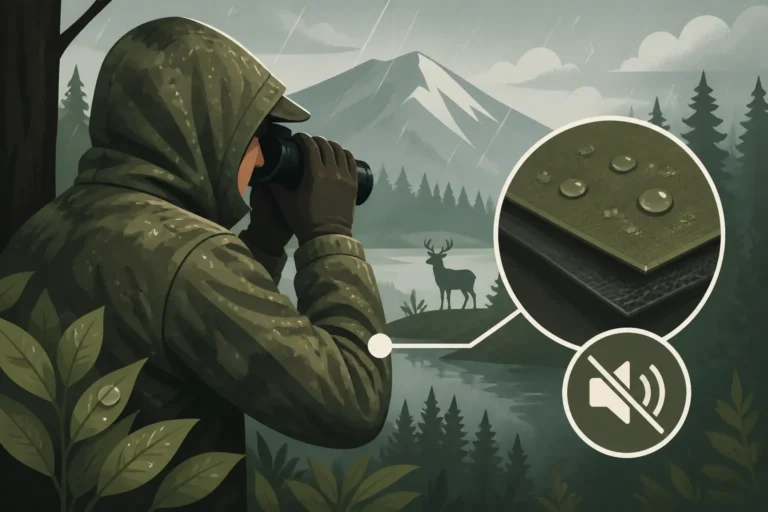
Washington's weather is notoriously fickle, especially during hunting season. The constant rain on the west side demands highly water-resistant or waterproof materials, or at the very least, a robust rain cover that can be deployed quickly. A pack that soaks up water becomes incredibly heavy and can compromise the contents, leading to discomfort and potentially ruining gear like extra clothing or optics. Rain Gear That Survives a Washington Westside Season is just as important for your body as a water-resistant pack is for your gear.
On the east side, while it can still rain and snow, dryness is often a bigger concern, especially in early season hunts. Durability against abrasive sagebrush and rocks is key, as is the pack's ability to breathe to prevent sweat buildup on long hikes. Regardless of location, the material's quietness is a crucial factor for stalking. No hunter wants a crinkly pack fabric announcing their presence to every critter in the woods. Look for quiet nylons or blends that can withstand abuse while remaining silent, and always consider how easily a pack can be cleaned, especially after a bloody pack-out.
Understanding Your Load Out
Before you even start looking at packs, sit down and honestly assess what you need to carry versus what you want to carry for your typical hunt. This "load out" exercise is fundamental. For a day hunt, do you really need a full cooking system, or just a few energy bars and a water bladder? For a multi-day hunt, what are the absolute essentials for survival and success? Your pack choice directly correlates to the volume and weight of the gear you'll be carrying.
Consider all the categories: water, food, navigation tools (GPS, maps, compass), first-aid, shelter (if multi-day), optics, weapon, knife, game bags, extra layers, and emergency supplies. For example, if you're focused on Washington Elk Hunting Tactics by Weapon Season, your weapon and associated gear might be heavier, influencing pack choice. A good starting point is to lay out everything you think you'll need and then critically evaluate each item. This process will quickly tell you if you're looking at a minimal day pack or something closer to Packs Sized for a Washington Elk Quarter. Using a tool like GoHunt's gear lists can help organize this thought process.
| Feature / Pack Type | Day Pack | Frame Pack |
|---|---|---|
| Primary Use | Day hunts, scouting, quick trips | Multi-day hunts, heavy hauling, meat packing |
| Weight Capacity | Light to moderate (10-30 lbs) | Heavy to very heavy (40-100+ lbs) |
| Comfort w/ Load | Good for light loads, poor for heavy | Excellent for heavy loads, superior weight transfer |
| Mobility | High, streamlined, agile | Moderate, can be bulky, stable but slower |
| Size Range | 1,000 – 3,000 cubic inches | 3,000 – 8,000+ cubic inches |
| Structure | Minimal or no internal frame/support | Internal or external rigid frame |
| Meat Hauling | Not designed for; very limited | Primary function; often has dedicated shelf |
| Versatility | Limited to light/medium loads | Highly versatile for varying loads/gear |
Bridging the Gap: Hybrid Options and Strategies
The good news is that pack manufacturers understand the varied needs of hunters. This has led to innovative designs that offer a blend of day pack agility and frame pack hauling power, giving Washington hunters more flexible options.
Detachable Day Lids and Pack Systems
Many modern, larger frame packs, particularly those designed for serious backcountry hunting, come with clever features like detachable lids or integrate a smaller "summit pack" that can be removed for shorter excursions. Imagine arriving at your remote base camp with your full frame pack, laden with several days' worth of gear. You set up camp, unload your sleeping bag and food, and then detach the smaller top lid or a dedicated day pack from the main frame.
This allows you to lighten your load significantly for a morning or afternoon hunt, carrying only your immediate essentials like water, snacks, optics, and a knife. Once the day's hunt is over, you return to your base camp and reattach the smaller pack. This modularity offers the best of both worlds: the robust hauling capacity of a frame pack for the initial and final journeys, combined with the lightweight agility of a day pack for daily hunting forays. It's an incredibly efficient system for Hunting Washington's Wilderness Areas where a permanent camp might be your base for multiple days.
The "Load Shelf" Advantage
One of the most significant innovations in modern frame pack design is the integrated load shelf. This feature fundamentally changes how hunters approach packing out an animal. Instead of trying to stuff a bloody, heavy quarter of elk into the main compartment of your pack (which is a recipe for a messy pack and potential contamination), a load shelf allows you to separate the meat from the rest of your gear.
The load shelf is essentially a platform or a compression system between the rigid frame and the main pack bag. After field dressing and quartering your animal using methods like The Gutless Method on an Elk, you can place the meat directly onto this shelf, secure it with compression straps, and then reattach or cinch down the main pack bag over it. This keeps your essential gear clean and dry, positions the heaviest part of the load closer to your back for better balance, and significantly increases the pack's usable volume for game meat. For hunters in Washington who regularly pursue big game like elk and moose, a pack with a robust load shelf is a game-changer for efficient and hygienic meat transport.
Making the Right Choice for Your Washington Adventure
Ultimately, the best pack for you isn't about what's most expensive or what your buddy uses; it's about what genuinely fits your hunting style and physical needs.
Assessing Your Typical Hunt Style
Before you drop a significant amount of cash on a new pack, take a moment to honestly reflect on the type of hunting you primarily do in Washington. Are you mostly a road hunter, sticking close to vehicle access and only venturing a mile or two from the truck for a morning hunt? In that case, a well-made day pack or a small backpack might be all you ever need. You'll carry lunch, water, and perhaps a light jacket, and if you get an animal, you're close enough to make a few trips or call for assistance.
However, if your passion lies in deep backcountry hunts, spike camps, or if you regularly apply for special permits in remote units, then a robust frame pack is an investment that will pay dividends in comfort and efficiency. Think about whether you primarily hunt blacktails in dense timber or mule deer in wide-open, eastern Washington coulees. Each scenario dictates a different set of priorities for your pack. A hunter regularly practicing E-Scouting Washington GMUs Before the Draw and then going in for multi-day trips will have vastly different needs than someone who hunts a local timber company gate for a few hours.
Fit and Comfort are Non-Negotiable
This is perhaps the most critical factor, regardless of whether you choose a day pack or a frame pack. A poorly fitting pack, even a small one, can turn a fantastic hunt into a miserable suffer-fest. For frame packs, this is especially true, as you'll be carrying substantial weight. The pack needs to fit your torso length correctly, and the hip belt must sit comfortably on your iliac crest (hip bones) to effectively transfer weight. Shoulder straps should bear a small portion of the load, but the bulk should be on your hips.
Don't just try a pack on in a store empty. Load it up with at least 20-30 pounds for a day pack, and 40-60 pounds (or more!) for a frame pack. Walk around, go up and down stairs, mimic some of the movements you'd make while hunting. Pay attention to any pressure points, rubbing, or discomfort. Adjustable features for torso length, shoulder strap positioning, and load lifters are crucial for fine-tuning the fit. Just as you wouldn't head into the backcountry with ill-fitting boots (check out Boots for Washington's Eastside Rock and Westside Mud for more on that!), you shouldn't head out with a pack that doesn't feel like an extension of your body. Investing time in finding the right fit will be one of the best hunting decisions you ever make.
Disclaimer
This article is for general informational purposes only and does not constitute professional advice. Laws, prices and regulations vary by location and change over time. Consult a qualified professional for guidance on your specific situation.