Rain Gear and Layering for Washington Hunts
Oh, Washington. The land of majestic peaks, dense forests, and more often than not, a persistent dampness that can seep into your bones and dampen your spirits faster than a missed shot on a prime elk. Many a hunter has started a crisp autumn morning feeling optimistic, only to be shivering uncontrollably by noon as a fine mist turns into a drenching downpour, leaving them miserable and cutting their hunt short. This guide isn't just about buying a rain jacket; it's about building a strategic layering system that keeps you dry, warm, and comfortable, no matter what unpredictable weather the Pacific Northwest throws your way.
Understanding Washington's Unique Weather Challenges
Hunting in Washington means embracing a kaleidoscope of weather conditions, often within the span of a single day. It's not just "rainy"; it's a nuanced dance of elevation, proximity to the coast, and rapidly changing frontal systems that can catch even seasoned outdoorsmen off guard. You need to prepare for everything, from a light drizzle to a full-blown tempest.
The Ever-Present Dampness
Let's be real, Washington is synonymous with rain, especially west of the Cascades. But even eastern Washington, often thought of as dry, can experience significant precipitation, particularly in the shoulder seasons or at higher elevations. This isn't just about avoiding a downpour; it's about managing the constant threat of dampness from fog, dew, melting snow, and even the condensation from your own breath in cold air. If you're still-hunting for blacktails in dense coastal timber, every branch you brush past is a source of moisture, slowly soaking into inadequate gear. It's a war of attrition against the wet, and if your gear isn't up to snuff, you'll lose. Hunting Blacktails in Fog and Rain is a real test of your system.
What makes this constant dampness so challenging is how quickly it can rob your body of heat. Water conducts heat away from your body much faster than air, meaning that even a slightly wet piece of clothing can make you feel significantly colder than if you were bone dry in the same ambient temperature. This isn't just uncomfortable; it's a safety concern, increasing your risk of hypothermia. Therefore, every single layer in your system needs to either resist water or actively move it away from your skin. Ignoring this fundamental principle is a recipe for a truly miserable and potentially dangerous hunt.
Rapid Temperature Swings
One moment you're hiking hard uphill, sweating buckets, and the next you've topped out on a ridge, hit by a biting wind, and the sun has vanished behind a thick cloud bank. Washington's mountainous terrain and proximity to the ocean mean that temperatures can fluctuate wildly. A morning that starts in the low 30s can warm up to the 50s by midday, only to plummet again as evening approaches. This isn't just an inconvenience; it requires a dynamic approach to dressing, where you're constantly adding or shedding layers to maintain a comfortable core temperature.
The key here is adaptability. A layering system allows you to adjust to these changes without having to carry an entirely new set of clothes. Instead of one heavy jacket that's too hot for hiking and not quite warm enough for sitting, you build warmth through multiple, thinner layers. This allows you to vent heat when working hard and quickly add insulation when stationary or facing colder conditions. For example, when you're Packing an Elk Out of Washington's Backcountry, you'll go from intense exertion to periods of rest, demanding constant adjustment of your outer layers.
Wind and Elevation Factors
Even if it's not raining, a strong wind can make a 40-degree day feel like 20. Washington's open ridges in the Okanogan, exposed clearcuts in the Willapa Hills, or even the tight canyons of the Blue Mountains can channel wind with incredible force. Wind chill is a powerful force that can strip away your body's warmth, making a robust outer shell essential. And, of course, the higher you go, the colder and windier it generally gets, often bringing snow or freezing rain even when it's just sprinkles at lower elevations.
Elevation dramatically impacts not only temperature but also the type of precipitation you might encounter. What starts as rain in the valley can turn into sleet or wet snow as you gain a thousand feet. This means your gear needs to be versatile enough to handle both liquid and frozen precipitation. A good outer layer provides a crucial barrier against wind, preventing it from penetrating your insulating layers and stealing your warmth. Without it, even the best mid-layers will struggle to keep you warm on an exposed Washington ridge.
The Foundational Layer: Wicking Away Moisture
Your base layer is arguably the most critical component of your entire system. It's the first line of defense against both external moisture and, more importantly, your own sweat. Get this wrong, and the rest of your expensive, high-tech gear will be fighting an uphill battle.
Merino Wool: The Hunter's Favorite
Merino wool has become the gold standard for base layers among serious hunters, and for good reason. Unlike traditional scratchy wool, merino fibers are incredibly fine, making them soft against the skin and comfortable for all-day wear. Its natural properties are perfectly suited for the demands of Washington hunting: it's an excellent insulator, even when wet, and it possesses remarkable moisture-wicking capabilities. When you're humping it up a steep slope and start to sweat, merino pulls that moisture away from your skin, where it can then evaporate or be pushed through subsequent layers.
Beyond its wicking ability, merino wool is naturally odor-resistant, a huge benefit on multi-day hunts. The complex protein structure of wool fibers traps odor-causing bacteria, preventing the build-up of smells that can alert game or just make camp life less pleasant. This means you can wear a merino base layer for days on end without it smelling like a locker room, allowing you to carry fewer items and lighten your pack. When you're doing a Backcountry Camps in Washington Wilderness trip, minimizing gear and maximizing utility is key.
Synthetic Options: Durable and Fast-Drying
While merino wool is fantastic, high-quality synthetic base layers offer a compelling alternative, especially if budget is a primary concern or if you need something exceptionally durable and fast-drying. Modern synthetics, often made from polyester or nylon, are engineered to excel at wicking moisture. They pull sweat from your skin quickly and spread it across the fabric's surface, where it can evaporate rapidly. This fast-drying characteristic is a huge advantage if you get completely soaked and need your clothes to dry out quickly, perhaps over a small campfire or during a brief dry spell.
Synthetic base layers tend to be more abrasion-resistant than merino wool, making them a good choice if you're constantly pushing through thick brush or anticipate a lot of heavy wear. They also often come at a lower price point than merino, allowing you to build a comprehensive layering system without breaking the bank. While they might not offer the same natural odor resistance as wool, many modern synthetics are treated with antimicrobial finishes to help mitigate smell, though these treatments can diminish over time with repeated washing.
The Insulation Layer: Trapping Warmth
Once you've dealt with moisture, your next priority is to trap and retain your body's warmth. This is where your insulation layer comes in, providing that crucial buffer against the cold. The goal is to choose materials that offer a high warmth-to-weight ratio and can still perform if they get a little damp.
Fleece: Versatile and Reliable
Fleece, typically made from synthetic polyester, is a workhorse insulation layer that has been a staple in outdoor gear for decades. Its popularity stems from its excellent warmth-to-weight ratio, its ability to insulate even when slightly damp, and its relatively quick-drying nature. The lofted fibers of fleece create thousands of tiny air pockets that trap body heat, keeping you warm. It's also breathable, allowing some moisture vapor to escape, which is important for active hunts.
Fleece comes in various weights, from lightweight microfleece perfect for cool days or as a boosting layer, to heavy expedition-weight fleece for colder conditions. This versatility allows you to choose the right amount of insulation for your specific hunt and conditions. Moreover, fleece is generally very durable and holds up well to repeated use and washing, making it a reliable and long-lasting component of your hunting wardrobe. Many hunters will pack a couple of different fleece weights to adjust to Layering for Wet Cold Weather or warmer conditions.
Puffy Jackets: Down vs. Synthetic
When temperatures really drop, or when you anticipate periods of inactivity, a puffy jacket or vest becomes indispensable. These garments are filled with either down feathers or synthetic insulation, both designed to create maximum loft and trap a significant amount of warm air. Down is renowned for its incredible warmth-to-weight ratio and compressibility, packing down into a tiny bundle that takes up minimal space in your pack. However, traditional down loses most of its insulating properties when wet, a significant concern in Washington's perpetually damp environment. Many manufacturers now offer "hydrophobic" or "water-resistant" down, which has been treated to shed water, improving its performance in damp conditions.
Synthetic insulation, on the other hand, is specifically engineered to retain its insulating properties even when wet. Brands like Primaloft or Thinsulate use synthetic fibers that mimic the structure of down, creating air pockets that continue to hold heat even if the fibers get saturated. While synthetic puffies might not compress quite as small or offer the exact same warmth-to-weight as premium down, their wet-weather performance makes them a highly practical choice for Washington hunters. If you're going to be Hunting Migration Timing in November, when cold rain and snow are a given, a synthetic puffy is often the smarter choice. Consider a vest for core warmth without restricting arm movement during shooting or archery.
The Outer Layer: Your Rain and Wind Armor
This is your shield, the final barrier between you and the elements. A quality outer layer must be waterproof, windproof, and breathable. Skimping here is a mistake many Washington hunters regret.
Hardshell Jackets and Pants
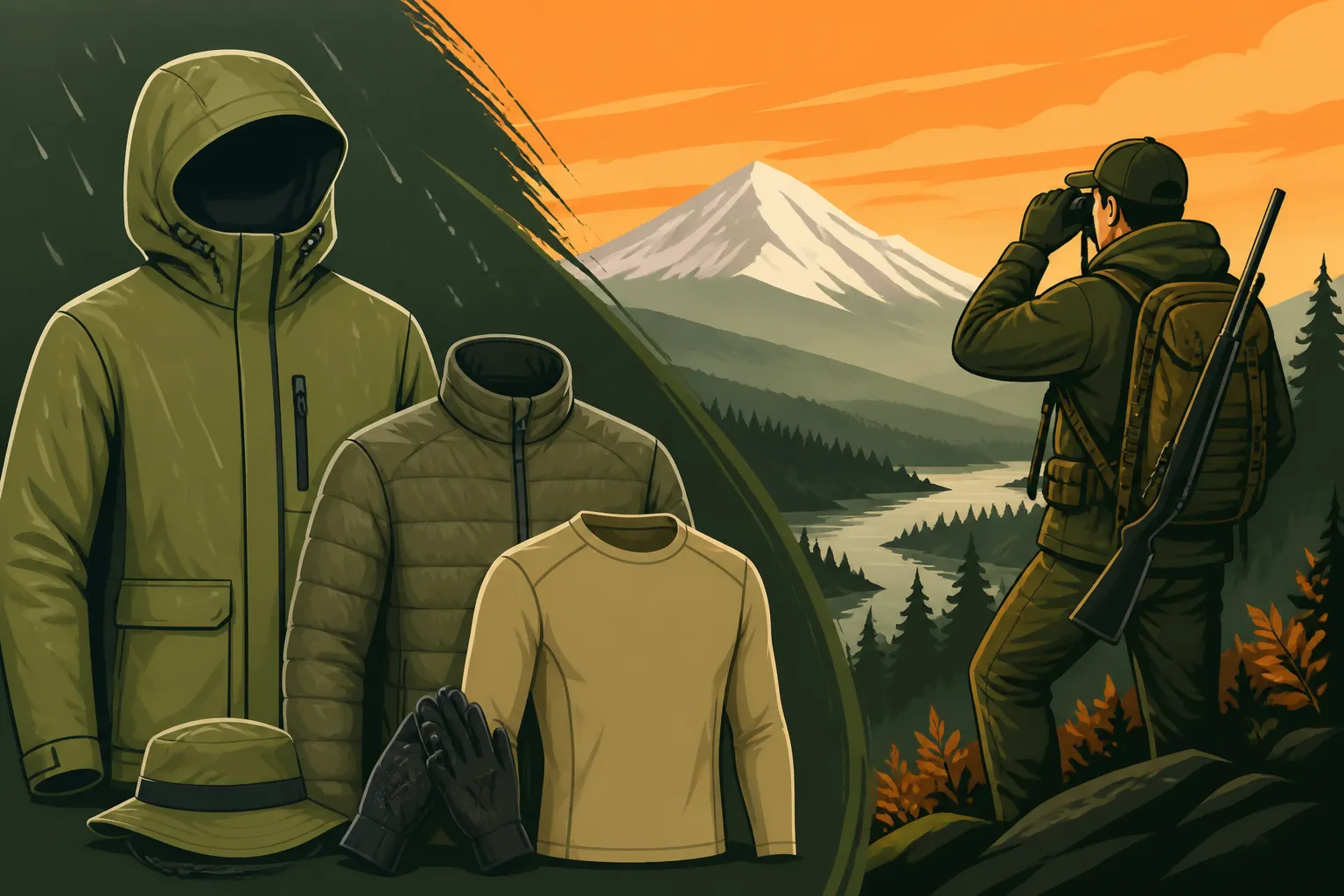
A hardshell jacket and matching pants are the cornerstone of any serious Washington hunting kit. These garments are designed to be completely waterproof and windproof, typically featuring a durable outer fabric laminated with a waterproof-breathable membrane like Gore-Tex, Pertex Shield, or proprietary alternatives. The "hardshell" designation comes from the stiffer, more robust feel of the fabric, engineered to stand up to heavy rain, snow, and abrasive contact with brush and rocks. When you're on a Blacktail Deer Hunting in Western Washington Timber expedition, you'll be crashing through salal and devil's club, and your hardshell needs to handle it.
The breathability aspect is crucial. While a simple poncho can keep rain out, it also traps all your body heat and sweat inside, leaving you drenched from the inside out. Waterproof-breathable membranes allow water vapor (sweat) to escape while preventing liquid water (rain) from entering. Look for features like fully taped seams (where the seams are sealed to prevent water ingress), waterproof zippers, and adjustable cuffs and hoods to create a complete seal against the weather. Pit zips (zippers under the arms) are also highly valuable for quickly venting excess heat during strenuous activity without having to take off your jacket entirely.
Softshell Jackets: For Drier, Active Days
While a hardshell is non-negotiable for true wet weather, a softshell jacket can be an excellent alternative for drier, but still cool and windy, conditions. Softshells are typically made from a woven fabric that is highly breathable, offers significant stretch for unrestricted movement, and provides excellent wind resistance. They usually have a durable water repellent (DWR) finish that will shed light rain or snow, but they are generally not fully waterproof. Their primary advantage is comfort and breathability during high-exertion activities.
For instance, if you're on the east side of the Cascades during an early season Glassing Eastern Washington Breaks for Mule Deer hunt, and the forecast is mostly clear but breezy, a softshell might be all you need. It allows for better heat regulation when hiking, and the stretch makes climbing over downed timber or maneuvering for a shot much easier. However, always carry a lightweight hardshell in your pack as a backup, because Washington weather can change its mind faster than a politician. The combination of a breathable softshell for the majority of the hunt and a packable hardshell for when the weather truly turns foul often provides the most versatile system.
Head, Hands, and Feet: Often Overlooked but Critical
You've got your core covered, but don't forget the extremities. These areas lose heat rapidly and are crucial for comfort, dexterity, and mobility. Many a hunt has been ruined by frozen fingers or perpetually soaked feet.
Headwear: Hats and Hoods
Your head is a major source of heat loss, and keeping it covered is fundamental to staying warm. A good wool or synthetic beanie is essential for cold mornings or sitting on stand. Look for something that can be easily pulled down over your ears and forehead. In rainy conditions, the hood of your hardshell jacket becomes your best friend. A well-designed hood should be adjustable, allowing you to cinch it down to keep rain and wind out without significantly impairing your peripheral vision. It should also be large enough to fit comfortably over your beanie.
Some hunters also opt for a waterproof brimmed hat (like a wide-brimmed rain hat or a baseball cap with a waterproof membrane) to keep rain off their face and glasses, which can then be worn under the jacket hood. This dual approach offers excellent protection from driving rain. Keeping your head warm and dry not only prevents heat loss but also maintains comfort, allowing you to focus on the hunt rather than shivering. A key part of Staying Dry in a Spike Camp is making sure every part of your body is protected.
Gloves: Dexterity and Warmth
Finding the right gloves for Washington hunting is a delicate balance. You need enough warmth and waterproofing to protect your hands, but also enough dexterity to load a rifle, nock an arrow, or operate your optics. Many hunters opt for a multi-glove system: a thin, synthetic or merino liner glove for warmth and dexterity, paired with a waterproof outer shell glove or mitten that can be easily pulled on and off. The liner gloves can be worn for most tasks, providing a baseline level of protection, and the shells deployed when the rain really starts coming down or when sitting stationary.
For really cold, wet conditions, waterproof mittens offer superior warmth compared to gloves because your fingers share warmth within the mitten. However, they drastically reduce dexterity. Consider convertible mittens that allow you to expose your fingers when needed. Another excellent option is a waterproof glove with a grippy palm, which helps maintain a secure hold on your weapon or trekking poles even when wet. Gloves That Work When Soaked are not a luxury, but a necessity in Washington.
Boots and Socks: Your Foundation
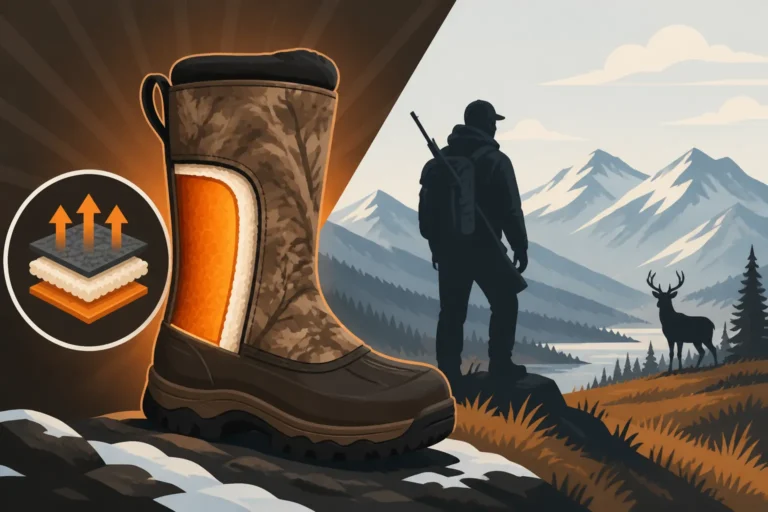
Your feet take a beating, covering miles of rugged, wet terrain. Waterproof boots are non-negotiable. Look for boots with a waterproof membrane (like Gore-Tex or similar technologies) and a good DWR finish on the outer leather or synthetic materials. The height of your boot matters too; taller boots provide more protection when crossing shallow streams or wading through deep snow. For Boots for Steep Eastside Country or the deep mud of the west side, traction and ankle support are just as important as waterproofing.
Socks are just as critical as your boots. Avoid cotton socks at all costs, as cotton absorbs moisture and loses all insulating properties when wet, leading to blisters and freezing feet. Instead, opt for merino wool or high-performance synthetic socks. These materials wick moisture away from your skin, even inside a waterproof boot, and continue to insulate when damp. Many hunters prefer a two-sock system: a thin liner sock to wick moisture directly from the foot, and a thicker outer sock for insulation and cushioning. Always pack multiple pairs of dry socks and change them frequently, especially if your feet start to feel damp.
Putting It All Together: Dynamic Layering for Active Hunts
The magic of a layering system isn't just in the individual pieces, but in how they work together dynamically to allow you to adapt to changing conditions and activity levels. This is especially vital for hunting in Washington, where you might be still-hunting, glassing, or climbing steep grades, all within a few hours.
The Stop-and-Go Strategy
Hunting often involves periods of high exertion (hiking uphill, tracking game, packing out meat) followed by periods of low activity (sitting on stand, glassing, waiting). This "stop-and-go" pattern creates a constant challenge for temperature regulation. When you're moving hard, your body generates a lot of heat and sweat; if this moisture can't escape, it condenses and soaks your clothes. Then, when you stop, that moisture cools rapidly, making you feel chilled to the bone.
The dynamic layering strategy combats this by allowing you to vent heat and manage moisture. As you start a strenuous climb, you might unzip your outer shell, open your pit zips, or even remove your mid-layer entirely and stash it in your pack. The goal is to avoid excessive sweating. When you stop to glass or take a break, immediately add back any layers you removed, zip up, and put on your beanie. This proactive approach prevents you from getting cold in the first place, which is much easier than trying to warm up once you're already shivering. Thinking ahead about the terrain you'll be covering, perhaps using scouting tools like GoHunt to understand elevation changes in your chosen GMU, can inform your layering decisions before you even leave the truck.
Venting and Adjusting on the Fly
Successful layering means being constantly aware of your body's temperature and making small adjustments. If you feel yourself starting to get warm, open a chest zip, pull up a sleeve, or undo a button. Don't wait until you're sweating profusely. Similarly, if you feel a chill, zip up, pull on a hat, or add a light mid-layer. The small, frequent adjustments are what keep you in that comfortable thermal zone. This is especially true when you're doing something like Reading Clearcuts and Reprod for Blacktail Bucks, where you might be walking slowly, then stopping to scan, then moving again.
Modern hunting apparel often comes with features specifically designed for on-the-fly adjustments, such as full-length side zippers on rain pants, which allow you to put them on or take them off without removing your boots. Articulated elbows and knees in jackets and pants provide a full range of motion, which is critical for shooting accurately or navigating difficult terrain. These small details, when combined with a thoughtful layering strategy, contribute significantly to your overall comfort and effectiveness in the field.
| Layer Type | Primary Function | Common Materials | Key Benefits | Considerations |
|---|---|---|---|---|
| Base Layer | Wicks moisture from skin | Merino Wool, Synthetic | Odor control, insulates when damp, fast-drying | Comfort, durability, price |
| Mid-Layer | Provides insulation | Fleece, Down, Synthetic | Warmth-to-weight, compressibility, wet performance | Bulk, price, wet-weather performance of down |
| Outer Layer | Protects from elements | Gore-Tex, Pertex, eVent | Waterproof, windproof, breathable | Noise, durability, breathability, price |
| Extremities | Protects head, hands, feet | Wool, Synthetic, Waterproof | Dexterity, warmth, prevents heat loss | Sensitivity, bulk, waterproofness |
Care and Maintenance of Your Gear
Investing in quality rain gear and layering components is only half the battle. Proper care and maintenance will ensure your gear performs as intended, season after season, protecting your investment and keeping you comfortable in the field. Neglecting your gear is a sure way to find yourself soaked and cold prematurely.
Washing and Re-Waterproofing Outer Shells
Your waterproof-breathable outer shell relies on its DWR (Durable Water Repellent) finish to shed water from the fabric surface and its internal membrane to prevent water ingress. Over time, dirt, oils, and repeated washing can degrade the DWR, causing the fabric to "wet out" (absorb water), even if the membrane is still technically waterproof. When the outer fabric is saturated, the membrane's breathability is severely compromised, and you'll feel clammy and wet.
To restore performance, wash your hardshells with a technical fabric cleaner (like Nikwax Tech Wash or Granger's Performance Wash) according to the garment's instructions. Avoid regular detergents, which can leave residues that clog the membrane. After washing, you can often reactivate the DWR by tumble drying on low heat (again, check garment instructions). If the DWR is completely worn off, you'll need to apply a spray-on or wash-in re-waterproofing treatment. This regular maintenance is crucial for ensuring your Rain Gear That Survives a Washington Westside Season keeps doing its job.
Storing Layers and Avoiding Damage
Proper storage helps maintain the integrity and longevity of all your layers. When storing your gear, ensure everything is clean and completely dry to prevent mildew and odors, especially with merino wool. For puffy jackets, avoid prolonged compression, as this can damage the insulation's loft over time. Store them loosely hung or in a large storage sack rather than a small stuff sack.
Chemicals, especially insect repellents with DEET, can damage delicate fabric coatings and waterproof membranes. Always apply bug spray away from your hunting clothes, or wear a dedicated outer layer that you don't mind getting sprayed. Sharp objects, like broadheads or knives, can easily tear lightweight fabrics, so be mindful of where you store them in your pack. When you're doing something intensive like Quartering and Packing an Elk Solo, you'll appreciate gear that's been cared for and is still performing perfectly. A little care goes a long way in ensuring your gear is ready for next season's adventures.
Budgeting for Quality Rain Gear and Layers
It's easy to get overwhelmed by the price tags on high-end hunting apparel, but remember, this is an investment in your comfort, safety, and ultimately, your success in the field. While top-tier gear offers undeniable performance, you don't necessarily need to break the bank to assemble an effective layering system for Washington hunting.
Where to Spend and Where to Save
When budgeting, prioritize your outer shell and base layers. These are the critical components that deal directly with moisture management and weather protection. A reliable waterproof-breathable jacket and pants are worth every penny, as they directly impact your ability to stay dry and warm. Similarly, high-quality merino wool or synthetic base layers are essential for wicking sweat and insulating. Skimping on these will compromise your entire system.
You can often save a bit on mid-layers. While premium down or technical fleece is great, a slightly heavier or less compressible synthetic puffy or a standard fleece jacket can still provide excellent insulation at a lower price point. Look for sales, last year's models, or even reputable used gear outlets for these items. Similarly, while top-of-the-line boots are fantastic, many mid-range waterproof hunting boots offer excellent performance for most Washington conditions. Focus on finding boots that fit well, are comfortable, and are truly waterproof. When you are just starting out, A First-Year Washington Hunter's Gear List can guide your purchases.
Leveraging Sales and Off-Season Purchases
The best time to buy hunting gear is often in the off-season or during major sales events. Retailers clear out inventory to make way for new models, offering significant discounts on last year's gear that is still perfectly functional and effective. Keep an eye out for sales around holidays like Black Friday, or clearance events in late winter and early spring. Signing up for email newsletters from outdoor retailers can alert you to these opportunities.
Consider saving up for one major piece of gear each year rather than trying to buy everything at once. Build your system incrementally, starting with those critical base and outer layers. Tools like GoHunt often highlight gear reviews and sales, which can be invaluable when planning your purchases. Remember, investing in durable, high-performing gear means you won't have to replace it every season, saving you money in the long run and ensuring you're always prepared for the challenging, yet incredibly rewarding, hunting experiences Washington has to offer.
Disclaimer
This article is for general informational purposes only and does not constitute professional advice. Laws, prices and regulations vary by location and change over time. Consult a qualified professional for guidance on your specific situation.