Washington Crossbow Draw Weight Minimum
Navigating the myriad of hunting regulations in Washington State can feel like deciphering an ancient scroll, especially when you're trying to figure out the specifics for a particular weapon. One common point of confusion for many aspiring or experienced hunters looking to use a crossbow for big game is the minimum draw weight requirement. It's not just a suggestion; it's a hard rule that impacts your gear choices and ultimately, your ability to legally hunt. This comprehensive guide is here to untangle those rules, clarify the specific draw weight minimums, and help you ensure your crossbow setup is fully compliant for a successful and ethical hunt in Washington.
Understanding Washington's Crossbow Regulations for Draw Weight
When you're out in the field, whether chasing a wary blacktail buck through western Washington timber or glassing for mule deer in the eastern breaks, the last thing you want is a run-in with a game warden because your equipment isn't up to snuff. Washington State, through its Department of Fish and Wildlife (WDFW), has clear guidelines for crossbows, primarily focused on ensuring humane and ethical harvesting of game animals. These regulations are designed to ensure that any projectile launched has sufficient power and penetration to quickly dispatch an animal.
The Specific Minimum Draw Weight for Big Game
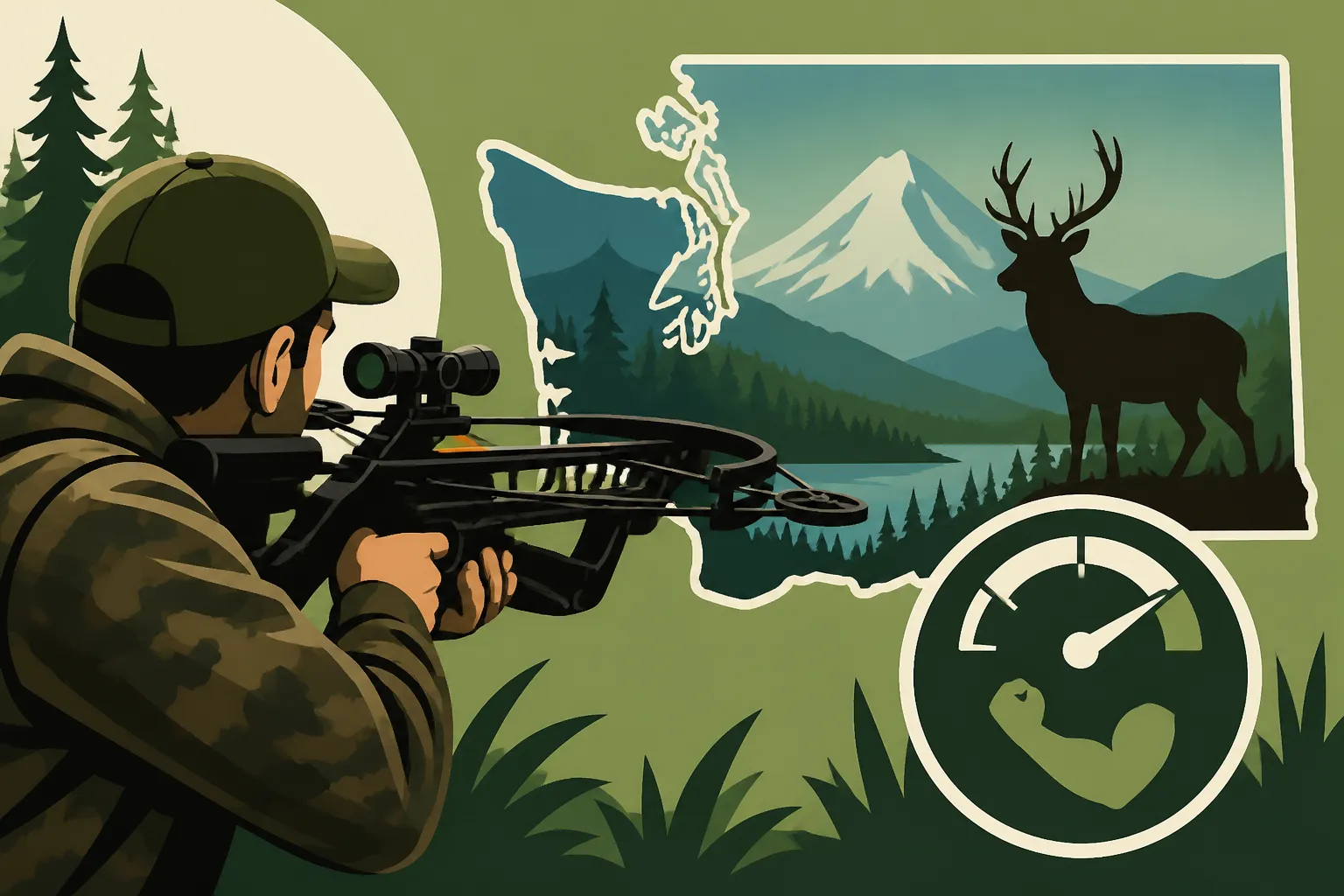
For big game hunting in Washington, WDFW mandates a specific minimum draw weight for crossbows. This isn't a vague suggestion; it's a concrete number you need to be aware of. Currently, any crossbow used for hunting big game like deer, elk, or bear must have a minimum draw weight of 125 pounds. This figure is crucial. It means if your crossbow, for example, only pulls 100 pounds, it's not legal for big game here, no matter how fast the arrow flies or how advanced its optics might be. This rule is consistent across all big game species that are legal to hunt with a crossbow in Washington.
It's really important to double-check the latest WDFW regulations pamphlet before every season, as rules can occasionally be updated. While the 125-pound minimum has been fairly consistent, relying on old information is a surefire way to run into trouble. Imagine you've spent months scouting, invested in a Washington Big Game Licence and Tag Costs, and then find out your crossbow isn't legal. That's a gut punch no hunter wants to experience. Always confirm.
Why This Regulation Exists: Ethics and Efficacy
The 125-pound draw weight minimum isn't an arbitrary number. It's rooted deeply in the principles of ethical hunting and effective animal harvest. The primary goal is to ensure that a shot delivers enough kinetic energy and momentum to achieve a clean, humane kill. A crossbow with insufficient power risks wounding an animal rather than cleanly dispatching it, leading to prolonged suffering and potentially unrecoverable game.
Think about the physiology of Washington's big game. An adult elk, especially a bull, is a powerful animal with dense muscle and bone. A deer, while smaller, still requires significant energy to penetrate vital organs. A low-powered crossbow might send an arrow flying, but if it lacks the punch to pass through the animal's hide, muscle, and bone, it's not doing its job. This regulation essentially sets a baseline for the kinetic energy an arrow can deliver, reducing the chance of superficial wounds and increasing the likelihood of a quick, ethical harvest. This aligns with overall hunting ethics, which prioritize minimizing suffering and maximizing the effectiveness of every shot.
Practical Implications for Crossbow Hunters
Knowing the rule is one thing, but actually applying it to your hunting setup is another. For new crossbow hunters, or those transitioning from vertical bows or firearms, understanding the practical implications of the draw weight minimum is key to making smart gear choices and preparing effectively for the season.
Choosing a Compliant Crossbow
When you're in the market for a crossbow, the 125-pound draw weight minimum immediately becomes a filter. Many modern crossbows, especially those designed for big game, easily exceed this minimum. However, some entry-level models or those designed for smaller game might fall short. It's crucial to check the manufacturer's specifications. Don't just assume; confirm the actual draw weight. If you're buying a used crossbow, this is even more critical, as the seller might not be fully aware of Washington's specific regulations.
Think about it like this: you wouldn't show up to a Rifle Setup for Washington Elk and Deer hunt with a rimfire rifle (unless specifically for cougar, in some rare instances). The same logic applies here. You need the right tool for the job. Most reputable crossbow brands will clearly state the draw weight in their product descriptions. Aim for a crossbow that provides a comfortable margin above the 125-pound minimum, not just barely meets it. This gives you peace of mind and often translates to better overall performance.
The Importance of Kinetic Energy, Not Just Draw Weight
While draw weight is the mandated minimum, serious crossbow hunters understand that kinetic energy (KE) and momentum are the real indicators of an arrow's penetration power. Draw weight is a component, but factors like arrow weight and speed also play a massive role. A crossbow with a 125-pound draw weight shooting a very light arrow might not deliver as much kinetic energy as a 150-pound draw weight crossbow shooting a heavier arrow, even if the speeds are similar.
WDFW has a separate Washington Bolt Weight Minimum for Crossbows to address this, ensuring that the projectile itself also meets a minimum standard. These two regulations work hand-in-hand to guarantee effective terminal performance. When you're selecting arrows or bolts, consider their weight in grains. A heavier arrow, even if slightly slower, often carries more momentum and kinetic energy downrange, leading to better penetration and energy transfer into the animal. This is especially important when thinking about shot placement on a large animal like an elk, where you might encounter heavy bone. Many resources, including those found on platforms like GoHunt, offer calculators to help you understand the kinetic energy and momentum of your specific crossbow and arrow setup. It’s a great way to fine-tune your gear beyond just meeting the minimum draw weight.
| Crossbow Component | Washington Big Game Minimums | Why It Matters |
|---|---|---|
| Draw Weight | 125 pounds | Ensures sufficient power to propel an arrow for ethical penetration. |
| Arrow/Bolt Weight | 350 grains | Contributes to kinetic energy and momentum for deep penetration. |
| Broadhead Width | 7/8 inch cutting diameter | Ensures a wide wound channel for rapid blood loss and humane kill. |
| Broadhead Sharpness | Razor sharp | Essential for clean entry and effective cutting of tissue. |
Other Key Crossbow Rules to Know in Washington
Beyond draw weight, there are several other regulations that crossbow hunters in Washington must be intimately familiar with. Missing these details could still lead to fines or loss of hunting privileges, even if your crossbow meets the draw weight minimum. It’s all part of being a responsible and legal hunter.
Broadhead Requirements and Arrow Weight
It's not enough to just launch an arrow with sufficient power; the business end of that arrow needs to be legal and effective. Washington has specific rules regarding broadheads. For big game, your broadhead must have a minimum cutting diameter of seven-eighths of an inch. This means the blades must span at least that width. This rule is critical because it ensures the broadhead creates a large enough wound channel to cause rapid blood loss and a quick, humane death. Small-game or practice broadheads are absolutely not allowed for big game.
Furthermore, the broadhead must be razor sharp. This isn't just common sense for hunters; it's a legal requirement. A dull broadhead will push tissue instead of cutting it, reducing penetration and wound efficacy. You can find more specific details in Washington's Seven-Eighths Inch Broadhead Rule. When considering broadhead types, whether fixed or mechanical, it's vital to know Are Mechanical Broadheads Legal in Washington?. Generally, they are, but they still need to meet the minimum cutting diameter when deployed and be razor sharp.
Beyond the broadhead, don't forget the aforementioned Washington Bolt Weight Minimum for Crossbows. Currently, for big game, your arrow or bolt must weigh a minimum of 350 grains total, including the broadhead. This again speaks to the efficacy of the shot, ensuring enough mass behind the cutting edge for proper penetration.
General Seasons and Crossbow Use
Another common question revolves around when you can actually use a crossbow. In Washington, crossbows are generally legal for big game during any archery-only season, as well as during modern firearm seasons. However, there are nuances. Some specific rules apply to certain permit hunts or units. It's critical to review the WDFW hunting pamphlet for the specific Game Management Unit (GMU) and season you plan to hunt.
For instance, while a crossbow allows you to participate in archery seasons without the physical demands of drawing a vertical bow, you are still subject to all other archery-season restrictions, such as wearing hunter orange during general firearm seasons (if applicable in certain areas) and obeying specific unit rules. For a comprehensive overview of when you can take your crossbow into the field, check out When a Crossbow Is Legal in Washington. Keep in mind that a crossbow is not considered a modern firearm, even though it may be used during modern firearm seasons, meaning it can't be used to fulfill a modern firearm-only tag. Always declare your weapon choice correctly when purchasing your tag, especially for species like elk, where you might have to choose East or West side and a weapon type.
Ensuring You're Legally and Ethically Prepared
The responsibility of knowing and adhering to hunting regulations falls squarely on the individual hunter. This isn't just about avoiding penalties; it's about upholding the integrity of hunting as a sport and ensuring the welfare of Washington's wildlife.
Checking the Latest WDFW Regulations
I can't stress this enough: always consult the current Washington Department of Fish and Wildlife hunting regulations pamphlet. These pamphlets are released annually and detail all the rules, season dates, legal equipment, and specific GMU restrictions. While guides like this one offer valuable insights, they are not a substitute for the official publication. Regulations can change due to legislative action, biological needs, or unforeseen circumstances. What was legal last year might have a slight tweak this year.
You can usually find these pamphlets online on the WDFW website, or pick up a physical copy at license vendors and sporting goods stores. Make it a ritual before every hunting season: download the new pamphlet, grab a highlighter, and read through the sections relevant to your chosen species and weapon. Pay close attention to the general regulations, the specific sections for archery/crossbows, and any GMU-specific rules. Websites like GoHunt also provide excellent tools for navigating these regulations, often with user-friendly breakdowns and maps that integrate WDFW data, making it easier to plan your hunt and verify compliance.
Practice, Practice, Practice
Meeting the minimum draw weight and legal equipment rules is just the starting line. Ethical hunting demands proficiency with your chosen weapon. A crossbow, while perhaps easier to shoot accurately than a vertical bow for some, still requires significant practice to master. Don't let the ease of aiming lull you into a false sense of security.
Practice shooting from various positions you might encounter in the field: kneeling, standing, from a tree stand, or even simulating shots with obstacles. Understand your crossbow's effective range and, more importantly, your effective range. Just because your crossbow can shoot accurately at 80 yards on a flat range doesn't mean you can ethically make that shot on a live animal in a steep, windy Washington canyon. Practice judging distances without a rangefinder (though you should always carry one!) and accounting for angle compensation. Learning about Archery Practice for Wet Coastal Conditions is particularly important if you plan to hunt the western side of the state, as rain and damp can affect grip and visibility.
Even with a powerful crossbow, a poorly placed shot is still a poor shot. Invest in good targets, spend time at the range, and build confidence in your setup and your abilities. This dedication to practice not only makes you a more effective hunter but also ensures you're ready to make a quick, humane kill when the opportunity arises, respecting the animal and the privilege of hunting.
Disclaimer
This article is for general informational purposes only and does not constitute professional advice. Laws, prices and regulations vary by location and change over time. Consult a qualified professional for guidance on your specific situation.