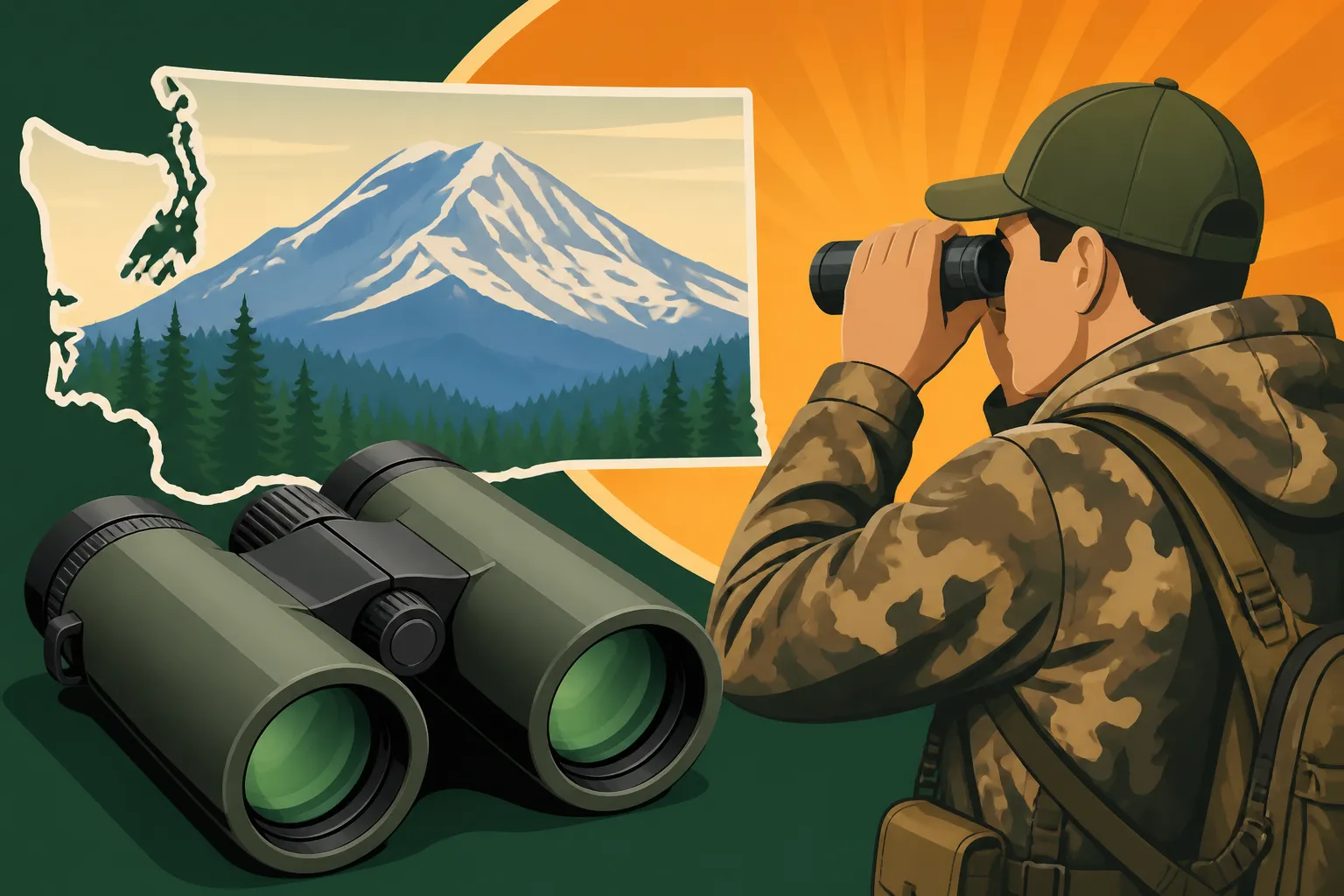
Why 10×42 Is the Western Standard
Trying to pick the right binoculars for hunting in Washington can feel like a real puzzle. You've got dense coastal rainforests on one side and wide-open sagebrush and wheat fields on the other, not to mention steep, rugged mountain terrain everywhere in between. It's easy to get lost in all the numbers and specs, wondering what will truly serve you best across such diverse landscapes. This guide will walk you through why the 10×42 binocular has become the undeniable Western standard for hunters, offering a perfect blend of performance, practicality, and versatility for chasing everything from wary blacktails to big Rocky Mountain elk in our great state.
The Goldilocks Zone: Why 10×42 Hits the Sweet Spot for Western Hunting
When you're out there, whether you're trying to pick apart dark timber for a Roosevelt elk or scanning a distant coulee for mule deer, your binoculars are often your most important tool. The challenge is finding that perfect balance – enough magnification to see detail, but not so much that the image is shaky or the binos weigh you down. That's where the 10×42 truly shines.
Balancing Magnification and Field of View
The "10" in 10×42 refers to its magnification, meaning it makes objects appear 10 times closer than they are to the naked eye. For most Western hunting scenarios, this is a fantastic sweet spot. It's enough to resolve antler points on a buck across a canyon or confirm a legal bull in a clearcut without feeling like you're trying to hold a telescope steady. Contrast this with an 8x binocular, which offers a slightly wider field of view, making it a bit easier to locate game quickly in dense cover, but often falls short when you need to really scrutinize details at longer distances. On the flip side, 12x or 15x options give you more power, but their narrower field of view can make initial target acquisition frustrating, especially if an animal is on the move or in thick brush. The 10x magnification allows you to cover ground efficiently while still having the power to make critical judgments.
The "42" refers to the diameter of the objective lens in millimeters. This is the lens at the front of the binocular that gathers light. A 42mm objective is large enough to gather a significant amount of light, contributing to a bright, clear image even in less-than-ideal conditions, yet it's not so large that it makes the binoculars unwieldy. It's a fantastic compromise, ensuring you get enough light-gathering capability without adding excessive bulk or weight. This balance is especially important when you're glassing in areas with varied topography, where animals might be moving from sun-drenched slopes into shadows.
The Practicality of Size and Weight in the Field
Anyone who's spent days packing into the backcountry knows that every ounce counts. Larger binoculars, like the popular 15×56 models, offer incredible light-gathering capabilities and magnification, but they come at a significant cost in terms of size and weight. While phenomenal for dedicated long-range glassing sessions from a tripod, carrying them comfortably for miles over rough terrain, especially through tangled blowdown or up steep ascents in places like the Colockum GMU Boundaries in Washington, can be a real burden.
A 10×42, on the other hand, strikes a perfect balance. It’s compact enough to ride comfortably in a binocular harness on your chest, making it readily accessible for quick scans without needing to dig through your pack. Its lighter weight means less fatigue over a long day of still-hunting through Blacktail Deer Hunting in Western Washington Timber or hiking ridgelines. This practical size also makes it easier to steady for handheld use. While any binocular will benefit from bracing against a tree or using a tripod for extended viewing, the 10×42 is much more forgiving for those quick, unplanned stops to check out a distant flicker or movement. For hunters constantly on the move, this blend of manageable size and effective power is simply unmatched.
Optical Performance and Ergonomics in Washington's Diverse Terrain
Washington's hunting environments demand a lot from your optics. From the rain-soaked timber of the Olympic Peninsula to the glaring sun and deep shadows of Eastern Washington's breaks, your binoculars need to perform consistently. The 10×42 design, when built with quality components, truly excels in these varied conditions.
Low-Light Performance and Image Brightness
The ability to see clearly at dawn and dusk is paramount for hunters, as these are often the peak movement times for big game. The 42mm objective lens of a 10×42 binocular, combined with its 10x magnification, results in an exit pupil of 4.2mm. The exit pupil is the beam of light that leaves the eyepiece and enters your eye; generally, a larger exit pupil (around 5-7mm) is ideal for low light, as your eye pupil dilates to around 5-7mm in dim conditions. While a 4.2mm exit pupil isn't as massive as, say, a 7×50 binocular (7.1mm exit pupil), it's more than sufficient for most practical hunting situations in low light.
Crucially, it balances this with maintaining a reasonable size. Binoculars with smaller objective lenses, like an 8×32, will struggle significantly more in dim conditions, turning shadowy areas into dark, indistinct blobs. Conversely, much larger objectives like 50mm or 56mm would offer slightly brighter images in extreme low light, but the added weight and bulk often make them less practical for general hunting. A quality 10×42 provides excellent image brightness and contrast, allowing you to pick out the subtle details of an animal in the shadows of a clearcut or against the fading light of a Glassing Eastern Washington Breaks for Mule Deer hunt. Many experienced Western hunters, including those sharing insights on platforms like GoHunt, consistently lean on their 10x42s for these critical low-light moments.
Durability and Weather Resistance for Washington's Elements
Let's be honest, hunting in Washington isn't always sunshine and blue skies. We face everything from persistent drizzle in the Westside timber to freezing fog and unexpected snow squalls in the high Cascades. Your gear needs to be tough, and your optics are no exception. A good 10×42 binocular is typically built with robust features designed to withstand these conditions. Look for models with durable, non-slip rubber armor that not only protects against drops and bumps but also provides a secure grip, even when your hands are cold and wet.
Equally important is internal protection against fogging and moisture. Most reputable 10×42 binoculars are nitrogen or argon purged and O-ring sealed. This means the air inside the optics has been replaced with an inert gas, preventing internal lenses from fogging up when you move from cold, damp air into a warm, humid vehicle, or vice-versa. This kind of weather sealing is critical when you're hunting in the kind of conditions we often experience while Still-Hunting Blacktails in Wet Washington Brush or dealing with late-season snow. Reliable optics that perform rain or shine are non-negotiable, and the 10×42 form factor lends itself well to these rugged, all-weather designs that are often reviewed and recommended by hunting communities and resources such as GoHunt.
Versatility Across Species and Hunting Styles
One of the greatest benefits of the 10×42 binocular is its incredible adaptability. It’s not just a specialized tool for one type of hunting; it’s a dependable workhorse that performs admirably across the vast spectrum of Washington's hunting opportunities.
From Blacktails to Rocky Mountain Elk
Whether you’re meticulously still-hunting for elusive Columbian blacktail deer in the dense coastal timber of Western Washington or ranging out across vast eastern Washington sagebrush flats in pursuit of a big Rocky Mountain elk, the 10×42 is up to the task. For blacktails, where shots are often close and quick, the 10x magnification provides enough detail to assess antler size in the tight confines of Reading Clearcuts and Reprod for Blacktail Bucks. Its relatively wide field of view helps you pick up movement in heavy cover without feeling like you're staring through a straw. You can easily scan small pockets of cover, pick out an ear flick, or confirm a legal buck's antlers with confidence.
When you shift gears to hunting elk in the Blue Mountains or the Okanogan, where distances can stretch considerably, the 10×42 still holds its own. While some might opt for higher magnification like 12x or 15x for extreme long-range glassing from a stationary position, the 10×42 is often sufficient for identifying an elk, discerning sex, and judging antler size up to several hundred yards. It allows for more mobile glassing, enabling you to quickly scan new areas as you crest a ridge or move through broken country. It’s the kind of binocular that won't leave you feeling under-gunned, no matter the species or the distance.
Steady Hands and Long Glassing Sessions
Let's be real, holding any binocular perfectly still for extended periods is tough, especially after a long hike. While a 15×56 on a tripod offers unmatched stability for truly picking apart distant hillsides hour after hour, it’s not always practical for every moment of a hunt. The 10×42, with its balanced magnification and weight, is much more amenable to handheld use for those crucial, shorter glassing sessions. When you suddenly spot movement on a far ridge, or need to confirm details on an animal before making a move, you can often bring the 10×42 to your eyes, brace an elbow, and get a stable enough view for decision-making.
For longer glassing periods, a good binocular harness can make a world of difference, distributing the weight evenly and keeping your optics secure yet instantly accessible. For hunters looking to enhance stability further without committing to a full tripod setup, some 10×42 models are light enough to be effectively used with monopod attachments or even small clamp-style mounts on trekking poles. GoHunt, a valuable resource for hunters, frequently discusses optimizing optics setups, including pairing 10x42s with appropriate accessories to maximize comfort and effectiveness during those prolonged periods of searching for game. This adaptability makes the 10×42 an ideal choice for hunters who combine different scouting and hunting methods throughout their season.
Cost-Effectiveness and Accessibility
One of the often-overlooked advantages of the 10×42 configuration is its broad availability and accessibility across various price points. Unlike some highly specialized optics, you can find a quality 10×42 binocular that performs exceptionally well without completely draining your hunting budget.
Finding Quality Without Breaking the Bank
When you start looking at hunting optics, the price tags can quickly get intimidating. High-magnification, large-objective binoculars or specialized rangefinding models often come with premium price tags, and while they offer incredible performance, they might be out of reach for many hunters, especially those just starting out or working with a tighter budget. This is where the 10×42 shines as an accessible entry point into quality glass.
The popularity and widespread production of 10×42 binoculars mean there's a huge range of options, from budget-friendly models that still offer decent optical performance, all the way up to top-tier alpha glass. This broad market means healthy competition among manufacturers, which translates to better value for hunters. You can invest in a 10×42 from a reputable brand and get a clear, bright image, good durability, and reliable weatherproofing without having to remortgage your home. Many hunting guides and online communities, including GoHunt's gear reviews, emphasize that for the vast majority of hunting situations in Washington, a mid-range 10×42 will offer 80-90% of the performance of a high-end model for a fraction of the cost. This makes it an incredibly smart investment for anyone building their essential gear kit for Washington Big Game Licence and Tag Costs.
The Learning Curve and Upgrade Path
For new hunters, or those transitioning from more casual hunting to serious Western big game pursuits, the 10×42 is an ideal learning tool. Its forgiving nature – good field of view, manageable magnification, and ease of hand-holding – allows you to develop essential glassing skills without fighting against shaky images or narrow sightlines. You can learn how to systematically pick apart a hillside, identify deer and elk sign, and differentiate game from cover. These foundational skills are critical, and the 10×42 helps you build them effectively.
Once you've spent a few seasons with a 10×42 and truly understand your personal hunting style and the specific demands of your preferred terrain, you'll be in a much better position to decide if an upgrade to a more specialized optic is truly necessary. Perhaps you find yourself spending hours intently glassing vast canyons for Mule Deer Numbers in Eastern Washington, and a 15x binocular on a tripod would significantly enhance your efficiency. Or maybe you realize your primary hunting involves thick timber and close encounters, and an 8x or even a lighter 7x model might serve you better for Still-Hunting Pace in Wet Brush. The 10×42 provides an excellent baseline, and any future optic purchases can be informed by real-world experience rather than just guesswork. Resources like GoHunt are excellent for researching when and if specialized optics make sense, allowing hunters to make informed decisions based on their evolving needs and expertise.
| Binocular Type | Magnification x Objective (mm) | Key Advantages for Washington Hunting | Potential Disadvantages | Ideal Use Cases |
|---|---|---|---|---|
| Compact | 8×32 / 10×32 | Very lightweight, portable, easy to carry in a day pack | Poor low-light performance, less detail at distance | Light, fast hunts, archery in dense timber, close range |
| Standard | 10×42 | Excellent balance of power, light-gathering, and portability; versatile | Not as powerful for extreme long range as larger models | All-around Western hunting, diverse terrain, active hunting |
| Large | 12×50 / 12×56 | More magnification and light-gathering than 10×42, good for open country | Heavier and bulkier than 10×42, harder to handhold steadily | More stationary glassing, open Eastern Washington units |
| Giant | 15×56 | Maximum magnification and light for picking apart distant terrain | Very heavy, requires a tripod for steady viewing, narrow field of view | Dedicated long-range glassing from a fixed position (e.g., Glassing Breaks at First Light) |
In the world of Washington hunting, where diverse landscapes and varied game species challenge hunters with every outing, the 10×42 binocular has rightfully earned its reputation as the Western standard. It's not about being the biggest or the most powerful, but about being the most balanced and versatile. It offers ample magnification to identify game and assess details at typical Western hunting distances, gathers enough light for crucial low-light periods, and does so in a package that's durable, weather-resistant, and comfortable to carry all day. Whether you're a seasoned veteran or just starting your journey into the wild places of Washington, a quality 10×42 binocular will be an indispensable tool, helping you see more, hunt smarter, and ultimately enjoy your time in the field to the fullest.
Disclaimer
This article is for general informational purposes only and does not constitute professional advice. Laws, prices and regulations vary by location and change over time. Consult a qualified professional for guidance on your specific situation.