Washington Moose Permit Numbers
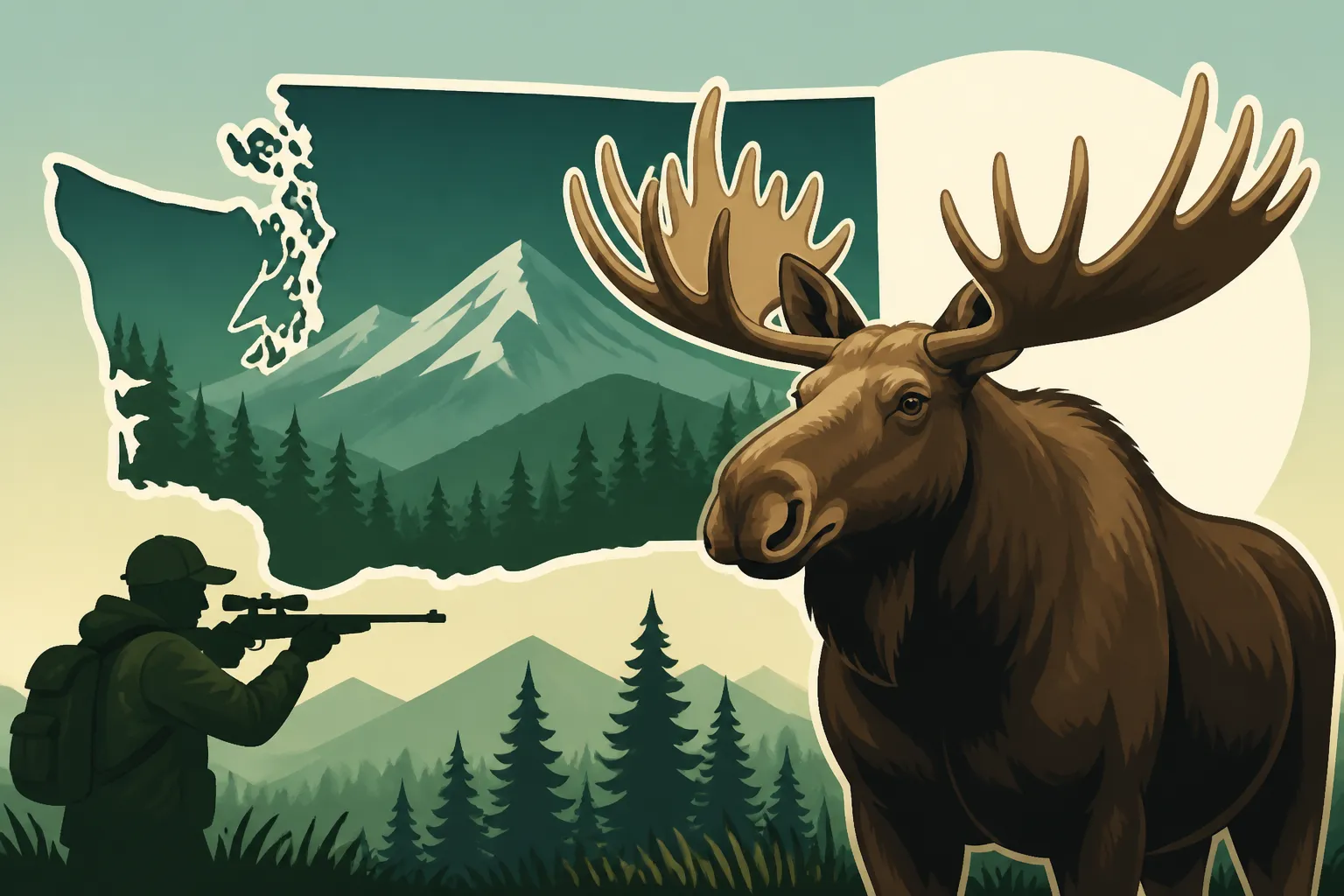
For many Washington hunters, the dream of drawing a moose permit feels like winning the lottery – a rare, almost mythical achievement. The reality is that these majestic animals are not as abundant in our state as they are in places like Maine or Alaska, leading to incredibly limited hunting opportunities. This guide is here to unravel the complexities surrounding Washington's moose permit numbers, offering a realistic look at the draw odds, the application process, and what it truly takes to pursue one of our state's most coveted big game animals.
The Scarcity of Washington Moose Permits
Let's not sugarcoat it: drawing a moose permit in Washington is exceptionally difficult. Unlike our neighboring states to the east, Washington's moose population is relatively small and concentrated in very specific areas. This isn't due to a lack of effort by wildlife managers, but rather the historical and ecological realities of moose distribution in the Pacific Northwest. While we do have a growing population, it pales in comparison to the vast moose ranges found elsewhere, which directly translates to fewer available permits each year. This scarcity creates an intense competition among hunters, making every application a long shot, but a dream worth chasing.
Historical Context of Moose in Washington
Believe it or not, moose weren't always a common sight in Washington. While historical records indicate some presence, their numbers were extremely low for a long time. The significant increase in Washington's moose population, primarily Rocky Mountain moose, has largely occurred over the last few decades, expanding naturally from robust populations in northern Idaho and British Columbia. These animals slowly, but surely, migrated into the prime habitat offered by Northeast Washington. Today, the core of our moose population remains firmly rooted in the northeastern corner of the state, particularly in the Selkirk Mountains, with smaller numbers extending into parts of the Okanogan. This natural expansion is a success story for wildlife, but it also means we're dealing with a relatively young and geographically limited population compared to states with a longer, more established moose history.
Factors Limiting Moose Population Growth
Even with natural expansion, Washington's moose population faces several challenges that can limit its growth and, consequently, the number of hunting permits WDFW can issue. Habitat availability is a significant factor. Moose require vast areas of diverse forest cover, wetlands, and abundant browse. While Northeast Washington offers excellent habitat, it's not unlimited. Beyond habitat, like any wildlife population, moose are susceptible to disease. For instance, the potential impact of parasites like winter ticks and brain worm (Parelaphostrongylus tenuis) carried by deer is a concern, though thankfully less prevalent here than in some eastern states. Predation by wolves and bears also plays a role, particularly impacting calves. Furthermore, wildfire and logging practices, while sometimes creating beneficial new browse, can also fragment habitat if not managed carefully. All these ecological factors are carefully considered by WDFW when setting annual permit numbers, aiming for sustainable management rather than maximizing harvest.
Understanding Washington's Moose Permit Numbers
When you finally get around to looking at the actual numbers, it often paints a stark picture of how rare these opportunities are. Washington's moose permits are some of the most sought-after tags in the state, and for good reason—there are simply very few to go around. The Washington Department of Fish and Wildlife (WDFW) meticulously manages these permits to ensure the long-term health and growth of the moose population, which means they are extremely conservative with their allocations.
Annual Permit Allocation and Regional Distribution
The number of moose permits offered in Washington varies slightly year to year, but generally remains quite low. In recent years, WDFW has typically offered fewer than 100 permits statewide, often hovering in the 50-70 range. For example, for the 2024 hunting season, the total number of moose permits for all weapons and hunt types combined was around 60. These permits are almost exclusively concentrated in the northeastern corner of the state, in units such as the Selkirk (GMU 117), 49 Degrees North (GMU 121), Huckleberry (GMU 101/105), and sometimes Mount Spokane (GMU 127).
The specific allocation to each GMU is determined by WDFW biologists after aerial surveys, population modeling, and harvest data analysis. They look at factors like Moose Population Growth in Washington, bull-to-cow ratios, calf recruitment, and overall herd health. For instance, the Selkirk unit often sees the highest number of permits due to having the largest and most established moose population. Other units might only offer a handful of permits, sometimes as few as one or two, making those draws even more of a needle-in-a-haystack scenario. You can find these detailed breakdowns in the annual big game hunting pamphlet and on the WDFW website, crucial information for anyone considering Washington Moose Permit Applications.
| GMU Name | Typical Permit Range (Annual) | Primary Moose Presence | Notes |
|---|---|---|---|
| Selkirk (GMU 117) | 20-35 | High | Most permits, strong population. |
| 49 Degrees North (GMU 121) | 10-20 | Moderate | Consistent permits, good habitat. |
| Huckleberry (GMU 101/105) | 5-15 | Moderate | Growing population, limited permits. |
| Mount Spokane (GMU 127) | 1-5 | Low | Very limited, often one or two tags. |
| Other Northeastern Units | 0-2 | Sparse | Occasional, highly variable permits. |
Note: These numbers are typical ranges and can change annually based on WDFW’s biological assessments and management goals.
The Realities of Draw Odds
With so few permits available statewide, it should come as no surprise that the Washington Moose Draw Odds are incredibly long. We're talking about odds that often stretch into the thousands-to-one for resident hunters, and even worse for non-residents. Washington uses a random draw system, meaning there are Washington's Random Draw and No Preference Points. Every applicant has an equal chance, whether it's their first time applying or their twentieth. This democratic approach ensures fairness but also means that years of applying don't increase your statistical probability of drawing.
Imagine a hunt unit with just one moose permit. If 5,000 people apply, your odds are literally 1 in 5,000. For the more commonly drawn Selkirk unit, with perhaps 30 permits, if 10,000 hunters apply for moose tags in that area, your odds are still 30 in 10,000, or 1 in 333. While those numbers might seem daunting, it's also true that someone does draw every year. It truly is a lottery. While tools like GoHunt provide fantastic resources for understanding draw odds in other states with preference points, for Washington's moose, the sheer scarcity is the main takeaway. It's less about complex statistics and more about persistent application and a healthy dose of luck.
Applying for a Washington Moose Permit
Given the astronomical odds, applying for a Washington moose permit might seem futile to some, but for many, it's an annual tradition fueled by hope and the allure of such a magnificent animal. The application process itself is straightforward, but it requires attention to detail and adherence to strict deadlines. Understanding each step can help ensure your application is valid, even if the odds remain stacked against you.
Navigating the WDFW Application Process
The journey to potentially drawing a Washington moose permit begins by applying through your WDFW WILD account online. This is the portal for all special hunt applications in the state. You'll need a current Washington hunting license to even apply, so make sure that's squared away well before the application period. The official window for applying for Washington Special Hunt Permits and How to Apply typically runs from mid-April to late May, with the Washington Special Hunt Application Deadline usually falling around May 27th. It's absolutely critical to mark this date on your calendar, set reminders, and apply early to avoid any last-minute technical glitches.
When you log into your WILD account, you'll navigate to the "Special Hunt Applications" section. Here, you'll find the option to apply for various species, including moose. There's a non-refundable application fee for each species you apply for, so be prepared for that as part of your Washington Big Game Licence and Tag Costs. The system will walk you through selecting your preferred hunt choices, which for moose are often limited to specific GMUs and weapon types (e.g., any legal weapon, archery, or muzzleloader). While GoHunt is a fantastic resource for planning other hunts and staying informed about regulations and deadlines, for the actual application submission, you'll be using the WDFW's official system. Double-check all your selections before submitting, as errors can easily disqualify your chance.
Strategic Application Choices
When it comes to moose, strategic application choices are somewhat limited compared to other species like elk or deer, where you might have many more GMU options or antler restrictions to consider. For moose, you typically get a very small number of hunt choices on your application – often just one or two. Your "strategy" largely boils down to deciding which of the few available units you'd prefer to hunt, knowing that the overall odds are long regardless.
You won't find specific trophy units or a wide array of season dates to choose from; rather, it's usually a general hunt within a specific GMU for a set period. It's also important to remember that moose in Washington are considered a Once-in-a-Lifetime Species in Washington. This means if you are fortunate enough to draw and harvest a moose in Washington, you cannot apply for another moose permit in the state for the rest of your life. This policy underscores the rarity and preciousness of the opportunity. My best advice for choosing your unit is to research the areas where Washington Moose in the Selkirks and other areas are present, look at the historical permit numbers (if WDFW publishes them), and pick the area you're most excited to explore if you get that golden ticket. Don't overthink the "strategy" too much; focus on simply getting your application in correctly each year.
What Happens After You Draw (or Don't)
The waiting game after submitting a special hunt application can feel agonizingly long. For moose, given the low odds, the anticipation is even more intense. Whether you're one of the incredibly lucky few to draw a tag or, like most of us, find yourself on the outside looking in, there are important steps and perspectives to consider as the results are announced.
Preparing for a Moose Hunt
If, by some stroke of incredible luck, you see a moose permit in your Washington Special Permit Results in Your WILD Account, the real work begins! This isn't a hunt to take lightly. Washington moose hunting, particularly in the rugged terrain of the Selkirk Mountains, demands significant preparation. You'll need to immediately start planning your scouting trips, which are absolutely crucial for understanding the terrain, identifying potential moose activity, and locating access points. This isn't like hunting in a flat prairie; the Selkirks are steep, dense, and can be unforgiving.
Physical conditioning should become a top priority. Moose are massive animals, and getting one out of the backcountry will test your endurance like few other hunts. You'll need robust gear, including a capable rifle (or bow/muzzleloader, depending on your tag), quality optics to glass through the thick timber, and a heavy-duty pack system. Think about how you'll handle a large animal quartered in the field—the gutless method is often essential for Quartering and Packing an Elk Solo, and the same principles apply, but with even larger game. Planning for Backcountry Camps in Washington Wilderness is also critical, as many prime moose areas are remote. Every detail, from your first aid kit to your communication plan, needs to be meticulously thought out. This is a dream hunt, and you owe it to yourself and the animal to be as prepared as possible.
Beyond the Draw: Other Opportunities and Perspectives
For the vast majority of hunters, the draw results will bring disappointment, but don't let that deter you from continuing to apply. The allure of a Washington moose tag is powerful, and continued participation in the draw is the only way to ever have a chance. Even without a moose tag, you can still experience moose country. Many deer and elk general season hunts occur in the same GMUs where moose permits are offered. Being present in the woods, even if you're pursuing other species, allows you to observe moose, learn their habits, and simply appreciate their presence.
Beyond the standard draw, WDFW also offers Washington Raffle Permits for Moose, Sheep and Goat each year. These are typically one-of-a-kind tags where hunters purchase raffle tickets, and the proceeds go towards conservation efforts. While the odds are even longer for these raffles, they represent another chance at a dream hunt and a way to contribute to wildlife management. Even if you're not successful in drawing a moose permit through the regular special hunt or raffle, remember that the funds generated from all permit applications and license sales directly support the management of these incredible animals and their habitat. Using resources like GoHunt can help you discover and plan other exciting hunting adventures in Washington and beyond, keeping your passion for the outdoors alive while you patiently await that elusive moose tag.
Disclaimer
Please note: Hunting regulations and permit numbers in Washington are subject to change annually. Always consult the most current Washington Department of Fish and Wildlife (WDFW) hunting regulations pamphlet and official website before planning any hunt or submitting applications. This guide provides general information and should not be considered legal advice or a definitive source for WDFW regulations.