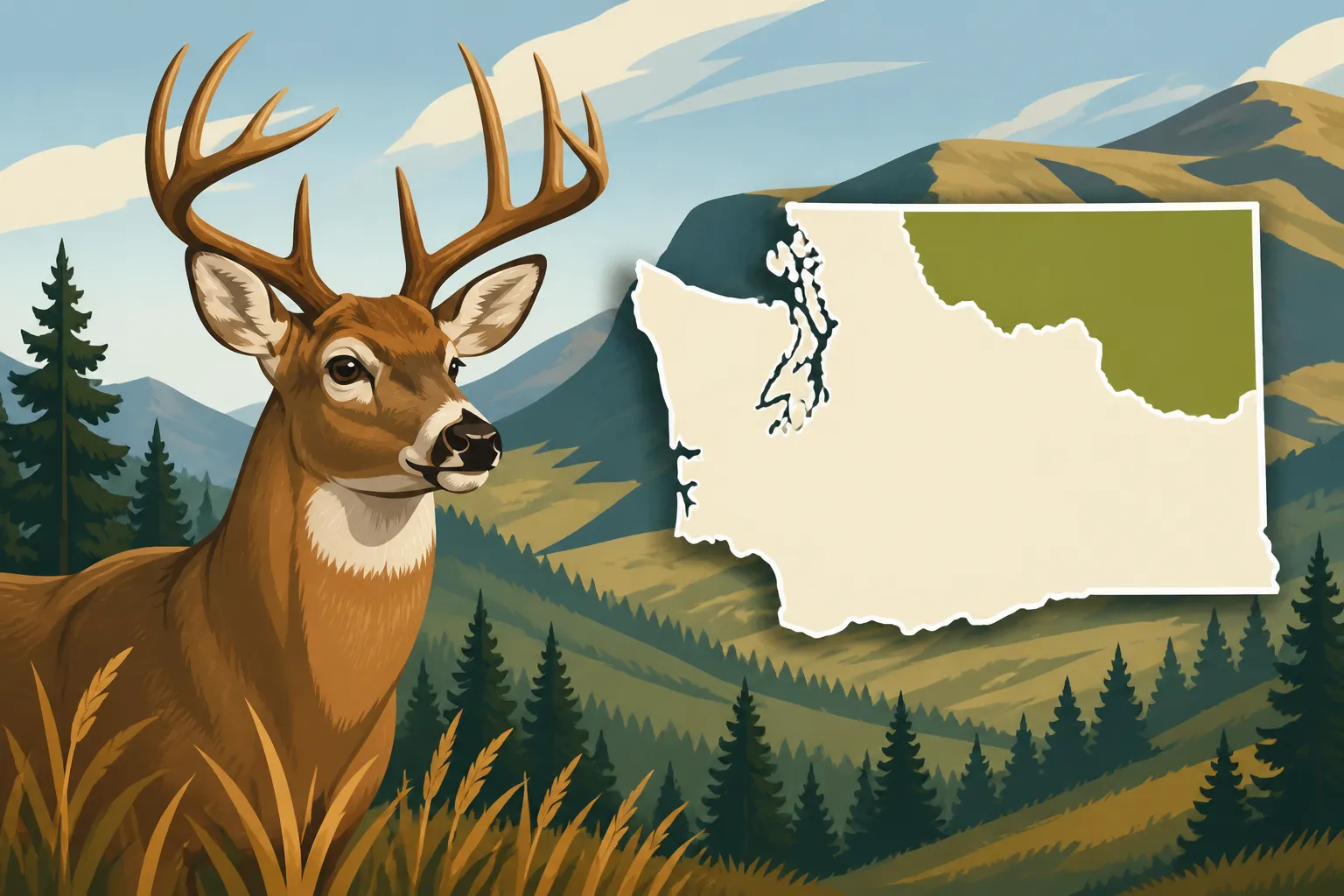
Whitetail Range in Northeast Washington
Hunting whitetail deer in Washington state can feel like a bit of a hidden gem, often overshadowed by the pursuit of our legendary elk or big mule deer. But if you’ve spent seasons fruitlessly chasing ghosts in the timber or glassing vast sagebrush flats and are ready for a different, incredibly rewarding challenge, then it's time to shift your focus to the vibrant whitetail populations thriving in Northeast Washington. This comprehensive guide will illuminate their specific range, preferred habitats, and unique behaviors in this stunning corner of our state, helping you understand precisely where and how to find success.
Understanding Washington's Whitetail Deer
It’s easy to think of Washington as purely a "western" hunting state, full of thick timber and steep mountainsides. But venture into the northeastern reaches, and you'll discover a landscape that feels distinctly different, one that perfectly suits the adaptable whitetail deer. These aren't the tiny deer you might imagine; Northeast Washington produces some truly impressive bucks, and understanding their world is the first step to putting one in your sights.
Geographic Distribution and Key Counties
When we talk about whitetails in Washington, we're almost exclusively talking about the northeastern corner of the state. This isn't just a small pocket; it encompasses several counties where whitetail populations are robust and, in many areas, actually increasing. The heart of whitetail country includes Ferry, Stevens, Pend Oreille, and the eastern parts of Okanogan and Spokane counties. These areas boast a mosaic of habitat types that whitetails absolutely thrive in. You won't find significant, huntable populations of whitetails west of the Cascades, which are primarily home to the Columbian blacktail deer. It's a distinct geographic line, and knowing it is crucial.
This region's terrain varies from dense coniferous forests, particularly in the northern reaches, to rolling hills interspersed with agricultural fields and river bottoms as you move south and west. The Pend Oreille River and the Colville River drainages, for instance, are classic whitetail strongholds, offering a mix of water, cover, and forage that keeps deer happy and healthy. Understanding this distribution helps you narrow down your initial scouting efforts, preventing wasted time in areas where whitetails are a rarity.
Habitat Preferences and Cover Types
Washington whitetails are masters of their environment, preferring areas that offer a good blend of dense cover for security and ample food sources. You’ll rarely find them in wide-open country like you might mule deer. Instead, they gravitate towards brushy draws, dense young timber, creek bottoms choked with willows, and the edges of agricultural fields. Think about areas where timber transitions into open pasture or small clearings; these are often whitetail magnets.
In the Colville National Forest, for example, look for stands of mixed conifer, particularly those with a strong understory of brush and young trees. Old logging cuts that are now regenerating with dense reprod provide fantastic bedding cover and browse. They love thickets of serviceberry, alder, and dogwood. Along river corridors like the Pend Oreille, the dense riparian zones offer crucial thermal cover, especially as winter approaches, and a bounty of succulent forage. They'll also frequent the timbered edges of wheat fields or alfalfa fields, sneaking out at dawn and dusk to feed before retreating into the safety of the trees. This preference for "edge" habitat is a hallmark of whitetail behavior and a key indicator for hunters.
Population Trends and Management Efforts
For many years, Washington’s whitetail population was relatively stable, but in recent decades, there's been a noticeable increase in density in Northeast Washington. This growth is a testament to their adaptability and the favorable habitat conditions. While some areas, particularly in the extreme northeast, hold higher numbers, the species is generally thriving. The Washington Department of Fish and Wildlife (WDFW) manages these populations through a combination of general season hunts and specific antlerless permits designed to balance herd health with agricultural concerns in some areas.
WDFW monitors herd health through harvest data, aerial surveys, and disease surveillance. Occasionally, factors like severe winters or disease outbreaks, such as epizootic hemorrhagic disease (EHD) or blue tongue, can cause localized dips in population. However, the overall trend for whitetails in this region remains positive. Hunters play a vital role in management by adhering to regulations and submitting their harvest reports, which helps WDFW make informed decisions about future seasons and permit allocations. This robust management means hunters generally have good opportunities for success year after year in whitetail country.
Prime Whitetail Hunting Zones in Northeast Washington
Identifying specific areas is critical to a successful whitetail hunt. While the general region is known for whitetails, understanding the nuances of public versus private land, and where deer concentrate, can save you countless hours of unproductive hunting. This isn't just about showing up; it's about being strategic.
The Colville National Forest and Surrounding Areas
The Colville National Forest is a sprawling expanse of public land that serves as a cornerstone of whitetail hunting in Northeast Washington. Encompassing over a million acres across Ferry, Stevens, and Pend Oreille counties, it offers diverse terrain from rolling timbered hills to steep, rugged mountains. This is prime whitetail habitat, with a mosaic of mature timber, regenerating clearcuts, and riparian zones along creeks and rivers. Many hunters find great success within the boundaries of the Colville National Forest. You can find detailed maps of the Colville National Forest Hunting in Washington, which helps in identifying accessible areas and different types of habitat.
The key to hunting the Colville is understanding its road systems and varied landscape. While some areas are easily accessible via maintained forest roads, others require more effort, often involving hiking into areas with less pressure. Look for areas with a mix of cover – dense reprod for bedding, mixed timber for travel corridors, and south-facing slopes for feeding in cooler weather. Don't be afraid to put in the miles away from vehicle access; whitetails, like all deer, quickly learn to avoid areas with high human activity. GMUs like the Huckleberry, Forty-Nine Degrees North, and Sherman Creek are well-known whitetail producers within or bordering the Colville.
Private Timber Lands and Agricultural Edges
While public land offers vast opportunities, a significant portion of Northeast Washington is comprised of private timber holdings and agricultural land. These private parcels, often intermingled with public lands, can be absolutely fantastic for whitetails dueating to the rich forage provided by farming operations and the dense cover of managed timber. However, accessing these lands requires diligence and respect. Timber companies like Weyerhaeuser or Hancock, while less prevalent in the extreme northeast compared to Western Washington, do hold property and sometimes offer permits or specific access rules.
The real challenge and opportunity lie in securing permission from smaller private landowners. Farmers and ranchers often have whitetails frequenting their properties, especially along the edges of grain fields, alfalfa, or orchards. Building relationships with these landowners well before the season is paramount. A knock on the door, a polite request, and an offer to help with chores can go a long way. Many will grant permission for hunting if you demonstrate respect for their property, close gates, and pack out what you pack in. These agricultural interfaces often concentrate deer, as they provide a buffet of high-energy foods that supplement the natural browse available in the adjacent timber.
Overlooked Public Access Points and WDFW Lands
Beyond the major national forest lands, WDFW manages a network of wildlife areas and access sites that can be incredible for whitetail hunting. These areas are specifically managed for wildlife and often receive less pressure than the more obvious public land blocks, especially if you're willing to walk a bit. For instance, the Sherman Creek Wildlife Area, the Little Pend Oreille National Wildlife Refuge (with specific hunting regulations), and various smaller WDFW access points along river systems can be phenomenal. Information on Washington Wildlife Area Rules is readily available and should be reviewed carefully.
Many of these smaller public parcels might appear as small squares or strips on a map, tucked away or landlocked. This is where meticulous e-scouting and on-the-ground reconnaissance really pay off. Using tools like GoHunt's mapping features can help you identify these hidden gems, revealing public land that abuts prime private timber or agricultural properties. These are often the places where a whitetail buck feels safe, slipping out to feed under the cover of darkness and bedding down in the dense public timber during daylight hours. Don't overlook these smaller, less obvious spots; they often hold the biggest surprises.
| Northeast Washington Whitetail GMUs (Examples) | Primary Counties | Dominant Habitat | Key Features |
|---|---|---|---|
| Huckleberry (117) | Stevens, Ferry | Mixed Conifer, Reprod, Creek Bottoms | Strong whitetail densities, good mix of public/private. |
| Forty-Nine Degrees North (105) | Stevens, Pend Oreille | Dense Conifer, Mountainous | Higher elevation whitetail, good wilderness feel in some areas. |
| Sherman Creek (113) | Ferry | Mixed Timber, River Drainages | Excellent river bottom habitat, WDFW wildlife area access. |
| Colville (111) | Stevens, Ferry | Rolling Hills, Logging Units | Extensive Colville National Forest access, managed timber. |
| Mt. Spokane (121) | Spokane | Timbered Hills, Agri-edges | Close to population centers, often requires private access. |
Whitetail Behavior Throughout the Seasons
Whitetails are creatures of habit, but those habits shift dramatically with the changing seasons, driven by food availability, breeding cycles, and the need for security. Understanding these shifts is crucial for any hunter hoping to intercept a buck. Their patterns in Northeast Washington are largely influenced by temperature, snow, and the availability of specific forage.
Early Season Patterns and Summer Feeding
As late summer transitions into early fall, usually around the September archery opener, whitetails are in a phase of intensive feeding, trying to pack on calories before the rigors of the rut and winter. At this time, bucks are typically still in bachelor groups, often found near plentiful food sources. Think about lush green areas – irrigated fields, creek bottoms that stay green longer, or areas rich in berry bushes like huckleberries or serviceberries. They'll also be heavily browsing on succulent forbs and new growth in clearcuts.
During these warmer months, whitetails are primarily nocturnal or crepuscular (active at dawn and dusk) to avoid the heat and human disturbance. Their bedding areas will be dense and shady, often on north-facing slopes or in thick riparian cover. Focus your early season scouting on identifying these major food sources and then tracing likely travel routes back to thick cover. You might find bucks consistently using the same trails to access a particular field. This is also a great time to implement trail cameras to confirm their presence and identify potential targets before the hunting pressure begins.
The Peak Rut and Mid-Fall Movements
The whitetail rut in Washington typically peaks in mid-November, though you'll see pre-rut activity picking up in late October. This is arguably the most exciting time to hunt whitetails because bucks, normally reclusive, become far more active and less cautious as they search for does. Their behavior changes from feeding-focused to breeding-focused, leading to increased daytime movement. If you're chasing bucks, this is your prime window. You might also want to research Washington's Three-Point Rule and What Counts as part of your rut strategy, as antler restrictions are common.
During the rut, bucks will expand their home ranges, relentlessly checking scrapes and rub lines, and dogging does. Focus your efforts on areas where doe groups congregate, such as preferred feeding areas or traditional bedding grounds. Funnels – narrow strips of cover between open areas, saddles in ridges, or pinch points along river bends – become high-traffic highways for cruising bucks. Calling and rattling can be incredibly effective during this period, as bucks are aggressive and responsive to challenges or the sound of other deer. Be prepared for colder weather and potential snow during this time, which can concentrate deer and make tracking easier. For more insights into this critical period, understanding the Whitetail Rut Timing in Washington can be a game-changer.
Late Season Wintering Areas and Survival
Once the rut winds down and winter truly sets in, usually from late November through December, whitetails shift their focus back to survival. Food sources become scarcer, and deep snow can limit their mobility. During this time, whitetails often move to wintering ranges, typically lower elevations with south-facing slopes that receive more sun exposure, helping to melt snow and expose forage. They'll also seek out dense thermal cover, such as mature conifer stands, which offer protection from harsh winds and heavy snowfall.
Food during the late season primarily consists of woody browse, often twigs and buds of shrubs and young trees. Tracking becomes a powerful tool in fresh snow, allowing you to follow deer sign and understand their movement patterns between bedding and feeding areas. Hunter pressure can also concentrate deer into more remote, thicker cover. Success in the late season often means still-hunting very slowly and deliberately through bedding areas or patiently waiting near crucial winter food sources. If the weather is severe, they will conserve energy, so you might find them bedded for extended periods.
Scouting Strategies for Northeast Washington Whitetails
Effective scouting is the bedrock of consistent whitetail hunting success, especially in the varied and often challenging terrain of Northeast Washington. It’s not just about finding deer; it’s about understanding their routines, their preferred bedding and feeding sites, and how they navigate the landscape. Without a solid scouting plan, you're essentially walking around hoping to get lucky.
E-Scouting for Promising Habitat and Access
Before you ever set foot in the woods, the best way to start your whitetail search is with thorough e-scouting. This involves using online mapping tools, satellite imagery, and WDFW resources to identify potential hunting areas from the comfort of your home. Platforms like GoHunt, OnX Hunt, or the WDFW GoHunt system are invaluable. Look for specific habitat features that whitetails love:
- Edge Habitat: Areas where dense timber meets agricultural fields, clearcuts, or natural openings.
- Riparian Zones: River and creek bottoms, often characterized by darker green foliage in satellite images, indicating dense cover and water.
- Funnels and Pinch Points: Narrow strips of timber or terrain features that funnel deer movement, such as saddles between ridges or narrow sections of timber between two open areas.
- Regenerating Clearcuts: These show up as lighter green patches with varied textures on satellite maps, often adjacent to older, darker timber. Knowing how to read a three-year-old clearcut for bucks can provide insights into bedding and browsing locations.
Beyond habitat, e-scouting helps you identify land ownership (public vs. private), access roads, and potential entry points. This is particularly crucial in Northeast Washington, where public and private lands are often intermingled. Use tools to confirm boundaries and avoid accidental trespassing. Understanding access means knowing where you can park, where gates are located, and if any permits are required for private timberlands. Many hunters use applications like GoHunt to mark potential stand locations, bedding areas, and travel corridors digitally, creating a comprehensive plan before they ever hit the trail. For a deeper dive, consider E-Scouting a Washington GMU From Home.
On-the-Ground Reconnaissance and Sign Reading
Once you’ve identified promising areas through e-scouting, it’s time to get your boots on the ground. Nothing beats physical reconnaissance for confirming theories and finding fresh sign. This needs to happen well before the season, ideally in late summer or early fall. When you’re out there, look for:
- Tracks and Trails: Whitetails are habitual creatures. Look for well-worn trails, especially those leading from bedding areas to feeding grounds. Pay attention to track size – larger tracks indicate mature deer.
- Scrapes and Rubs: These are calling cards left by bucks. Scrapes are pawed-out areas on the ground, often under a low-hanging branch (the "licking branch"), where bucks deposit scent. Rubs are where bucks have scraped their antlers on trees or saplings. Both indicate buck activity, especially as the pre-rut approaches.
- Bedding Areas: These are often thick, secluded spots with good visibility downwind. Look for flattened grass or leaves where deer have rested. In clearcuts, bedding will be in the densest reprod.
- Droppings and Hair: Fresh droppings confirm recent deer presence, while hair on fences or low branches indicates travel corridors.
During your on-the-ground scouting, move slowly and deliberately. Think like a deer. Where would you feel safe? Where would you feed? What routes would you take? Pay attention to prevailing winds and how they might affect scent. Mark key observations on your physical map or digital mapping app. This immersive approach helps you build a mental map of the deer's world, which is invaluable come hunting season.
Utilizing Trail Cameras for Whitetail Intelligence
Trail cameras have revolutionized scouting for whitetail deer, and they are incredibly effective in Northeast Washington. They allow you to monitor deer activity in specific areas 24/7 without being present, providing crucial intelligence on buck presence, size, and movement patterns. When using trail cameras, consider these tips:
- Strategic Placement: Place cameras along well-used trails, near scrapes, over mineral licks (if legal and ethical in your area), or overlooking food plots or agricultural field edges. Focus on pinch points or funnels where deer movement is concentrated.
- Angle and Height: Mount cameras angled slightly downward to capture deer walking by, and consider mounting them higher than eye level, angled down, to make them less noticeable to deer and potential human interference.
- Minimize Disturbance: Check your cameras infrequently to avoid pressuring the deer. A weekly or bi-weekly check is usually sufficient. Approach and leave quietly, paying attention to wind direction.
- Data Analysis: Don’t just look at the pretty pictures; analyze the data. What time are deer moving? Are the bucks nocturnal or moving during daylight? Are specific bucks showing up consistently? This information helps you decide when and where to hunt. Using Trail Cameras to Find Washington Bulls can be adapted to apply directly to whitetails.
Remember, Washington has specific rules regarding trail camera use on public land, so always check current WDFW regulations. By combining e-scouting, on-the-ground sign reading, and strategic trail camera deployment, you'll develop a comprehensive understanding of your chosen whitetail hunting area, significantly increasing your odds of success.
Hunting Tactics Tailored for Whitetails in the Region
Hunting whitetails in Northeast Washington demands a specific skillset and approach. Unlike the vast, open country often associated with mule deer, whitetail hunting here is often about patience, stealth, and understanding how deer use dense cover to their advantage. It's an intimate, often close-quarters game.
Still-Hunting and Stand Hunting Approaches
Still-Hunting: This is a highly effective tactic for Washington whitetails, especially in the thick timber and brushy clearcuts they inhabit. Still-hunting involves moving very slowly and deliberately through the woods, pausing frequently to observe and listen. You're not just walking; you're hunting every step of the way.
- Pace: Think in terms of yards per hour, not miles. Take one or two steps, then stop for a minute or two, scanning ahead and to the sides, looking for horizontal lines, patches of hair, or antler tines that break up the vertical lines of trees.
- Wind and Terrain: Always hunt into the wind or with a crosswind. Use terrain features like ridges and creek bottoms to mask your movement and provide cover. The natural noise of a slight breeze or falling rain can also help cover your movement.
- Visibility: Whitetails have incredible eyesight. Use available cover—trees, brush, terrain—to break up your silhouette. Move when you are in shadow or when the deer's attention is elsewhere. This method can be incredibly effective in the dense pockets of Northeast Washington, similar to how one might go about Still-Hunting Blacktails in Wet Washington Brush.
Stand Hunting: This involves setting up in a fixed position, either in a tree stand or a ground blind, overlooking a strategic location. It requires patience but can be deadly if you’ve done your scouting.
- Location, Location, Location: Choose stand sites based on confirmed deer activity. Look for intersecting game trails, funnel points, agricultural field edges, or active scrapes and rubs.
- Wind is King: Always hunt with the wind in your favor, carrying your scent away from where you expect deer to approach. This often means having multiple stand locations for different wind directions.
- Timing: Set up before first light and stay until well after dark. Dawn and dusk are prime movement times, but rutting bucks can move at any hour. In the late season, deer may move later in the morning or earlier in the afternoon to catch sun.
- Concealment: Whether in a tree or on the ground, ensure you are well-camouflaged and blend into your surroundings. Break up your outline, avoid bright colors, and keep movement to an absolute minimum.
Calling and Rattling for Whitetail Bucks
Unlike elk or even some mule deer, whitetails are quite vocal and responsive to calling, particularly during the rut. Using calls can add an exciting and effective dimension to your hunt.
- Grunts: A buck grunt can simulate a deer in the area, often used to stop a cruising buck or to draw one closer. Short, guttural grunts are common. Vary your cadence and volume.
- Bleats and Bellows: Doe and fawn bleats can pique a buck's curiosity, signaling the presence of a receptive doe or a distressed fawn. During the rut, a doe bleat can be very effective in pulling in a buck.
- Rattling: Simulating two bucks fighting with a pair of rattling antlers (real or synthetic) can be incredibly effective during the pre-rut and peak rut. Bucks are competitive and will often come investigate a fight, looking to assert dominance or steal a doe.
- Technique: Start with light sparring, gradually building to a crashing, violent fight. Follow up with grunts or snort-wheezes.
- Setup: Always rattle from a concealed position, preferably with a partner positioned downwind and 30-50 yards away, ready to shoot. Bucks often circle downwind to get a whiff of the "fighters."
- Decoys: While not calling, combining a doe or buck decoy with calling can be a powerful strategy, especially if hunting over open ground or in a clearcut edge. Ensure your setup allows for a safe shot without hitting the decoy.
Calling and rattling are most effective during the rut when bucks are aggressive and less wary. Experiment with different calls and sequences; what works one day might not work the next. And remember, sometimes the best call is no call at all.
Navigating Access and Hunter Pressure
Northeast Washington can experience significant hunter pressure, especially on readily accessible public lands during general rifle seasons. Managing this pressure and securing good access are paramount.
- Hunt Mid-Week: If possible, hunt during the week when most hunters are at work. Weekends, especially the opener, can be crowded.
- Go Deeper: The further you are willing to walk from a road or parking area, the less pressure you'll likely encounter. Whitetails quickly learn to avoid areas with heavy human presence. Consider going beyond the well-traveled trails and into thicker, less inviting terrain.
- Private Land: As discussed earlier, securing written permission on private land, particularly those bordering timber company gates or even residential areas, can unlock fantastic, low-pressure hunting. This might involve getting Written Permission Before Opening Day from landowners. Don't underestimate the potential of smaller, overlooked private parcels.
- WDFW Programs: Explore WDFW's private lands access programs like "Feel Free to Hunt" or "Hunt by Reservation." These programs, while sometimes competitive or limited, offer excellent opportunities on managed private lands that might otherwise be inaccessible.
- Flexibility: Be prepared to change your plans. If you arrive at your intended spot and find multiple vehicles, have a backup plan. The ability to adapt to changing conditions and pressure is a hallmark of a successful whitetail hunter. Use your mapping tools, like those from GoHunt, to quickly identify alternative access points or nearby public land that might be less impacted.
Ultimately, hunting whitetails in Northeast Washington is about combining patience with persistence, applying smart scouting, and adapting your tactics to the unique behaviors of these fantastic deer in their diverse habitat.
Disclaimer
Please remember that hunting regulations and land access rules can change. Always consult the most current Washington Department of Fish and Wildlife (WDFW) hunting regulations pamphlet and local land management agency rules before planning any hunt. Ensure you have all necessary licenses, tags, and permits. Safety is paramount; always know your target and what lies beyond it.