Cougar Sightings Near Washington Towns
It’s a scenario that can send a shiver down anyone’s spine: you’re letting the dog out in the backyard, or heading to your car in the early morning, and there it is—a cougar, right near your Washington town. This guide is all about helping you understand why these apex predators sometimes venture into our neighborhoods, what you absolutely must do if you encounter one, and how we can all learn to coexist more safely in shared landscapes.
Understanding Cougar Behavior Near Populated Areas
Cougars, also known as mountain lions or pumas, are naturally elusive and generally try to avoid human contact. But as Washington's population grows and expands into what was once wildland, encounters become more frequent. It's not necessarily a sign of aggression; often, it's just a cougar trying to make a living.
Why Cougars Venture Near Towns
You might wonder why such a wild animal would wander into a residential area. The truth is, it usually boils down to a few key factors. First, prime cougar habitat is diminishing as human development pushes further into wild areas. What was once deep forest or open scrubland where a cougar could roam freely might now be flanked by housing developments or small farms. This encroachment forces cougars into smaller, more fragmented territories, and sometimes, the path of least resistance or the search for food leads them closer to us.
Secondly, and perhaps most significantly, is the availability of prey. Deer, especially blacktail deer in Western Washington, often thrive in suburban and exurban environments. Our lush gardens, parks, and greenbelts provide abundant forage for deer, drawing them closer to human settlements. Where the deer go, cougars often follow. A young, dispersing cougar looking to establish its own territory might find an unexpected buffet right on the edge of a community. These young cats are often less experienced hunters and more prone to taking risks, leading them into areas they might not typically frequent. You can learn more about Cougar Territory and Movement to understand their natural ranging habits.
Common Scenarios for Town Sightings
Most cougar sightings near towns aren't a cat lounging on your porch in broad daylight. More typically, they occur during dawn or dusk, when cougars are most active. You might see one dart across a road at twilight, or hear of a neighbor's outdoor cat or small dog disappearing. Backyard chicken coops or hobby farm livestock, if not properly secured, can also become tempting targets.
Sometimes, people spot them through game cameras set up to monitor backyard wildlife or deer. These sightings are often fleeting—a shadowy figure moving through dense brush at the edge of a park or a greenbelt. They might be attracted to pets, not necessarily as prey, but because a barking dog or a curious cat can pique their interest. Remember, to a cougar, a small pet might resemble natural prey like raccoons or rabbits. This close proximity to human activity is usually temporary; a cougar is rarely looking to set up permanent residence in the middle of a bustling neighborhood, but rather passing through or investigating.
The Role of Urban Deer Populations
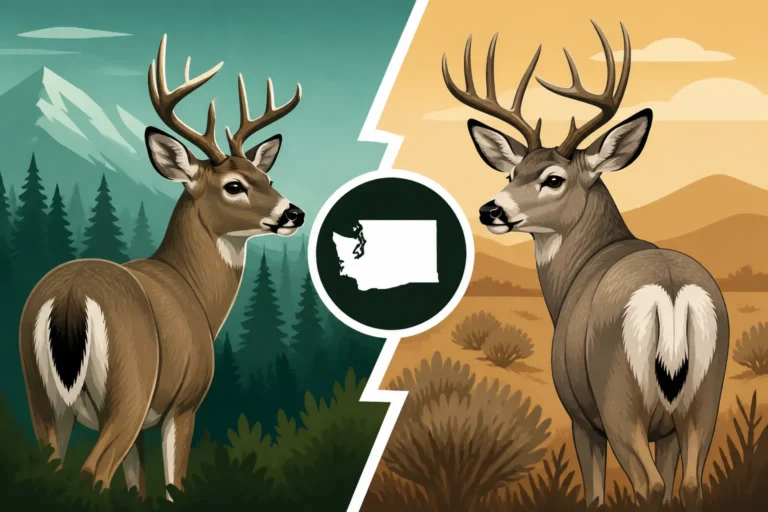
It’s no secret that many Washington towns have thriving deer populations. While it’s charming to see deer grazing in a neighborhood park or even in your backyard, this abundance of prey is a magnet for cougars. If your town has a healthy population of Columbian Blacktail Deer in Western Washington or Mule Deer of Eastern Washington, it’s a strong indicator that cougars will also be in the vicinity.
Deer offer an accessible, relatively easy meal for a cougar. Instead of having to track elk deep in the mountains, a cougar can follow deer that are habituated to humans right into the fringes of a town. This isn't a new phenomenon, but it is becoming more pronounced as urban sprawl and deer populations grow. Managing urban deer numbers can be a contentious issue, but it plays a direct role in how often cougars might visit our neighborhoods. Understanding Cougar Predation on Washington Deer Herds highlights this natural connection.
What to Do When You See a Cougar
Seeing a cougar is an intense experience, and your immediate reaction is key to staying safe. Panic is natural, but acting decisively and calmly is paramount.
Immediate Safety Protocols
First and foremost, never run. Running can trigger a cougar’s predatory chase instinct. Instead, make yourself appear as large and intimidating as possible. Raise your arms above your head, open your jacket, or pick up a child to prevent them from running and to make yourself look bigger. Maintain eye contact with the cougar, but don’t stare it down aggressively. Speak in a loud, firm voice, even yell, to let it know you are human and not prey.
If the cougar doesn't immediately retreat, slowly back away while continuing to face it. Give it an escape route; don't corner it. If you have any objects like sticks or rocks, throw them towards the cougar, but again, without turning your back or running. The goal is to make yourself a difficult and unappealing target. Though rare, if a cougar does attack, fight back with everything you have. Aim for the face and eyes. Your best defense is to make it clear you are not worth the effort. Learn more about Cougar Attacks in Washington History for context on these rare but serious events.
Protecting Pets and Livestock
Our furry companions are often the most vulnerable when a cougar is in the area. The best defense for pets is prevention. Keep cats indoors, especially at night. Walk dogs on a leash, particularly during dawn and dusk, and avoid areas with dense vegetation where a cougar could easily hide. If you have a fenced yard, ensure the fence is robust and tall enough to deter a cougars; they are incredible jumpers and can scale fences most domestic animals can't.
For livestock owners, particularly those with chickens, goats, or sheep, secure enclosures are critical. Use sturdy fencing, preferably with a roof or a completely enclosed pen for smaller animals. Electric fencing can be an effective deterrent. Always bring smaller livestock into secure barns or pens at night. Remove any food sources, like pet food, that might be left outside, as these can attract smaller prey animals, which in turn attract cougars. Regularly check for Reading Cougar Sign in the Snow or other tracks around your property, even if you haven't seen the animal directly.
Reporting a Sighting to WDFW
Reporting cougar sightings, especially those near populated areas or involving unusual behavior, is crucial for wildlife management. The Washington Department of Fish and Wildlife (WDFW) relies on these reports to track cougar activity, understand their movements, and identify potential conflict areas.
When you report a sighting, be prepared to provide as much detail as possible: the exact location, time of day, how long you observed the cougar, its size and apparent health, and any specific behaviors (e.g., did it seem curious, aggressive, or just passing through?). Mention if it had collars or ear tags, as this indicates it might be part of a research project. Your report helps WDFW assess the situation and determine if intervention is necessary. They can offer advice, and in some cases, might send out a wildlife officer to investigate, especially if the cougar is exhibiting bold or aggressive behavior or has preyed on pets or livestock.
Coexisting with Cougars in Washington's Landscape
Living in Washington often means sharing our space with wildlife. When it comes to cougars, coexistence is about minimizing conflict and understanding their place in the ecosystem.
Reducing Attractants Around Your Home
The simplest and most effective way to reduce cougar visits is to make your property less appealing to them and their prey. Start by managing anything that draws deer. If you have fruit trees, pick up fallen fruit. Keep bird feeders cleaned up, as spilled seed attracts small rodents, which can attract larger predators like raccoons, which can attract cougars.
Secure your garbage cans with tight-fitting lids. Don't leave pet food or water bowls outside, especially overnight. If you have compost piles, make sure they are fully enclosed and don't contain meat scraps. Consider motion-activated lights or alarms around your property, which can startle and deter wildlife. Sometimes, simply clearing dense brush and landscaping near your home can reduce hiding spots for cougars and make your yard less attractive to deer. You might also check resources from groups like GoHunt, who often share tips on understanding wildlife movements, even in less traditional settings.
Understanding Cougar Habits and Habitat
Cougars are solitary, nocturnal, and highly territorial animals. They prefer dense cover, rugged terrain, and areas with ample prey. A typical Cougar Home Range Size can be vast, encompassing hundreds of square miles for a male, meaning a cougar you see near town might have traveled quite a distance from its usual hunting grounds. They aren't looking for a fight; they're looking for food and safe passage.
Knowing their habits helps us understand that a fleeting sighting doesn't necessarily mean a permanent problem. It could be a young male dispersing, a female looking for new hunting areas to support cubs, or a cougar simply traversing a corridor between larger tracts of habitat. They are part of the natural predator-prey balance, keeping deer and elk populations healthy. Understanding How Far a Cougar Travels can help you appreciate the vastness of their movements.
Long-Term Community Strategies
Addressing cougar encounters effectively often requires a community-wide approach. Local governments, wildlife agencies, and residents can work together on strategies such as:
- Public Education: Campaigns to inform residents about cougar safety, how to secure properties, and the importance of reporting sightings.
- Habitat Management: Preserving greenbelts and wildlife corridors to allow cougars to move through landscapes without being forced into residential areas.
- Responsible Pet Ownership: Encouraging residents to keep pets indoors or on leashes and to secure pet food.
- Urban Deer Management: Implementing responsible and ethical deer management programs where urban deer populations become excessive, reducing the primary attractant for cougars.
- Collaborative Planning: Integrating wildlife considerations into urban planning and development decisions to minimize human-wildlife conflict.
These proactive measures, rather than reactive ones, are key to fostering a safe environment for both people and cougars in Washington.
Distinguishing a True Threat from a Transient Visitor
It's natural to feel alarm when you spot a cougar, but not every sighting indicates a dangerous situation. Learning to differentiate between a curious, passing animal and one that might pose a threat is crucial.
Signs of a Dangerous Cougar
Most cougars will actively avoid human contact. A truly dangerous cougar exhibits specific behaviors that warrant serious concern. These include:
- Lack of Fear: A cougar that shows no fear of humans, doesn't retreat when yelled at, or approaches people directly.
- Stalking Behavior: If a cougar is watching you from cover, crouching, or creeping towards you with an intense focus, it could be exhibiting predatory behavior.
- Aggression: Hissing, growling, flattening its ears, or swatting at you are clear signs of aggression.
- Daytime Sightings (with unusual behavior): While cougars can be active during the day, a cougar seen repeatedly in daylight hours, especially in open, busy areas, and not retreating, might be a sign of a sick, injured, or habituated animal.
- Repeated Presence: A cougar that continuously lurks around homes, pets, or livestock over several days, rather than simply passing through, might be viewing the area as a hunting ground.
It's important to understand that What a Cougar Kills in a Year is generally wild prey, but a compromised or extremely habituated cat might deviate from that.
When WDFW Intervenes
The WDFW's primary goal is public safety, followed by wildlife conservation. They don't typically intervene every time a cougar is spotted. Their protocol usually involves assessment based on the reported behavior.
Intervention becomes more likely when a cougar:
- Attacks or injures a human.
- Preys on domestic animals like pets or livestock.
- Exhibits aggressive, bold, or habituated behavior towards people, showing no fear.
- Is repeatedly sighted in urban areas and shows no inclination to leave, particularly if young children are present.
In such cases, WDFW wildlife officers may attempt to haze the cougar to encourage it to leave, or, in severe situations where public safety is at immediate risk, they may have to capture or euthanize the animal. This is always a last resort, but one they take seriously to protect communities. Knowing Washington Cougar Population Estimate helps agencies manage these decisions with a broader perspective.
How Technology Helps
In today's world, technology plays an increasing role in managing and understanding wildlife interactions, even near towns. Trail cameras, for instance, can provide valuable insights into when and how cougars are moving through an area without direct human observation. They can capture images or videos of cougars on the fringes of properties, helping residents and wildlife officials understand patterns of activity.
Mapping applications and hunting tools, such as those provided by GoHunt, often include detailed satellite imagery, land ownership overlays, and topographical maps. While primarily used by hunters for planning trips or understanding game movement, these tools can also be invaluable for homeowners on the edge of wildlands. They can help visualize potential travel corridors, identify dense cover areas near homes, or understand property boundaries. Knowing where public lands meet private parcels, or where greenbelts connect, can help anticipate where wildlife might move, even in developed areas. This kind of information helps us all be more informed residents and responsible stewards of our shared environment.
| Cougar Encounter Scenario | Recommended Action | Notes |
|---|---|---|
| Distant Sighting | Keep your distance, observe calmly, do not approach. Keep pets on leash. | Most common and least concerning. Cougar is likely passing through. |
| Close, Non-Aggressive | Make yourself large, make noise, maintain eye contact, back away slowly. Do NOT run. | Cougar is likely curious or startled. Showing dominance helps. |
| Stalking/Aggressive | Fight back immediately and aggressively if approached. Throw objects, use pepper spray if available. Aim for face/eyes. | This is rare but indicates a serious threat. Focus on survival. |
| Near Pets/Livestock | Bring pets/livestock indoors. Secure enclosures. Hazing (loud noises) may deter, but avoid direct confrontation. Report to WDFW. | Prevention is key. Cougar may view them as prey. |
| Repeated Sightings | Reduce attractants on property. Report all sightings to WDFW with specific details. Consider motion lights/alarms. | Indicates a pattern, potentially a habituated animal. WDFW can assess. |
| Injured/Sick Cougar | Do NOT approach under any circumstances. Report immediately to WDFW. | Injured animals can be unpredictable and dangerous. |
Disclaimer
This article is for general informational purposes only and does not constitute professional advice. Laws, prices and regulations vary by location and change over time. Consult a qualified professional for guidance on your specific situation.