Skookumchuck Unit Timber Ground
Hunting the Skookumchuck Unit, also known as GMU 506, presents a unique set of challenges for any Washington hunter. With its dense timber, checkerboard of public and private land, and the elusive nature of its resident game, it's easy to feel overwhelmed trying to figure out where you can even legally step foot, let alone find an animal. This guide will walk you through the ins and outs of tackling the timbered landscape of Skookumchuck, from understanding its terrain and wildlife to navigating access and employing effective hunting strategies.
Understanding the Skookumchuck Unit GMU 506
The Skookumchuck Unit is a classic example of western Washington hunting ground, characterized by its thick timber, rolling hills, and a mix of public and private ownership. If you're planning a hunt here, knowing the lay of the land and what animals call it home is your first crucial step.
Geographic Boundaries and Key Features
GMU 506, the Skookumchuck Unit, is situated in southwest Washington, primarily encompassing portions of Thurston and Lewis counties. Its western boundary often runs along the Chehalis River, while other boundaries are defined by major roads and rivers like the Skookumchuck River itself, which gives the unit its name. This isn't wide-open country where you can glass for miles; instead, you're looking at a mosaic of dense conifer forests, clearcuts in various stages of regeneration (from young "reprod" to more mature stands), and riparian zones along creeks and rivers.
The terrain here is generally rolling to moderately steep, not the sheer vertical climbs you'd find in the high Cascades, but certainly enough to give your legs a workout, especially when you're navigating blowdowns or slick, wet ground. The elevation varies, but you're mostly operating below significant snowlines for much of the general season, though late-season hunts can bring plenty of cold rain and occasional snow at higher elevations. Understanding these features is vital, as they directly influence game movement and where you'll find animals seeking food, cover, and water.
Primary Game Species and Their Habitat
When you're talking about hunting the Skookumchuck, you're primarily thinking about two iconic western Washington species: Roosevelt elk and Columbian blacktail deer. These animals thrive in the very habitat that defines this unit, and understanding their preferences will greatly inform your hunting plan.
Roosevelt elk, known for their impressive size and ability to melt into the timber, call these dense forests home. They utilize the mature timber for security and bedding, especially during hunting pressure, and venture into younger clearcuts and brushy areas to feed on grasses, forbs, and browse. Creek bottoms and draws often serve as travel corridors, providing both cover and easy passage. If you're serious about elk, you need to understand Roosevelt Elk of Western Washington and how they navigate their dense environments.
Columbian blacktail deer are equally at home here, often favoring the thickest cover where they can disappear with startling ease. They're masters of using the complex topography and dense vegetation to their advantage. You'll find them browsing in clearcuts where new growth is abundant, especially in the early morning or late evening, before retreating into the heavy reprod or mature timber to bed down. Understanding Columbian Blacktail Deer in Western Washington behavior is key, as they are notorious for being one of the more challenging deer species to hunt due to their preference for dense cover. Black bears are also present throughout the unit, often found foraging in the same clearcuts and berry patches, especially in late summer and early fall. Cougars are also residents, though rarely seen, patrolling the timber in search of deer and elk.
Navigating Access in Skookumchuck Timber
One of the biggest headaches, and frankly, frustrations, for hunters in GMU 506 is figuring out land access. It's a checkerboard, and what might look like open public land on a map can quickly turn into private property with no public access. You really need to do your homework here.
Public Versus Private Land: The Reality
The Skookumchuck Unit, like much of western Washington, is a mix of state and federal public lands interspersed with vast tracts of private timber holdings. You'll find some Washington Department of Natural Resources (DNR) lands and potentially some scattered Washington Department of Fish and Wildlife (WDFW) wildlife areas or lands. However, a substantial portion of what looks like prime elk and deer country is often owned by large private timber companies.
The challenge lies in identifying exactly which parcel is public and which is private. It's not always obvious on the ground, and property lines aren't always clearly marked, especially deep in the woods. Relying solely on a basic paper map can lead to accidental trespassing, which is a serious offense. This is where modern tools become indispensable. For a deeper dive into the general principles of navigating these varied land statuses, check out Public Land Hunting in Washington: Forest, DNR and BLM.
The Role of Timber Company Permits and Programs
Because so much of the huntable land in Skookumchuck is private timber, understanding their access policies is critical. Companies like Weyerhaeuser or Hancock, which own significant acreage in western Washington, often have specific permit systems in place. These permits can range from seasonal passes that grant walk-in access to specific blocks, to more limited motorized access, or even restricted entry that requires advance registration or payment.
Sometimes, a permit might allow access to a vast network of logging roads for foot traffic, but prohibit motorized vehicles beyond a certain gate. Other times, specific units might be closed entirely during certain seasons due to logging operations, fire danger, or other land management reasons. These policies can change year to year, or even within a season, so staying updated is paramount. If you're serious about hunting this area, you'll need to research Timber Company Permits in Western Washington well in advance of the season, as many popular permits sell out quickly or have specific application windows. There are also specific rules about Walk-In Only Gates on Industrial Timber that you'll need to be aware of.
Utilizing Mapping Tools for Access
This is where technology really shines and can save you a ton of grief. Digital mapping apps have revolutionized land navigation, especially in areas with complex ownership like the Skookumchuck. I cannot stress enough how much easier your hunt will be with the right tools.
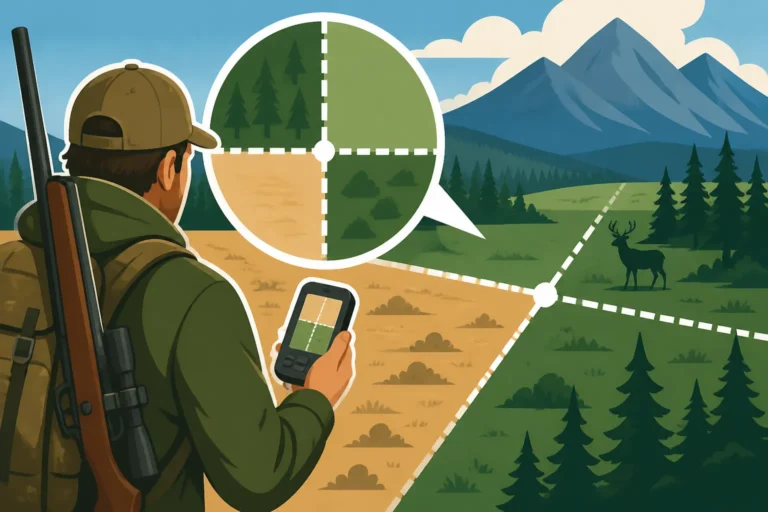
Applications like onX Hunt are invaluable. They provide detailed land ownership maps, showing you immediately whether you're standing on public land, private timber, or state property. The color-coded maps make it easy to see property boundaries, often down to individual parcel lines, which are overlaid onto topographic maps and satellite imagery. This means you can identify access points, legal routes, and avoid trespassing before you even set foot out of your truck. Using onX Hunt, you can download maps for offline use, which is critical in areas where cell service is non-existent, a common occurrence in the dense timber of Skookumchuck. It allows you to mark waypoints for gates, property lines, and game sign, giving you a clear picture of your hunting area. Another helpful resource for research and scouting is GoHunt, which can provide insights into unit statistics and draw odds, complementing your ground-level mapping. These tools are indispensable for E-Scouting Washington GMUs Before the Draw and making sure you're hunting legally and effectively.
| Access Type | Description | Considerations |
|---|---|---|
| Public Lands | State-owned land (DNR, WDFW), sometimes federal forest land. Generally open to hunting. | Check specific WDFW/DNR regulations; some areas may have special rules or closures. Often requires Discover Pass. |
| Private Timber Lands | Large tracts owned by timber companies (e.g., Weyerhaeuser, Hancock). | Often requires a permit (daily, weekly, seasonal, or specific access types). Policies vary greatly, check company sites. |
| Private Farm/Rural | Smaller parcels owned by individuals. | Requires explicit, written permission from the landowner. Trespassing is a serious issue. |
| "Feel Free to Hunt" | WDFW managed private lands where landowners allow public access under specific guidelines. | Look for WDFW signs; check online maps for designated access points and rules. |
| Hunt By Reservation | WDFW program for specific private lands requiring advance online registration for a timed hunt slot. | Limited slots, competitive. Check WDFW website for specific dates and sign-up periods. |
Hunting Strategies for Skookumchuck Timber
Once you've got your access figured out, it's time to talk strategy. Hunting in dense timber, particularly for elk and blacktail, demands a different approach than open country. Stealth, patience, and an understanding of how these animals use the cover are paramount.
Elk Hunting Tactics in Dense Timber
Roosevelt elk in the Skookumchuck are masters of the dark timber. They use it not just for cover from hunters, but also for thermal regulation and bedding. Still-hunting is often the most effective tactic here. This means moving incredibly slowly, pausing frequently, and using your eyes and ears more than your feet. Take one or two steps, then stop and scan the woods. Look for horizontal lines (an elk's back or belly) in a vertical world of trees, or the flicker of an ear. Listen for the subtle sounds of a branch breaking, a hoof crunching leaves, or the soft blowing of a wary elk.
Calling can also be effective, particularly during the early archery season. Cow calls can bring in curious bulls or cows, while a soft bugle might challenge a nearby bull. However, in dense timber, elk might not travel far to a call, so you need to be within a reasonable distance. A Two-Man Calling Setups on Elk strategy can be particularly potent, with one caller drawing attention while the shooter sets up for a shot. Later in the season, when bulls are less vocal, a quiet still-hunt through thick thermal cover, especially on north-facing slopes, can pay dividends. Focus on drainages and saddles that connect feeding areas to bedding areas.
Blacktail Deer in Reprod and Clearings
Blacktail deer in Skookumchuck are legendary for their ability to vanish into seemingly sparse cover. Hunting them effectively means accepting that you're often going to be hunting in close quarters, relying on keen observation and a slow, methodical approach. Still-Hunting Blacktails in Wet Washington Brush is a highly effective tactic. Move with the wind or a crosswind, constantly stopping and scanning. Look for patches of sunlight in clearcuts or the edges of dense reprod where deer might be browsing.
Focus your efforts on areas where clearcuts meet mature timber, or where dense reprod provides both food and security. Blacktails will often bed in the thickest brush, only moving a short distance to feed. Look for fresh tracks, droppings, and rubbed trees, especially during the rut. In clearcuts, understanding Reading Clearcuts and Reprod for Blacktail Bucks is crucial, as the age and density of the new growth dictate how deer use them. Very young reprod (1-5 years) provides good forage but little cover, while older, denser reprod (5-15 years) offers both.
Equipment Considerations for Wet and Steep Terrain
The Skookumchuck's terrain and climate demand specific gear choices. Neglecting your equipment can quickly turn a challenging hunt into a miserable one.
First and foremost, invest in quality rain gear. This isn't just about staying comfortable; it's about staying safe and focused. Western Washington rain can be relentless, and getting soaked to the bone can lead to hypothermia even in mild temperatures. Look for quiet, durable waterproof-breathable fabrics that can withstand pushing through brush. Layering underneath is key to managing your body temperature as you move and stop. If you want to dive deeper into this, check out Rain Gear and Layering for Washington Hunts.
Your footwear is equally critical. You'll be traversing slippery, uneven terrain, wet logs, and mud. Waterproof, supportive boots with excellent traction are non-negotiable. Many hunters prefer a stiffer boot for side-hilling and carrying heavy loads. Boots for Washington's Eastside Rock and Westside Mud offers general advice, but for Skookumchuck, prioritize waterproofing and grip for the westside mud and slick conditions. A good backpack, capable of comfortably carrying your day's essentials and potentially an animal quarter, is also vital.
Finally, navigation equipment is paramount. As discussed, a reliable GPS unit or a smartphone with onX Hunt maps downloaded for offline use is essential. Cell service is spotty at best, so don't count on it. A headlamp with spare batteries, a first-aid kit, and enough water and high-energy snacks complete your essential gear list for a safe and effective hunt in the Skookumchuck timber.
Seasonal Considerations and Challenges
Hunting in the Skookumchuck isn't a static experience; it changes with the seasons, bringing new opportunities and new challenges. Understanding these shifts is crucial for planning a successful hunt.
Early Season Opportunities and Warm Weather Concerns
The early archery seasons, typically in September, offer some incredible opportunities for elk hunters in the Skookumchuck. Bulls are often still bugling, making them more responsive to calls. The weather can be milder, though it's still western Washington, so rain is always a possibility. Blacktail bucks are also more visible before the intense hunting pressure pushes them deeper into cover.
However, early season warmth also brings significant challenges, particularly concerning meat care. A warm day, even in September, can quickly spoil meat if not handled properly. You need a plan to get your animal field dressed, quartered, and cooled as rapidly as possible. This might mean extra trips, carrying larger game bags, or having coolers packed with ice waiting at the trailhead. Learning Field Dressing in Warm Early-Season Weather is not just good practice, it's essential for salvaging your hard-earned harvest. Additionally, early season means more foliage, which can make spotting animals even harder in the already dense timber.
Late Season Hunting and Winter Range
As the calendar turns to late fall and early winter, hunting the Skookumchuck transforms. Modern firearm seasons often fall during this period, and while hunting pressure can be higher, the cooler temperatures offer better conditions for meat preservation. However, weather becomes a much more significant factor. Rain can be constant, and higher elevations might see early snowfalls. These conditions can push animals down to lower elevations, concentrating them in certain areas, but they can also make access more difficult as logging roads become muddy or snow-covered.
Late season hunts require an even greater emphasis on staying warm and dry. Hypothermia risk increases dramatically if you're not properly prepared. Beyond the personal comfort factor, hunters must also be aware of winter range closures. As snow depths increase, certain areas may be closed by WDFW to protect wintering deer and elk from disturbance during a critical period of their annual cycle. Always check the current WDFW regulations and unit maps for any specific seasonal or emergency closures before heading out on a late-season hunt in the Skookumchuck.
Disclaimer
This article is for general informational purposes only and does not constitute professional advice. Laws, prices and regulations vary by location and change over time. Consult a qualified professional for guidance on your specific situation.