Sabot Versus Conical Projectiles
Alright, let's talk muzzleloaders! If you've ever stood in the sporting goods aisle, staring at the dizzying array of muzzleloader projectiles, you know the feeling. It's a critical decision that can seriously impact your hunt, and understanding the difference between sabots and conical projectiles isn't just about bullet design—it's about accuracy, terminal performance, and even what's legal for your Washington hunt. This guide is going to break down everything you need to know to make an informed choice for your next black powder adventure.
Understanding the Basics: Sabots and Conical Projectiles
When it comes to muzzleloading, the projectile you load is half the battle. Historically, it was all about lead, but modern advancements have given us more options. Knowing the fundamental differences between sabots and conicals is the first step to figuring out what will perform best in your rifle and for your hunt.
What is a Sabot Projectile?
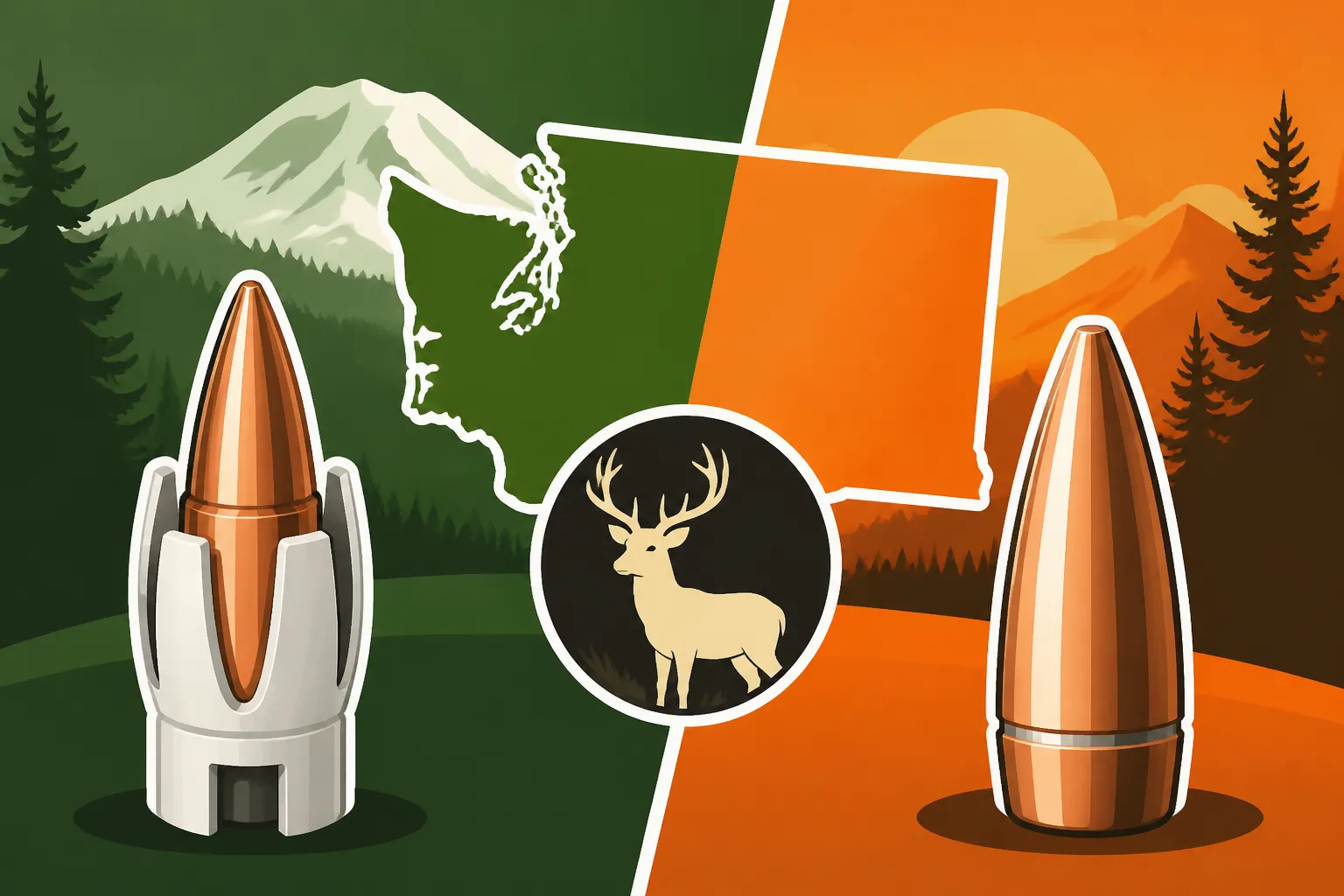
Imagine a sleek, modern rifle bullet, but one that’s too small for your muzzleloader’s bore. How do you get it to seal the rifling and build pressure? That's where the sabot comes in. A sabot (pronounced SAY-bow) is a plastic sleeve, or cup, that cradles a smaller-diameter bullet. For instance, in a .50 caliber muzzleloader, you might be shooting a .45 caliber bullet encased in a plastic sabot. When you fire, the sabot engages the rifling, imparting spin to the bullet. Once the projectile leaves the muzzle, the plastic sabot separates and falls away, allowing the bullet to continue on its trajectory.
These systems are incredibly popular because they allow muzzleloader hunters to utilize the superior ballistic performance and terminal characteristics of modern rifle bullets. You get better aerodynamics, often a flatter trajectory, and typically more reliable expansion on impact than traditional lead balls or conicals. This can be a huge advantage when you're looking to stretch your effective range, or if you simply prefer the consistent performance of a jacketed bullet. Just remember, these plastic sabots need to be matched correctly to your bore for optimal accuracy, and they can sometimes be a bit fussier to load in a dirty barrel.
What is a Conical Projectile?
Now, let's go old school – or at least, older school. A conical projectile is essentially a bullet that is the full diameter of your muzzleloader's bore. If you're shooting a .50 caliber muzzleloader, you're loading a .50 caliber lead bullet. There's no plastic sabot here; the soft lead of the conical itself engages the rifling, creating the necessary seal and spin. These projectiles are often made of pure lead, or a soft lead alloy, and come in various shapes and weights, from "minie balls" with hollow bases to solid, heavy slugs.
Conical projectiles have a long, storied history in muzzleloading. They’re generally heavier than sabot-encased bullets, which means they tend to carry a lot of momentum and hit with substantial force at closer ranges. Their large diameter and soft lead composition can create a devastating wound channel through hydrostatic shock and blunt trauma, even if they don't always expand dramatically. For hunters who appreciate the tradition of muzzleloading, or those who hunt in dense timber where shots are typically close, a heavy conical can be an excellent choice. They can also be easier to load if your bore is a little rough or if you're not meticulous about cleaning between shots, as the soft lead is more forgiving.
Performance on the Range and in the Field
The choice between a sabot and a conical isn't just about what fits your rifle; it’s about how that projectile performs when it matters most – on the range and, more importantly, in the field. Every hunter wants accuracy and effective terminal performance, but the path to achieving those can vary significantly depending on your projectile.
Accuracy and Ballistics
When we talk about accuracy, it's not a simple "sabots are more accurate" or "conicals are more accurate" statement. It's more nuanced than that. Generally speaking, sabots, because they carry modern rifle bullets, often offer superior external ballistics. These bullets are designed for aerodynamic efficiency, which usually translates to a flatter trajectory and better accuracy at longer distances. If your Washington hunt takes you to eastern Washington's open country, where shots on mule deer might stretch, a sabot could be your friend. The lighter, faster bullet minimizes drop and drift, making those longer shots more manageable, especially if your muzzleloader is topped with a legal optic. For example, if you're trying to reach out to 150 yards, a sabot might give you a tighter group and less guesswork. Check out Muzzleloader Accuracy at 100 Yards for more on optimizing your precision.
However, conicals can be incredibly accurate, especially at typical muzzleloader ranges of 100 yards or less. The key is finding a conical that perfectly matches your rifle's bore and twist rate. A heavy, slow-moving conical can be exceptionally stable out to reasonable distances, providing excellent precision. The "thump" of a well-placed conical is undeniable. Many traditional muzzleloader hunters swear by their accuracy for close-range timber hunting scenarios, like still-hunting blacktails in dense western Washington brush. It really boils down to finding what your specific rifle "likes" and then practicing, practicing, practicing. The loading process itself can also affect accuracy, and a consistent routine is paramount, especially when you're dealing with the variables of powder, patch, and projectile.
Terminal Performance and Energy Transfer
This is where the rubber meets the road—or rather, where the bullet meets the game. Terminal performance refers to how the projectile behaves upon impact with the animal. With sabots, you're often getting the benefit of advanced bullet design. Many sabot manufacturers load jacketed bullets, like those from Hornady or Barnes, which are engineered for controlled expansion. This means they're designed to mushroom out to a larger diameter, creating a wider wound channel, while still retaining a good portion of their weight for deep penetration. For a tough animal like a Washington elk, especially in dense timber where quick incapacitation is vital, this reliable expansion can be a significant advantage. The energy is transferred efficiently, disrupting vitals and bringing the animal down cleanly.
Conical projectiles, being typically made of soft lead, transfer energy through sheer mass and impact force. They often don't expand as dramatically as jacketed sabot bullets, but they make up for it with their weight and large diameter. A heavy conical will plow through tissue and bone, creating a significant hole. Think of it less as a delicate surgical strike and more as a powerful punch. While some conicals do deform and expand, their primary mechanism is often deep penetration and massive tissue disruption from their initial size. This can be devastating on game, particularly if you hit heavy bone. For those pursuing large animals like Roosevelt elk in thick cover, the deep penetration of a heavy conical is highly valued. It’s a different kind of knockdown power, one that’s been proven for centuries.
Navigating Washington's Muzzleloader Regulations
Understanding Washington's specific rules for muzzleloaders isn't just a good idea; it's absolutely essential. The regulations directly influence what kind of projectiles you can legally use and, by extension, how you approach your hunt. Ignoring these details could land you in hot water, so let's make sure you're on the right side of the law.
Washington's Caliber and Scope Rules
Washington has clear stipulations for muzzleloader equipment, and they directly impact your choice of projectile. For big game like deer and elk, you're generally looking at a minimum caliber of .45. This means your saboted bullet or conical projectile must be at least .45 caliber. While most modern muzzleloaders are .50 caliber, it's still crucial to confirm your specific projectile meets the minimum. More critically, Washington has distinct rules regarding optics. For general muzzleloader seasons, scopes are often restricted or entirely prohibited; many units require "iron sights" or "open sights." This is a huge factor. If you can't use a magnified optic, your effective range is naturally reduced, which might lead you to rethink whether a super-aerodynamic sabot is truly beneficial over a heavier, shorter-range conical. These regulations are designed to maintain the traditional challenge of muzzleloading, and it's something every hunter needs to consider. You can delve deeper into the exact specifics by checking out Washington's Muzzleloader Equipment Rules.
Imagine you're hunting the Colockum Elk Herd during a muzzleloader-only season. If that particular GMU has an open sight restriction, that 200-yard shot with a sabot you might have taken with a scope is now likely out of play. You're probably looking at ethical shots within 75-100 yards, maximum. In such a scenario, the flatter trajectory of a sabot becomes less critical, and the heavy-hitting power of a conical, which might be more forgiving in terms of bore fit and quick loading for subsequent shots, might be a more practical choice. Always, always consult the current Washington big game regulations pamphlet or use a trusted resource like GoHunt to confirm the rules for your specific season and GMU before you head out. Don't let a technicality ruin your hunt or put you in a tough spot with wildlife enforcement.
Impact on Projectile Selection
Given Washington's regulations, particularly the restrictions on optics in many muzzleloader seasons, your projectile choice often becomes a tactical decision. If you're limited to open sights, precision at extreme ranges is less of a concern than reliable accuracy and knockdown power at shorter distances. In these scenarios, many hunters gravitate towards heavier conical projectiles. A large, heavy lead conical creates a massive wound channel, which is exactly what you want when your aiming precision is limited by iron sights and your shot opportunities might be close and fast in dense cover. The inherent stability and deep penetration of a conical can be very reassuring when you’re facing a big animal like a bull elk at 60 yards.
On the flip side, some special permit hunts or specific general seasons do allow scopes on muzzleloaders. If you've drawn a permit that allows a scoped muzzleloader, the playing field changes. In this situation, the ballistic advantages of a sabot become much more appealing. A flatter-shooting sabot could extend your ethical range, making shots at 150 yards or even a bit further more feasible and confident, assuming you've put in the range time. This flexibility can be a game-changer if you’re hunting in more open terrain, like some of Washington's eastern plains or clearcuts. Always check the specific rules for your tag, whether it's a general season tag or a special permit. Don't just assume; confirm. A solid resource like GoHunt can help clarify these nuances as you plan your hunt and choose your gear, ensuring you're compliant with every rule, down to your choice of projectile.
Making Your Choice: When to Pick Which
Deciding between a sabot and a conical isn't about one being inherently "better." It's about what's better for your specific rifle, your hunting conditions, and your personal preferences. Both have their strengths, and understanding these can guide you to the right choice for your Washington hunting adventure.
Hunting Scenarios Favoring Sabots
If your hunting takes you to more open country, like the vast sagebrush flats of eastern Washington where you're glassing for mule deer, sabots often shine. Their aerodynamic design and lighter, faster bullets lead to a flatter trajectory. This means less bullet drop over longer distances, simplifying your aiming solution and potentially extending your ethical range—especially if your chosen hunt allows for a magnified optic on your muzzleloader. Shots on those big bucks in the Okanogan Unit Mule Deer Country can sometimes be stretched, and a sabot can help bridge that distance.
Consider a scenario where you've e-scouted a Washington GMU from home using a platform like GoHunt, and you've identified a promising area with long draws and scattered timber. If the regulations permit a scoped muzzleloader, a sabot offers you the ability to confidently take a shot at an animal that might be a bit further out. Furthermore, many sabots use modern jacketed bullets with controlled expansion, ensuring reliable terminal performance even at higher velocities. This is crucial for a clean kill, as these bullets are designed to mushroom consistently, creating a wide wound channel while retaining enough mass for deep penetration. If you're after a clean, ethical kill and your hunting grounds offer those longer shot opportunities, a sabot is definitely worth considering.
Hunting Scenarios Favoring Conicals
For those who hunt in Washington's dense, dark timber, especially on the west side for Roosevelt elk, conicals often become the projectile of choice. In these environments, shots are typically close – often under 75 yards – and quick decisions are paramount. The sheer weight and momentum of a full-bore lead conical translate to immense knockdown power, which is exactly what you want when a bull steps out at spitting distance in the Coweeman Unit Timber Roads. You're not looking for extreme long-range accuracy here; you're looking for an immediate, bone-crushing impact.
Many muzzleloader seasons, especially those with open sight restrictions, naturally favor the heavy-hitting nature of conicals. Their larger diameter creates a substantial wound channel, and their deep penetration can be invaluable if you hit a shoulder or other heavy bone. For hunters who value tradition, or simply prefer the simplicity of loading a soft lead projectile, conicals offer a classic and effective solution. They can also be a bit more forgiving to load in a barrel that isn't perfectly clean between shots, which can be a real consideration if you're out in the backcountry without an easy way to scrub your bore meticulously. Plus, if you're trying to figure out Muzzleloader Loading and Ignition in Rain, the robust nature of conicals might be less susceptible to finicky loading issues than some sabot designs.
Testing and Practice
No matter which projectile you lean towards, the most crucial step is testing it in your specific muzzleloader. Every rifle is an individual, and what shoots well in one might be mediocre in another. You absolutely need to spend time at the range, trying different powder charges and projectile types until you find the combination that delivers consistent accuracy. This isn't just about punching paper; it's about understanding your rifle's capabilities and your own limitations. Whether you're sighting in before the opener or practicing offhand and kneeling shots, consistency is key.
Start by acquiring a few different brands and weights of both sabots and conicals. Use a consistent powder charge, or vary it slightly within safe limits, and shoot several groups. Pay attention to how easy they are to load, how consistent your groups are, and what feels right for you. Don't forget to practice in conditions similar to what you'll encounter hunting—if you're planning a late-season hunt in Washington Snow, practice with cold hands and wearing your heavy hunting gear. Only through rigorous testing and practice will you develop the confidence needed to make an ethical shot in the field. Remember, the best projectile is the one you can shoot most accurately and consistently under hunting pressure.
| Feature | Sabot Projectiles | Conical Projectiles |
|---|---|---|
| Description | Smaller rifle bullet cradled in plastic sleeve | Full-bore diameter lead bullet |
| Typical Calibers | .40, .44, .45 in a .50 cal. muzzleloader | .50, .54, etc. (matches bore) |
| Ballistics | Often flatter trajectory, higher velocity | Heavier, slower, more parabolic trajectory |
| Accuracy | Excellent at longer range with good bullet design | Excellent at shorter range with proper bore match |
| Terminal Performance | Controlled expansion, deep penetration | Deep penetration, large wound channel by mass |
| Loading Ease | Can be tight, sensitive to bore fouling | Often easier, more forgiving in a dirty bore |
| Washington Suitability | Good for open country, scoped hunts (if legal) | Excellent for dense timber, open-sight seasons |
| Cost | Generally higher per projectile | Often more affordable per projectile |
Choosing the right projectile is a critical part of your muzzleloading setup. Take the time to research, test, and practice, and you'll be well-prepared for whatever Washington's diverse hunting landscape throws your way. Good luck out there!
Disclaimer
This article is for general informational purposes only and does not constitute professional advice. Laws, prices and regulations vary by location and change over time. Consult a qualified professional for guidance on your specific situation.