Sleeping Bag Temperature Ratings
There’s nothing quite as miserable as shivering through a sleepless night in your sleeping bag when you’re out hunting in Washington. You picked a bag with a "20-degree rating," but when the thermometer dipped to 30, you felt every bit of that chill right down to your bones. This guide is here to demystify sleeping bag temperature ratings, help you understand what those numbers really mean, and equip you to choose a sleep system that truly keeps you warm and comfortable in Washington’s wildly diverse hunting conditions, from wet coastal rainforests to freezing eastern breaks.
The Basics of Sleeping Bag Temperature Ratings
It's a common misconception, isn't it? You see a sleeping bag labeled "20°F" and think, "Great! I'll be toasty down to twenty degrees." Then you're lying there, teeth chattering, wondering if the bag's manufacturer even knows what a twenty-degree night feels like. The truth is, that single number is rarely a straightforward promise of warmth. Many budget or older bags might list a "survival" rating, meaning you won't literally freeze to death, but you certainly won't be getting any quality rest. It’s a marketing number more often than a practical one, and understanding this is the first step to avoiding a miserable night in the backcountry.
Why Your Bag's "Rating" Might Lie to You
Let's face it, marketing can be a powerful thing, and nowhere is it more confusing than with sleeping bag temperature ratings. For years, manufacturers had no standard, so a "20-degree bag" from one company might be closer to a "30-degree bag" from another, or even a "survival at 0 degrees, but you'll feel awful at 20" kind of bag. This lack of consistency left countless hunters like us out in the cold, quite literally. You'd shell out good money, trust the label, and then find yourself bundling up in every spare piece of clothing just to tolerate the night. It's frustrating to plan a hunt, dial in your gear, and then discover your most important piece of camp comfort is a dud when the temperature drops unexpectedly in a Cascades high country camp.
The underlying issue is that "temperature rating" isn't a simple, objective measure like the length of a fishing rod or the caliber of a rifle. It's heavily influenced by how you sleep, what you wear, the conditions of your camp, and even your own metabolism. A warm sleeper might be fine in a bag rated for 20 degrees, while a cold sleeper could be miserable at 35 degrees in the exact same bag. Without standardized testing, it was a total guessing game, often leading to overpacking heavy gear "just in case" or, worse, underpacking and enduring bone-chilling nights. This is precisely why more regulated standards eventually emerged, trying to bring some order to the chaos.
Down Versus Synthetic: Insulation Types and Their Performance
When it comes to the guts of your sleeping bag – the insulation – you're generally looking at two main contenders: down or synthetic. Each has its own distinct personality, especially when you're dealing with Washington's infamous wet weather or dry, crisp cold.
Down, typically from ducks or geese, is famous for its incredible warmth-to-weight ratio and compressibility. A down bag packs down tiny, making it a favorite for ultralight backpack hunters trekking deep into the Pasayten Wilderness. Its "fill power" number, like 800-fill or 900-fill, indicates its loft and quality – higher numbers mean more warmth for less weight. The catch with down, and it's a big one for us in Washington, is its Achilles' heel: moisture. Get a traditional down bag wet, and it loses most of its insulating properties, clumping up into a soggy, useless mess. Modern advancements include hydrophobic down, which is treated to resist water, but it's still not completely waterproof.
Synthetic insulation, on the other hand, is a collection of polyester fibers designed to mimic down. While it's generally heavier and bulkier than down for the same warmth, its superpower lies in its performance when wet. Synthetic bags retain a significant portion of their insulating ability even if damp, which is a huge comfort when you're spike camping in the Olympic National Forest during a persistent drizzle. They also tend to be less expensive and hypoallergenic. The downside is that they don't compress quite as well, and over time, the fibers can break down, leading to a loss of loft and warmth faster than a well-maintained down bag. When you're planning a trip, consider the Rain Gear and Layering for Washington Hunts you'll be using, as that can directly impact your bag choice.
| Feature | Down Insulation | Synthetic Insulation |
|---|---|---|
| Warmth-to-Weight | Excellent (Higher fill power = better) | Good (Generally heavier for same warmth) |
| Compressibility | Excellent (Packs down very small) | Fair (Bulkier than down) |
| Wet Performance | Poor (Loses insulating value when wet) | Good (Retains warmth even when damp) |
| Cost | Higher | Lower |
| Durability | Very good (Can last decades if cared for) | Good (Fibers break down over time, losing loft) |
| Maintenance | Requires careful washing and drying | Easier to wash and dry |
| Hypoallergenic | Not always | Generally yes |
| Best Use Case | Dry, cold conditions; ultralight backpacking | Wet, humid conditions; budget-conscious; heavy use |
Understanding EN/ISO Standards: More Than Just a Number
Thankfully, the confusion around sleeping bag ratings began to clear up with the introduction of standardized testing. The European Norm (EN) 13537 standard, and its successor, the International Organization for Standardization (ISO) 23537, provide a much more reliable way to compare sleeping bags. When a bag has an EN or ISO rating, it means it's been tested in a lab using a thermal mannequin with sensors, dressed in a base layer, and placed inside the bag on a standardized insulated mat. This process removes much of the guesswork and marketing hype, giving us actual, comparable data. If you're researching gear on platforms like GoHunt, you'll often see these ratings listed, and knowing what they mean is crucial for making an informed decision.
Comfort, Limit, and Extreme: The Three Key Ratings Explained
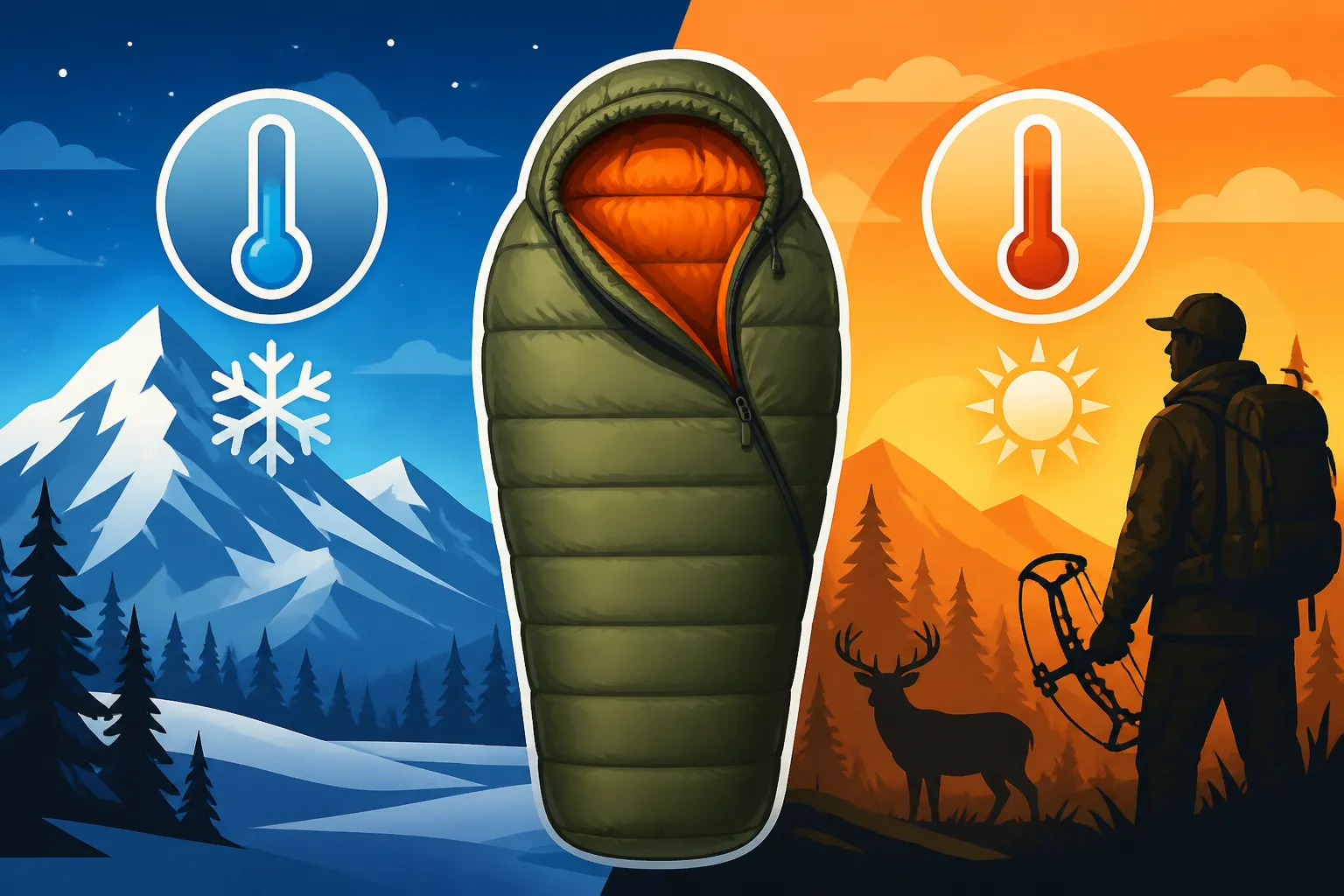
When you look at an EN or ISO rated sleeping bag, you'll typically see three distinct temperature ratings, not just one. These ratings are designed to give you a more nuanced understanding of the bag's performance for different types of sleepers and situations:
-
Comfort Rating (T Comfort): This is the temperature at which a standard woman (assumed to be a "cold sleeper") can expect to sleep comfortably in a relaxed posture. For most people, especially women, this is the most important number to pay attention to for general comfort. If you're heading out for Late-Season Hunting in Washington Snow, and the forecast is 25°F, you'd want a bag with a comfort rating at or below 25°F to ensure a good night's sleep. It's the rating that truly reflects what you'll feel like for an enjoyable night.
-
Lower Limit Rating (T Limit): This is the temperature at which a standard man (assumed to be a "warm sleeper") can expect to sleep for eight hours in a curled-up position without feeling overly cold. This rating is often what manufacturers used to slap on as their single "rating" before the standards. It implies a certain level of endurance and less comfort. If you're a warm sleeper, or you plan on supplementing your bag with significant Layering for Wet Cold Weather, you might push it to this limit, but don't expect plush warmth.
-
Extreme Rating (T Extreme): This is the lowest temperature at which a standard woman can survive for six hours without risk of death from hypothermia, but with significant risk of severe discomfort and health damage. This is a survival rating, not a comfort rating. You absolutely do not want to choose a bag based on its extreme rating for an actual hunt, unless your goal is simply to avoid immediate death in an emergency. It's a testament to the bag's absolute limit, not its functional warmth.
Understanding these three levels allows you to tailor your choice much more precisely to your personal physiology and the expected conditions. When you're packing for a remote hunt, choosing the right bag based on the comfort rating can make all the difference between a successful, rested hunt and a miserable, exhausting ordeal.
How Gender and Personal Metabolism Factor In
It's a biological fact: men and women generally experience cold differently. This isn't just an anecdotal observation; it's why the EN/ISO standards explicitly differentiate between a "standard man" and a "standard woman" for their comfort and limit ratings. Women, on average, have a lower metabolic rate and a higher surface area to mass ratio, which means they tend to get colder faster and at higher ambient temperatures. So, a bag that keeps a man comfortable at 20°F might only keep a woman comfortable at 30°F.
Beyond gender, individual metabolism plays a huge role. Some people are naturally "cold sleepers," while others are "warm sleepers." If you're someone who often feels chilly, even indoors, you're likely a cold sleeper and should err on the side of a warmer bag, choosing one with a comfort rating several degrees lower than the coldest temperature you anticipate. Conversely, if you're always kicking off the covers, you might get away with a bag whose comfort rating is closer to the expected low. Your age, fitness level, and even what you ate before bed can also influence how warm you feel. This is where personal experience, and perhaps a bit of trial and error in less critical conditions, becomes invaluable. No matter what the label says, your own body is the ultimate thermometer.
Beyond the Bag: Systematically Staying Warm in Washington
A sleeping bag, no matter how highly rated, is just one component of your overall "sleep system." Many hunters make the mistake of focusing solely on the bag's rating, only to find themselves cold because they neglected other crucial elements. Think of it like building a fire: you need good fuel, oxygen, and a spark, not just one blazing log. In the backcountry of Washington, especially during unpredictable shoulder seasons or full-on winter hunts, neglecting any part of the system can lead to a long, cold night. When planning your Backpack Camps in Washington Wilderness, you have to consider every piece of the puzzle.
The Critical Role of Your Sleeping Pad's R-Value
If your sleeping bag is your top insulation, your sleeping pad is your crucial bottom insulation. Many new hunters assume their sleeping bag does all the work, forgetting that when you lie down, your body compresses the insulation beneath you, squishing out much of its loft and, thus, its insulating power. All that cold ground beneath you then leeches your body heat away, fast. That's where your sleeping pad comes in, and its effectiveness is measured by its R-value.
The R-value quantifies a material's resistance to heat flow. The higher the R-value, the better the insulation. For summer camping, an R-value of 1-2 might suffice. For typical three-season hunting in Washington, you'll want something in the 3-5 range. If you're planning a late-season hunt in the Blue Mountains where temperatures regularly drop into the teens, or even single digits, you'll need an R-value of 5 or higher, possibly even stacking two pads for extreme cold. Neglecting your pad is like trying to heat your house with the doors wide open; no matter how good your furnace (sleeping bag) is, you'll still feel the chill from the floor. You can use resources like GoHunt to compare different sleeping pads and their R-values, ensuring you’re getting the right match for your anticipated conditions.
Layering Your Sleep System for Maximum Efficiency
Just as you layer your clothing for active hunting, you should layer for sleep. Getting into your sleeping bag completely naked is a common myth for warmth; in reality, a strategic base layer can significantly boost your comfort. Think about Layering for Wet Cold Weather—the same principles apply when you're settling in for the night.
Start with a clean, dry base layer. Merino wool or synthetic fabrics are excellent choices because they wick moisture away from your skin, preventing you from getting clammy and cold. Avoid cotton at all costs, as it absorbs sweat and then gets cold, defeating the purpose. If it's really chilly, add a mid-layer, like a lightweight fleece or a puffy jacket. You can even wear a warm hat, as a significant amount of heat escapes through your head. The key is to wear just enough to feel comfortable, but not so much that you sweat, which would then make you colder. Remember, you want your body to be slightly warm when you get into your bag so the insulation can trap that heat. Don't crawl in already shivering.
Camp Setup and Personal Factors Affecting Warmth
Beyond your gear, how and where you set up camp, along with your personal preparation, drastically affects how warm you sleep. Even with the best bag and pad, a poor camp choice can lead to a miserable night.
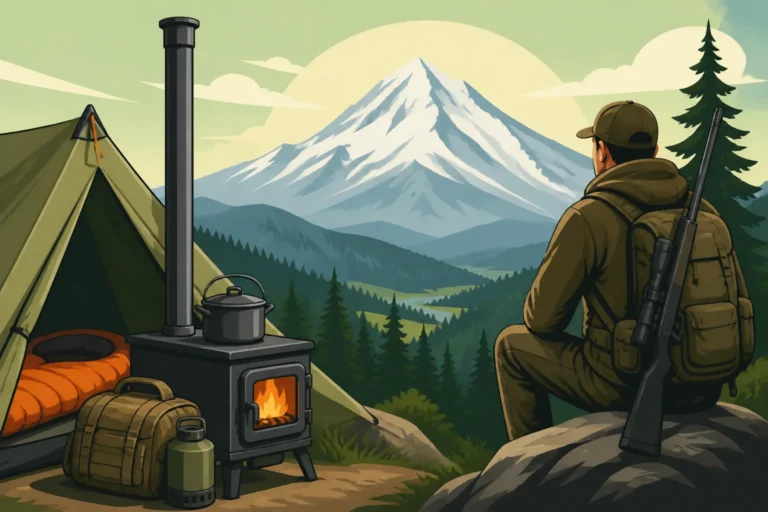
Consider the location of your Tents, Stoves and Washington Camp Gear. Are you pitched in a low-lying area where cold air settles? Is your tent directly exposed to prevailing winds? A few extra minutes spent finding a sheltered spot, perhaps behind a natural windbreak like a cluster of trees or a large rock, can make a huge difference. Inside the tent, ensure good ventilation to reduce condensation, which can dampen your gear and make you feel colder. If you're using a hot tent with a stove, make sure you understand the safety protocols.
Your personal state before crawling into the bag is also crucial. Eat a good, calorie-rich meal before bed; your body generates heat as it digests food. Hydrate adequately, but maybe don't chug a liter of water right before bed if you want to avoid midnight excursions in the cold. A light workout, like ten jumping jacks or a quick walk around camp, can warm your core right before you get in, giving your bag a head start on trapping warmth. Avoid alcohol and caffeine before bed, as they can interfere with your body's natural temperature regulation. Taking care of your body's energy needs is just as important as the gear itself.
Choosing the Right Sleeping Bag for Washington's Diverse Hunts
Washington state is a land of extremes when it comes to hunting environments. From the perpetually damp, mild rainforests of the Olympic Peninsula to the arid, freezing high deserts and mountain ranges of Eastern Washington, no single sleeping bag is going to be perfect for every scenario. What works for a September archery elk hunt in the Selkirks might leave you hypothermic during a November blacktail hunt in the Willapa Hills. Making an informed choice means considering your specific hunting grounds and the time of year. Consulting detailed hunt planning resources like those offered by GoHunt can help you anticipate the microclimates and typical temperatures of your chosen GMU.
Westside Rain, Eastside Cold: Matching Your Bag to the Environment
Hunting on the west side of the Cascades, especially in areas known for Roosevelt elk like the Coweeman or Lewis River units, means one thing: rain. And lots of it. Here, moisture is your biggest enemy when it comes to staying warm. For these conditions, a synthetic sleeping bag or one with high-quality hydrophobic down is often a wiser choice. While synthetic is heavier, its ability to retain warmth when damp is a game-changer. Imagine getting a light drizzle on your bag during a damp morning pack-up; a synthetic bag will still perform, whereas traditional down might be compromised. You might also consider a waterproof stuff sack and keeping your bag meticulously dry in your Pack Volume for a Washington Spike Camp.
Conversely, heading east of the Cascades, into mule deer country like the Okanogan or Colockum, you're more likely to encounter colder, drier conditions, often with significant temperature swings from day to night. Here, the superior warmth-to-weight and compressibility of high-fill-power down truly shines. A properly cared-for down bag will keep you incredibly warm in the crisp, dry air, and it's invaluable when you're Packing an Elk Out of Washington's Backcountry and every ounce counts. The risk of widespread saturation is lower, making down a comfortable and efficient choice. However, even on the east side, unexpected snow or a leaky tent can introduce moisture, so good tent hygiene and a dry bag for your sleeping bag are still paramount.
Weight, Packability, and Durability Considerations
When you’re a hunter, especially a backpack hunter, every ounce in your pack matters. The weight and how small your sleeping bag compresses (its packability) are crucial factors that directly impact your energy levels and how far you can comfortably travel.
Weight: Lighter bags often come with a higher price tag, as they use premium materials like high-fill-power down, ultralight shell fabrics, and efficient designs. A two-pound, 20-degree down bag might cost significantly more than a four-pound synthetic bag of the same rating, but those two pounds saved on a multi-day hunt through steep terrain can feel like twenty. If you're routinely hiking miles into wilderness areas like the Wenaha-Tucannon, investing in a lightweight bag is a wise decision.
Packability: How small your bag stuffs down is equally important. A bulky bag can take up half your pack volume, leaving less space for food, water, and other essentials. Down bags generally excel here, compressing into incredibly small sacks. Synthetic bags, while improving, still tend to be bulkier. Consider the dimensions of your pack and the other gear you need to carry. An overstuffed pack is uncomfortable and can restrict movement, which is the last thing you want when navigating dense Washington timber.
Durability: Hunters are rough on gear. Your sleeping bag will be stuffed, unstuffed, dragged in and out of tents, laid on rough ground, and potentially exposed to embers or sharp objects. Down bags with ultralight fabrics can be delicate and require more care to avoid rips and feather leaks. Synthetic bags, often made with more robust fabrics, can sometimes handle more abuse. Think about your hunting style. Are you a meticulous gear caretaker, or do you tend to be harder on your equipment? Balance durability with weight and packability based on your personal habits and the demands of your Backcountry Camps in Washington Wilderness.
Specific Bag Recommendations for Different Washington Seasons
Choosing the right sleeping bag for Washington’s varied hunting seasons means anticipating not just the temperature, but also the potential for rain, snow, and unexpected cold snaps.
For early archery season (September) in the high country or general seasons in moderate elevations, where nights might dip into the 30s but can be warmer, a good 20-30°F rated bag (Comfort rating) is usually sufficient. A lightweight down bag is ideal for dry eastern mountain hunts, offering excellent warmth-to-weight. For the west side, a hydrophobic down or quality synthetic bag in this range provides peace of mind against the ever-present threat of drizzle. You want something versatile enough for varied conditions, especially if you have a Washington Multi-Season Tags and Three Chances and plan to use it across different conditions.
As you move into late-season hunts (October/November), particularly for rifle seasons when temperatures plummet and snow becomes a real possibility, you'll need something much warmer. A 0-15°F rated bag (Comfort rating) becomes essential. This is where a high-fill-power down bag, especially if you're east of the Cascades, truly shines. For the wet west side, a robust synthetic bag or a very well-protected hydrophobic down bag is crucial. Remember that your Boots for Washington's Eastside Rock and Westside Mud and Rain Gear and Layering for Washington Hunts need to be equally suited to the extreme conditions.
For extreme cold or high-elevation late-season ventures, think about specialized mountaineering-grade bags. These might be rated -10°F or even lower (Comfort rating), and they're often insulated with very high-fill-power down. They are heavy investments but invaluable if you plan to push the limits of Washington's hunting calendar and hunt areas known for brutal winter weather. Always remember, it’s better to be a little too warm and unzip your bag than to be dangerously cold and unable to warm up. Your life and your hunt success depend on a good night's rest, especially when you consider the potential for Hypothermia Risk on a Wet Hunt.
Disclaimer
This article is for general informational purposes only and does not constitute professional advice. Laws, prices and regulations vary by location and change over time. Consult a qualified professional for guidance on your specific situation.