Archery Practice for Wet Coastal Conditions
Washington's coastal archery hunting presents a unique set of challenges that can make even the most seasoned bowhunter question their sanity. The relentless rain, swirling fog, and ever-present dampness don't just soak your gear; they mess with your mindset, your shooting mechanics, and the overall performance of your equipment. It's frustrating to put in countless hours at the range in perfect conditions, only to have a sudden downpour on opening day turn your confident shot into a shaky guess. This guide is all about helping you overcome those specific frustrations by detailing effective archery practice strategies tailored for Washington's notoriously wet coastal conditions, ensuring you're truly prepared when it matters most.
Understanding the Unique Challenges of Washington's Wet Coast
Hunting on Washington's coast isn't like hunting anywhere else. The weather here dictates everything, especially for archery hunters. It’s not just about getting wet; it's about the pervasive dampness that seeps into every fiber of your clothing and every component of your gear, altering how everything performs. You need to acknowledge these specific environmental factors to truly prepare.
The Relentless Drizzle and Downpours
Anyone who's spent time west of the Cascades knows the kind of rain we're talking about. It's not always a torrential downpour, but often a persistent, soul-sapping drizzle that can last for days. This constant moisture saturation is a major problem for archers. First off, it makes everything slick – your bow grip, the ground underfoot, even your release aid can feel different. Your shooting form, which feels so natural on a dry range, can quickly break down when your hands are cold and wet.
Beyond the immediate discomfort, the relentless moisture can affect your bowstring. A wet string can stretch ever so slightly, changing your tune and potentially impacting arrow flight. Peep sights can fill with water, obscuring your vision at a crucial moment. Arrows, too, can get heavier as water adheres to their fletchings, and if left unchecked, can lead to fletching separation. It's not just about the shot itself; it's about the cumulative effect of constant dampness on every part of your setup, which is why practicing in the rain is so crucial.
Humidity and Temperature Swings
High humidity is another silent killer for archery gear on the Washington coast. Even when it's not actively raining, the air is often thick with moisture. This can cause components to swell or contract subtly, affecting tolerances and potentially leading to minor alignment issues in your bow. String waxes can become gummy, and cam bearings might not turn as smoothly. Wooden risers, while less common today, would be particularly susceptible to warpage in such conditions.
Temperature swings, especially during fall seasons, add another layer of complexity. A crisp morning can turn into a warm, humid afternoon, only to drop back into freezing temperatures overnight. These fluctuations cause materials to expand and contract, which can stress glues, coatings, and even the structural integrity of arrows. For a bowhunter, this means your carefully sighted-in pins might not be precisely accurate if your equipment has been subjected to significant temperature shifts. It’s a subtle shift, but in archery, subtle shifts often mean missed opportunities. This makes proper maintenance and understanding your specific equipment's resilience incredibly important.
Limited Visibility and Muddy Terrain
Beyond the direct impact on your gear, coastal conditions severely affect the hunting environment itself. Fog, mist, and heavy rain drastically reduce visibility, making it harder to spot game, judge distances, and pick clear shooting lanes. You might only get a small window to make a shot, and that window could be through a curtain of rain or fog. This is where your ability to make quick, confident decisions under pressure truly counts.
The terrain becomes a treacherous mess of slick moss, muddy slopes, and slippery roots. Navigating these conditions quietly and safely is a skill in itself. Trying to maintain a steady shooting platform on uneven, muddy ground while soaked to the bone is a real test of balance and core strength. This isn't just about shooting; it's about the entire stalk, the approach, and being able to maintain your composure when everything around you seems to conspire against a clean shot. Developing strong footwork and balance, as we'll discuss, is as critical as your shooting form.
Protecting Your Archery Gear from the Elements
The first line of defense against Washington's notorious wet weather is proper gear protection. Your bow and arrows are precision instruments, and they deserve meticulous care, especially when subjected to the harsh realities of the rainforest-like conditions found on the coast. Neglecting this crucial step can lead to costly repairs, inconsistent performance, or worse – a missed shot on the bull of a lifetime.
Bow and String Maintenance in Wet Weather
Your bowstring is the heart of your archery system, and it's highly susceptible to moisture. A wet string loses some of its kinetic energy transfer efficiency, can stretch, and can even fray prematurely. To combat this, invest in a good quality string wax that offers superior water repellency. Apply it generously and frequently, working it into the fibers to create a protective barrier. Make sure you get all the way into the servings, where moisture often likes to wick in. When you're out in the field, it's a good habit to wipe down your string regularly and re-wax if it feels dry or fuzzy. If you're serious about your bow's longevity, consider a string and cable set made from materials known for their stability in varying conditions.
Beyond the string, the rest of your bow needs attention. A good bow case is non-negotiable for transport and storage, but in the field, you'll want to protect it from direct downpours when not actively shooting. Many hunters use a simple bow sock or a waterproof cover. Pay close attention to cams and axles; moisture can lead to rust or corrosion in bearings and screws. After a wet practice session or hunt, never just throw your bow back in its case. Wipe it down thoroughly with a dry cloth, paying special attention to metal parts. If you're wondering about the best options for your rig, check out our guide on Keeping a Bowstring Dry on the Washington Coast.
Arrow and Broadhead Care
Your arrows are your projectiles, and their integrity is paramount for accuracy. Wet fletchings are a common problem; water can cause them to become matted, affecting arrow flight, or worse, lead to separation from the shaft. Using a fletching glue that can withstand moisture is key, and some hunters even apply a thin coat of fletching sealant for added protection. Carbon arrows are generally more water-resistant than aluminum, but regardless of material, always inspect them for dings, cracks, or loose components after a wet outing.
Broadheads, being sharp metal, are prime candidates for rust, especially mechanical broadheads with small moving parts. After any exposure to moisture, remove your broadheads, clean them thoroughly, and apply a light coat of rust-preventative oil or wax. Store them in a dedicated broadhead box to prevent dulling or accidental injury. For fixed-blade broadheads, ensure the blades are always razor-sharp. Consider the Broadhead Width Rules in Washington when selecting your preferred models. A dull broadhead, even if perfectly tuned, dramatically reduces penetration, a critical factor when hunting large game like elk, especially if their hide is wet and matted.
Optics and Accessory Protection
Archery doesn't just involve the bow and arrow; it includes crucial accessories like rangefinders, sights, and releases. These items are often electronic or have delicate mechanisms that are easily compromised by water. Your rangefinder, for instance, needs to be truly waterproof, not just "water-resistant." Invest in a quality rangefinder and keep it in a protective case or a waterproof pouch when not in use. After a wet day, ensure it's completely dry before storing it away.
Sights, especially those with fiber optics or electronic pins, require careful attention. Wipe down lenses and ensure all adjustments move freely. A small amount of moisture can fog lenses or even corrode battery contacts. Your release aid, arguably one of the most personal pieces of equipment, also needs to be kept dry. A sticky or corroded release can lead to inconsistent shots or worse, a misfire. Many hunters keep their release tucked inside their jacket or in a dedicated dry pouch. Consider carrying a few silica gel packets with your accessories to absorb any lingering moisture, especially when camping in damp conditions.
Adapting Your Practice Routine for Wet Conditions
It's one thing to have your gear protected, but it's another entirely to perform effectively in wet, cold conditions. If you only practice on sunny days, you're setting yourself up for failure when the weather inevitably turns foul on your Washington hunt. True preparedness means deliberately introducing these challenges into your practice routine.
Shooting in the Rain: Embracing the Inevitable
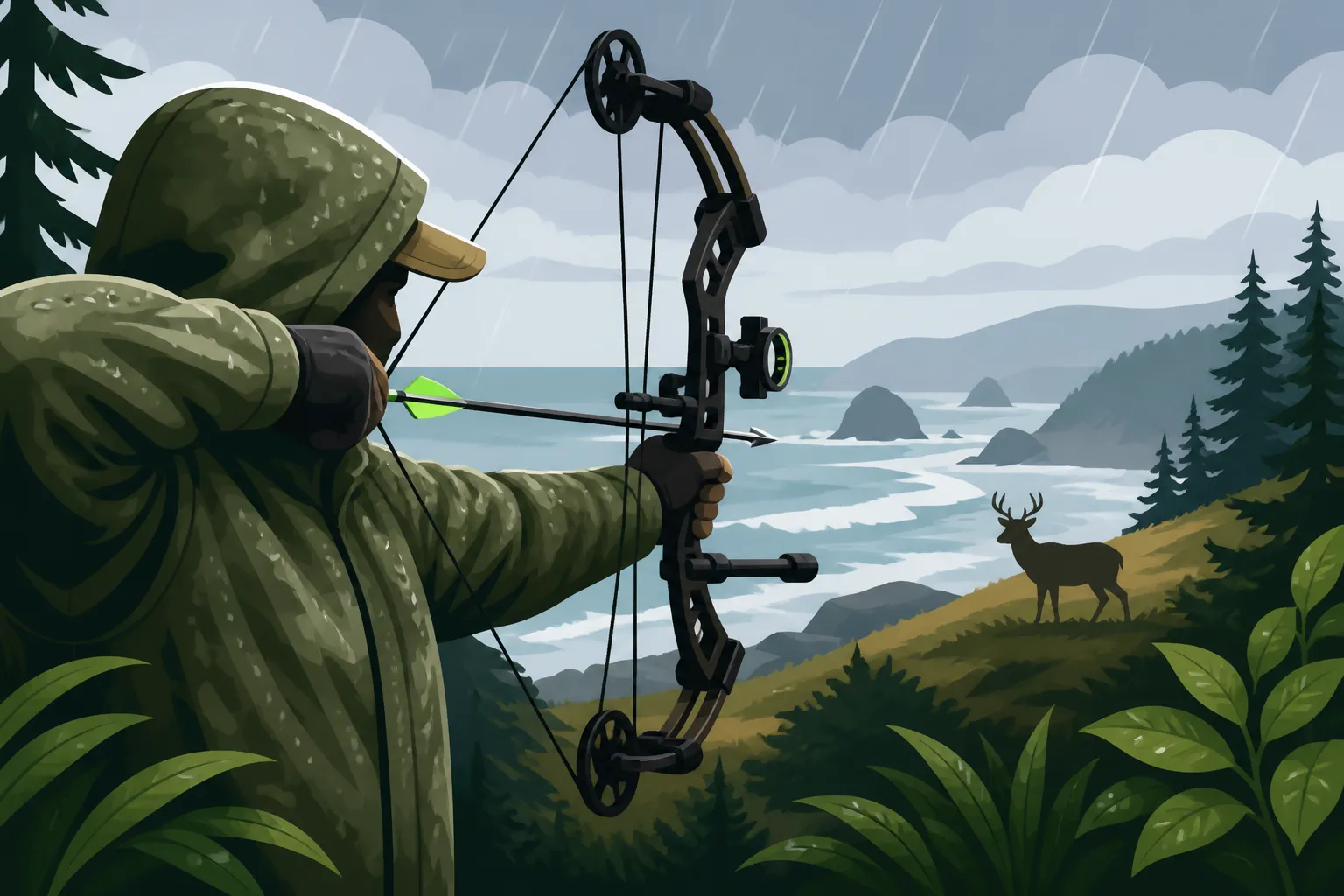
The most direct way to prepare is to simply shoot in the rain. Don't shy away from it. Set up a target in your yard or at a secluded range during a light shower or drizzle. Start with shorter distances, say 20 yards, and focus on maintaining your form and release, even as raindrops obscure your sight picture. Notice how the bow feels in your hand, how your release finger reacts, and how the arrow flies. You might find that your anchor point feels different, or that your bow grip is more slippery. This is the time to identify these issues, not when a trophy bull is standing in front of you.
As you get comfortable, gradually extend your distance. Practice shooting at various targets, simulating different shot angles you might encounter in the field. Don't forget to wear your actual rain gear and hunting layers during these sessions. This isn't just about shooting; it's about experiencing the full sensory impact of hunting in the wet. The sound of rain on your hood, the way water drips off your sight, the subtle chilling of your hands – these are all factors that can distract you in the field if you haven't desensitized yourself to them through practice. This proactive approach is key to building confidence in challenging conditions.
Footwork and Stance on Slick Surfaces
Washington's coastal terrain is often a slick, uneven mosaic of wet moss, decaying leaves, and slippery roots. Getting a stable shooting platform can be incredibly challenging. Therefore, your practice needs to extend beyond just standing still and shooting. Incorporate drills that force you to shoot from awkward, unstable positions. Practice shooting from kneeling, from one knee, or even from a seated position, especially on sloped or uneven ground. Use natural obstacles like fallen logs or small embankments to simulate realistic scenarios.
Focus on your foot placement and balance. Engage your core to maintain stability. You'll likely discover that your "perfect" shooting form needs some slight adjustments to accommodate an uneven stance. Practicing Offhand and Kneeling Shots will make a huge difference. Imagine a scenario where an elk busts out of the timber, and you have only a split second to react and get a shot off while navigating a muddy ravine. If you haven't practiced drawing and holding steady under such circumstances, your chances of success plummet. This kind of practice builds muscle memory for stability, allowing you to execute a clean shot even when your footing is compromised.
Mental Toughness and Focus Under Duress
The mental game in archery is always crucial, but it becomes exponentially more important in adverse conditions. The cold, wet, and discomfort can erode your focus and patience, leading to rushed shots or target panic. Practicing in these conditions is as much about building mental toughness as it is about refining physical technique. Deliberately introduce distractions into your wet practice sessions. Play a podcast, have a friend talk to you, or simply embrace the discomfort of the cold rain.
The goal is to cultivate a mindset where the external conditions fade into the background, and your focus remains solely on the shot process. Visualize yourself making a perfect shot on a Shot Placement on a Quartering Elk, even with rain streaking your glasses. Developing this resilience means you won't be caught off guard by the harsh realities of a coastal hunt. It’s about accepting the discomfort as part of the challenge and knowing that you've trained through worse. This mental fortitude, combined with physical preparation, is what separates successful coastal bowhunters from those who let the weather defeat them.
Specialized Gear and Techniques for Coastal Archery
Beyond diligent practice and gear protection, investing in the right specialized equipment and understanding specific techniques can significantly improve your chances of success when hunting in Washington's wet coastal environment. Don't underestimate the role that purposeful gear selection plays in mitigating the challenges of persistent moisture and fluctuating temperatures.
Rain Gear and Layering for Archery
The right rain gear isn't just about staying dry; it's about staying comfortable and quiet enough to hunt effectively. Forget your bulky, noisy plastic ponchos. You need technical rainwear that is waterproof, breathable, and quiet. Look for fabrics with advanced DWR (Durable Water Repellent) coatings and taped seams. Brands like Sitka Gear, Kuiu, and First Lite offer excellent options designed for hunting, focusing on packability and low noise. Your outer layer needs to shed water, but also allow moisture vapor from your body to escape, preventing that clammy, internal sweat that leads to chilling.
Equally important is a well-thought-out layering system. A good base layer of merino wool or synthetic material will wick moisture away from your skin, even when you're exerting yourself. Mid-layers provide insulation and warmth, and again, synthetic or wool are superior to cotton in wet conditions because they retain insulating properties even when damp. Remember, when you're cold and wet, your focus is on survival, not on making a precise shot. Investing in Rain Gear That Survives a Washington Westside Season and understanding Layering for Washington's Fifty Degrees and Wet will keep you in the game longer and more comfortably.
Bow Grips, Slings, and Stabilizers for Wet Hands
Holding onto your bow securely with cold, wet hands is a genuine concern. Many factory bow grips can become incredibly slick when wet. Consider adding a non-slip grip tape to your riser or replacing your grip with an aftermarket option made from a grippier material. Some hunters even wrap their grips with athletic tape for better purchase. A quality bow sling is also essential, not just for carrying your bow but also for providing an extra layer of security when drawing or shooting in slick conditions. It ensures that if your grip slips slightly, your bow isn't going anywhere.
Stabilizers, while primarily for balance and vibration dampening, can also play a subtle role. Some materials absorb less water and remain lighter, maintaining your bow's intended balance point. When choosing a bow, think about how it feels in your hand, both dry and wet. The overall Bow Choice for Wet Coastal Hunting will influence how well you can maintain control and make a steady shot when conditions are less than ideal.
Broadhead Selection and Arrow Weight for Penetration
In wet conditions, especially when hunting larger game like elk, penetration becomes even more critical. A wet, matted hide can offer surprising resistance, and you need every advantage you can get to ensure your arrow passes through vitals. This is where broadhead selection and overall arrow weight come into play. For coastal hunting, many experienced archers lean towards fixed-blade broadheads known for their robust construction and superior penetration. Mechanical broadheads, while effective in ideal conditions, can sometimes struggle with deploying properly through thick, wet hair or hide, though modern designs have significantly improved.
Consider a heavier arrow setup. Increased arrow weight translates to more kinetic energy and momentum, which helps drive the broadhead through bone and gristle. While it might slightly flatten your trajectory, the added punch is often worth it for the improved penetration, especially on a quartering shot. Ensure your arrow and broadhead combination adheres to Washington Archery Equipment Rules. Remember, ethical hunting demands the quickest, most humane kill possible, and maximizing penetration in challenging conditions is a key component of that responsibility.
| Feature | Membrane Laminate (e.g., Gore-Tex) | Coated Nylon/Polyester (e.g., HyVent) | Softshell (DWR-treated) |
|---|---|---|---|
| Waterproofness | Excellent | Good | Fair (not fully WP) |
| Breathability | Excellent | Good | Good |
| Noise Level | Low to Moderate | Moderate to High | Low |
| Durability | High | Moderate | High |
| Weight | Moderate | Moderate | Moderate to High |
| Cost | High | Moderate | Moderate to High |
| Best Use | Persistent rain, high exertion | Moderate rain, general hunting | Light rain, cold, active |
| Archery Suitability | High (if quiet fabric) | Low (can be noisy) | Moderate (for drizzle) |
Finding and Utilizing Practice Locations
You can't just practice in a vacuum. To truly prepare for Washington's wet coastal hunts, you need to think strategically about where and how you practice. Relying solely on a perfectly manicured, dry archery range won't cut it. You need to seek out or create environments that mimic the challenges you'll face in the field.
Covered Ranges and Indoor Options
While the goal is to practice in the wet, covered or indoor archery ranges still have a vital role. They provide a controlled environment where you can focus on refining your form, tuning your bow, and getting consistent groups without the immediate distractions of weather. This is where you establish your baseline accuracy. Use these facilities for fine-tuning your Rifle Setup for Washington Elk and Deer if you're multi-season hunting, or more generally, to ensure your archery setup is dialed in before you expose it to the elements.
These ranges are especially valuable during the off-season or when the weather is truly atrocious. They allow for consistent practice regardless of external conditions, which is crucial for muscle memory. Think of it as your controlled laboratory. You can experiment with different arrow rests, stabilizers, or broadhead combinations to see what performs best before taking it out into the wild. Many communities in Washington, even smaller coastal towns, might have a local club with a covered shooting line or an indoor facility. Sites like GoHunt are great for researching gear and tactics, and you can often find information on local ranges and clubs through their resources or forums.
Setting Up a Backyard Wet-Weather Range
For many, the most practical solution for consistent wet-weather practice is setting up a dedicated range in their own backyard or on private land. This doesn't need to be elaborate. A simple archery target butt, a reliable backstop, and a designated shooting lane are all you need. The key is to make it accessible during inclement weather. Consider erecting a simple tarp or lean-to structure over your shooting line to provide some shelter for yourself and your immediate gear, while still allowing the target downrange to be exposed to the rain.
The advantage of a backyard range is convenience and realism. You can practice at various times of day, in changing light and weather, without having to pack up and travel. Deliberately seek out areas with uneven ground, slight slopes, or small obstacles to simulate realistic shooting positions. Use your hunting layers and rain gear during these sessions to get comfortable with the feel and movement. Remember, the more you can replicate actual hunting conditions in your practice, the more confident and prepared you’ll be when the opportunity arises in the field.
Simulating Real-World Scenarios in Coastal Terrain
The ultimate test of your wet-weather archery skills comes from simulating real-world hunting scenarios. This means getting out into terrain that closely resembles what you'll find on the Washington coast. Find a safe, legal area on public land or a friend's property that has brush, hills, and perhaps some standing timber. Incorporate movement into your practice: stalk to a target, take a shot, then move to another. Practice drawing your bow quietly while navigating thick undergrowth.
Set up targets at varying, unmarked distances and practice your Rangefinding Inside Bow Range under pressure. Use range cards and practice quickly estimating distances when your rangefinder might be fogged up or giving you trouble. Look for shooting lanes through brush, forcing yourself to pick precise openings. This isn't just about hitting the target; it's about the entire sequence leading up to the shot – the stalk, the draw, the hold, and the release, all while battling the elements and the terrain. This comprehensive approach to practice ensures you're ready for the dynamic and often unpredictable nature of coastal archery hunting.
Post-Practice Care and Long-Term Gear Health
Your dedication to practicing in wet conditions is admirable, but that effort can be undone if you neglect proper post-practice gear care. Moisture is the enemy of archery equipment, and allowing it to linger can lead to rust, corrosion, material degradation, and ultimately, shortened gear life and decreased performance. A thorough post-practice routine is just as important as the practice itself.
Thorough Cleaning and Drying Protocols
After any wet practice session or hunt, your gear needs immediate and meticulous attention. Start by wiping down your bow with a clean, dry cloth. Pay particular attention to all metal components – screws, cams, axles, and sight pins. Any visible moisture needs to be removed. If you suspect water got into the cam bearings, consider using a moisture-displacing lubricant, but be cautious not to over-lubricate or use products that attract dirt. Next, remove your arrows and wipe each shaft clean, inspecting fletchings for any signs of water damage or separation. Ensure broadheads are removed, cleaned, dried, and lightly oiled to prevent rust.
Beyond the initial wipe-down, you need to ensure everything is fully dry before storage. This often means bringing your gear indoors, in a climate-controlled environment, for several hours or even overnight. Don't leave your bow in a cold garage or damp shed where moisture can condense. Airflow is key. You might even consider using a small fan to aid in drying. For your release aid, open it up if possible to allow internal components to dry. The diligence here saves you headaches and money down the road.
Storage Solutions to Prevent Moisture Damage
Once your gear is thoroughly dry, proper storage is paramount for long-term health. A hard bow case is excellent for transport and protection from impact, but for long-term storage, ensure it's lined with material that doesn't trap moisture. Some hunters will place silica gel packets inside their cases to absorb any ambient humidity. Store your bow in a stable environment, away from extreme temperature fluctuations or direct sunlight, which can degrade materials.
Arrows should be stored horizontally or vertically in a rack to prevent warping. Keep broadheads separate in their own dry storage container. Never store a wet bow or wet arrows in a sealed container or case; you'll create a miniature rainforest that promotes rust and mold growth. Think about the conditions in your actual hunting camp; if you’re using Backcountry Camps in Washington Wilderness, make sure you have strategies for keeping your essential gear as dry as possible, even in remote locations. The goal is to keep everything as dry and stable as possible, mimicking the ideal conditions of a pro shop's storage area.
Regular Inspections and Professional Tune-Ups
Even with the best cleaning and storage routines, routine inspections are non-negotiable for an archery system exposed to Washington's wet conditions. Before and after every hunt or intense practice period, visually inspect your bowstring and cables for fraying, serving separation, or discoloration. Check all screws for tightness, especially those on your sight, rest, and stabilizer. A small loose screw can throw off your entire setup. Flex your limbs gently to check for any cracks or delamination, though this is rare with modern bows.
Periodically, it's a wise investment to take your bow to a reputable pro shop for a professional tune-up. They have the specialized tools and expertise to check cam timing, limb deflection, bearing health, and other critical components that you might miss. They can also address any subtle issues caused by prolonged exposure to moisture, such as minor string stretch or cam lean. Think of it like taking your truck in for an oil change; it's preventative maintenance that extends the life and reliability of your equipment. Being proactive with these checks ensures your bow is always in prime condition, ready to perform when called upon, regardless of the weather.
Disclaimer
The information provided in this guide is for general informational purposes only and does not constitute professional advice. Hunting involves inherent risks, and conditions in Washington can be unpredictable and hazardous. Always prioritize safety, follow all local, state, and federal hunting regulations, and consider seeking expert instruction for specific hunting techniques or gear usage. The author and publisher are not responsible for any accidents, injuries, or legal infractions that may result from following the advice in this article. Always check current Washington Department of Fish and Wildlife (WDFW) regulations before any hunting activity.