How Long to Sit a Cougar Stand
For any cougar hunter in Washington, especially those of us who started after the hound ban, the question isn't just how to call a cougar, but how long you truly need to commit to a stand. It's frustrating to pour your heart and soul into setting up, calling for what feels like an eternity, and then wonder if you left too early or stayed too long. This guide will walk you through the nuances of cougar calling stand times, helping you understand the factors that dictate your patience and increase your odds.
Understanding Cougar Behavior and Calling Strategy
Cougar hunting in Washington, particularly without the aid of hounds, boils down to patience, stealth, and a deep understanding of how these elusive predators operate. You're essentially trying to trick one of the smartest animals in the woods into thinking there's an easy meal. This isn't like calling an elk that might bugle back or a deer that might walk by; a cougar's approach is often silent and deliberate. The success of your calling strategy, and by extension, your stand time, hinges on appreciating their natural instincts.
The Cougar's Acute Senses and Curiosity
Cougars are apex predators for a reason, and their senses are finely tuned for hunting. Their hearing is exceptional, capable of picking up distress calls from a considerable distance. Their eyesight, especially in low light, is superb, and their sense of smell, while perhaps not as strong as a bear's, is still keen enough to detect foreign scents. When you're sitting a stand, you're relying heavily on their hearing to detect your call and their curiosity to investigate. They're not just listening for the sound of a distressed rabbit or a fawn; they're also listening for anything else that might be out of place. This includes the sound of you shifting your weight, the rustle of your clothes, or even the subtle scent you might be leaving behind on the wind. It means you need to be incredibly still and scent-conscious, because once a cougar detects something isn't right, they often melt away into the shadows without you ever knowing they were there. For more specific tactics, consider learning about Calling Cougars Without Dogs in Washington.
Mimicking Prey: The Core of Calling Success
Your primary goal when calling is to replicate the sounds of vulnerable prey, typically a rabbit in distress or a fawn bleat. The key is realism and consistency, but also an understanding of the cougar's potential caution. A cougar isn't just going to blindly rush in; they're going to circle, test the wind, and try to pinpoint the source of the sound without exposing themselves. This circling behavior is crucial to why stand time is so important. Many hunters make the mistake of calling for a short burst and then leaving, not giving the cougar enough time to process the sound, approach, and then circle downwind to confirm the "meal" is legitimate and safe to attack. This approach and verification process can take significant time, especially if the cougar is coming from a long distance or through dense cover. Understanding Cougar Territory and Movement can help you predict likely travel lanes and approach vectors, further influencing how long you might need to stay put.
Factors Influencing Your Stand Time
There's no single magic number for how long to sit a cougar stand, and anyone who tells you differently is likely oversimplifying a very complex endeavor. Instead, it's about understanding the variables and making an informed decision in the field. Your commitment to a stand can vary wildly based on conditions, your scouting efforts, and even your own confidence.
The Initial 30-Minute Window
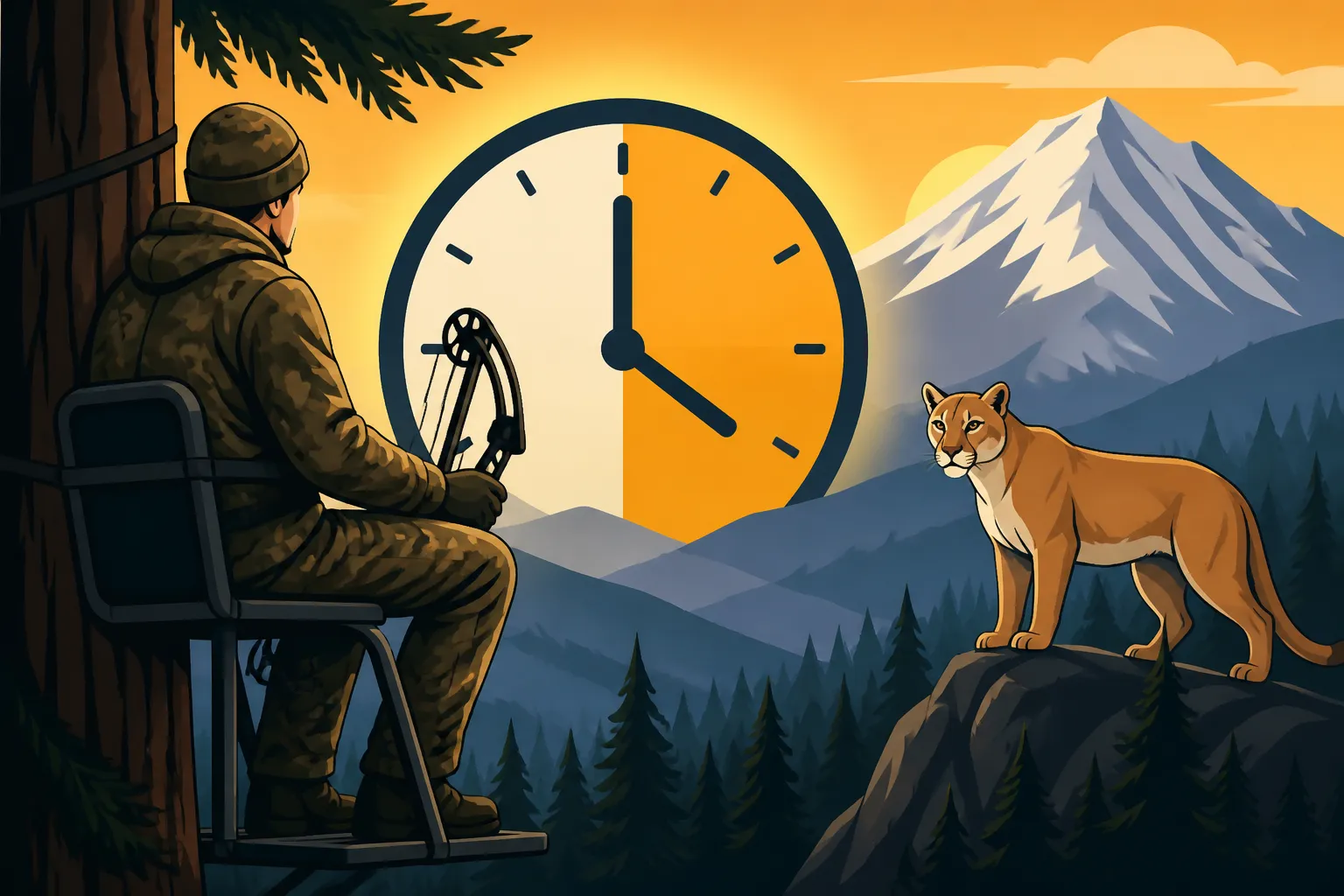
Many seasoned cougar callers suggest a minimum of 30 minutes on a stand. Why? This initial period allows sufficient time for any nearby cougar to hear your call, process it, and begin its cautious approach. Cougars don't typically sprint in, especially not to an unknown sound source. They will move deliberately, often using available cover to conceal their approach. If a cougar is close—say, within a few hundred yards when you start calling—it might respond relatively quickly. You might not see it, but it could be moving closer, trying to get a visual or a scent check. This 30-minute benchmark is a good starting point, but it's important not to treat it as a hard and fast rule for every situation. It’s the bare minimum for giving a call a fair shake. Think of it as the minimum required commitment, much like how you might commit to scouting a particular area when E-Scouting Washington GMUs Before the Draw.
Extending Your Stay: Conditions and Confidence
While 30 minutes is a baseline, there are many scenarios where extending your sit far beyond that is not just beneficial, but often necessary.
- Wind Conditions: If the wind is inconsistent or swirling, a cougar will take longer to get downwind of you, potentially circling more widely. You might need to stay an hour or even longer to account for a cautious cat navigating tricky thermals. If the wind is strong, your calls won't carry as far, and a cougar coming from a distance will simply take more time to cover ground.
- Cover Density: In thick timber or dense brush, a cougar's approach will be slower, as it prioritizes stealth and concealment. You're not going to see them coming from a quarter-mile away in Washington's western forests. What looks like a short distance on a map can take a cougar a significant amount of time to navigate silently. This is especially true in areas with heavy salal or devil's club, which really slows down movement for any animal, let alone a predator trying to stay hidden.
- Acoustics of the Terrain: How well your call carries depends on the terrain. In open, rolling country, calls can travel further, potentially drawing in cats from a greater distance, meaning a longer approach. In steep, broken canyons or dense drainages, sound can be muffled or distorted, again requiring more time for a cougar to pinpoint and approach.
- Lack of Prior Activity: If you haven't seen any cougar sign (tracks, scat, kills) in the immediate area, but believe it's good habitat, you might need to call longer to pull a cat from further away. Conversely, if you're in an area where you've recently spotted fresh Reading Cougar Sign in the Snow or on
GoHuntmaps, identified historical kill sites, you might have a cat within closer range and could get a quicker response. - Your Confidence Level: This might sound subjective, but it's important. If you feel like the spot is prime, or you just had a feeling as you set up, sometimes that intuition is worth listening to. If you've put in the work scouting, maybe using tools like GoHunt to analyze terrain and historical data, and you're confident in your setup, then staying longer makes sense.
It’s often said that most hunters quit too early, and with cougars, this is profoundly true. An hour, an hour and a half, or even two hours on a single stand isn't uncommon for dedicated callers, especially when employing specific tactics like Calling Cougars With a Fawn Distress Sound.
Reading the Sign: When to Pack Up or Stay Longer
Knowing when to call it quits or when to double down on your patience is key. This isn't just about the clock; it's about observing the environment.
Table: Factors Influencing Cougar Stand Time
| Factor | Recommended Stand Time (Typical) | Rationale |
|---|---|---|
| Ideal Conditions | 30-45 minutes | Light breeze, open approach, fresh sign, high confidence. |
| Moderate Conditions | 45-90 minutes | Inconsistent wind, moderate cover, good but not fresh sign, average confidence. |
| Challenging Conditions | 90+ minutes | Swirling wind, dense cover, no recent sign but good habitat, high commitment. |
| Heard a Response | Stay as long as needed | If you hear a distant cat, or any unusual animal movement, commit fully. |
| No Activity/Confidence | 30 minutes (minimum) | If conditions are poor, or you lack confidence, move to a new spot after the minimum. |
- No Response, No Movement: After an hour or more of varied calling sequences, if you haven't heard or seen anything, no birds alarm calling, no deer trotting away, no distant rustles, it might be time to move. Continuing to call in a barren area for hours can be counterproductive and waste valuable hunting time.
- Subtle Clues: Sometimes a response isn't a cougar roaring back. It might be a flock of jays suddenly going quiet, deer flicking their tails nervously in the distance, or even a sudden hush in the forest. These are subtle indicators that something is moving cautiously in the area. If you observe these, extend your stand.
- Your Gut Feeling: Experienced hunters often develop an instinct. If you just feel like a cat should be there, and conditions are favorable, give it more time. Don't let impatience ruin a potentially successful hunt. GoHunt's historical harvest data for a specific GMU can sometimes validate these hunches by showing consistent cougar presence.
- Changing Conditions: If the wind suddenly shifts dramatically, or a fog rolls in, it might be time to adjust your strategy. A major change in conditions can make a previously good stand location less effective, or conversely, make a marginal spot suddenly productive if the wind becomes favorable.
Optimal Stand Setup and Common Mistakes
Committing to a long sit is only effective if your initial setup is solid. A poor setup, even with endless patience, will likely lead to frustration. Every detail, from your position relative to the wind to the rhythm of your calling, plays a critical role.
Wind, Cover, and Shot Lanes
Before you even think about how long to sit, consider your setup. This is paramount for cougar hunting, perhaps more so than for any other big game in Washington.
- Wind Direction: A cougar will almost always try to approach downwind to scent-check whatever is making the noise. You must position yourself so the prevailing wind carries your scent away from where you expect the cougar to approach. Use a wind checker constantly. This is non-negotiable. If the wind is swirling or unpredictable, try to find a saddle or ridge line where the thermals might be more stable, or position yourself with a natural barrier (like a steep drop-off or a river) directly downwind of you, forcing the cat to approach from other directions.
- Back Cover: Always position yourself against a solid backdrop, like a large tree, a rock face, or thick brush. This breaks up your silhouette and prevents a cougar from circling behind you unseen. Remember, their approach is about stealth.
- Shot Lanes: Clear multiple shooting lanes in front of you, especially where you anticipate the cougar to appear. They won't come crashing through the open like an elk. They will typically appear in small windows of opportunity. You need to be ready to make a quick, accurate shot in dense cover. This is where a Rifle Setup for Washington Elk and Deer that's versatile for close-quarter timber shots can really pay off. Trim small branches or push aside brush if legal and necessary, ensuring you have at least a few clear lines of sight.
- Elevated Position: If possible, calling from a slightly elevated position (a small knob, a gentle rise) can give you a better view of approaching animals and help broadcast your call more effectively. Just ensure your backdrop is still secure.
Caller Volume and Sequence
Your calling technique also impacts your stand time. It’s not just about how long you sit, but how you use that time.
- Vary Your Volume: Start with a moderate volume, especially if you're in an area with fresh sign or dense cover, suggesting a cougar might be close. Then, every 10-15 minutes, vary your volume—a few loud, frantic bursts, followed by softer whimpers, then silence, then build back up. This mimics a real distress scenario where an animal might be struggling, then weaken, then struggle again.
- Calling Sequence: Don't just blast away continuously. A typical sequence might involve 1-2 minutes of calling, followed by 5-10 minutes of absolute silence, listening intently. Repeat this for the duration of your stand. The silence is critical; it’s when the cougar is likely moving in, trying to pinpoint the sound, and you need to hear their approach. Sometimes, they respond best to the quiet, giving them confidence to move closer.
- Choose the Right Call: While fawn distress is excellent, a rabbit distress call is a universal sound that can bring in coyotes, bobcats, and cougars. Be prepared for any of these. If you're specifically targeting cougars, a more drawn-out, mournful sound like a fawn bleat can sometimes be more enticing, as it signals a larger, more substantial meal.
Patience, Persistence, and Self-Doubt
Ultimately, the biggest hurdle to sitting a cougar stand for the optimal amount of time isn't external; it's internal. We all feel the urge to move, to see what's over the next ridge, especially when nothing seems to be happening. But with cougars, that last 15 minutes of your stand can be the most critical.
- Fight the Urge to Move: Every rustle might make you think a cougar is coming, or that a deer is blowing at you. Stay still. Many cougars are harvested by hunters who were just about to pack up. They often appear silently and can vanish just as quickly. You have to be ready to stay locked in.
- Trust Your Scouting: If you've done your homework—using tools like GoHunt to analyze historical harvest data, e-scouting winter ranges, or physically finding tracks and kills—then trust that you're in a good area. That confidence can help you endure a longer, silent sit. You've stacked the odds in your favor; now you need to let the process work.
- Embrace the Waiting Game: Cougar hunting without hounds is a waiting game. It's about out-patienting the predator. Remember that you are trying to convince an animal that rarely takes risks to come to you. That takes time. Sometimes, you'll sit for two hours and see nothing. Other times, a cat will appear silently within the first 10 minutes. The only way to know is to commit the time. For deeper dives into other methods, explore Cougar Hunting in Washington After the Hound Ban.
The longer you sit, the wider the area from which a cougar can respond. While the initial 30-minute window might attract a nearby cat, extending to an hour or more significantly increases the chances of pulling in a curious cougar from further away, making that critical investment of time genuinely worthwhile.
Disclaimer
Please ensure you are familiar with and adhere to all Washington Department of Fish and Wildlife (WDFW) regulations regarding cougar hunting, including season dates, tag requirements, and legal hunting methods. Rules and guidelines can change, so always consult the most current WDFW hunting pamphlets before heading into the field.