Two-Way Radio Use While Hunting
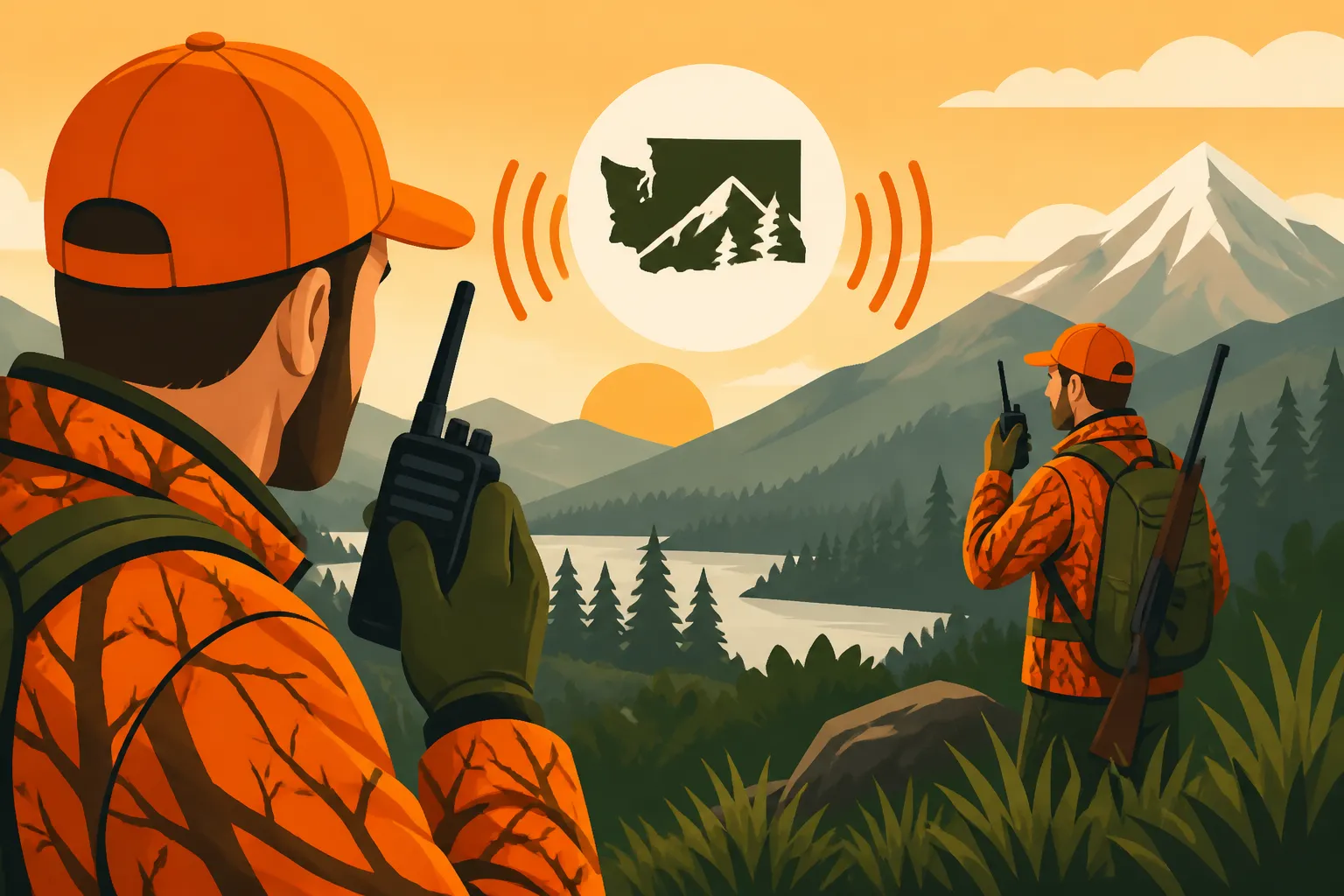
There’s nothing quite like the heart-sinking feeling of being deep in Washington’s vast backcountry, maybe trying to coordinate with your hunting partner, only to pull out your phone and see that dreaded "No Service" message. It's frustrating, potentially unsafe, and can utterly derail a well-planned hunt. This guide is all about cutting through that digital silence, exploring how two-way radios can be your lifeline in the field, keeping your hunting party connected, safe, and efficient, no matter how rugged the Evergreen State’s terrain gets.
Why Two-Way Radios Are Essential for Washington Hunters
Washington's diverse landscape, from the dense rainforests of the Olympic Peninsula to the sprawling sagebrush of the Columbia Basin, is breathtaking but often unforgiving when it comes to communication. Cell service is notoriously spotty, making traditional phone calls unreliable at best. This is where two-way radios truly shine, providing a dedicated and robust communication channel that can be the difference between a successful hunt and a missed opportunity, or even worse, a dangerous situation.
Bridging the Gaps in Cell Service
Let's be real, how many times have you been out in the Gifford Pinchot National Forest or up in the Blue Mountains, miles from the nearest town, and your smartphone is nothing more than a camera or a brick? It’s a common frustration for Washington hunters. These beautiful, wild places, the very spots where the best hunting often happens, are also notorious cell service dead zones. You might have a bar or two on a high ridge, but drop down into a drainage or into that thick timber, and you’re disconnected.
Two-way radios operate on radio frequencies, not cellular networks, meaning they don't rely on cell towers. This makes them incredibly reliable for short to medium-range communication in areas where phones are utterly useless. Imagine you've split up to flank a bull elk you heard bugle, or one of you spots a black bear moving through a clearcut. Being able to instantly, silently, and reliably communicate without yelling across a canyon – and potentially spooking game – is invaluable. Whether you're coordinating a push, alerting a partner to a hot track, or simply checking in, radios ensure you're never truly alone, even when you're physically separated by thick cover or challenging terrain. They're a critical tool, especially when tackling tasks like Packing an Elk Out of Washington's Backcountry, where coordination can save you hours of grueling work.
Enhancing Safety and Coordination
Beyond just convenience, the safety aspect of two-way radios cannot be overstated. Hunting, especially in Washington’s rugged wilderness areas, carries inherent risks. A twisted ankle on a steep slope, a sudden change in weather, or an unexpected encounter with wildlife can turn a routine day into an emergency in a heartbeat. Having a direct line of communication with your partners allows for immediate alerts and coordinated responses, significantly reducing the risk in unexpected situations.
For instance, if someone in your party takes a tumble or gets disoriented, a quick radio call can summon help without delay. This is particularly important if you're exploring Hunting Washington's Wilderness Areas, where rescue can be a long time coming. Radios also enhance coordination for tactical hunting maneuvers. You can quietly direct a partner on a stalk, give real-time updates on game movement, or coordinate a silent drive through timber. This isn't just about safety; it's about making your hunting efforts more efficient and effective. Knowing you can communicate readily also provides peace of mind, allowing you to focus on the hunt itself rather than worrying about a partner's whereabouts. For those who embrace Solo Hunting Safety Precautions, a satellite messenger often takes priority, but even then, a radio is excellent for local, team communication once combined.
Understanding Radio Types and Legal Channels in Washington
Choosing the right radio for your Washington hunt can feel a bit like sifting through all the different hunting regulations – confusing at first, but critical to get right. It boils down to understanding the capabilities and legalities of a few main types, particularly FRS and GMRS, which are most common for hunting teams.
FRS and GMRS Radios for Hunting Teams
When most hunters talk about two-way radios, they're typically referring to Family Radio Service (FRS) or General Mobile Radio Service (GMRS) devices. These handheld units are popular because they're relatively inexpensive and widely available from brands like Motorola Talkabout or Midland GXT. However, there are some important distinctions to understand:
- FRS Radios: These are the simplest and most accessible option. FRS radios operate on lower power (up to 2 Watts) and do not require an FCC license to operate. They share 22 channels, and while they often boast "up to 30-mile range" on the packaging, in Washington's varied terrain – think dense timber, rolling hills, or deep canyons – you'll realistically get about 1-2 miles, often less. They're great for small groups staying relatively close together, like during a deer drive in thick brush or when working a clearcut.
- GMRS Radios: GMRS radios utilize the same 22 channels as FRS, but also have 8 additional "interstitial" channels. The key difference is power: GMRS radios can transmit at significantly higher wattages (up to 50 Watts for base stations, though handhelds are usually 1-5 Watts). This higher power translates to greater range and more reliable communication, particularly in challenging terrain. However, operating a GMRS radio requires an FCC GMRS license, which covers your entire immediate family for 10 years and costs around $35. Many radios sold today are "FRS/GMRS hybrid" units, meaning they can operate as FRS without a license, or as GMRS on higher power if you have a license. For serious hunters wanting maximum reliable range without diving into complex ham radio setups, a GMRS license and a quality GMRS-capable handheld unit are usually the best bet. WDFW regulations don't typically restrict the use of these common radios, but it’s always wise to confirm if you're ever in doubt about specific public lands.
Advanced Options: Satellite Messengers and Ham Radio
While FRS and GMRS cover most tactical communication needs for hunting parties, there are other, more advanced communication tools that serve different purposes:
- Satellite Messengers: Devices like Garmin inReach or Zoleo are not true two-way radios in the traditional sense, as they don't offer real-time, push-to-talk voice communication. Instead, they use satellite networks to send and receive text messages, track your location, and most importantly, send SOS signals in emergencies. They're invaluable for Satellite Messengers for Solo Washington Hunts or as a critical backup for any group venturing into remote areas where even GMRS radios might struggle. They require a subscription plan, but their ability to connect you to emergency services from virtually anywhere makes them a wise investment for ultimate safety.
- Ham Radio (Amateur Radio): For the truly dedicated, ham radio offers the most robust and longest-range communication capabilities. However, this comes with a steeper learning curve, requiring an FCC amateur radio license (Technician class is usually sufficient for VHF/UHF frequencies used in the field) and more complex equipment. While powerful, the bulk and complexity of ham radio equipment often make it overkill for the average hunting team's day-to-day tactical communication, though it can be a fantastic hobby and a serious emergency communication tool.
Legal Channels and Etiquette
Regardless of the radio type you choose, understanding legal channels and practicing good etiquette is crucial. FRS and GMRS radios share channels, meaning you'll often hear other users – hikers, other hunting parties, or just folks out recreating.
- Privacy Codes (CTCSS/DCS): Most modern radios offer "privacy codes" or "sub-channels" (CTCSS/DCS tones). These don't actually encrypt your conversation or make it private; they simply filter out transmissions that aren't using the same code, so you only hear your group. It dramatically reduces background chatter, but anyone on the same main channel without a code (or using a different code) can still hear your conversations.
- Clear Communication: When transmitting, remember that others might be listening. Keep your conversations concise, professional, and relevant to the hunt. Avoid hogging the channel. Designate specific channels for your group and have a backup. Before transmitting, quickly check if the channel is clear. Short, clear messages are always best. Avoid using the "scan" function during critical moments, as it can cause you to miss an important transmission from your partners. A quick "Radio check, this is Base" is often all you need to start.
Practical Tips for Maximizing Radio Performance in Washington's Terrain
Having the right radios is only half the battle; knowing how to use them effectively in Washington's varied and often challenging landscapes is key. Performance can fluctuate wildly depending on where you are, so a few practical strategies can make all the difference.
Terrain and Range Limitations
The biggest factor influencing your radio's performance is terrain. Two-way radios primarily operate on a "line-of-sight" principle. This means if there's a mountain, a ridge, or even a dense stand of timber between you and your partner, your range will be significantly reduced, sometimes to mere hundreds of yards.
Consider the stark difference between hunting in Eastern Washington's open sagebrush country near the Columbia Basin, where you might easily get a few miles of range, versus the deep, timbered canyons of the Wenaha-Tucannon Wilderness or the thick, wet coastal forests of Western Washington. In the latter, especially when Still-Hunting Blacktails in Wet Washington Brush, dense vegetation and rugged topography can choke radio signals to less than a quarter-mile. To counteract this, always try to communicate from higher ground when possible. Ridge lines, saddles, or even standing on a rock can often give you just enough line of sight to connect. If you’re coordinating a move, plan rendezvous points or check-in times based on where you anticipate better radio reception.
Battery Management and Durability
There’s nothing worse than needing your radio and finding the battery dead. Washington’s weather, particularly in the late seasons or at higher elevations, can be brutal on electronics. Cold temperatures rapidly drain batteries, and rain can wreak havoc on non-durable units.
- Charge and Spares: Always start your hunt with fully charged batteries. If your radios use rechargeable battery packs, consider carrying spare AA or AAA alkaline batteries if your unit supports them, or a fully charged extra battery pack. For longer hunts, or when Layering for Wet Cold Weather indicates plummeting temperatures, a small power bank can be a lifesaver for recharging USB-compatible radio batteries.
- Durability and Waterproofing: Invest in radios with good durability and water resistance, often indicated by an IP rating (e.g., IP67 for dustproof and submersible). Washington is synonymous with rain and damp conditions, especially west of the Cascades. A radio failing due to moisture is not just an inconvenience, it's a safety hazard. Keep your radios protected in your pack when not in use, or use a waterproof pouch if your unit isn't fully waterproof. In cold weather, keep batteries (and the radio itself) close to your body to prolong their life.
Establishing Clear Communication Protocols
Even the best gear won’t help if your team doesn’t have a clear communication strategy. Before you even leave the truck, establish some simple protocols:
- Designate Roles: Appoint a lead communicator or a "Base" who monitors the primary channel. This helps avoid confusion and ensures critical messages are heard.
- Channel Selection: Decide on a primary channel and a backup channel. Use privacy codes consistently within your group.
- Call Signs: Use clear, concise call signs (e.g., "Alpha," "Bravo," "Base") instead of names. This adds clarity and a touch of professionalism, especially when multiple groups might be on the same channels.
- Standard Phrases: Agree on basic phrases. "Copy" means you understand. "Stand by" means you’re busy but will respond soon. "Go ahead" means you’re ready to receive a message.
- Practice: Briefly practice using the radios before the hunt begins. This is particularly useful for coordinating tactics like Two-Man Calling Setups on Elk or organizing a Spot-and-Stalk Bear on Washington Green-Up Slopes. A few minutes of practice can prevent misunderstandings when it really counts. Remember, while radios are fantastic, they're part of a larger plan that includes communicating your itinerary and expectations, much like Leaving a Trip Plan at Home.
Integrating Radios with Other Hunt Planning Tools
Two-way radios are powerful, but they become even more effective when integrated with other modern hunting tools. Think of them as one crucial layer in your comprehensive hunt planning strategy, working alongside maps, GPS, and digital scouting platforms like GoHunt.
Using Maps and GPS for Location Sharing
In Washington's vast and often unmarked terrain, knowing your precise location is paramount. While radios let you talk, integrating them with mapping tools allows you to share where you are with pinpoint accuracy. This is incredibly helpful for rendezvous points, indicating game locations, or guiding a partner to a specific feature.
For example, if you're tracking a wounded animal or have spotted a promising game trail, you can relay your GPS coordinates (latitude/longitude) over the radio to your partners. Many modern hunting apps, like onX Hunt, allow you to quickly pull your exact coordinates or even drop a pin and describe its proximity to a known landmark. This eliminates guesswork and helps everyone stay oriented. Imagine you’re trying to navigate dense timber after dark; being able to say, "I'm at this latitude and longitude, moving towards the stream bed," is far more effective than vague descriptions. It’s a natural complement to tools like GPS Units Versus Phone Apps and essential after Downloading Offline Maps for Washington to ensure you always have your bearings, even without service. Using platforms like GoHunt's mapping tools to pre-scout these potential communication points (high ridges, clearings) can also give you a significant advantage.
Enhancing Solo and Group Safety
Radios are more than just tactical devices; they are a fundamental component of a comprehensive safety plan, especially when combined with other emergency preparedness measures. They provide an immediate, direct line of communication for minor incidents that don't warrant an SOS signal but still require coordination.
Regular check-ins are a simple yet effective way to use radios to enhance safety, particularly during dangerous tasks like crossing swift water, climbing steep slopes, or working on gutting an animal in the dark. A quick "Status check, Alpha" and a "Copy, all good" can provide immense reassurance. While a First Aid Kit for a Remote Hunt handles physical injuries, a radio handles the urgent communication needed to deploy that kit or summon further help. If someone gets separated, or an unexpected weather event rolls in, real-time communication on the radio allows for quick decision-making and ensures everyone knows the plan. GoHunt’s detailed GMU data can also help you identify areas with historically poor communication, prompting you to double-check your radio batteries and protocols before you even set foot in the field.
| Feature | FRS (Family Radio Service) | GMRS (General Mobile Radio Service) |
|---|---|---|
| Power Output | Low (up to 2 Watts) | High (up to 50 Watts, handhelds typically 1-5W) |
| Range | Shorter (1-2 miles typical in varied terrain) | Longer (2-5 miles typical in varied terrain, more with high power) |
| Channels | 22 shared channels | 22 shared channels, plus 8 interstitial channels |
| License Required | No | Yes (FCC GMRS license for the entire family, ~$35 for 10 years) |
| Antenna | Fixed | Fixed or detachable (some higher-end units) |
| Cost | Generally lower | Generally higher for quality units |
| Best Use | Short-range team communication, casual use | Extended range team communication, more reliable in rugged terrain |
Disclaimer
The information provided in this guide is for general informational purposes only and does not constitute professional advice. Hunting regulations, safety protocols, and equipment specifications can change. Always consult the latest Washington Department of Fish and Wildlife (WDFW) regulations, seek appropriate training for all hunting activities, and verify all information with official sources before engaging in any hunting or outdoor pursuits. Your safety is your responsibility.