Eye Guards and Point Counting Mistakes
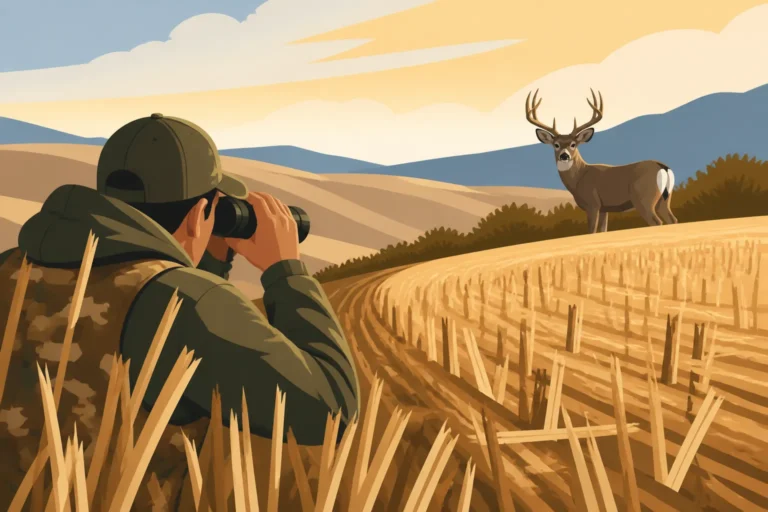
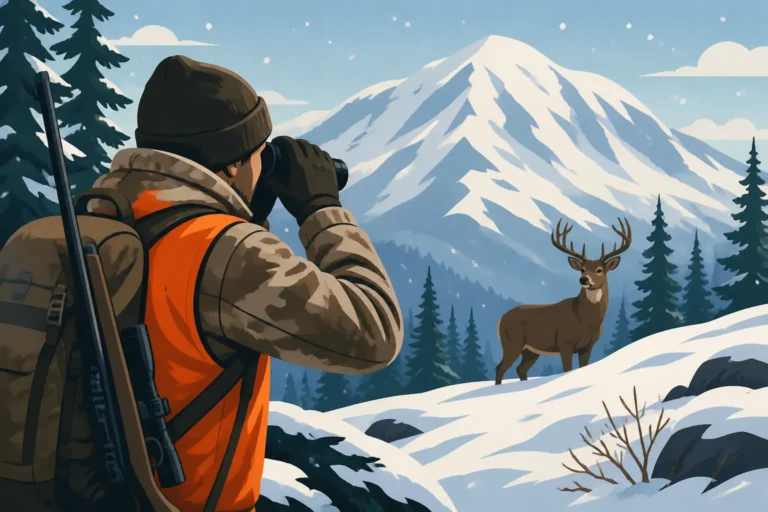
Standing there, heart pounding, as a magnificent buck steps out of the timber, it’s easy to get tunnel vision. Your mind races, adrenaline surges, and suddenly, those antler points you’ve studied relentlessly in the hunting pamphlet look completely different in the fleeting moment of truth. Many a Washington hunter has felt that gut-wrenching uncertainty, wondering if that brow tine really counts, or if the buck has enough points to be legal in a restrictive GMU. This guide is dedicated to demystifying Washington's antler point regulations, specifically focusing on the often-misunderstood eye guards and the common mistakes hunters make when trying to count points under pressure, ensuring you can make confident, ethical decisions in the field.
Deciphering Washington's Antler Point Regulations
Washington's hunting regulations can feel like a labyrinth at times, especially when it comes to antler point restrictions. It's not just about spotting a big buck; it's about understanding the nuances of what makes that buck legal in your specific hunting unit. Getting it wrong can lead to serious consequences, so a clear understanding is your best defense against regret.
The Basics of Washington's Three-Point Rule
Many areas across Washington, particularly for blacktail and mule deer, operate under a "three-point minimum" rule. This means that a buck must have at least three points on one side of its antlers to be legally harvested. It’s important to stress the "on one side" aspect—you don't add up both sides; you look for at least three distinct, legal points on either the left or the right antler. However, not all GMUs are created equal. You'll find areas with no antler restrictions at all, allowing for "any buck," while others might have specific "branch-antlered" rules that differ slightly. Before you even head out, spend some serious time with the current WDFW Big Game Hunting Seasons and Regulations pamphlet to understand your specific GMU's rules. For a deeper dive into the specifics, you can check out our article on Washington's Three-Point Rule and What Counts, or explore Which Washington GMUs Require Three Points and Where Washington Has No Antler Restriction for more details on regional differences.
What Exactly Counts as a "Point" in Washington?
This is where the rubber meets the road, and where many hunters stumble. The Washington Department of Fish and Wildlife (WDFW) provides a very clear, yet often misinterpreted, definition for what constitutes a legal point. According to WDFW, a point is defined as "a projection at least one inch long and longer than its width at one inch or more from the tip." Let's break that down because every word matters. First, it has to be at least one inch long. If it's a nub or a bump that doesn't reach that one-inch mark, it doesn't count. Second, and equally important, it must be longer than its width at one inch or more from the tip. This second criterion is critical for distinguishing true points from mere bumps, abnormal growths, or small bases. A short, fat stub that's an inch long but also an inch wide (or wider) at the tip won't make the cut. Remember, the main beam tip always counts as a point, assuming it's not broken off or blunted. This precise definition is what separates a legal buck from an illegal one in those three-point minimum units, and it's what you need to be constantly evaluating. For more on this, our guide on Counting Points on a Live Buck goes into further detail.
The Eye Guard Enigma and Other Common Mistakes
The excitement of a hunt can quickly turn to confusion when you're trying to make a split-second decision about a buck's legality. Nothing causes more headaches than eye guards and those odd, non-typical points that seem to appear and disappear in the brush. These are the details that separate a clear shot from a hesitant pass.
The Eye Guard Conundrum: When Do They Count?
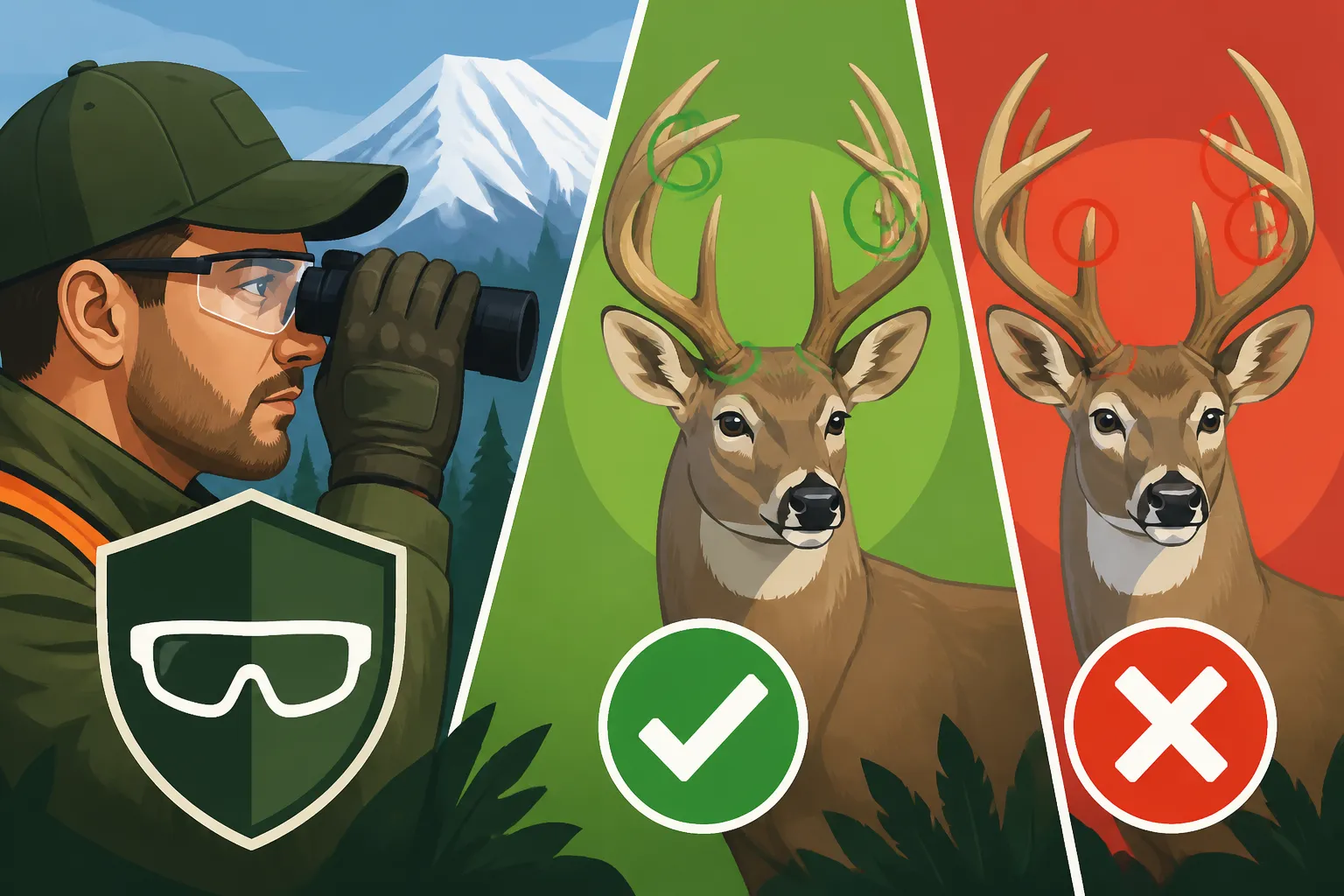
Eye guards, also known as brow tines, are perhaps the most misunderstood antler feature when it comes to point counting. The common misconception is that they either always count or never count. The truth, as with most things in hunting regulations, lies in the specific WDFW definition we just covered. An eye guard can absolutely count as a point if it meets the criteria of being "at least one inch long and longer than its width at one inch or more from the tip."
Think of a small, blunt stub that barely protrudes from the main beam above the eye. While it might technically be an "eye guard," if it doesn't extend a full inch and isn't discernibly longer than it is wide at that point, it simply doesn't count. Conversely, a prominent, well-developed brow tine that clearly meets both the length and width criteria will count. This means a buck with a main beam, one typical point, and a good eye guard might be a legal three-point buck on that side. It’s a game of inches, literally, and judging that accurately in the field requires practice and discipline.
Broken Tines, Forked Tips, and Non-Typical Points
Beyond eye guards, several other antler characteristics frequently lead to point-counting errors.
- Broken Tines: This is a classic. You see a buck with what looks like three points on one side, but upon closer inspection, one of them is clearly broken off. The crucial question is: does enough of the broken tine remain to still meet the WDFW's 1-inch length and greater-than-width criteria? Often, a broken tine will be too short or too blunted to count as a legal point. Many hunters mistakenly count "ghost points" – where a tine clearly was but no longer is. Don't fall into this trap; you must evaluate what is present and legal at the time of the shot.
- Forked Tips: Sometimes a main beam will terminate in a small, almost imperceptible fork. Does this count as one point (the main beam tip) or two? Again, apply the 1-inch rule. If the fork creates two distinct projections, both at least an inch long and longer than their width at an inch from the tip, then yes, it could count as two points. If one or both are just minor bumps, then it might still only be one main beam tip.
- Non-Typical Points (Stickers/Kickouts): These are any points that don't conform to the typical antler structure, growing off the main beam or other tines in unusual directions. The good news here is that non-typical points do count towards your total if they meet the WDFW 1-inch length and width requirements. So, don't dismiss a buck just because its points aren't perfectly symmetrical or "typical." If it has a main beam, one typical tine, and a legal "sticker" off its G2, that could be your three-point buck. Understanding these nuances is critical for Judging Antler Points Before the Shot.
The "Ghost Point" and Judging at a Distance
The human eye, especially under stress, can play tricks on you. What looks like a solid point from 200 yards through hazy air might be a short nub, a shadow, or even a piece of brush once the buck moves. We often see what we want to see, not what's actually there. Light conditions, shadows, and the animal's angle can dramatically alter your perception of antler size and number. This phenomenon, often called the "ghost point," is why rushed judgments are so dangerous. Furthermore, the terrain can make judging distances and antler features even harder. Using scouting tools like GoHunt's detailed maps can help you understand the topography and plan your approach, potentially allowing for closer, clearer observation, but in the moment, steady glassing is key. Our articles on Glassing Breaks at First Light and Glassing Sage and Wheat Edges for Washington Mule Deer offer tips on how to maximize your visibility in varied terrains.
Field-Proven Strategies for Confident Point Counting
It's one thing to read the regulations in your cozy living room and another entirely to apply them when a buck is staring back at you. Developing a reliable system for point counting in the field will save you headaches and help you avoid legal troubles.
Your Optics Are Your Best Friend
You simply cannot rely on your naked eye, especially for deer that are any distance away or partially obscured. High-quality optics are not a luxury; they are an essential tool for ethical and legal hunting.
- Binoculars First: Start with a good pair of 10×42 or 12×50 binoculars. Get them steady, braced against a tree, a trekking pole, or even your knee if you're kneeling. Take slow, deliberate sweeps over the antlers, counting each projection.
- Spotting Scope for Distance: If the buck is far out – say, beyond 300 yards – or if the light isn't perfect, a spotting scope on a sturdy tripod becomes indispensable. This will give you the magnification needed to scrutinize each potential point, confirming its length and width against the WDFW criteria. An angled spotting scope can be more comfortable for prolonged viewing. You can learn more about choosing the right magnification in Spotting Scope Magnification Range and Choosing Binoculars for Washington Glassing.
- A Systematic Count: Don't just glance. Develop a systematic approach. Pick one side of the antler and start counting from the main beam tip back towards the head, or from the base forward. Mentally (or verbally, if you're with a partner) tick off each point that clearly meets the definition. Then, repeat for the other side. This method ensures you don't double-count or miss anything.
Patience, Angles, and Confirmation
The biggest mistake hunters make when point counting is rushing. Adrenaline is a powerful thing, but it's also a blindfold.
- Wait for the Right Angle: Deer rarely stand perfectly broadside, holding still for your antler inspection. Be patient. Wait for the buck to turn its head, allowing you to see the antlers from multiple angles. What looks like a two-point from the front might reveal a hidden third point from the side, and vice-versa. Sometimes, a quartering-away angle can give you a better view of the inner tines.
- Rangefinder for Perspective: A rangefinder not only helps with shot placement but also with judging antler size. Knowing the exact distance can help you calibrate your eye. For example, a small tine might appear bigger or smaller depending on how far away it is. Modern rangefinders often have angle compensation, which is incredibly useful in Washington's steep terrain. Dive into Rangefinder Angle Compensation for more.
- Partner Confirmation: If you're hunting with a partner, always get a second opinion if possible. Two sets of eyes are almost always better than one, especially when one pair is shaking with excitement. Communicate clearly: "I see three on the left, including a solid brow. What do you see?" Even if you're alone, talking yourself through the count can help slow down your thinking process. While not specifically for deer, the principles discussed in Two-Man Calling Setups on Elk can translate to coordinated field observation.
- Leverage Technology for Pre-Planning: Before the hunt, use tools like GoHunt's mapping features and layers to identify potential travel corridors, bedding areas, and feeding zones. Understanding the terrain and likely deer movements can help you position yourself for better observation opportunities. You might be able to anticipate where a buck might stop, giving you more time to count points.
Pre-Season Prep: Practice Makes Perfect
Like any hunting skill, accurate point counting improves with practice. The more you train your eye, the more confident you'll be when it matters most.
- Study the Regulations (Again and Again): Don't just skim the WDFW pamphlet; read it, highlight it, and internalize it. Look at photos of bucks that are legal versus illegal in three-point units.
- Shed Antler Practice: This is invaluable. Get your hands on some shed antlers. Using a ruler, practice measuring various points against the WDFW definition. Pay close attention to those border-line nubs and eye guards. This tactile experience will train your eye to recognize that crucial one-inch length and the length-to-width ratio.
- Trail Camera Review: Pour over your trail camera photos from past seasons. Practice counting points on bucks you've captured. Many bucks will appear year after year, offering a longitudinal study in antler growth and point definition. This also gives you a chance to practice counting without the pressure of a live animal in front of you. Our guide on Using Trail Cameras to Find Washington Bulls offers general tips applicable here.
- Online Resources: Utilize online hunting forums and resources like the GoHunt Insider platform. These often have discussions and photos where hunters debate point counts, providing excellent learning opportunities. GoHunt also provides unit-specific information that can help you understand typical antler growth patterns for the deer in your chosen GMU, giving you a better idea of what to expect. This kind of e-scouting can significantly improve your chances and confidence, as detailed in E-Scouting a Washington GMU From Home.
Ethical Hunting and Avoiding Regret
Ultimately, the ability to accurately count points and distinguish eye guards from non-counting nubs isn't just about adhering to the law. It's about upholding the integrity of hunting, respecting the animals, and ensuring the future of our sport.
The Stakes: Legal Ramifications and Conservation
Mistakes in point counting can carry severe penalties in Washington. Harvesting an illegal buck can lead to significant fines, confiscation of your rifle, scope, and the animal itself, and even a suspension of your hunting privileges for multiple years. The financial and personal cost can be enormous. Beyond the personal ramifications, mistakenly harvesting an immature buck in a three-point unit can negatively impact herd management strategies aimed at fostering older age-class bucks. These regulations are designed to ensure sustainable populations and quality hunting experiences for everyone. Your careful adherence to these rules contributes directly to conservation efforts.
When in Doubt, Don't Shoot
This is the golden rule, and it applies more to antler point restrictions than almost anything else. If you are standing there, glassing a buck, and you have any doubt about whether it meets the legal requirements for your unit, then the answer is simple: don't shoot. It's far better to pass on a legal buck and live to hunt another day than to pull the trigger on an illegal one and face the consequences and the deep regret that often accompanies such an error. The fleeting excitement of a potential shot is not worth the potential fines, legal troubles, and the feeling of knowing you've made a mistake. Washington has plenty of deer, and if you've done your homework, using resources like GoHunt to understand your unit, you'll likely have other opportunities. Be confident, be ethical, and hunt smart.
Disclaimer
Please note: Hunting regulations can change. Always consult the most current Washington Department of Fish and Wildlife (WDFW) hunting regulations pamphlet before heading into the field. This guide provides general information and recommendations, but it is the individual hunter's responsibility to know and follow all applicable laws and regulations.