Finding Cougar Tracks Without Hounds
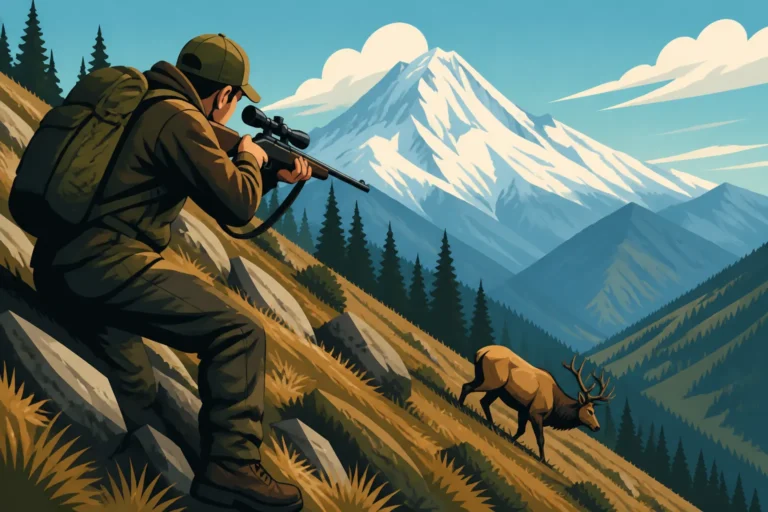
Hunting cougars in Washington without the aid of hounds can feel like searching for a ghost in the wilderness, especially after the changes to hunting regulations. It’s a challenge that demands patience, keen observation, and a deep understanding of cougar behavior. This comprehensive guide will walk you through the precise steps and nuanced knowledge you need to successfully find cougar tracks and other vital signs, even when you're hunting solo in the vast landscapes of Washington.
Understanding Cougar Behavior and Habitat in Washington
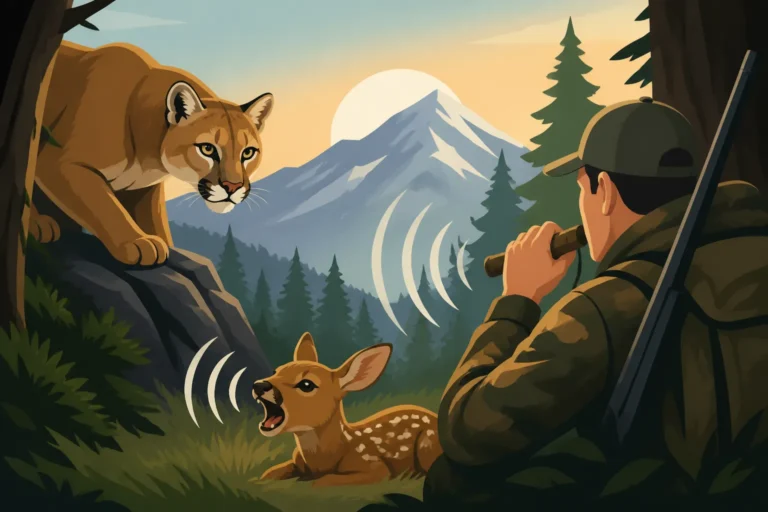
Before you can even begin to think about finding cougar tracks, you need to understand the animal itself. Cougars are incredibly elusive and stealthy, masters of their environment. They are apex predators, and their movements are intrinsically linked to their prey base. In Washington, this primarily means deer and elk, with a healthy side of smaller mammals like rabbits and even coyotes.
Prime Cougar Territory
Cougars can be found across most of Washington state, from the dense rainforests of the Olympic Peninsula to the rugged mountains of the Cascades and the broken country of Eastern Washington. They prefer areas with thick cover for ambushing prey, but also require significant travel corridors and access to water. Look for steep, rocky terrain, dense timber stands adjacent to clearcuts or open meadows, and riparian zones along creeks and rivers. These areas provide the perfect blend of concealment, water, and easy access to prey. Remember that cougars, much like other predators, are highly territorial, and understanding their Cougar Territory and Movement is crucial for effective scouting.
These big cats are often found where deer and elk populations are healthy and thriving. In the western part of the state, this might mean tracking them through dense Douglas fir and hemlock forests or along the edges of vast private timberlands. East of the Cascades, cougars frequently patrol the timbered draws and canyonlands bordering agricultural fields, especially where mule deer or white-tailed deer are abundant. They utilize natural features like rock outcroppings, caves, and thick brush for bedding down during the day, often overlooking areas where they expect prey to travel.
Seasonal Movements and Prey Preferences
A cougar's movements are largely dictated by the seasons and the migratory patterns of its primary food source. In winter, when snow depths can limit prey movement, cougars will follow deer and elk to lower elevations where forage is more accessible. This can be a prime time for finding tracks, as the snow provides a clear canvas. Conversely, during warmer months, cougars might range higher into the mountains, pursuing elk or even relying more on smaller game if larger prey is dispersed.
Understanding what a cougar eats can also guide your search. While deer and elk are staples, cougars are opportunistic hunters. They'll readily take coyotes, bighorn sheep, and even porcupines. Knowing their varied diet helps you anticipate where they might be hunting. For instance, if you're in an area with a strong population of Cougar Predation on Washington Deer Herds, you can bet cougars are nearby. Fresh snowfall often compresses deer and elk into smaller areas, making them easier targets and, consequently, making cougar tracks easier to find as the cats patrol these wintering grounds.
Recognizing and Interpreting Cougar Tracks and Sign
Successfully finding a cougar without hounds hinges entirely on your ability to read the ground. This isn't just about spotting a track; it's about interpreting its freshness, direction, and the story it tells. The details matter, and distinguishing cougar sign from other animals is paramount.
Distinguishing Cougar Tracks from Other Predators
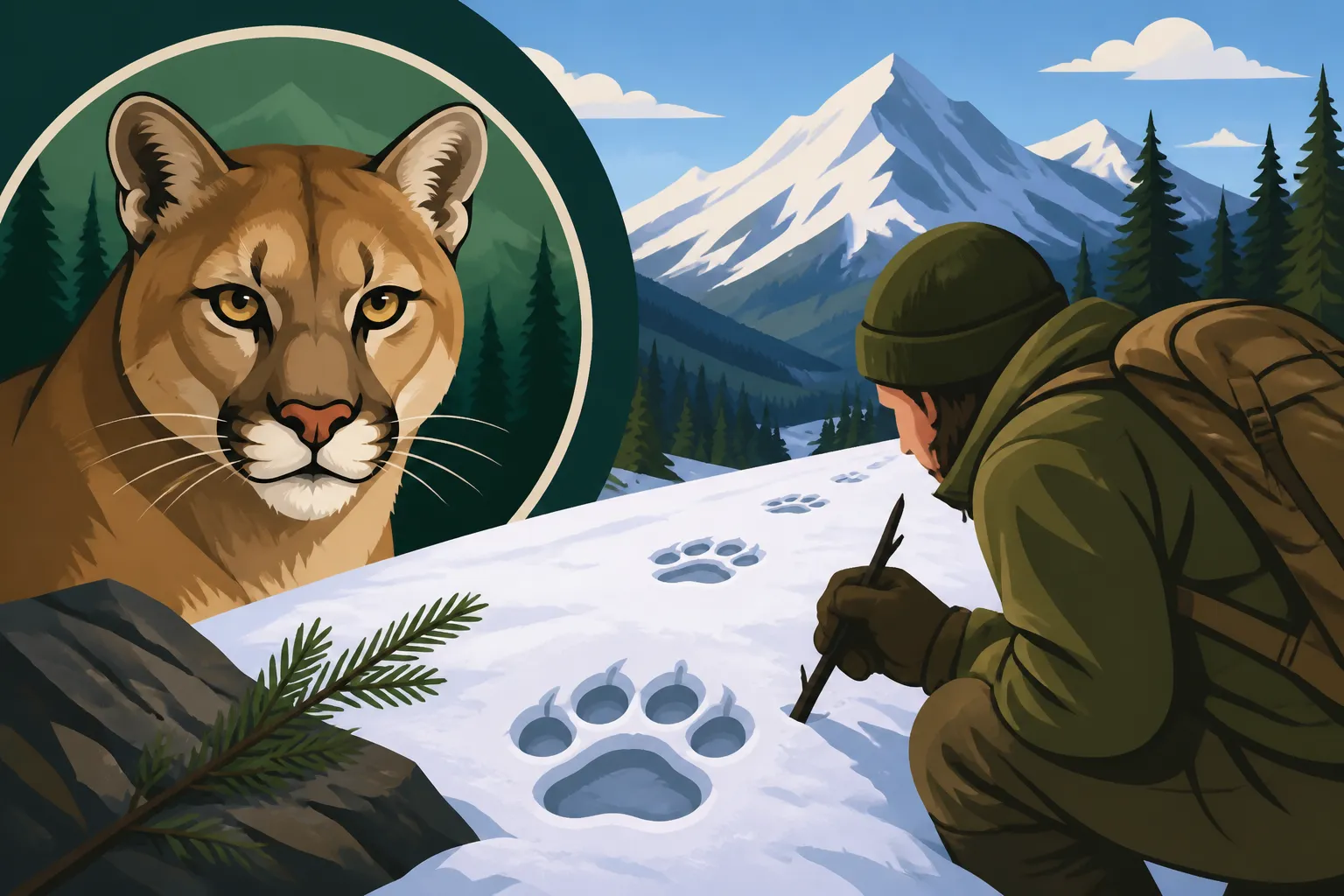
This is where many hunters get tripped up. Cougars share their territory with bobcats, coyotes, and domestic dogs, all of which leave similar-looking prints. The key characteristic of a cougar track is the absence of claw marks. Unlike canids (dogs, coyotes, wolves), cougars (and all felids) retract their claws while walking, leaving only the padded impression. Their tracks also tend to be more asymmetrical, with the leading toe (often the inner toe) standing slightly forward.
A cougar's paw print will be noticeably larger than a bobcat's, typically ranging from 3 to 4.5 inches across, whereas a bobcat print is usually 2 inches or less. Compared to a domestic dog or coyote, a cougar track will also appear more rounded and compact, with less splay between the toes. The hind track will often register almost directly into the foretrack, a characteristic called "direct register" that makes their gait very efficient and quiet. Learning to identify these subtle but critical differences is an art form that improves with practice, but focusing on the lack of claw marks is your primary distinguishing factor.
Reading Other Cougar Sign Scrapes, Kills, Scat
Tracks are only one piece of the puzzle. Cougars leave behind a variety of other signs that can indicate their presence. Scrapes are depressions in the ground, often under trees or along game trails, where a cougar has scraped dirt and debris with its hind feet. These are territorial markers, much like rubbing posts for deer, and often contain urine or scat. Fresh scrapes are gold, indicating a cougar has recently passed through.
Kill sites are another critical indicator. Cougars typically cover their kills with leaves, dirt, and branches to hide them from scavengers like coyotes and bears. Look for disturbed ground, drag marks leading away from the kill, and cached carcasses. These caches are often revisited over several days. If you find a partially covered kill, there’s a good chance the cougar isn't far, or will return. Finally, scat (feces) can tell you a lot about a cougar's diet and recent presence. Cougar scat is typically segmented, rope-like, and often contains hair and bone fragments from their prey. Fresh scat will be dark and moist, while older scat will be dry and bleached. For more detailed information on identifying signs, check out our guide on Reading Cougar Sign in the Snow.
Here's a quick comparison of tracks you might encounter:
| Feature | Cougar Track | Bobcat Track | Coyote Track | Domestic Dog Track |
|---|---|---|---|---|
| Claw Marks | Absent (retractable claws) | Absent (retractable claws) | Present (non-retractable claws) | Present (non-retractable claws) |
| Shape | Rounded, asymmetrical | Rounded, often fuzzy edge | Oval, elongated | Variable, often splayed |
| Size | Large (3-4.5 inches long/wide) | Small (1.5-2.5 inches long/wide) | Medium (2.5-3.5 inches long) | Variable, can be large |
| Heel Pad | Distinct 3-lobed heel pad | Distinct 3-lobed heel pad | Single lobe, often triangular | Single lobe, often triangular |
| Register | Often direct register | Often direct register | Indirect register, usually splayed | Indirect register, highly variable |
Strategic Scouting and Track-Finding Techniques
Finding cougar tracks without the assistance of dogs means you need to become the dog. You'll need to systematically search key areas and understand the conditions that make track identification easiest. This is where meticulous scouting and leveraging modern tools really pay off.
Focus Areas for Track Scouting
When you're out looking for tracks, don't just wander aimlessly. Focus your efforts on known travel corridors and choke points. Ridge saddles, where animals cross from one drainage to another, are prime locations. Game trails, especially those heavily used by deer and elk, are also excellent spots, as cougars will frequently patrol these routes. Look along the edges of clearcuts and dense forest, where the mix of cover and open hunting ground is ideal. River and creek bottoms, particularly those with sandy or muddy banks, are natural highways for wildlife, including cougars.
Old logging roads, even those gated and growing over, are fantastic for finding tracks. These old routes provide relatively easy travel for both cougars and their prey, and the softer, disturbed earth can hold a clear print. Many hunters will drive (where permitted) or walk these roads slowly, scanning the ground. Using a mapping application like GoHunt can help you identify these old road systems and potential travel corridors beforehand, allowing you to prioritize your scouting efforts.
Optimal Conditions for Finding Tracks
The best time to look for cougar tracks is immediately after a fresh snow or rain. These conditions leave the ground soft and receptive to clear prints, making identification much easier. A light, fresh dusting of snow, especially, can make tracks stand out like neon signs. If you're hunting in dry conditions, focus on damp areas around springs, seeps, and creek beds, or in shady, sandy spots that hold moisture longer.
Pay attention to how recent the tracks are. Fresh tracks will have sharp, distinct edges, while older tracks will be more weathered and rounded. In snow, fresh tracks will often have small pieces of dislodged snow that haven't melted or refrozen. The fresher the track, the closer the cougar is likely to be. Remember that cougars are most active at dawn, dusk, and throughout the night, so checking fresh tracks early in the morning can give you a strong indication of recent activity.
Using Technology to Aid Your Search
While technology can't replace boots on the ground, it can significantly enhance your scouting efficiency. Modern mapping apps, like those available through GoHunt, allow you to identify potential cougar habitat, map out old roads, and mark areas of interest from the comfort of your home. You can E-Scouting Washington GMUs Before the Draw to pinpoint promising regions. Look for areas with a high density of game trails, good cover, and access to water.
Satellite imagery can reveal hidden benches, timbered draws, and remote water sources that might otherwise be missed. Saving offline maps is critical, as cell service is often nonexistent in prime hunting areas. GPS units or phone apps with downloaded maps can help you navigate silently and keep track of areas you've covered, ensuring you're systematically searching. You can also use these tools to mark any sign you find, helping you build a pattern of movement over time. Furthermore, tools that show public land boundaries and land ownership can prevent accidental trespass, especially when you're exploring Finding Old Logging Roads on Satellite that might cross private parcels.
Planning Your Hunt and Maximizing Your Chances
Once you’ve mastered finding and interpreting cougar sign, the next step is to put a solid plan into action. This involves timing your efforts correctly, maintaining stealth, and always prioritizing safety.
Timing Your Track Hunts
The prime time for finding cougar tracks in Washington usually aligns with the colder months, especially after fresh snowfall. Winter concentrates both cougars and their prey at lower elevations, and the snow provides an ideal medium for tracks. Washington's cougar season often extends into these winter months, making track hunting a viable strategy. Be aware of Washington Winter Range Closures That End Late Hunts to avoid disturbing vulnerable big game.
A successful track hunt often means being out just after a fresh storm, when the tracks are new and visible. If you find a fresh track, dedicate your time to slowly and carefully following it. This is a game of patience and quiet observation. Cougars are incredibly sensitive to sound and scent, so move slowly, stopping often to scan your surroundings, and hunt into the wind whenever possible. If the tracks indicate a cougar has bedded down or is actively hunting, you might be very close.
Safety Considerations and Solo Hunting
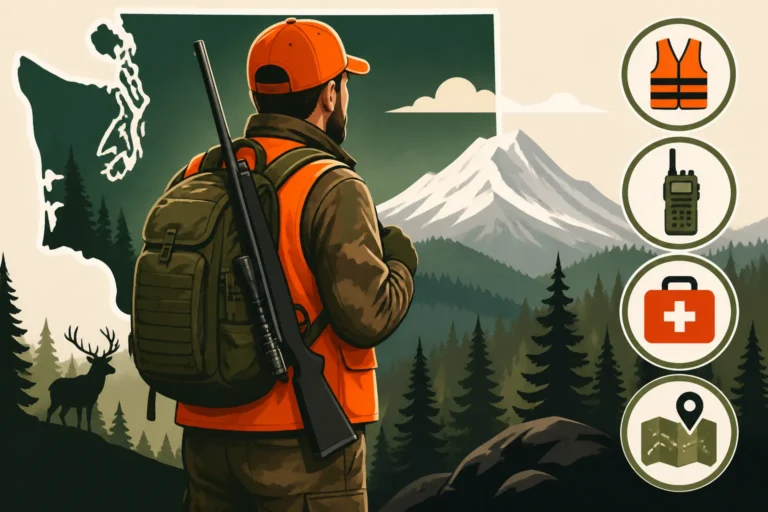
Hunting cougars, especially alone and without hounds, demands a high degree of situational awareness and safety planning. Cougar country is often rugged and remote. Always tell someone your hunt plan, including where you're going and when you expect to return. Pack a comprehensive First Aid Kit for a Remote Hunt and know how to use it. Carrying a satellite messenger or a two-way radio can be a literal lifesaver if you encounter trouble or need to report an emergency. While cougar attacks are rare, being prepared for any wildlife encounter is crucial.
When you're focused on tracks, it's easy to lose track of your surroundings. Continuously scan ahead and to your sides. Remember that cougars are ambush predators; they are often aware of your presence long before you are aware of theirs. Carrying a firearm you are proficient with, even if you’re only tracking for now, is a good idea. Should you stumble upon a cougar, make yourself look large, make noise, and never run. Understanding and adhering to Washington Cougar Season and Harvest Guidelines is also essential for a legal and ethical hunt. Always be prepared for an unexpected encounter, whether it's with a cougar or another hunter. If you do encounter an issue or have an accident, knowing how to handle Reporting an Accident in the Field is vital.
Disclaimer
The information provided in this guide is for informational purposes only and is not a substitute for professional advice. Hunting regulations and conditions can change rapidly. Always consult the latest Washington Department of Fish and Wildlife (WDFW) regulations, obtain the necessary licenses and permits, and prioritize safety in the field.