Hunting a Recent Burn for Elk
Hunting a recent burn for elk in Washington can feel like stepping onto an alien planet – the landscape is transformed, familiar landmarks are gone, and the ground underfoot is a chaotic mess of ash and fallen timber. Many hunters struggle to understand why elk would even be in such a devastated area, let alone how to effectively navigate and hunt it. This guide will walk you through the unique opportunities and challenges of pursuing elk in Washington's post-fire landscapes, helping you decipher the signs and adapt your tactics for success.
Why Recent Burns Are Elk Magnets in Washington
It might seem counterintuitive, but a wildfire, despite its destructive force, often sets the stage for a burst of life that can be incredibly attractive to elk. The initial devastation clears the way for new growth, creating a banquet that brings elk back, sometimes surprisingly quickly, to areas that were once choked with dense, less palatable vegetation.
Immediate Post-Fire Benefits for Elk
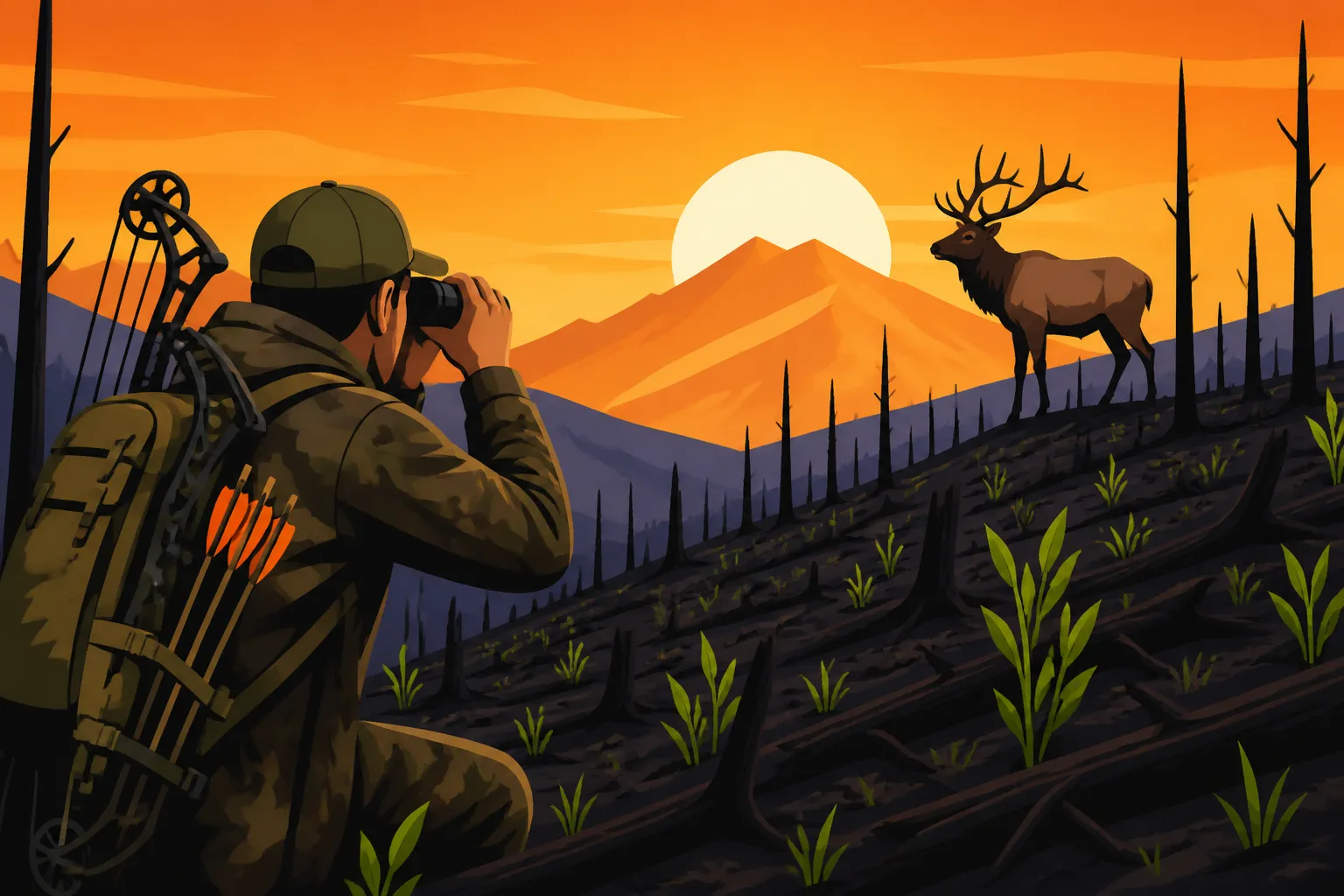
The immediate aftermath of a fire transforms the forest floor, and while it looks bleak to us, it opens up critical resources for elk. One of the biggest boons is increased visibility. Dense underbrush and timber that once made glassing impossible are gone, allowing elk to see danger coming and hunters to spot elk from a distance. But it's not just about visibility. The fire consumes thick, mature vegetation, reducing competition and allowing sunlight to hit the forest floor directly. This is crucial because it often vaporizes the duff layer, releasing nutrients back into the soil that were previously locked away. This nutrient flush, combined with sunlight, is a supercharger for the seeds and root systems lying dormant, waiting for their chance to sprout. Suddenly, areas that were difficult for elk to move through or forage in become more open, and new, tender shoots begin to emerge, offering a fresh food source.
The Regrowth Cycle and Nutritional Value
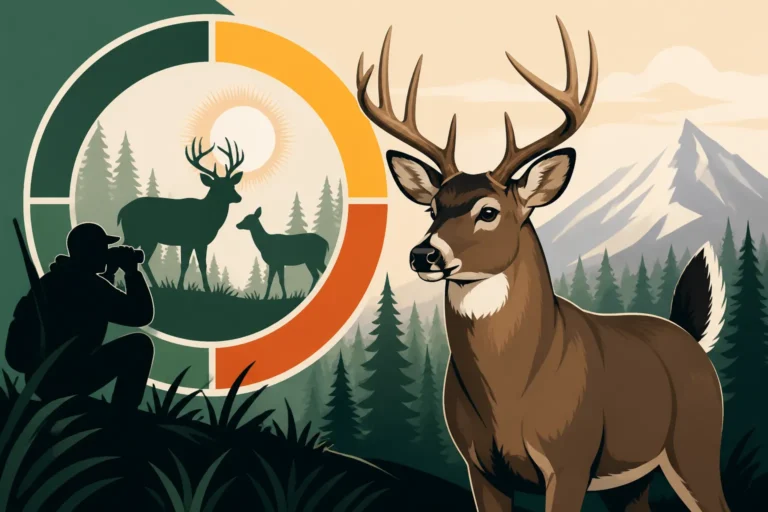
The real magic happens in the months and years following a burn as the regrowth cycle kicks into high gear. What hunters often call "the green-up" in a burn area is exactly what elk are after. The first plants to emerge are typically annual grasses, forbs, and pioneering shrubs like fireweed and huckleberry. These young plants are incredibly nutritious, packed with protein and moisture, making them far more palatable and digestible for elk than the older, tougher browse they might find in unburned forests. This high-quality forage acts like a magnet, drawing elk from surrounding areas into the burn to feed. As the ecosystem recovers, a mosaic of new growth emerges, often in patches determined by burn severity. Areas that burned hotter might take longer to recover, while areas with a lighter burn or "cooler" spots will green up rapidly. This creates varied feeding opportunities, attracting elk that graze on grasses and forbs, as well as those that prefer shrubby browse. Hunters who understand this process know that these regenerating areas, rich in diverse forage, become prime real estate for elk, especially during early and mid-season hunts. This regeneration is a key factor in understanding Elk Behavior in Deep Snow, which might drive them out of high-elevation burns later in the season.
Scouting and Locating Elk in Burned Areas
Finding elk in a burn requires a different approach than in unburnt timber. The open nature provides advantages for observation, but the chaotic landscape demands careful navigation and understanding of how elk use the new environment. It’s not just about looking for green shoots; it's about connecting the dots of topography, remaining cover, and vital resources.
Interpreting Burn Severity and Habitat
Not all burns are created equal. A "recent burn" can range from a light understory fire that leaves most large trees standing to a catastrophic crown fire that incinerates everything. Understanding the burn severity is paramount. Light-to-moderate burns, often characterized by standing blackened timber and a quickly regenerating understory, tend to be the most productive. These areas retain some cover for security and offer abundant, nutritious forage. Elk need both food and shelter, so finding the sweet spot where intense fire opened things up but didn't completely obliterate escape routes or bedding cover is key. Look for areas where the burn creates a mosaic: patches of heavy burn alongside fingers of unburned timber, or north-facing slopes that might have held moisture and burned less intensely. These varied landscapes provide thermal cover, bedding areas, and diverse forage, drawing elk in. Areas of dense, unburnt timber adjacent to the burn will often be used for security during the day, with elk moving into the burn to feed in the evenings and mornings.
Using Topography and Water Sources
Even in a burned landscape, elk still rely heavily on topography and water. Ridgelines, saddles, and drainages remain critical travel corridors. The fire might have changed what these look like, clearing out brush that once obscured them, but their functional importance to elk persists. Look for benches and draws within the burn that offer slight depressions or pockets of thicker growth where elk can feel secure. These become prime bedding areas. Water sources, more than ever, become focal points. Springs, seeps, and small creeks often survive even intense fires, and elk will gravitate to them for drinking and cooling. While you might not see the lush green around a spring in a burn, the moisture is still there, and elk will find it. When E-Scouting Washington GMUs Before the Draw, pay close attention to the intersection of varied burn severity, prominent terrain features, and perennial water sources. These are the hot zones to investigate.
Digital Tools and E-Scouting for Burns
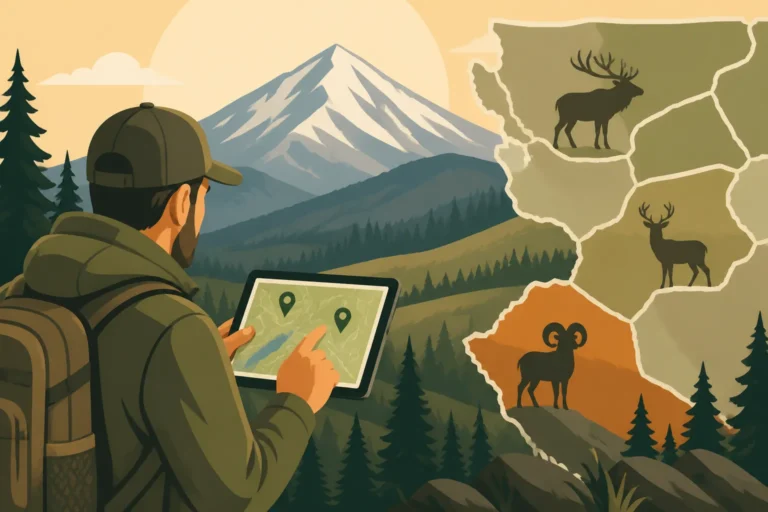
In today's hunting world, digital scouting tools are indispensable, and they become even more critical when planning a hunt in a recent burn. Platforms like GoHunt allow you to overlay historical fire data onto satellite imagery, giving you a bird's-eye view of burn perimeters, severity, and the subsequent green-up. You can look at different years of satellite imagery to see how quickly vegetation returned, identifying areas with significant regrowth versus those still recovering. Start by identifying recent fires within your target Washington Game Management Units Explained. Then, use the topo and satellite layers to pinpoint features like drainages, benches, and unburned timber islands that offer cover. Look for old logging roads or clearcuts that run into or through the burn; these often become travel routes for both elk and hunters. The ability to mark waypoints for potential water sources, escape routes, and bedding areas from your couch is a huge advantage. This digital reconnaissance, combined with on-the-ground scouting like Public Land Scouting in Washington Before Opening Day, will save you countless hours of aimless wandering in a bewildering landscape. Remember to download your maps for offline use, as cell service is often nonexistent in remote burn areas.
Hunting Tactics for Burned Timber
Hunting in burned areas demands flexibility and a keen eye. The open nature changes how you approach an animal, but the obstacles on the ground mean you can’t simply walk through like normal timber. It’s a game of observation, patience, and adapting to the challenging terrain underfoot.
Still-Hunting and Glassing Strategies
The increased visibility in burned areas makes both still-hunting and glassing highly effective. For still-hunting, your pace will be excruciatingly slow, often dictated by the downed logs, ash, and unstable ground. Every step needs to be deliberate, as the crunch of charcoal or snap of a burnt branch can carry far in the open air. Focus on moving quietly from one vantage point to the next, constantly scanning ahead and to the sides. Look for horizontal lines (an elk’s back) against the vertical lines of standing dead timber. Pay attention to subtle movements, patches of dark hide, or flicking ears.
Glassing, however, is often the most productive tactic in a burn. Find a high vantage point that offers a broad view of diverse burn severity – look into draws, across slopes, and towards the edges of unburned timber. Spend long periods behind your optics, systematically picking apart the landscape. A good set of 10×42 binoculars, or even 15×56 if you’re covering vast open country, is essential. Take your time. Elk often blend incredibly well with the black and grey tones of the burnt trees. Look for movement at first and last light when elk are most active. After spotting, consider a strategic Spot-and-Stalk Bear Hunting in Washington Without Bait approach, which applies perfectly to elk in these more open landscapes, using any remaining contours or burnt snags as cover for your advance.
Approach and Wind Considerations
Approaching an elk in a burn requires extreme stealth. With less cover, every move you make is amplified. Plan your stalk carefully, using the terrain to your advantage – dip into draws, sneak along ridges that offer slight elevation changes, and utilize any clumps of unburned brush or downed log piles for concealment. The wind is always your paramount concern. In open burns, wind can be swirling and unpredictable, especially in uneven topography. Always try to maintain an advantage, constantly checking for shifts. A strong crosswind can be your best friend, masking your sound, but a swirling wind can give you away in an instant. Get a good read on the thermals: typically, air rises in the morning and falls in the evening, but micro-climates in a burn can alter this. A quiet rain can also be a blessing, dampening the crunchy ash and making for quieter footfalls, something Westside hunters are familiar with when Still-Hunting Blacktails in Wet Washington Brush.
Dealing with Difficult Terrain and Blackened Obstacles
Hunting burns is physically demanding. The ground is often a minefield of fallen trees, unstable ash, and hidden holes. You'll constantly be climbing over, under, or around obstacles. This makes travel slow and exhausting, and it can also damage your gear. Boots are absolutely critical; choose durable, high-ankle boots with excellent support and stiff soles to navigate the uneven ground and protect your feet from sharp debris. Consider Boots for Steep Eastside Country for maximum support and traction. Your clothing will get dirty, almost guaranteed. The fine ash and soot will cling to everything, so be prepared to get messy.
Visibility can be a double-edged sword: while you can see far, elk can also see you far. Use the blackened trees as natural camouflage, but be mindful of your silhouette against the skyline. Furthermore, always be aware of falling snags (dead trees). They are unstable and can fall without warning, especially on windy days. This is a real danger in a severely burned forest. Before heading out, always check for current fire restrictions and closures.
Essential Gear for Hunting Washington Burns
Hunting in a burn demands specific gear considerations beyond your typical setup. The environment is harsh on equipment, and specific items can make a huge difference in comfort, safety, and success.
Footwear and Clothing for Ash and Char
Your feet are going to take a beating in a burn. As mentioned, sturdy, high-quality hiking boots are non-negotiable. Look for boots with good ankle support to prevent twists and sprains on uneven ground and a durable sole that can withstand sharp debris and hot ash. I personally prefer something with a relatively stiff sole that can handle walking on downed logs all day. Gaiters are also a great idea; they'll keep the fine ash and soot out of your boots and protect your lower pant legs from snags and tears.
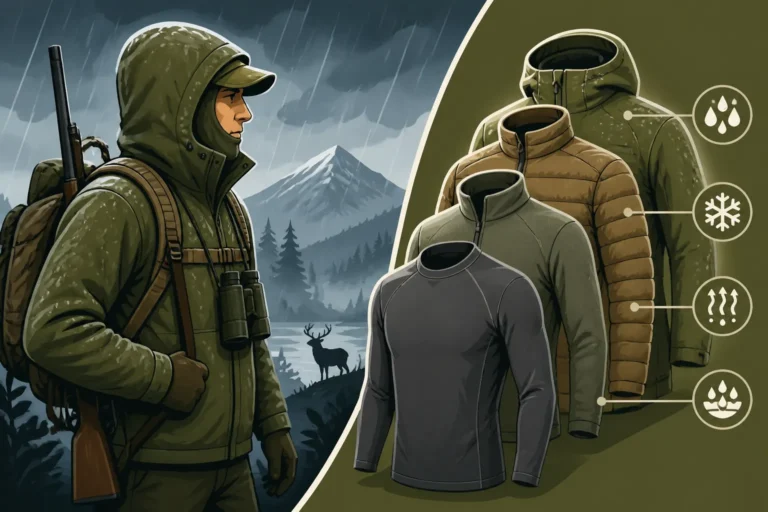
As for clothing, forget about staying clean. You'll be covered in black soot by the end of the day. Opt for durable, dark-colored outer layers that can stand up to abrasion from burnt timber and brush. Avoid light colors that will show every smudge. Layering is always smart in Washington, so think about a merino wool base layer for warmth and moisture wicking, a mid-layer for insulation, and a tough, breathable outer shell. Even if it's not raining, a good waterproof outer layer can help shed some of the loose ash and keep you a bit cleaner. You might also want to carry a pair of gloves to protect your hands when climbing over charred logs.
Optics for Spotting in Open Burns
With the increased visibility in many burn areas, optics become your primary scouting tool. A good pair of binoculars, like a 10×42, is essential for constantly scanning the landscape. For hunters glassing vast canyons or open slopes, a higher magnification binocular (like a 12x or 15x) mounted on a tripod can be incredibly effective, allowing you to pick out subtle details at extreme distances. Spotting scopes also shine here, enabling you to identify antler points on a distant bull or confirm if that dark blob is indeed an elk or just a burnt stump. When you're glassing from a high point, you might spend hours behind your glass, so investing in quality optics from brands like Vortex, Zeiss, or Swarovski, if your budget allows, will pay dividends. Make sure you have a comfortable harness for your binoculars; a neck strap will get heavy fast. A rangefinder is also vital for estimating distances across open, often featureless terrain.
Navigation and Safety in Burned Forests
Navigation in a burn can be disorienting. Familiar landmarks may be gone, replaced by a homogenous sea of black and grey. A reliable GPS unit or a smartphone with a hunting app like GoHunt, loaded with offline maps, is absolutely critical. Mark your truck, key terrain features, and any game sign you find. Pay attention to how the burn interacts with the surrounding unburned areas – these transition zones are often key and can help orient you. Finding Old Logging Roads on Satellite imagery before your hunt can identify routes that might be obscured on the ground but still offer a path.
Safety in a burn is paramount. As mentioned, dead snags can fall unexpectedly, especially on windy days. Always be aware of your surroundings. The air quality can also be an issue, as fine ash particles can be stirred up by wind or your movement. Consider carrying a simple dust mask if you have respiratory sensitivities. Always carry plenty of water, as burns can be surprisingly hot and dry, and water sources might be contaminated with ash. A well-stocked first-aid kit is essential for dealing with cuts, scrapes, and potential falls on the rough terrain. Also, make sure someone knows your hunting plan, especially if you’re planning on Solo Hunting Safety Precautions in a remote burn area. Remember, when you're successful, you'll also need gear for Packing an Elk Out of Washington's Backcountry, and that task is significantly harder through miles of downed, charred timber.
Disclaimer
Hunting is an inherently risky activity. This guide provides general information and advice; however, conditions in Washington's wilderness areas can change rapidly and unexpectedly. Always prioritize safety, understand and follow all Washington Department of Fish and Wildlife regulations, and be prepared for emergencies. Neither the author nor the publisher assumes any responsibility for accidents or injuries sustained while hunting.