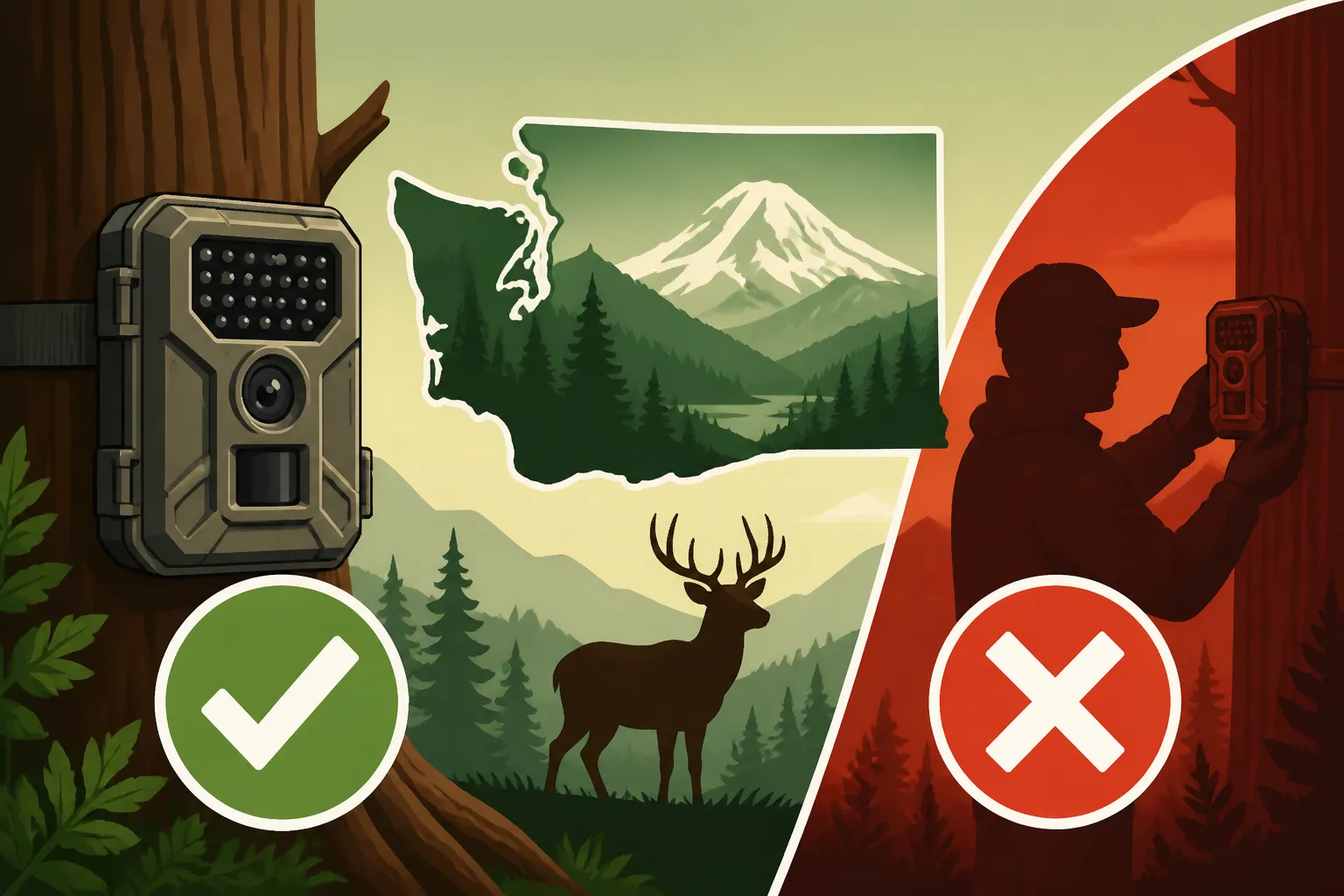
Trail Camera Rules on Washington Public Land
Figuring out where you can legally place a trail camera on Washington’s vast public lands can feel like navigating a minefield. It's frustrating when the rules aren't always crystal clear, leaving you worried about unknowingly breaking a regulation. This guide aims to clear up that confusion, diving deep into the specifics of Washington's trail camera rules so you can scout effectively and ethically without any unnecessary stress.
Navigating the Complexities of Trail Camera Regulations in Washington
It's easy to assume a camera is just a camera, right? You set it out, it records, you check it. But on public lands, especially in a state as diverse as Washington, it gets a lot more nuanced. The core issue often comes down to what constitutes "personal property" versus a "structure" or even "harassment" of wildlife. And let's be honest, the specific wording in regulations can sometimes feel like it was written in another language, leaving us scratching our heads.
Understanding Washington's Public Land Categories
One of the biggest hurdles is that "public land" isn't a single, uniform entity. We have federal lands, like National Forests and Bureau of Land Management (BLM) property, state lands managed by the Washington Department of Natural Resources (DNR), and even more specific areas like the Washington Department of Fish and Wildlife (WDFW) Wildlife Areas. Each of these agencies, while generally aligned, can have its own subtle variations in rules regarding structures, leaving things behind, or even how long something can remain unattended. It’s enough to make you want to throw your hands up and just stick to private land, but that defeats the purpose for many of us trying to utilize the amazing access we do have. If you’re trying to understand the full scope, you might want to review what goes into identifying different segments of public land hunting in Washington: Forest, DNR and BLM.
Imagine you've meticulously scouted a promising ridge in the Gifford Pinchot National Forest, found a killer travel corridor, and you're stoked to set up a camera. But then you start wondering, "Is this okay for National Forest land? Are there different rules than the DNR land near my house?" This is a real, common concern. These varying jurisdictions often have slightly different mandates. National Forests focus on multiple uses, including recreation, timber, and conservation. DNR lands are often "trust lands," managed to generate revenue for specific beneficiaries, which can influence access and rules. WDFW Wildlife Areas, on the other hand, are primarily for wildlife habitat and public recreation, often with more specific regulations to protect sensitive areas or reduce disturbance.
The Core State Regulations for Trail Cameras
At its heart, the Washington Department of Fish and Wildlife (WDFW) doesn't have a direct, explicit regulation that says "thou shalt not use trail cameras." However, their rules on baiting and harassment are what most frequently come into play and what most hunters worry about inadvertently violating. The big takeaway is this: you cannot use a trail camera to aid in the taking of game if it's placed in conjunction with bait. This isn't just about the camera being on the bait pile; it's about the intent and proximity. If you're using a camera to monitor a location where you've put out attractants (which themselves are mostly illegal for big game in Washington anyway), you're stepping into a very grey area, and it's best to avoid it entirely.
Furthermore, WDFW regulations generally prohibit the harassment of wildlife. While a static trail camera isn't usually considered harassment, if you're constantly checking it, creating undue disturbance, or pairing it with other tactics that unnaturally influence animal behavior, you could potentially run into issues. It's about maintaining ethical distances and minimal impact. Remember, the goal is to observe, not to alter the natural patterns of the animals. We want to understand elk movements for Washington Elk Hunting Tactics by Weapon Season, not change them.
Emerging Technologies and Rule Interpretations
The rise of cellular-enabled trail cameras and real-time live feeds has added a whole new layer of complexity to these regulations. When most of these rules were written, a trail camera meant a static box that stored images on an SD card you had to retrieve. Now, with instantaneous photo delivery to your phone, the line between "scouting" and "active hunting aid" can blur.
While WDFW hasn't specifically outlawed cellular trail cameras, the spirit of the law around electronic devices used to aid in hunting is always something to consider. For instance, using an electronic device to pinpoint an animal's exact location in real-time and then immediately pursuing it could be seen as an unfair advantage, akin to using drones for spotting game or other active electronic aids that are explicitly prohibited. The concern isn't just about the camera itself, but how it's being used. If you're sitting in camp, receiving an alert that a bull is at a specific waterhole, and you immediately pack up and head there, are you still "scouting," or is the camera actively directing your hunt? This distinction is where the rules become open to interpretation and where hunters need to exercise good judgment. It’s a dynamic landscape, and staying informed is crucial, especially as technology outpaces the rulemaking process.
Specific Rules for Different Public Land Jurisdictions
Given that Washington's public lands are a mosaic of different managing agencies, it's not surprising that while the spirit of the law remains consistent, the specific nuances can vary. Understanding these differences can save you a headache and ensure your scouting efforts are entirely above board.
National Forests and BLM Lands
On federal lands managed by the U.S. Forest Service (USFS) and the Bureau of Land Management (BLM), the primary guiding principles often revolve around "Leave No Trace" ethics and avoiding permanent structures or defacement of property. While a trail camera generally falls into a "temporary" category, there are still considerations.
You should never damage trees or natural features to mount a camera. That means no hammering nails, screwing bolts, or sawing limbs. Straps, bungee cords, or even zip ties are generally acceptable, provided they don't girdle the tree or damage its bark. The idea is that when you remove your camera, there should be no lasting evidence it was ever there. Furthermore, leaving a camera out for an excessive period, say, multiple seasons or even years, could be interpreted as abandoning property or creating a "structure," which is typically prohibited. These federal lands are managed for broad public enjoyment, and part of that is ensuring they remain wild and undisturbed. Think about the remote feeling you get when you're deep in the Pasayten Wilderness hunting access. Leaving a permanent fixture goes against that ethos. Many hunters utilize tools like GoHunt to scout these vast areas remotely, helping them pinpoint key features without having to physically disturb the landscape as much.
Washington Department of Fish and Wildlife (WDFW) Lands
WDFW Wildlife Areas and other managed lands often have more specific and sometimes stricter rules than broader federal lands, simply because they are managed intensively for wildlife and public recreation. These areas are critical habitat for many species, and WDFW aims to minimize human impact. While trail cameras are generally allowed, they might be subject to certain restrictions.
For example, some WDFW areas might have explicit rules against leaving any property unattended for more than a set number of days, or they might prohibit certain types of equipment altogether if they deem it disruptive to wildlife or other users. It's always a good idea to check the specific regulations for the WDFW Wildlife Area you plan to hunt. These rules are usually posted at access points or available in the Washington Big Game Pamphlet. The general rule of thumb is: if you can't carry it in and carry it out easily, it probably shouldn't be left there. This also extends to how you set up your camp, as seen in rules for backpack camps in Washington wilderness.
Department of Natural Resources (DNR) Lands
Washington DNR lands, which often include vast tracts of timberland, are managed for a mix of purposes, including timber production and public recreation. Access to these lands can sometimes be more fluid, with gate closures or seasonal restrictions that might impact when and how you can deploy a trail camera. For those interested, the rules on Washington DNR land open to hunting are detailed elsewhere.
Generally, trail cameras are permitted on DNR lands, but like federal lands, the emphasis is on being temporary and non-damaging. You should always ensure your camera is not interfering with active logging operations, road maintenance, or other commercial activities. Also, because DNR lands can see a lot of varied use – from hikers and mountain bikers to timber workers and other hunters – there's an increased chance of your camera being discovered, or even worse, stolen. Marking your camera clearly with your contact information is a good practice here, though it offers no guarantee against theft.
To give you a clearer picture, here's a general comparison of trail camera rules across different public land types in Washington:
| Land Type | General Stance on Trail Cams | Key Restrictions/Considerations | Recommended Practices |
|---|---|---|---|
| National Forests / BLM | Generally Allowed | No permanent structures, no damage to trees/vegetation, Leave No Trace. | Use straps, remove after season, don't leave indefinitely. |
| WDFW Wildlife Areas | Generally Allowed (check specifics) | May have specific limits on unattended property, avoid sensitive areas. | Check area-specific rules, mark clearly, remove frequently. |
| Washington DNR Lands | Generally Allowed | No interference with commercial operations, temporary placement. | Be aware of logging activity, mark clearly, use theft-deterrent measures. |
Best Practices for Ethical and Legal Trail Camera Use
Beyond simply knowing the rules, applying best practices ensures you're not just legal, but also an ethical and respectful user of our shared public lands. It's about minimizing your footprint, respecting wildlife, and being a good steward.
Placement and Concealment
When you're out there placing a camera, think about two main things: the animals and other people. For the animals, placing your camera off game trails or in areas that aren't obvious travel corridors helps reduce disturbance. If a camera is right on a heavily used trail, its presence, even if quiet, can alter animal behavior, especially if you're checking it frequently. Plus, placing it discreetly means less chance of drawing attention to your hunting spot from other hunters.
Concealment is also crucial for preventing theft and maintaining the integrity of the outdoor experience for others. Try to blend your camera into the natural environment. Face it away from direct sunlight to avoid lens flare. Use natural cover like thick brush or the back side of a tree. Avoid placing cameras where they are easily visible from roads, main trails, or popular campsites. Nobody wants to feel like they're being watched while enjoying nature, and a poorly hidden camera can give that impression. This discretion is part of the art of E-Scouting Washington GMUs Before the Draw and then verifying in the field.
Property Markings and Identification
This is a bit of a grey area that often leads to frustration. WDFW encourages hunters to clearly mark their trail cameras with their name, address, and phone number. This helps in a couple of ways: if a camera is found and deemed "abandoned," authorities can contact you, and it might deter some casual theft. However, many hunters are understandably hesitant to plaster their personal information on a piece of gear left in the woods, fearing it might invite theft rather than deter it.
There's no perfect answer here. Some opt for less identifying marks, perhaps just a WDFW customer ID number. Others use robust locking cables and discreetly placed cameras. The key is to weigh the risk and benefit for your specific situation. Just remember, if an unmarked camera is found and considered abandoned, it might be removed by land management officials.
Regular Checking and Maintenance
It might seem obvious, but regularly checking and maintaining your trail cameras is vital for several reasons. First, it ensures your batteries are fresh and your memory cards aren't full, so you're actually capturing the data you want. Secondly, it minimizes the impact on wildlife. The longer a camera sits, the more likely something could happen to it, or it could start to fail, becoming litter.
More importantly, it helps maintain the "temporary" status of your camera. Leaving a camera out for an entire year without checking it might start to blur the line into it being considered abandoned property or even a "structure," depending on the land manager's interpretation. Frequent visits, even just once a month, demonstrate active use and ownership. When you do visit, minimize your scent and disturbance. Approach carefully, swap cards and batteries, and get out. You’re trying to understand animal patterns, not change them with your presence. This practice also aligns with strategies for using trail cameras to find Washington bulls.
Common Pitfalls and Misconceptions
Despite our best intentions, it's easy to fall into traps or misunderstand certain aspects of trail camera use. Being aware of these common pitfalls can help you avoid unwelcome surprises or potential violations.
The "No Permanent Structures" Rule
This rule trips up a lot of hunters. On most public lands in Washington, building or leaving permanent structures is prohibited. While a trail camera strapped to a tree is clearly not a cabin, the question of "permanence" can be subjective. Is a camera left for a week permanent? A month? A year?
Generally, land management agencies consider anything left indefinitely, or for an unreasonably long period without active management, to be "permanent" or abandoned. The best way to avoid this is to adhere to a regular checking schedule and remove your cameras promptly at the end of the season or if you're no longer actively scouting that area. A common scenario is a hunter leaving a camera out all fall, then forgetting about it over winter, only to find it damaged or gone in the spring. While you might be able to get away with leaving them out for multiple months during a specific season, like from pre-season scouting through a general season, it's generally ill-advised to leave them out year-round without regular attention. This concept also ties into broader regulations like those governing backcountry camps in Washington wilderness.
Avoiding Accusations of Harassment or Illegal Baiting
This is probably the most significant concern for ethical hunters using trail cameras in Washington. As mentioned, WDFW prohibits the use of bait to attract big game for the purpose of hunting, and it also prohibits harassment of wildlife.
The rule about baiting is critical. If you place a trail camera within sight or scent of bait (which, remember, is illegal for big game anyway), it could be seen as using the camera to aid in an illegal activity. Even if you're just monitoring non-game animals, it's best to keep cameras well away from any potential attractants, as perception can become reality in the eyes of an enforcement officer.
Harassment is another delicate balance. While a passive camera doesn't harass, excessive human presence when checking cameras, especially during sensitive times like fawning or calving seasons, or during deep winter when animals are stressed, could be interpreted as undue disturbance. Always approach camera sites quietly, swiftly, and with minimal impact. Treat the area as if you expect a trophy animal to be bedded right behind the camera – because they might be! Knowing how to read a Washington GMU boundary helps ensure you're on legal ground when placing cameras.
Respecting Other Users and Private Property
Public land is shared by everyone: hikers, birdwatchers, photographers, and other hunters. Your trail camera setup should not infringe on their enjoyment or privacy. This means not placing cameras overlooking popular hiking trails, campsites, or areas known for high foot traffic, as it could make other users feel uncomfortable or spied upon.
Crucially, always know your property lines. Public lands often abut private property, and unknowingly placing a camera on private land is trespassing. Even if the camera is technically on public land but pointed at private land, it can create significant issues. Utilizing mapping tools like those offered by GoHunt, or checking WDFW's online maps and downloading Washington GMU maps before you head out, is essential. These tools can clearly show property boundaries, helping you avoid costly mistakes. Always verify your position, especially when hunting close to residential areas or agricultural fields. The last thing you want is to be dealing with a landowner complaint or a trespass violation, which is why understanding things like getting written permission on private land is so important.
Disclaimer
Please note: This article provides general information and recommendations. Hunting regulations and rules are subject to change. Always consult the most current Washington Department of Fish and Wildlife (WDFW) regulations pamphlet and relevant land management agency rules before engaging in any hunting or scouting activities. It is your responsibility to understand and comply with all applicable laws and regulations.