Washington Moose Permit Applications
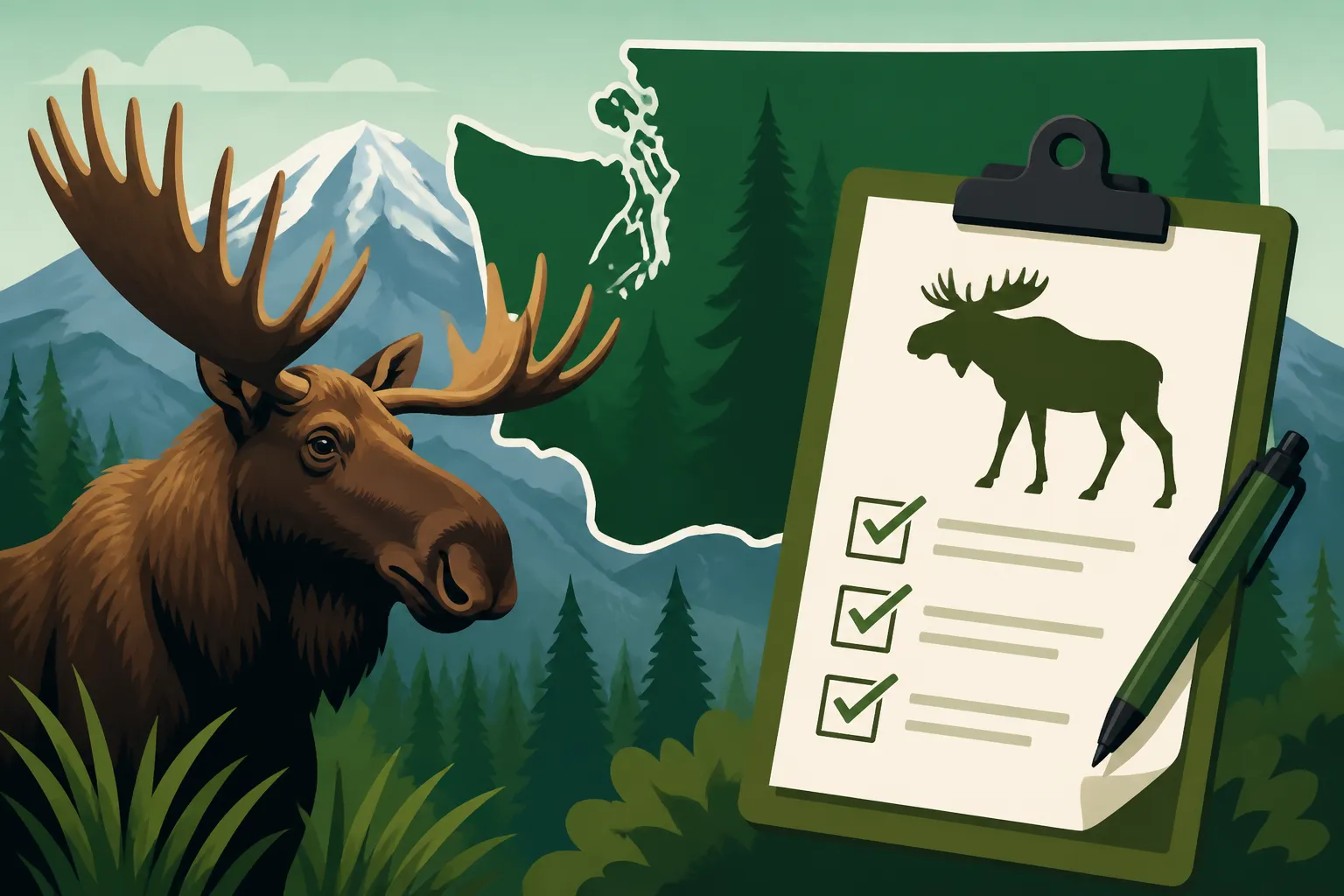
Getting a moose permit in Washington State can feel like hitting the lottery – a dream that many apply for year after year, often facing disappointment. The application process itself, navigating the WDFW system, and understanding the nuances of draw odds can be complex and frankly, a bit disheartening when you rarely see success. This comprehensive guide is here to walk you through everything you need to know about Washington moose permit applications, from herd management to boosting your chances, and what to expect if you're one of the lucky few.
Understanding Washington's Moose Management
Moose are an iconic, majestic species, and their presence in Washington is a testament to successful conservation efforts. However, they are also a species managed with extreme care, which is why permits are so incredibly limited. Understanding the state's approach to moose management is the first step in appreciating the value and rarity of these hunting opportunities.
Where Washington Moose Herds Roam
While once a rare sight, moose populations have steadily increased in Washington over the past few decades, primarily establishing strongholds in the northeastern part of the state. The Selkirk Mountains, in particular, are the heart of Washington's moose country, spilling into areas like Pend Oreille, Stevens, and Ferry counties. These areas provide the ideal mix of dense timber, wetland browse, and high-elevation forage that moose thrive on. You might also find smaller, more scattered populations showing up in other parts of the state, slowly expanding their range, but the northeast remains the primary focus for management and hunting permits. Learning about Washington Moose in the Selkirks can give you a better idea of their preferred habitat.
Beyond the Selkirks, smaller, isolated groups have been observed pushing into regions like the Okanogan Highlands and even parts of the North Cascades. These expansion efforts are exciting for wildlife enthusiasts, but for hunters, the numbers simply aren't there yet to support broader permit allocations. WDFW continually monitors these populations, but the vast majority of huntable moose are found in those specific northeastern units, making those areas highly competitive for the limited permits available.
Population Trends and Harvest Goals
Washington's moose population, estimated to be around 5,000 animals, is managed to ensure its long-term health and stability. The Washington Department of Fish and Wildlife (WDFW) sets conservative harvest goals each year, taking into account population surveys, calf recruitment rates, and overall herd health. These goals are designed to allow for controlled hunting while preventing overharvest, which is why the number of permits issued is so small. It's a delicate balance of providing recreational opportunity and ensuring the species continues to thrive.
The management strategy often focuses on maintaining a healthy bull-to-cow ratio and ensuring sufficient numbers of breeding-age animals. This means that if a particular unit shows a dip in recruitment or a high mortality rate for other reasons (like disease or predation), the permit numbers for that unit might be adjusted downwards, or even eliminated for a season. This dynamic approach means that the number of available permits, and thus your Washington Moose Population Numbers, can fluctuate slightly from year to year.
The Role of Limited Permits
The extreme rarity of Washington moose permits is directly tied to the state's conservation-first approach. Unlike general season deer or elk tags, moose permits are considered a "special permit" opportunity, often referred to as a "once-in-a-lifetime" species for many hunters, even though you can draw more than once if you're exceptionally lucky. This limited access ensures that the harvest pressure remains low, protecting the breeding population and minimizing disturbance to these magnificent animals.
This scarcity also elevates the value of the permit. For those who draw, it’s not just a hunt; it's a significant privilege and a profound experience. The limited number means that even with a strong and growing population, only a tiny fraction of applicants will ever get the chance to pursue a moose in Washington. This is the reality that every applicant grapples with, year after year, as they throw their name into the hat for one of the coveted tags.
The Washington Moose Permit Application Process
Applying for a Washington moose permit can feel like navigating a maze, especially if you're new to the WDFW system. It's crucial to understand each step, from eligibility to deadlines, to ensure your application isn't disqualified on a technicality. Every detail matters when the odds are stacked against you.
Eligibility and License Requirements
Before you can even dream of applying for a moose permit, you need to ensure you meet the basic eligibility criteria. First and foremost, you must possess a valid Washington hunting license for the current year. This isn't just a formality; it's a prerequisite. If you don't already have one, you'll need to purchase a general hunting license or a big game combo license before the special permit application window closes. It’s a common mistake to think you can apply and then buy the license later, but for the draw, your license needs to be active. You can find details on Applying Without a Washington Hunting Licence to understand the process.
Furthermore, applicants must meet specific hunter education requirements. If you were born after January 1, 1972, you're required to complete a hunter education course certified by the state. This ensures you have the foundational knowledge of safe and ethical hunting practices. While not directly tied to the moose draw, these are the fundamental gates you must pass through to participate in any big game hunting in Washington. Make sure your WDFW WILD account reflects these completed requirements, as discrepancies can cause issues.
Navigating the WDFW Application Portal
Once you're eligible, the actual application happens through your personal WDFW WILD account online. This portal is your one-stop shop for all licensing, tag purchases, and special permit applications. The interface can sometimes be a bit clunky, so take your time. You'll need to locate the "Special Hunt Permits" section, then select "Moose" from the list of species. The system will then guide you through selecting your hunt choices.
You'll be asked to rank your preferred hunt choices by Game Management Unit (GMU) and weapon type. This is where strategy comes into play, as you'll want to carefully consider the units you apply for. Washington allows How Many Hunt Choices Washington Allows for special permits, so you'll want to fill out as many as you're comfortable with to maximize your chances, though each choice comes with an application fee. Double-check all your selections before finalizing; once submitted, changes are typically not allowed.
Important Dates and Deadlines
Missing a deadline for a special permit application is a heartbreaking mistake that happens to too many hunters. The application period for most Washington special hunt permits, including moose, typically runs from April 20th through May 27th each year. This is a strict window, and WDFW is firm on cut-off times. Mark these dates on your calendar, set reminders, and apply well in advance to avoid last-minute technical glitches or unforeseen circumstances. Washington's April 20 to May 27 Application Window is critical to remember.
The draw results are usually posted in mid-June, often around the 15th to the 20th. You can check your results directly through your WILD account. If you're one of the incredibly fortunate few to draw a moose permit, you'll receive a notification and further instructions on how to purchase your tag. Be sure your contact information in your WILD account is up-to-date, so you don't miss any critical communications from WDFW.
Maximizing Your Application Odds
Let's be brutally honest: drawing a Washington moose permit is an uphill battle. The odds are notoriously low, and there's no preference point system to build up your chances over time. However, that doesn't mean you can't approach your application strategically. While luck plays a huge role, understanding the dynamics can make a slight difference in how you apply.
Understanding Draw Odds by Unit
One of the most important aspects of applying strategically is to research the draw odds for each specific GMU (Game Management Unit) offered for moose. WDFW publishes these statistics annually, detailing how many permits were issued for each unit and how many applicants applied. This information, while historical, provides a critical baseline for understanding which units are most popular and, consequently, have the lowest odds. Some units might have slightly better odds simply because they are more remote, harder to access, or have fewer moose, making them less attractive to the masses. Studying Washington Moose Draw Odds is absolutely essential.
For example, a unit with 5 permits and 1,000 applicants has vastly different odds than a unit with 2 permits and 800 applicants. While both are long shots, the former offers a slightly better mathematical chance. Tools like GoHunt's Insider platform, though primarily focused on western states with point systems, can still offer valuable insights into hunter pressure and unit characteristics, helping you to research the general terrain and access, even if their preference point tools don't directly apply to Washington's random draw. You'll want to carefully weigh the desire for a specific location against the statistical likelihood of drawing.
Choosing Your Hunt Choices Wisely
Since Washington allows you to list multiple choices on your special permit application, don't just put your dream unit for every choice. This is where that research on draw odds comes in. Many hunters will place their absolute dream unit as their first choice, regardless of the odds. That's perfectly understandable! But for subsequent choices, consider picking units with slightly "better" (read: still terrible, but statistically less terrible) odds, perhaps those that are less popular or have slightly more permits.
A common approach is to rank your true "trophy" unit first, followed by units that still offer a good hunting experience but might have marginally less competition. For instance, if you've done your E-Scouting a Washington GMU From Home and found a unit that looks promising but is also super popular, put it first. Then, for your second or third choice, consider a unit that's a bit more rugged, harder to access, or has historically seen fewer applicants. This thoughtful ranking won't guarantee a permit, but it can slightly increase your overall chance of success across your chosen options.
The Benefit of a Multi-Species Approach
While moose permits are a once-in-a-lifetime dream, many hunters apply for multiple special permits across various species, hoping to draw at least one coveted tag. Washington offers special permits for bighorn sheep, mountain goat, quality deer, and quality elk, in addition to moose. If you have the budget for the application fees, applying for multiple species means you're increasing your overall chances of drawing any special permit. This is particularly true for species considered Once-in-a-Lifetime Species in Washington like mountain goat or bighorn sheep, where the experience is similarly unique.
Think of it as diversifying your investment; while the odds for any single species might be low, the collective chance of drawing something improves. Many dedicated hunters use platforms like GoHunt to track their applications across multiple states and species, staying organized and informed about various draw dates and strategies. While Washington's random draw is unique, applying for Washington Special Hunt Permits and How to Apply for other species could be a smart way to get a special tag on the wall, even if it's not a moose. Just remember to manage your budget, as each application typically incurs a non-refundable fee.
Washington Moose Permit Application Timeline (General)
| Early April | WDFW releases the Big Game Hunting pamphlet for the new license year. Review moose permit details, units, and permit numbers. |
|---|---|
| April 20th | Special Hunt Permit application window opens online via your WDFW WILD account. Ensure you have a valid WA hunting license before applying. |
| May 27th (approx.) | Application deadline for all special hunt permits. Ensure your application is submitted and fees paid well before the final hour to avoid technical issues. |
| Mid-June (approx.) | Draw results are typically posted in your WDFW WILD account. Check your status actively. |
| Late June / Early July | Successful applicants receive notification and instructions on how to purchase their moose transport tag. This tag must be acquired before heading afield. |
| September – November | Moose seasons typically run in the fall, varying by unit and weapon choice. Specific dates are listed in the annual pamphlet. |
| December 31st | Deadline for Washington Harvest Reporting Requirements, even if you didn't harvest a moose. Failure to report can result in penalties and future application issues. |
What to Do If You Draw a Washington Moose Permit
The moment you see that "Successful" notification in your WDFW WILD account is surreal. Years of applying, hoping, and dreaming suddenly culminate in an incredible reality. But drawing the tag is just the beginning; the real work of preparing for a once-in-a-lifetime hunt is about to start.
Immediate Next Steps After a Successful Draw
First, take a deep breath, and maybe pinch yourself. Then, log back into your WDFW WILD account and follow the instructions to purchase your actual moose transport tag. Drawing the permit doesn't automatically mean you have the physical tag in hand. There's usually a window of time to complete this purchase, so don't procrastinate. Missing this step after drawing a permit would be an agonizing mistake. Ensure your Washington Big Game Licence and Tag Costs are paid.
Once the tag is secured, immediately dive into detailed research for your specific unit. Re-read the WDFW pamphlet section for your unit, noting any special restrictions, access points, or regulations. Start intense map study – both paper and digital. Use tools like OnX Hunt, which can show land ownership, topography, and potential access routes. Reach out to WDFW biologists if you have specific questions about recent moose activity or winter range conditions in your unit. Now is the time to gather all possible intelligence to make the most of this rare opportunity.
Planning Your Once-in-a-Lifetime Hunt
A Washington moose hunt is not a casual affair. It requires meticulous planning, physical conditioning, and often, specialized gear. Moose are incredibly large animals, and recovering one from rugged terrain is a monumental task. You'll need to consider how you'll get into your hunting area, whether that involves extensive hiking, horse packing, or utilizing designated motorized access. Packing an Elk Out of Washington's Backcountry gives you a good idea of the physical demands, and a moose is even larger!
Logistics like food, water, emergency communication (satellite messenger is highly recommended in remote areas), and potential spike camp locations need to be ironed out. If you're hunting with partners, define roles and responsibilities well in advance. Practice with your chosen weapon to ensure proficiency for shots at various distances and angles. This is the hunt of a lifetime, and every detail you plan now will contribute to a safer, more successful, and more enjoyable experience when you're finally in the field.
Ethical Hunting and Public Perception
With such a coveted tag, comes a heightened responsibility. Ethical conduct on a moose hunt is paramount, not just for the sake of the animal, but for the public perception of hunting as a whole. Moose are often found in areas that might be accessible to other recreationists, so maintaining a respectful and responsible demeanor is critical. This includes everything from proper game retrieval to leaving no trace in the backcountry.
If you are successful, ensure you know how to properly field dress and care for such a large animal, especially if hunting in warmer early-season conditions. The "gutless method" is often a preferred technique for breaking down a moose in the field. Remember, you'll likely need multiple trips or a team to pack out all the meat and trophy, so plan accordingly to avoid spoilage. Document your hunt, take respectful photos, and share your experience in a way that honors the animal and promotes responsible hunting practices.
Common Misconceptions and Frustrations
Even seasoned hunters find the Washington special permit system, particularly for moose, a source of both hope and considerable frustration. There are several common misconceptions that circulate, and it's important to set realistic expectations and understand the underlying mechanisms.
Washington's Random Draw System Explained
One of the biggest sources of confusion and frustration for hunters accustomed to other state systems is Washington's purely random draw. Unlike many Western states that implement a preference point or bonus point system – where your odds improve with each year you apply and don't draw – Washington operates on a clean slate every single year. This means your application from 10 years ago holds no more weight than someone applying for the very first time. Washington's Random Draw and No Preference Points is a critical concept to grasp.
While this system can feel unfair to those who have applied religiously for decades, it does mean that theoretically, anyone, including a brand-new hunter, has an equal chance of drawing in any given year. There's no strategy to "build points" or "wait it out." It’s a pure lottery. This removes some of the complex strategic thinking involved in point-based systems but replaces it with the stark reality that it truly is just a roll of the dice each spring.
The Realities of Low Odds
Let's not sugarcoat it: the odds of drawing a Washington moose permit are incredibly low. We're talking percentages that often hover well below 1%, sometimes even a fraction of a percent for the most popular units. It's not uncommon for thousands of applicants to vie for just a handful of permits. This reality can be tough to swallow, especially when you see year after year pass without success.
It's important to maintain perspective. This isn't a reflection of your hunting skill or dedication; it's simply a numbers game. WDFW is managing a precious resource, and the demand far outweighs the supply. While it's easy to get discouraged, remember that someone does draw every year. Keep applying if the dream is strong, but manage your expectations. Tools that analyze draw odds, like those you might find on GoHunt for other species, always highlight the competitive nature of these limited entry draws, and Washington's moose draw is among the toughest.
Dealing with Application Fatigue
The grind of applying year after year, paying the application fees, and constantly seeing "Unsuccessful" in your results can lead to what we call "application fatigue." It’s natural to feel a sense of weariness, questioning whether it's even worth continuing. This is especially true when there's no reward for persistence in Washington's random draw system.
My advice? If hunting a Washington moose is truly a deep-seated goal, keep applying. The small application fee is often a small price to pay for the chance at such an incredible experience. If you find yourself truly burned out, take a year off, or focus your energy on other general season hunts or special permits for different species where you might have better odds. Remember, the journey and the hope are part of the experience, but don't let the draw system detract from your overall enjoyment of hunting in Washington.
Disclaimer
Please note that hunting regulations, permit application periods, and fees in Washington State are subject to change. Always consult the official Washington Department of Fish and Wildlife (WDFW) website and the current year's Big Game Hunting Pamphlet for the most accurate and up-to-date information before applying or heading afield.