Washington Bighorn Sheep Permits
For many Washington hunters, the dream of drawing a bighorn sheep permit feels like chasing a ghost – an elusive, once-in-a-lifetime opportunity that seems almost unattainable. The reality is, these permits are incredibly rare, issued for a species that faces significant conservation challenges, making the application process complex and the odds long. This comprehensive guide will meticulously break down everything you need to know about Washington's bighorn sheep permits, from understanding the herds themselves to navigating the draw and preparing for the hunt of a lifetime.
Understanding Washington's Bighorn Sheep and Their Status
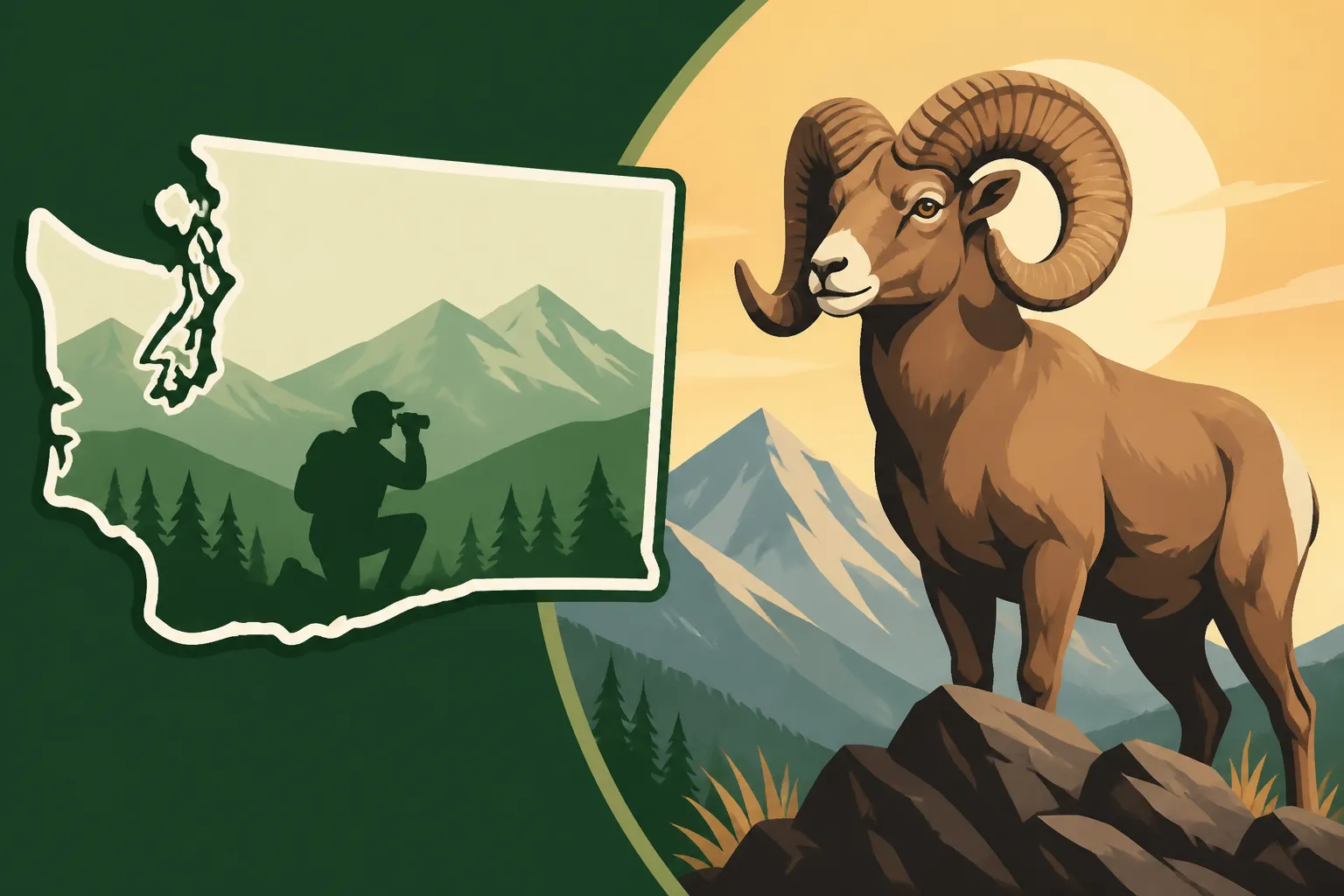
Washington state is home to some truly majestic bighorn sheep, but their populations are relatively small and localized compared to other Western states. This limited population is precisely why securing a permit to hunt one is such a coveted prize. Before you even think about applying, it's crucial to understand the species and the significant challenges they face.
California Bighorn Versus Rocky Mountain Bighorn in Washington
Washington is unique in that it hosts both subspecies of bighorn sheep: California bighorn and Rocky Mountain bighorn. While they share many characteristics, their distribution and some subtle features differ. The California bighorn, typically found in the central and eastern parts of the state's drier, more open country like the Sinlahekin Valley and Chelan Butte, are generally a bit smaller in body size and have horns that tend to flare out and then curl back tighter to the head. These sheep are resilient, often found in steep, rugged canyonlands and sagebrush-steppe environments.
In contrast, the Rocky Mountain bighorn sheep primarily inhabit the extreme southeastern corner of Washington, most notably in the Blue Mountains. These are generally larger animals with massive horns that can achieve impressive spreads, often spiraling widely. Their habitat is typically higher elevation, timbered ridges interspersed with steep, rocky outcrops and alpine meadows. Understanding which subspecies you're applying for, and the specific terrain they call home, is a critical first step. You can delve deeper into the specific populations by reading about California Bighorn Sheep in Washington and Rocky Mountain Bighorn Herds in Washington.
Bighorn Pneumonia and Herd Health Challenges
One of the most devastating challenges facing bighorn sheep across the West, including Washington, is respiratory disease, particularly bacterial pneumonia. This disease can decimate entire herds, especially after contact with domestic sheep or goats, which can carry the bacteria asymptomatically but transmit it to bighorns, where it proves lethal. Outbreaks have historically led to significant population declines in Washington, making herd management a constant, uphill battle for the Washington Department of Fish and Wildlife (WDFW).
These disease events directly impact permit availability. When a herd experiences a pneumonia outbreak, WDFW often has to reduce or even eliminate permits for that unit to allow the population to recover. This unfortunate reality means that even if you've been eyeing a specific unit for years, its permit allocation can change dramatically due to factors beyond anyone's control. It’s a stark reminder that conservation is paramount, and hunting opportunities are a direct reflection of healthy, viable populations. You can learn more about this critical issue by exploring Bighorn Pneumonia Die-Offs in Washington.
Conservation Efforts and Permit Management
Given the fragility of Washington's bighorn sheep populations, conservation efforts are at the forefront of WDFW's management strategy. These efforts include habitat improvement, disease monitoring, and strict management of domestic sheep grazing near bighorn ranges. Hunting permits are a carefully managed tool within this broader conservation framework. They are not issued for every herd every year; rather, they are strategically allocated to specific Game Management Units (GMUs) only when biologists determine that a sustainable harvest is possible without jeopardizing the long-term health and growth of the herd.
The revenue generated from permit sales, though small due to the limited number of permits, often directly supports these critical conservation programs. Hunters, by participating in this highly regulated system, contribute to the ongoing efforts to maintain and grow these iconic populations. It's a testament to the fact that hunting, when properly managed, is a powerful conservation tool, helping to fund the very programs that ensure these species thrive for future generations.
The Washington Bighorn Permit Application Process
Applying for a bighorn sheep permit in Washington is not like buying an over-the-counter deer tag. It's a specialized, often nerve-wracking process that requires careful attention to detail and strict adherence to deadlines. Missing a step means missing out on the slimmest of chances.
Navigating the WDFW Application Window and System
The application period for special hunt permits in Washington is a critical window, typically running from mid-April through late May each year. For 2024, the deadline was May 27th, and future years tend to follow a similar pattern. You'll need to submit your application through the WDFW WILD system, which is their online licensing and permit portal. It's highly recommended to do this well in advance of the Washington Special Hunt Application Deadline to avoid any last-minute technical glitches or forgotten details.
Before applying, you'll need a valid Washington hunting license. Even if you're a non-resident, you must purchase the appropriate license to be eligible to apply for special permits. The application itself involves selecting your desired species (bighorn sheep, in this case) and then choosing your hunt choices. Remember, WDFW uses a random draw system with no preference points, so every applicant has an equal chance each year, regardless of how many times they've applied in the past. This can be frustrating for those who have applied for decades, but it means a first-time applicant has the same shot as a seasoned veteran. You can find detailed instructions on How to Apply for a Washington Special Hunt Permit.
Understanding Hunt Choices and Group Applications
When applying for a bighorn permit, you typically get to rank up to four hunt choices. However, for species as rare as bighorn sheep, you often have very few, if any, units with available permits in a given year, or only one permit per unit. This means your choices are often limited. Each choice represents a specific GMU and hunt season. It’s absolutely vital to research each unit thoroughly before making your selections. Look at historical success rates, herd numbers, and access challenges. Some units might be incredibly rugged and require extreme physical conditioning, while others might be more accessible.
Another important consideration is group applications. For bighorn sheep, WDFW usually allows group applications of up to two hunters. If you apply as a group, both hunters must have a valid hunting license, and if your group is drawn, both individuals receive a permit. This can be a great option for hunting with a trusted partner, but it also means your odds are slightly different since you’re essentially pooling your applications. Be sure to coordinate thoroughly with your partner before submitting a group application to ensure everyone is on the same page regarding choices and commitment.
Checking Your Draw Results
The waiting period after the application deadline is often the hardest part. WDFW typically posts the special permit draw results in mid-June or sometimes early July. You can check your results by logging into your WILD account on the WDFW website. Don't expect a personal phone call or email if you're drawn; it's up to you to actively check your account. The rush of excitement when you see "Successful" next to your bighorn sheep application is an experience few hunters ever get to have.
If you are drawn, congratulations! This is when the real planning begins. If you aren't successful, which is the far more common outcome, don't despair. Many dedicated bighorn hunters apply year after year for decades before finally drawing. The low odds are just part of the game. For details on how to view your results, refer to Checking Washington Results in a WILD Account.
Analyzing Washington Bighorn Draw Odds and Strategies
Let's not sugarcoat it: drawing a Washington bighorn sheep permit is akin to winning a small lottery. The odds are astronomically low, making strategic application all the more important.
The Reality of Low Draw Odds
To give you a realistic picture, consider this: in a typical year, WDFW might issue only a handful of bighorn sheep permits across the entire state – sometimes as few as 10-20 permits total. When you compare that to thousands of applicants, the math becomes clear. For instance, some units might have hundreds of applicants for a single permit. This translates to draw odds that are often less than 1% for most units. This stark reality means that success is primarily a matter of persistence and sheer luck.
The lack of a preference point system in Washington means that every year, your name goes into the hat with everyone else's. There’s no accumulating points to increase your odds over time, which can be both a blessing and a curse. It levels the playing field for new applicants but offers no reward for years of trying. While it might sound discouraging, it also means that every time you apply, you genuinely have a shot, however slim. The best approach is to apply annually, consider it a small investment in a monumental dream, and simply hope for the best. You can get a general sense of the challenge by looking at Washington Draw Odds for Quality Elk, which, while higher than bighorn, still illustrate the difficulty of drawing highly desired tags.
Strategies for Improving Your Chances
While luck plays a massive role, there are a few subtle strategies that might slightly nudge the odds in your favor, or at least ensure you're making the most informed choices.
1. Research Specific Units: Don't just pick a unit because it sounds cool. Dive deep into WDFW's harvest reports from previous years. Look for units that historically offer permits, even if the numbers are tiny. Pay attention to success rates – a permit might be issued, but if no one harvests an animal, that tells you something about the hunt's difficulty or the herd's behavior. Platforms like GoHunt provide incredibly detailed insights and analytics for draw odds in various states, which can be invaluable for pinpointing units that might have slightly better (or at least less awful) odds or a higher success rate once drawn. GoHunt compiles historical data in an easily digestible format, helping you cut through the noise.
2. Consider Less Popular Units (If Available): Sometimes, a unit might have slightly fewer applicants simply because it's less known, harder to access, or offers a more challenging hunt. While bighorn sheep units are all popular, scrutinizing every option can sometimes reveal a diamond in the rough. This often means more rugged terrain, further pushes into the backcountry, or an area with lower ram density. Are you willing to embrace that challenge for a slightly better chance?
3. Group Application Strategy: If you're applying with a partner, remember that a group application uses both individuals' eligibility for that year. While it doesn't double your individual odds in the random draw, it does mean that if your group is drawn, you both get a tag. This is fantastic if you want to hunt together. However, if your goal is solely to maximize one person getting a tag, applying individually might be a consideration, though it won't impact the core random draw mechanism.
Considering Raffle Permits for Bighorn Sheep
Beyond the general special hunt permit draw, there's another avenue to hunt a Washington bighorn sheep: the WDFW raffle permits. Each year, WDFW typically offers one or two raffle permits for bighorn sheep. These permits are incredibly desirable because the winner receives a tag for one of the state’s premier units, often with extended seasons and sometimes even during prime rut periods, maximizing the chance of harvesting a mature ram.
The cost of a single raffle ticket is significantly higher than the application fee for the general draw, but the number of tickets sold is generally much lower than the number of applicants for the special permit draw, leading to relatively better odds. For instance, in 2023, a bighorn raffle ticket was around $15, but you could buy multiple tickets, increasing your individual chances. Many hunters view these raffles as a way to contribute directly to conservation while also getting a much better shot at the ultimate tag. It's a different kind of gamble, but for those truly dedicated to hunting bighorns, it's often a worthwhile one. You can find more information on Washington Raffle Permit Applications and Washington Multi-Species Raffle Options.
Key Bighorn Sheep Hunting Areas in Washington
Once you’ve applied and, hopefully, drawn a permit, the next step is to deeply understand the specific area you’ll be hunting. Washington’s bighorn country is rugged, remote, and unforgiving, requiring extensive physical and mental preparation.
Eastern Washington's Bighorn Strongholds
The vast majority of Washington's bighorn sheep hunting opportunities are concentrated in the eastern half of the state, primarily due to habitat suitability. The Blue Mountains, encompassing GMUs like the Wenaha-Tucannon and Asotin Creek, are classic Rocky Mountain bighorn country. This area is characterized by steep, timbered canyons, open ridges, and basalt cliffs. Hunting here often means hiking deep into roadless areas, covering significant vertical terrain, and glassing vast expanses. The rams in the Blues can be massive, but finding them in the dense timber and broken country requires immense effort.
Further north, in the Sinlahekin Valley and the Chelan Butte region, you’ll find California bighorn sheep. This landscape is distinctly different, featuring dry, open sagebrush hillsides, dramatic rock formations, and steep, brushy draws dropping down to rivers like the Okanogan. While the terrain is often less timbered than the Blues, it’s still incredibly challenging, with loose scree, treacherous slopes, and extreme temperature swings. Hunters in these units rely heavily on quality optics to locate sheep from a distance.
The Sinlahekin and Chelan Butte Units
The Sinlahekin Wildlife Area, managed by WDFW, is particularly notable as one of Washington's original bighorn reintroduction sites and a critical stronghold for California bighorns. It's an area of significant conservation focus, and permits here are highly sought after. Hunting in the Sinlahekin often involves spotting sheep from valley roads or hiking ridges, then making a strategic stalk through open, broken country. The sheep can be surprisingly visible but also remarkably adept at disappearing into the terrain.
The Chelan Butte unit offers similar challenges, with steep, south-facing slopes, scattered timber, and thick brush along canyons. Both areas demand a hunter who is physically fit, proficient with their optics, and patient. The sheep in these units are acutely aware of their surroundings, and any mistake in approach can send them scurrying over a ridge, often never to be seen again during your hunt. These are not hunts for the faint of heart, but the rewards are truly exceptional.
Access and Terrain Challenges in Bighorn Habitat
Regardless of the specific unit you draw, expect significant access and terrain challenges. Bighorn sheep thrive in steep, broken country that often deters predators and humans alike. Many of the best areas are deep in wilderness or roadless zones, requiring multi-day pack-ins. Roads, where they exist, can be rough, requiring high-clearance 4×4 vehicles.
One of the biggest hurdles is simply getting eyes on the sheep. They blend into the rocky, barren landscapes remarkably well. This means hours upon hours of Glassing Eastern Washington Breaks for Mule Deer or other high-country animals, systematically picking apart mountain faces with binoculars and spotting scopes. Once a ram is spotted, the stalk can be even more arduous, involving navigating dangerous cliffs, loose rock, and dense brush, often at high altitudes. This isn't flat-land hunting, and underestimating the physical demands is a common mistake. Planning your access, whether through designated trailheads or by utilizing game trails, is critical. Familiarize yourself with Washington Game Management Units Explained and their specific access points.
Essential Gear and Preparation for a Washington Bighorn Hunt
Drawing a bighorn permit isn't the finish line; it's the starting gun for an intense period of preparation. The right gear and a rigorous training regimen are absolutely non-negotiable for a successful and safe bighorn hunt.
Optics and Long-Range Shooting Setup
For bighorn sheep hunting, high-quality optics are not a luxury; they are an absolute necessity. You'll spend most of your hunt behind glass, meticulously searching distant slopes. A good pair of 10×42 or even 12×50 binoculars are your primary scouting tool, ideally paired with a bino harness for comfortable, all-day carry. But to truly evaluate a ram at extreme distances, a high-power spotting scope (20-60x or 25-75x) mounted on a sturdy tripod is essential. This allows you to differentiate legal rams, assess horn size, and plan your stalk. You can learn more about choosing your glass in Optics for Washington Elk and Deer Hunting.
Given the open, expansive terrain where bighorns often live, long-range shooting proficiency is also crucial. While you should always strive for the closest, most ethical shot, a bighorn hunt often presents opportunities at extended distances due to the sheep’s wary nature and the difficulty of closing the distance in open country. This means a reliable rifle setup capable of consistent accuracy out to 400-600 yards is highly recommended. Practice shooting from various field positions – prone, kneeling, and from a backpack rest – and know your rifle and bullet ballistics intimately. Consider a cartridge like a .270 WSM, 7mm Rem Mag, or .300 Win Mag, paired with a quality riflescope that has dialing turrets. For more on this, check out Rifle Setup for Washington Big Game.
Physical Fitness and Backcountry Gear
Bighorn hunting is arguably one of the most physically demanding hunts Washington offers. You will be hiking miles, often off-trail, with significant elevation gains and losses, frequently carrying a heavy pack in preparation for a potential harvest. Training should focus on cardiovascular endurance, leg strength, and carrying weight. Incorporate activities like trail running, hiking with a loaded pack (mimicking your anticipated pack-out weight), and stair climbing. Don't underestimate the impact of altitude, even in Washington's relatively lower mountains; if possible, train at elevation.
Your backcountry gear list needs to be robust and lightweight. A high-quality, comfortable backpack with a sturdy frame capable of hauling heavy loads is paramount for packing out meat and trophy. Layered clothing is essential to adapt to rapid temperature changes, from frosty mornings to hot midday sun. A reliable tent or shelter, a warm sleeping bag, and a portable cooking system are also critical for extended stays in remote areas. Even for a day hunt, always carry emergency supplies like a first-aid kit, fire starter, water filter, and a headlamp. Proper footwear, specifically sturdy, ankle-supporting boots that are well broken-in, is perhaps the most important item, as your feet will take a pounding. Prioritize Boots for Washington's Eastside Rock and Westside Mud that offer excellent traction and support.
Scouting and Pre-Hunt Planning
Unlike general season hunts, where you might have weeks or months to scout, drawing a bighorn permit often leaves a compressed timeline, but scouting is still critical. Utilize E-scouting tools like GoHunt, onX Hunt, and Google Earth to familiarize yourself with the terrain, potential bedding areas, water sources, and access routes. Mark key features, escape routes for sheep, and potential shooting lanes. Identify possible glassing points that offer expansive views of the unit.
If possible, make a physical scouting trip to the unit, even if it's just a few weeks or months before the season. This allows you to confirm your E-scouting observations, identify recent sign, check road conditions, and acclimate to the elevation and terrain. Pay attention to game trails, rub lines, and historical patterns of movement. A bighorn hunt is often a chess match against one of the most intelligent and wary animals in the West, and thorough pre-hunt planning can make all the difference between an unforgettable success and a frustrating, exhausting experience. Don't forget to practice E-Scouting Washington GMUs Before the Draw or after you draw for even better results.
| Washington Bighorn Sheep Permit Key Information | General Draw Application | Raffle Permit |
|---|---|---|
| Application Window | Mid-April to late May | Typically May-June |
| Submission Method | WDFW WILD Account | WDFW WILD Account (Raffle section) |
| Number of Permits (approx.) | 10-20 statewide | 1-2 statewide |
| Odds of Drawing | <1% (extremely low) | Relatively better than general draw (fewer total tickets) |
| Cost | License + Application Fee (~$10-20) | Raffle Ticket Price (e.g., $15-$25 per ticket, can buy multiples) |
| Preference Points | No | No (random draw among ticket holders) |
| Hunt Choices | Up to 4 (if available by unit) | Specific unit assigned to raffle winner |
| Group Application Allowed | Yes (up to 2 hunters) | No (individual winner) |
| Hunt Quality | Varies by unit | Often for premier units with extended seasons |
| Required License | Valid WA Hunting License | Valid WA Hunting License |
Disclaimer
The information provided in this guide is for general informational purposes only and does not constitute legal advice. Hunting regulations, seasons, and permit requirements in Washington are subject to change by the Washington Department of Fish and Wildlife (WDFW). It is the sole responsibility of every hunter to consult the most current WDFW hunting regulations pamphlet and relevant laws before participating in any hunting activity. Always confirm season dates, bag limits, and specific unit rules directly with WDFW.