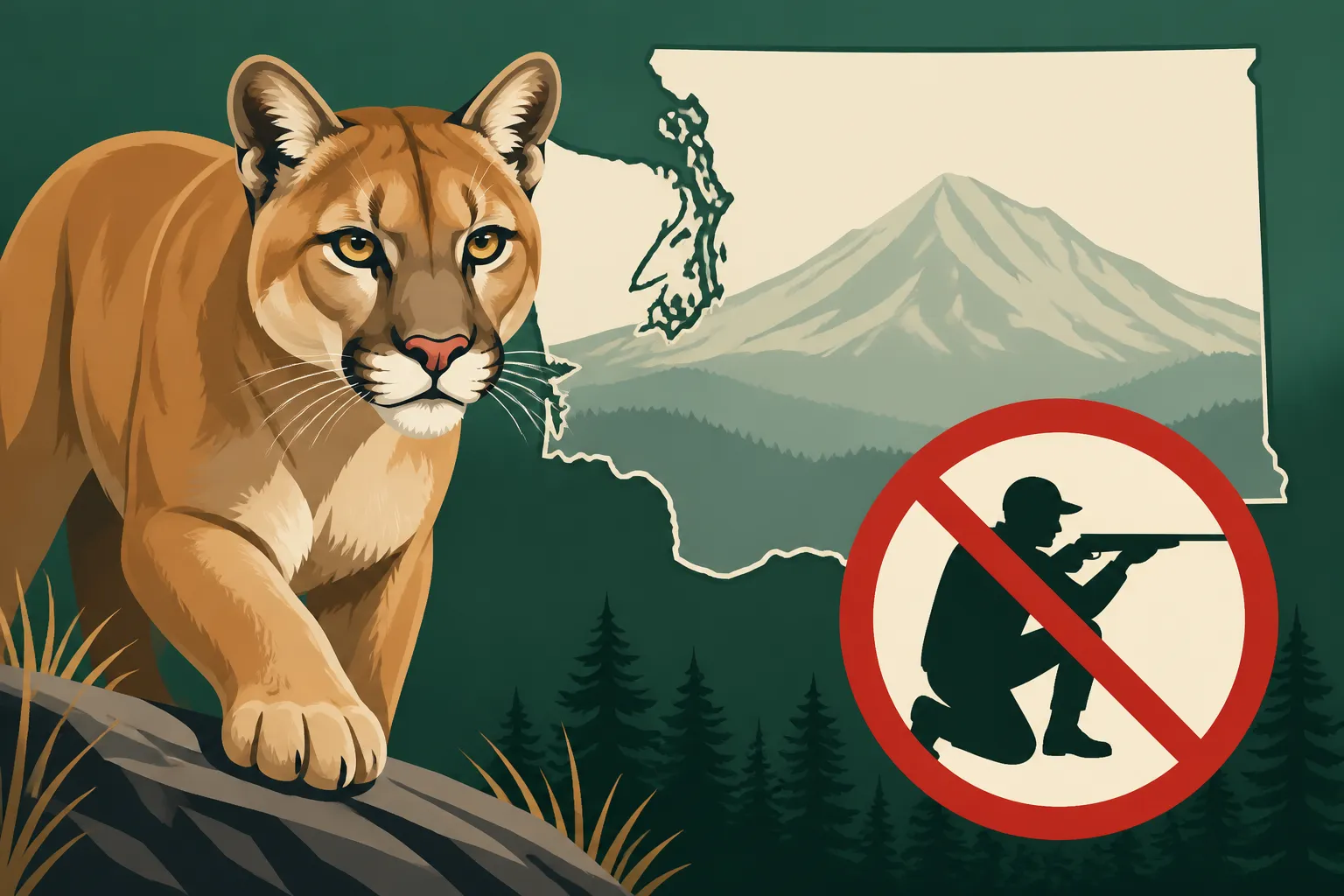
Washington Cougar Harvest Guideline Closures
One of the most frustrating aspects of hunting cougars in Washington isn't just finding one of these elusive predators; it's navigating the real-time harvest guidelines and knowing when a unit might suddenly close. Many hunters have experienced the gut punch of having a hunt planned, only to discover their target GMU closed days or even hours before they intended to head out. This comprehensive guide is here to unravel the complexities of Washington's cougar harvest guideline closures, helping you understand how they work and, more importantly, how to stay on top of ever-changing unit statuses.
Understanding Washington's Cougar Harvest Guidelines
Hunting cougars in Washington is a unique challenge, not just because of the animal's secretive nature, but also due to the highly dynamic management system employed by the Washington Department of Fish and Wildlife (WDFW). Unlike many other big game species with fixed season dates, cougar hunting often operates under a flexible framework designed to balance harvest objectives with population health. This system uses what are known as "harvest guidelines" or quotas, which are set annually for specific Game Management Units (GMUs) or groups of GMUs.
The Logic Behind Population Management
The primary goal of Washington's cougar harvest guidelines is to manage cougar populations effectively and sustainably. Cougars are apex predators, and their numbers directly impact prey species like deer and elk. WDFW biologists use a variety of data points, including research, harvest reports, and population models, to estimate cougar numbers in different regions. Based on these estimates, a "guideline" or target harvest number is established for each area. This isn't a hard and fast quota in the traditional sense, but rather a number that, once approached or met, triggers a review and potential closure of that GMU to further cougar hunting. The idea is to reduce localized cougar densities where necessary, mitigate potential conflicts with humans or livestock, and ensure healthy prey populations, all while maintaining a robust overall cougar population across the state. It's a tricky balancing act, and it requires constant monitoring.
Historical Context and the Hound Ban's Impact
Washington's approach to cougar management significantly changed with the passage of Initiative 655 in 1996, which effectively banned the use of hounds for cougar hunting by the general public. This legislative shift forced WDFW to adapt its management strategies. Prior to the ban, hound hunting provided a more efficient way to manage local cougar populations, as it allowed for selective harvest and more precise control over numbers. After the ban, harvest rates initially dropped, and cougar populations in some areas began to increase, leading to concerns about increased livestock depredation and potential impacts on deer and elk herds.
In response, WDFW developed the current harvest guideline system. This system relies heavily on general season hunters reporting their kills promptly, allowing the department to track harvest numbers in near real-time. This model is a direct result of needing a practical way to manage cougars without the use of hounds, making hunter compliance and communication absolutely critical for its success. Understanding What I-655 Banned for Cougar Hunters helps frame why the current system is structured the way it is.
How Cougar Harvest Guidelines Work by GMU
The granular detail of Washington's cougar management truly lies in how these guidelines are applied at the GMU level. It's not a blanket statewide quota; rather, each GMU or a cluster of GMUs has its own specific harvest guideline. This localized approach recognizes that cougar populations and their impacts vary significantly across Washington's diverse landscapes.
GMU Specific Quotas and Target Numbers
For each hunting season, WDFW publishes the cougar harvest guidelines for every GMU or group of GMUs. These numbers aren't arbitrary; they're derived from population modeling that considers habitat quality, prey availability, past harvest data, and reported conflicts. For example, a GMU with a dense elk herd might have a higher guideline than one with fewer prey animals or more human-cougar interactions.
When the cougar season opens, hunters are allowed to pursue cougars within the established general season dates, but with a critical caveat: the season in any particular GMU can close at any time if the harvest guideline for that unit is met or is projected to be met. This means you could be legally hunting one day, and the very next, the season in your GMU could be closed. It's not about filling a "quota" and then closing; it's about staying under that guideline to ensure sustainable management. This fluid nature is what makes constant vigilance so important for cougar hunters.
Reporting Requirements: Your Role in the System
This brings us to one of the most vital components of Washington's cougar management system: mandatory harvest reporting. If you are fortunate enough to harvest a cougar, the responsibility to report it immediately, or at least within 48 hours, falls squarely on your shoulders. This isn't just a bureaucratic step; it's the lifeblood of the harvest guideline system.
When you report your kill, WDFW updates its harvest count for that specific GMU. Without timely and accurate reporting from hunters, the department cannot effectively monitor progress toward the harvest guideline. Delayed reports can lead to overharvesting in a unit, which could negatively impact the cougar population, or, conversely, units staying open longer than necessary, distorting management efforts. Your prompt report is what allows WDFW to make informed, real-time decisions about closing units. Hunters play an active, indispensable role in the conservation of this species by adhering to these rules. You can find detailed instructions on Reporting an Unfilled Washington Tag or a filled one on the WDFW website.
Closure Triggers and Decision-Making
The decision to close a GMU to cougar hunting isn't made lightly. WDFW continuously monitors harvest reports. When the number of reported cougars in a specific GMU approaches or reaches its annual harvest guideline, biologists and enforcement officers convene. They look at the current numbers, the rate of harvest, and any recent late reports to project if the guideline will be exceeded.
If the projection indicates that the guideline is likely to be met or surpassed, WDFW will issue an emergency rule change to close the GMU. These closures are typically announced as quickly as possible, but it can still take time for the information to disseminate. This rapid response mechanism is in place to prevent overharvest, which is why the system demands such strict reporting from hunters and constant monitoring from the department. The goal is always to stay as close to the guideline as possible without going over, ensuring that the population remains healthy year after year.
Staying Informed: Checking for Cougar Unit Closures
Given the dynamic nature of cougar season closures, staying informed is not just a recommendation—it's an absolute necessity. Heading into the field without checking for current closures is akin to driving blindfolded; it's irresponsible and potentially illegal. Thankfully, WDFW provides several channels for hunters to get the most up-to-date information.
WDFW's Official Channels for Updates
The most authoritative source for cougar season closure information is, without a doubt, the Washington Department of Fish and Wildlife. They have a dedicated system in place to disseminate this critical information:
- WDFW Website: The WDFW website has a specific "Emergency Rules and Rule Changes" section, often updated daily during cougar season. This is where official closure announcements are posted. You'll want to bookmark this page and check it regularly, especially in the days leading up to and during your planned hunt. They often list the GMU, the reason for closure (harvest guideline met), and the effective date and time of the closure. It's often updated by late afternoon for closures effective the next day, but it's crucial to verify.
- Cougar Harvest Guidelines & Quotas Page: WDFW also maintains a page specifically listing the cougar harvest guidelines for each GMU, often with a running tally of reported harvests. This page allows you to see how close your target GMU is to its guideline before a closure is even announced.
- WDFW News Releases: For broader announcements or significant changes, WDFW will issue news releases. While these might not be daily updates on specific GMUs, they are important for understanding overall season dynamics or policy shifts.
- Local WDFW Offices: Don't hesitate to call your regional WDFW office if you have questions or need clarification. While online resources are primary, a conversation with a local wildlife manager can sometimes provide invaluable context.
Making it a habit to check these official channels, particularly the emergency rules and harvest guideline pages, every single day leading up to your hunt is non-negotiable for responsible cougar hunting in Washington.
Leveraging Online Tools and Apps (GoHunt)
Beyond the official WDFW channels, several excellent online tools and hunting apps can aggregate and display this critical information in a more user-friendly format, helping you quickly assess the situation. One such resource that many Washington hunters find incredibly useful is GoHunt.
GoHunt provides detailed information on hunting units, season dates, and often integrates real-time or near real-time updates directly from WDFW sources. Their platform typically includes:
- GMU-specific pages: You can often view an overview of a GMU, including its cougar harvest guideline and how many cougars have been reported. This visual representation can be much quicker to digest than sifting through multiple WDFW pages.
- Notifications: Many advanced hunting apps, including GoHunt, offer notification features. You can set alerts for specific GMUs or species, receiving a push notification on your phone when a closure is announced. This can be a game-changer, saving you from constantly checking websites manually.
- Integrated Maps: GoHunt maps often overlay GMU boundaries, making it easy to see exactly which areas are open or closed, which is vital when units close and you need to find an alternative.
While GoHunt and similar platforms are fantastic for convenience, always remember that they pull their data from official sources. It's good practice to cross-reference with the WDFW site, especially if you see conflicting information or are planning a high-stakes trip. Tools like GoHunt serve as excellent aids for planning and rapid status checks, ensuring you're always operating with the most current information. Understanding how to use E-Scouting Washington GMUs Before the Draw can also help you plan for these dynamic closures by having backup units in mind.
Planning Your Hunt Around Potential Closures
The unpredictability of cougar season closures requires a flexible and proactive approach to hunt planning. You can't just set a date and expect your chosen GMU to be open. Here's how to strategize:
- Have Backup Plans: Always identify several alternative GMUs that you'd be willing to hunt. Research their harvest guidelines, access points, and cougar potential well in advance. This way, if your primary unit closes, you're not scrambling at the last minute.
- Monitor Harvest Numbers: Start monitoring the harvest numbers for your target GMUs days, or even weeks, before your planned hunt. If a unit is quickly approaching its guideline, it's a strong signal that it might close soon, prompting you to consider your backup plans earlier.
- Hunt Early in the Season: While not a guarantee, hunting earlier in the general season (which typically starts in September, though rules can vary yearly) often provides a better chance of finding open units before many guidelines are met. However, cougars can be harder to locate in warmer early-season weather.
- Be Flexible with Your Dates: If possible, keep your cougar hunting dates flexible. If you see your preferred GMU is nearing its closure, you might be able to move your hunt up by a day or two to get in before the hammer drops.
- Check Daily, Even Hourly: On the day of your hunt, and especially if you're traveling a significant distance, check the WDFW emergency rule page and your preferred hunting app before you leave home. Check again if you have service once you reach your hunting area. It might seem excessive, but it's the only way to be truly compliant and avoid potential legal issues. Knowing How Long to Sit a Cougar Stand means you might be out there for a while, so getting that confirmation beforehand is key.
By being diligent and adaptable, you significantly increase your chances of a successful and legal cougar hunt in Washington.
Implications of Not Following Closure Guidelines
Disregarding Washington's cougar harvest guideline closures carries serious consequences, extending beyond just legal penalties. It strikes at the core of ethical hunting and responsible conservation, potentially jeopardizing future hunting opportunities for everyone.
Legal Consequences and Penalties
Hunting in a GMU that has been officially closed for cougar season is considered poaching, plain and simple. Ignorance of the law is generally not a defense, meaning "I didn't know it was closed" is unlikely to get you off the hook. The legal ramifications can be severe:
- Fines: Expect substantial monetary fines, potentially ranging into the thousands of dollars, depending on the severity and any additional violations.
- License Revocation: Your hunting privileges, not just for cougars but potentially for all species in Washington and even in other states (due to interstate compacts), can be revoked for multiple years. This is a devastating consequence for any passionate hunter.
- Confiscation: Your harvested cougar, and potentially your hunting equipment (firearms, bows, etc.), can be confiscated.
- Criminal Charges: In egregious cases, hunting in a closed unit can lead to criminal charges, which could result in jail time, especially if other violations (like hunting out of season, without a tag, or trespassing) are involved.
- Public Scrutiny: Beyond legal issues, poachers often face immense public backlash, harming the reputation of ethical hunters everywhere.
The WDFW enforcement officers are actively patrolling during hunting seasons, and they take violations of harvest guidelines very seriously. It's a risk simply not worth taking. Staying informed and compliant is the only legal and responsible path. Remember, if you're ever in doubt, it's always better to err on the side of caution and verify the status of your GMU before heading out. For more on what constitutes poaching, you can look into Washington Wildlife Violation Penalties.
Ethical Hunting and Conservation Responsibility
Beyond the legal implications, adhering to cougar harvest guidelines is a fundamental aspect of ethical hunting and responsible conservation. Every hunter has a moral obligation to respect wildlife management efforts and contribute to the health of the resource.
- Respect for the Resource: Cougars are magnificent animals, and their populations require careful stewardship. Hunting within established guidelines ensures that their numbers remain healthy and sustainable for future generations, preventing localized overharvest that could lead to population declines.
- Fair Chase: Ethical hunting is about fair chase and respecting the rules designed to protect the animal. Hunting a cougar when its unit is closed goes against the spirit of fair chase and undermines the conservation efforts that make hunting possible.
- Maintaining Public Trust: The ability to hunt cougars (or any species) relies heavily on public acceptance and trust. When hunters violate regulations, it erodes that trust and provides ammunition for anti-hunting sentiments, potentially leading to further restrictions or even bans on hunting practices.
- Supporting WDFW Efforts: The harvest guideline system is WDFW's best tool for managing cougars post-hound ban. By complying with reporting requirements and respecting closures, hunters directly support the department's ability to manage this species effectively, ensuring that hunting opportunities continue to exist. For details on Washington Cougar Population and Density, understanding how these guidelines help manage those numbers is key.
Ensuring the Future of Washington's Cougar Hunts
The future of cougar hunting in Washington hinges on the collective responsibility of every hunter. The current system, with its real-time closures, is a direct response to past legislative changes and ongoing management needs. If hunters consistently fail to comply with reporting requirements or disregard closures, it forces WDFW to reconsider its management strategies, potentially leading to more restrictive seasons, reduced opportunities, or even further legislative interventions.
By being diligent in checking for closures, promptly reporting your harvest, and adhering to all regulations, you're not just staying out of trouble; you're actively contributing to the long-term viability of cougar hunting in Washington. Your actions help demonstrate that hunters are responsible conservationists who play a vital role in wildlife management. This commitment ensures that future generations will also have the chance to experience the unique challenge and reward of pursuing Washington's elusive cougars. Knowing How Many Cougar Washington Has is often tied directly to how effectively these guidelines are followed and reported.
Here's a quick reference for understanding the general flow of cougar season management:
| Stage | Description | Hunter Action Required | Key Takeaway |
|---|---|---|---|
| Pre-Season | WDFW sets harvest guidelines for each GMU/area based on population data. | Research target GMUs, understand their specific guidelines. | Know your target GMU's guideline. |
| Season Opens | General cougar season begins (e.g., September 1st). | Hunt legally within open GMUs. | Season is not guaranteed to stay open for full duration. |
| In-Season | Hunters harvest cougars and report kills. | Report all harvests immediately (within 48 hours). Monitor GMU status. | Your report is crucial for system integrity. |
| Closure Trigger | Reported harvests approach or meet a GMU's guideline. | Intensify monitoring of WDFW emergency rules and harvest pages. | Anticipate potential closures. |
| GMU Closure | WDFW issues emergency rule; GMU officially closes to cougar hunting. | Immediately cease hunting for cougars in that specific GMU. | Hunting in a closed unit is illegal. |
| Post-Season | Final harvest data compiled; future guidelines adjusted. | Complete any outstanding harvest reports. | Accurate reporting impacts future seasons. |
Disclaimer
The information provided in this guide is for general informational purposes only and is not intended as legal advice. Hunting regulations, seasons, and harvest guidelines in Washington are subject to change by the Washington Department of Fish and Wildlife (WDFW). It is the individual hunter's responsibility to review and comply with all current WDFW regulations, pamphlets, and emergency rule changes before engaging in any hunting activity. Always consult the official WDFW website or contact WDFW directly for the most up-to-date and accurate information.