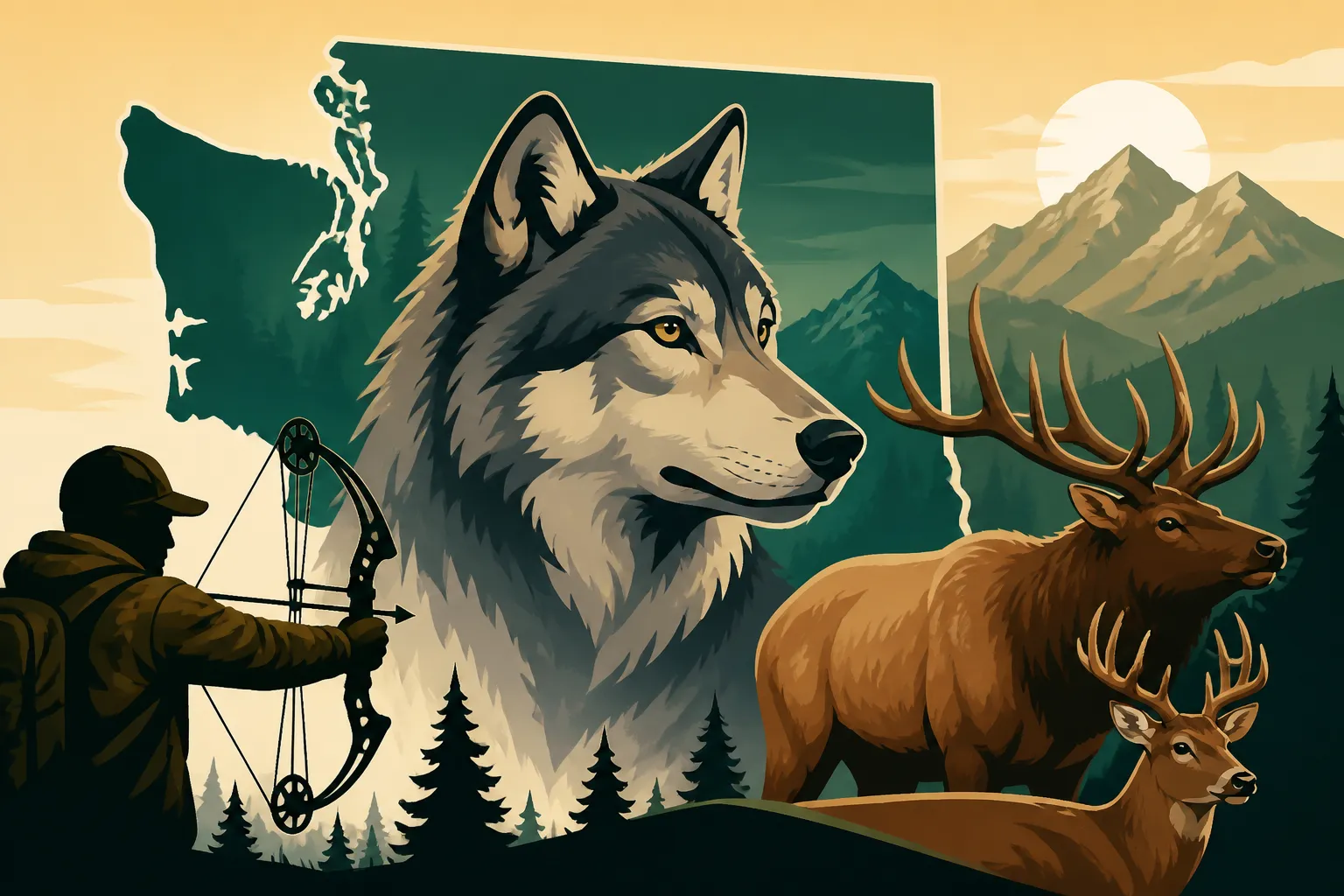
Washington Wolves and Big Game
The return of gray wolves to Washington's landscape has sparked passionate discussions, concerns, and even frustrations among hunters who have witnessed changes in their beloved big game populations. It's a complex topic, fraught with emotion and scientific debate, and it leaves many of us wondering how to navigate our hunting seasons in this evolving environment. This comprehensive guide aims to shed light on the dynamics of Washington's wolf populations, their impact on elk and deer, and how hunters are adapting to this new reality, offering a realistic look at what it means for your time in the field.
The Return and Resurgence of Gray Wolves in Washington
For decades, the idea of a wild wolf howling in Washington's forests was a distant memory. Now, it's a growing reality, bringing with it both ecological restoration and significant challenges for wildlife managers, livestock owners, and hunters alike. Understanding this historical context is crucial to grasping the current situation.
Tracing Their Steps: Historical Extirpation and Natural Comeback
Gray wolves were once widespread across Washington state, as they were across much of North America. However, by the early 20th century, concerted eradication efforts, driven by agricultural expansion and a misunderstanding of their ecological role, led to their complete extirpation from the state. For nearly 80 years, the forests and mountains of Washington remained silent of their ancient howls.
The turning point came with the federal protection of wolves under the Endangered Species Act in the 1970s. As populations rebounded in neighboring states like Idaho and Montana, and in Canadian provinces, it was only a matter of time before these resilient predators began to naturally recolonize their ancestral territories in Washington. The first confirmed breeding pack in Washington in recent history was documented in 2008 in Okanogan County, marking a significant milestone in the state's conservation efforts. Since then, their return has been a slow but steady process, characterized by new packs forming and expanding their ranges, primarily moving south and west from the initial recolonization points. This natural migration, rather than reintroduction, emphasizes the species' inherent drive to reclaim suitable habitat.
A Growing Presence: Current Distribution and Population Trends
The initial re-establishment of wolves occurred predominantly in the remote, rugged landscapes of northeastern Washington, particularly in areas bordering Idaho and British Columbia. These vast expanses of forest and mountains offered abundant prey and minimal human disturbance, ideal conditions for pioneer packs to thrive. Over time, as these core populations grew, individual wolves and new packs began to disperse, pushing into new territories.
Today, wolf packs are confirmed in multiple regions across Washington. While northeastern Washington remains a stronghold, packs have established themselves in the North Cascades, the Blue Mountains, and increasingly, in the south-central and even western portions of the state. It's a dynamic situation; new packs are often discovered, and existing packs expand or sometimes split. Wildlife agencies continually monitor these populations through various methods, including aerial surveys, collared animals, and public reports. While specific numbers fluctuate annually, the general trend has been one of increasing wolf numbers and expanding geographic distribution, indicating a successful, albeit challenging, recovery. This expansion means that hunters in areas previously untouched by wolves are now learning to share the woods with them, impacting everything from scouting to actual hunt days. Tools like GoHunt can be invaluable for hunters to stay informed about potential wolf activity reported in specific GMUs, helping to track these dynamic changes in real-time.
Unpacking the Impact: Wolves and Washington's Big Game Dynamics
The presence of wolves fundamentally alters the dynamics of big game populations. Hunters often express concern about fewer deer and elk, and while wolf predation is a natural process, understanding how these interactions play out on the ground is key to a realistic perspective.
Predation Patterns and Prey Vulnerability: How Wolves Hunt
Wolves are highly efficient apex predators, primarily targeting deer and elk. Their hunting strategy often involves cooperative efforts, with packs working together to test and pursue prey. They typically aim to cull the weak, old, young, or sick animals, which in theory can lead to healthier, more robust prey populations over time. However, in areas where prey populations are already stressed by factors like habitat loss, severe winters, or other predators, even "natural" levels of wolf predation can exacerbate declines, leading to noticeable impacts for hunters.
For instance, a pack of wolves moving through a valley can significantly reduce localized deer or elk numbers, even if the broader herd remains stable. This is a common frustration for hunters who see specific drainages or feeding areas suddenly devoid of animals. Wolves are opportunistic hunters, and while they prefer easy targets, they will also take healthy adult animals, especially if they are isolated or caught in deep snow. Factors like deep snow, rugged terrain, and escape cover all influence how successful wolves are and which animals become vulnerable. Understanding these predation patterns helps us appreciate the complex web of life that dictates big game numbers, rather than simply attributing all declines to a single cause.
Shifting Landscapes: Behavioral Changes in Deer and Elk
Perhaps one of the most visible impacts of wolf presence on big game is the alteration of prey behavior. Elk and deer, having evolved alongside predators for millennia, naturally adapt their movements and habits to minimize risk. In areas with established wolf packs, you might notice elk becoming more wary, spending less time in open areas, and utilizing thicker timber or steeper, more inaccessible terrain as refuge.
This shift in behavior can directly affect hunting opportunities. Where once you might have found elk grazing in a particular meadow at dawn, they might now be deep in the timber, moving only under the cover of darkness or in very dense brush. This makes finding and approaching animals significantly more challenging. Deer, particularly mule deer that often inhabit more open country in eastern Washington, might also exhibit increased vigilance, making them harder to spot and stalk. Hunters relying on predictable patterns or traditional glassing spots might find themselves needing to completely rethink their strategies. This new wariness can make already elusive game even more so, forcing hunters to become even more skilled in woodsmanship and stealth, similar to Still-Hunting Blacktails in Wet Washington Brush.
Navigating Coexistence: Washington's Wolf Management Framework
The return of wolves necessitates careful and often contentious management. Washington's approach is designed to balance the species' recovery with the needs of rural communities and the impacts on livestock and big game. It's a tough tightrope walk for wildlife managers.
The State's Approach: Balancing Recovery and Conflict Mitigation
Washington's wolf management is guided by a comprehensive plan that outlines a phased approach to recovery and eventual delisting from state endangered species protections. The core objective is to ensure a sustainable, self-sustaining wolf population while simultaneously addressing conflicts that arise as wolves expand into areas shared with people and livestock. This involves extensive monitoring, research, and public engagement. The state aims to achieve specific recovery objectives based on the number and distribution of breeding wolf packs across different recovery zones.
The phased approach means that management strategies evolve as the wolf population grows. In early stages, when wolf numbers are low, the focus is heavily on protection and allowing natural recolonization. As populations become more established, the plan allows for more proactive management of conflicts, particularly those involving livestock. This adaptive framework seeks to prevent situations where public tolerance for wolves erodes due to unmanaged conflicts, which could jeopardize the long-term success of recovery efforts. It's a complex balancing act, often criticized from both sides of the conservation spectrum, highlighting the deep-seated values and concerns that surround large predator management.
Addressing the Edge: Livestock Depredation and Lethal Control Protocols
One of the most persistent and politically charged issues associated with wolf recovery is livestock depredation. Ranchers and livestock producers face tangible economic losses when wolves prey on their cattle, sheep, or other animals. This direct conflict often fuels much of the public debate and frustration surrounding wolf management. The state has implemented protocols to address these depredations, emphasizing a hierarchy of responses.
Initially, non-lethal deterrents are strongly encouraged and supported. These can include range riders, guard dogs, fladry (colored flags on fencing), scare devices, and increased human presence. When non-lethal methods prove ineffective, and confirmed depredations continue, lethal removal of problem wolves may be authorized. This is never a first step and is only pursued under strict guidelines, typically after multiple confirmed attacks and the failure of non-lethal measures. These lethal removal actions are highly controversial, yet they are a critical component of the state's strategy to maintain social tolerance for wolves among rural communities. For hunters, understanding these protocols is important because they underscore the very real human-wildlife conflicts that arise when large predators return to a working landscape. The complexities involved are far greater than simply observing a wolf in the wild; they extend into the livelihoods of many people.
Adapting to a New Reality: The Hunter's Perspective on Wolves
For hunters, the presence of wolves isn't just an ecological footnote; it's a tangible factor that can influence everything from scouting plans to shot opportunities. Adapting to this new reality requires both an open mind and a willingness to adjust long-held strategies.
Strategic Shifts: How Hunters are Adjusting Their Approach
Many hunters have experienced firsthand the behavioral changes in big game where wolves are present. The once-reliable elk wallow might now be avoided, or deer patterns in a specific clearcut could be entirely different. This forces a significant strategic shift. Instead of relying solely on historical knowledge of game movements, hunters are now investing more time in scouting for fresh sign, observing new travel corridors, and identifying sanctuary areas that elk and deer might use to evade predators.
This often means more emphasis on deep backcountry exploration, utilizing steeper, thicker terrain that offers cover, or even focusing on areas with higher human presence where wolves might be less inclined to frequent. E-scouting tools and GPS applications, like those often featured on platforms such as GoHunt, become even more critical for identifying potential escape routes, remote bedding areas, and understanding public versus private land boundaries where game might feel safer. Hunters are learning to become more mobile, more patient, and to pay even closer attention to details like fresh tracks, scat, and recent kills that might indicate wolf activity in a particular area. Adapting to this new dynamic is akin to mastering specific techniques like Glassing Eastern Washington Breaks for Mule Deer or Public Land Scouting in Washington Before Opening Day – it requires new skills and keen observation.
Beyond the Hunt: Hunter Observations and Data Contribution
Hunters are unique participants in wildlife management because of the sheer amount of time they spend in the field, often in remote areas. This extensive presence provides an invaluable source of anecdotal and observational data regarding wolf activity and big game health. Many hunters report their wolf sightings, observations of wolf sign, and even suspected wolf kills to the Washington Department of Fish and Wildlife (WDFW), contributing to the broader understanding of wolf distribution and impacts.
This partnership between hunters and wildlife managers is crucial. While emotional responses are understandable, objective observations from the field can help inform management decisions and research efforts. Hunters can play a vital role in monitoring changes in big game behavior, identifying areas of increased predation, and providing a ground-level perspective that complements aerial surveys and remote camera studies. Responsible hunters recognize that their role extends beyond just harvesting an animal; it involves being stewards of the land and contributors to wildlife conservation, especially when dealing with a recovering, controversial species like the gray wolf. This collaborative approach ensures that diverse perspectives and valuable field insights are considered in the ongoing management of Washington's wildlife.
The Wider Ecological Web: Wolves as a Keystone Species
While the direct impacts on hunting opportunities are a primary concern for many, it's also important to consider the broader ecological role that wolves play. Their presence can ripple through an ecosystem in ways that are both complex and, at times, unexpected.
Ecosystem Engineers: Trophic Cascades and Habitat Effects
From an ecological standpoint, wolves are considered a "keystone species." This means their presence has a disproportionately large effect on their environment relative to their abundance. When wolves are reintroduced or naturally recolonize, they can initiate what are known as "trophic cascades" – a series of direct and indirect effects that extend through different levels of the food chain.
For example, by preying on elk and deer, wolves can reduce the browsing pressure on certain vegetation. This reduction allows plants, particularly woody species like aspen and willow, to recover and thrive. The increased vegetation can, in turn, provide better habitat for other species, such as beaver, songbirds, and fish, by stabilizing stream banks and creating more diverse riparian zones. The carcasses left by wolf kills also provide a critical food source for scavengers, including bears, coyotes, eagles, and ravens, enriching the entire ecosystem. While these ecological benefits don't always directly translate to easier hunting, they represent the complex natural processes that wolves help facilitate, shaping the very landscape we hunt in.
The Future Landscape: Challenges and Opportunities for Conservation
The re-establishment of wolves in Washington is an ongoing story, filled with both challenges and opportunities. The challenges are clear: managing human-wildlife conflict, addressing livestock depredation, and navigating the passionate debates among various stakeholders, including hunters, ranchers, and conservationists. These conflicts require continued dialogue, adaptive management, and a willingness to find common ground.
The opportunities lie in the restoration of a more complete and resilient ecosystem. As wolves reclaim their ecological niche, they contribute to the natural processes that have shaped North American wilderness for millennia. For hunters, this means adapting to a dynamic landscape where big game behavior is increasingly influenced by predator presence. It encourages a deeper connection to the wild and a more holistic understanding of wildlife management. The future of Washington's wolves and big game will depend on continued research, flexible management strategies, and the collective commitment of all stakeholders to coexist and steward our shared natural resources. Tools available from resources like GoHunt can help track herd data and permit statistics over time, allowing hunters to see how various management decisions and environmental factors, including wolf presence, might be influencing outcomes for big game in specific Washington Game Management Units Explained.
Ultimately, the presence of wolves in Washington means a wilder, more complex hunting experience. It demands more from us as hunters, but it also offers a deeper connection to the raw, untamed essence of the wild.
Disclaimer
This article is for general informational purposes only and does not constitute professional advice. Laws, prices and regulations vary by location and change over time. Consult a qualified professional for guidance on your specific situation.