Mountain Goat Translocations in Washington
It's incredibly frustrating when we see iconic wildlife populations struggling, especially magnificent creatures like Washington's mountain goats. You watch the news, read the reports, and wonder what's being done to ensure these animals not only survive but thrive. This guide is all about one of the most proactive and fascinating conservation tools in our kit: mountain goat translocations. We'll delve into why these moves happen, how they're pulled off in some of the most rugged terrain imaginable, and the impact they have on the future of hunting and wildlife across our beautiful state.
Understanding Mountain Goat Populations in Washington
Before we talk about moving these amazing animals, it’s really helpful to understand where they come from, where they are now, and the different challenges they face. Washington State is home to two main groups of mountain goats, and their stories are quite different, which is a big part of why translocations become necessary.
A Brief History of Washington's Mountain Goats
Historically, mountain goats have roamed the high, craggy peaks of Washington's Cascade Range for thousands of years. They are truly an animal of the alpine, designed for incredible feats of climbing and living in places most other big game can't even dream of accessing. Their natural range was extensive throughout the North and South Cascades, extending into some of the isolated, high-elevation areas in northeastern Washington. Early explorers and settlers often marvelled at their resilience and ability to navigate such unforgiving landscapes.
However, like many wildlife species, mountain goat populations weren't immune to human impacts. While their remote habitat offered some protection, unregulated hunting in the late 19th and early 20th centuries, combined with habitat fragmentation from logging, mining, and the development of mountain passes, began to take a toll. Although specific historical numbers are hard to pinpoint, evidence suggests declines in some areas. Conservation efforts, including regulating hunting and establishing protected wilderness areas, slowly helped stabilize some of these native herds. Understanding the historical context helps us appreciate the delicate balance that WDFW and other agencies strive to maintain today.
The Olympic Mountain Goat Story
Now, here's where things get interesting and a bit controversial. The mountain goats on the Olympic Peninsula? They weren't naturally there. This herd actually originated from a small number of goats – about a dozen – that were introduced to the Olympic Mountains in the late 1920s from other parts of Washington and British Columbia. The idea at the time was to "enhance" the wildlife viewing opportunities in the newly established Olympic National Park. It seemed like a good idea, right? New animals, new experiences.
Fast forward several decades, and those original dozen goats had exploded into a population of over 700. While impressive from a biological standpoint, this growth came with significant ecological costs. Mountain goats, being non-native to the Olympics, began to have a noticeable impact on the fragile alpine ecosystem. They grazed on rare, endemic plants that hadn't evolved defenses against such heavy herbivory, and their constant trampling damaged sensitive soils. Even more pressing, they became habituated to humans, seeking out salt from hikers' sweat and urine, which led to increasingly bold and sometimes aggressive encounters. This created a serious safety concern for park visitors, and sadly, in 2010, one hiker was gored to death by a goat. This tragic incident underscored the urgent need for a solution, ultimately leading to the massive translocation effort aimed at removing these non-native goats from the Olympics, which you can read more about in our article on Olympic Mountain Goat Removal.
Cascade Mountain Goat Herds
In stark contrast to the Olympic story, the mountain goats in the Cascade Range are native, an integral part of Washington's natural heritage. These herds are found throughout the North and South Cascades, from the peaks overlooking the Methow Valley to the rugged terrain of the Gifford Pinchot National Forest. They represent the species' true home in our state.
However, even these native populations face their own challenges. While overall numbers are generally stable or slowly increasing in some areas, many herds are small and isolated, making them vulnerable to disease, habitat changes, or inbreeding. Some historical ranges still lie vacant, or populations are far below what the habitat could support. This is where translocations play a vital role – not just in removing problem goats, but in bolstering these native, cherished herds, ensuring their long-term health and genetic diversity. Knowing where to find these Washington Mountain Goat Herds is a great start for anyone interested in their conservation or viewing.
Why Translocate Mountain Goats?
The decision to translocate a wild animal isn't taken lightly. It's an incredibly complex, expensive, and logistically challenging undertaking that involves significant risks to both the animals and the personnel involved. So, why do wildlife managers go through all this trouble? There are several compelling reasons, ranging from ecological recovery to public safety.
Ecological Restoration and Habitat Suitability
One of the primary drivers behind mountain goat translocations is the goal of ecological restoration. In many cases, these projects aim to re-establish mountain goat populations in historical habitats where they've either disappeared entirely or exist in critically low numbers. Think about it: a species that once thrived in a particular mountain range, but due to past human impacts or natural events, is no longer there. Reintroducing them helps restore the natural balance of that ecosystem.
For instance, goats might be moved to specific wilderness areas within the Cascades, like parts of the Glacier Peak and Alpine Lakes Wilderness, where surveys indicate suitable habitat but a lack of robust goat numbers. These areas offer prime conditions – steep, rocky terrain, abundant alpine forage, and minimal human disturbance – essentially a perfect home waiting for its original inhabitants. By carefully selecting release sites, wildlife biologists ensure the translocated goats have the best chance to establish a self-sustaining population, contributing to the overall genetic health and distribution of the species across the state.
Managing Overpopulation and Human Conflicts
This particular reason hits close to home for anyone who followed the Olympic mountain goat situation. When a species, especially a large and powerful one like a mountain goat, becomes overpopulated in an area where it's not native, or where it becomes habituated to humans, it can lead to serious problems. The Olympic National Park, a place cherished by hikers and wildlife enthusiasts, became a hotbed of human-goat conflicts. The goats, initially a novelty, became a nuisance, then a danger, as they aggressively sought out salt and nutrients from human sources.
The long-term goal for the Olympic National Park goats was complete removal. Translocation offered a humane alternative to lethal removal for a significant portion of the population. Instead of culling, these animals were captured and relocated to the native ranges of the Cascade Mountains, effectively killing two birds with one stone: removing a problematic non-native species from a sensitive ecosystem while simultaneously augmenting struggling native populations elsewhere. This pragmatic approach highlights the difficult decisions wildlife managers sometimes face when balancing conservation goals with public safety and ecological integrity.
Genetic Diversity and Herd Health
Imagine a small, isolated human community where everyone is related. Over generations, this can lead to a lack of genetic diversity, making the community more susceptible to certain diseases or less adaptable to change. The same principle applies to wildlife. Many native mountain goat herds in the Cascades are relatively small and geographically isolated by valleys, rivers, or human development. This isolation can lead to reduced genetic diversity over time, which weakens the herd's overall health and resilience.
Translocating goats from a healthy, robust source population to a smaller, isolated one acts as a genetic booster shot. By introducing new genetic material, wildlife managers can increase the overall genetic diversity of the recipient herd, making it stronger and more adaptable. This doesn't just improve resistance to disease; it can also enhance reproductive success and general fitness, ensuring that these vital populations can withstand future environmental challenges. It’s a proactive conservation strategy that looks beyond immediate numbers to the long-term viability of the species.
The Process of Mountain Goat Translocation
You might be thinking, "How do you even begin to move a wild mountain goat from one mountain range to another?" It's not like coaxing a family pet into a carrier! The process is an incredible display of skill, specialized equipment, and careful planning. It's truly a feat of modern wildlife management that relies on a deep understanding of animal behavior and physiology, often performed in extreme conditions.
Capture Methods and Logistics
The capture phase is arguably the most dramatic and challenging part of any mountain goat translocation. These animals live in some of the most inaccessible terrain imaginable, often on sheer cliffs or high alpine ridges. The primary method involves the use of helicopters and highly skilled crews. One technique is net-gunning, where a trained crew member in the helicopter uses a net gun to capture a goat, quickly immobilizing it. Another method involves darting a goat with a tranquilizer from the air.
Once a goat is captured, the clock starts ticking. Ground crews, often already positioned in rugged locations, move in swiftly. They assess the animal's condition, blindfold it to reduce stress, and secure its legs to prevent injury. The goat is then placed into a specially designed sling or large cargo net, often suspended below the helicopter, for transport to a base camp. This initial journey is short but critical, as minimizing stress and handling time is paramount to the animal's survival. The terrain itself adds layers of complexity, requiring intimate knowledge of the mountains and precise coordination, much like the intense planning that goes into Packing an Elk Out of Washington's Backcountry.
Health Checks and Vetting
At the base camp, usually a remote clearing accessible by vehicle or helicopter, a team of veterinarians and wildlife biologists springs into action. Each captured mountain goat undergoes a thorough health check-up. This isn't just a quick look-over; it's a comprehensive examination. Vets draw blood samples to screen for diseases and genetic markers, check vital signs, and assess overall body condition. They might take measurements, weigh the animal, and attach radio collars or ear tags for future monitoring. This stage is crucial for several reasons.
Firstly, it ensures that only healthy goats are translocated, preventing the potential spread of disease to recipient populations. Imagine moving a sick goat into a new herd – it could devastate the entire population! Secondly, the collected data provides invaluable scientific information about the health and demographics of the source population. This data is then used to refine future management strategies and to track the success of the translocation post-release. GoHunt, for example, often features articles that delve into how such scientific data informs conservation strategies, helping hunters understand the broader picture.
Transport and Release into New Habitats
Once the goats have been deemed healthy and processed at base camp, they are prepared for the final leg of their journey: transport to the designated release site. They are typically placed in individual custom-built transport crates, which are designed to be dark, quiet, and secure, further reducing stress during travel. These crates are then loaded onto trucks or, for more remote sites, often sling-loaded again by helicopter.
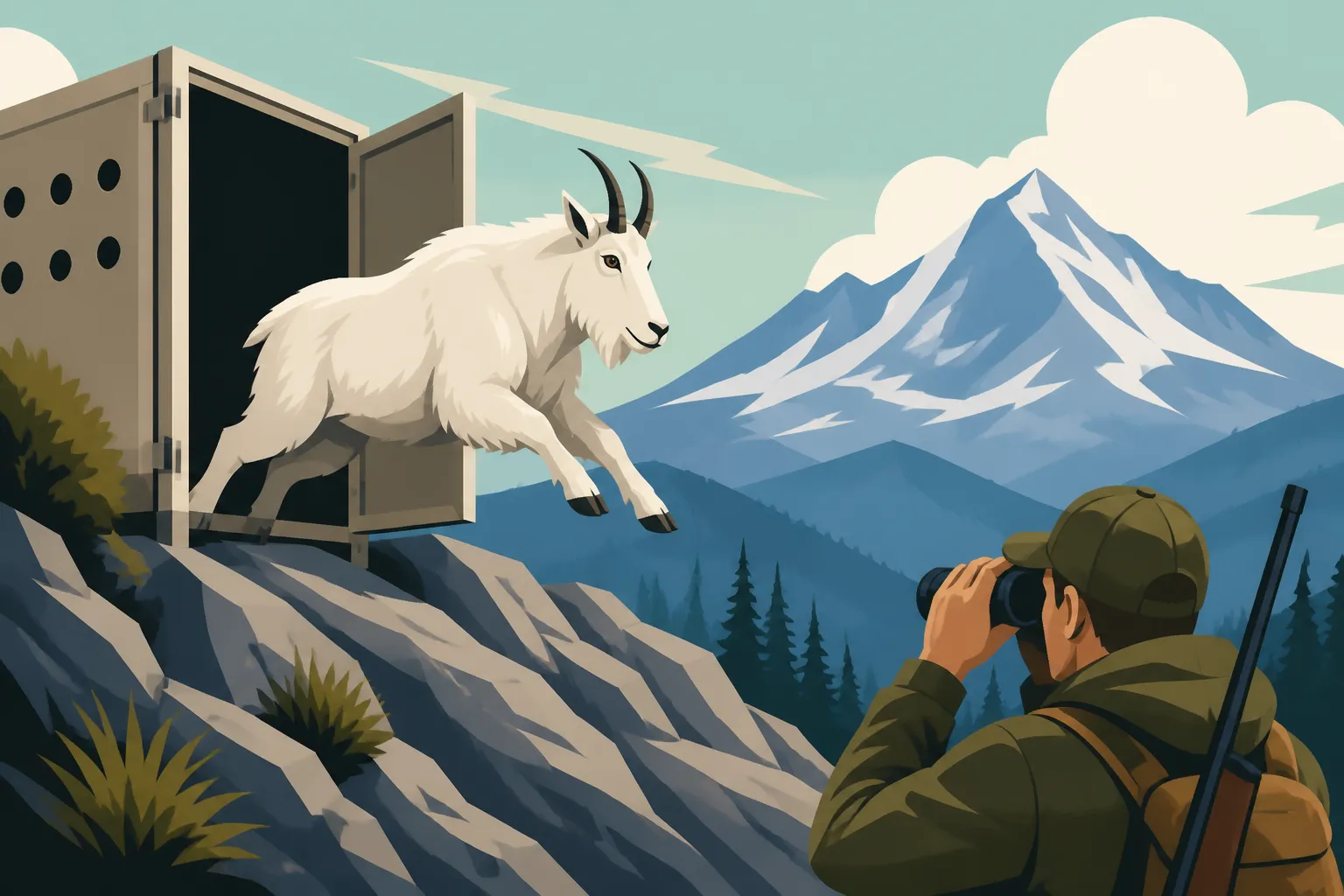
The selection of a release site is a meticulous process, based on extensive habitat analysis. Biologists look for areas with ample forage, suitable escape terrain, access to water, and minimal existing human disturbance. The goal is to drop the goats into an environment where they have the best possible chance to disperse naturally and establish themselves without immediate threats. Upon arrival, the crates are opened, and the goats are released. Observing a goat bolt out of its crate and disappear into its new mountain home is often an emotional moment for the crews, a culmination of immense effort and dedication. Following their release, the radio-collared goats are monitored for months or even years, providing crucial data on their movements, survival, and integration into the new landscape, much like how WDFW conducts How WDFW Counts Big Game across various species.
Notable Washington Translocation Projects
Washington has been at the forefront of several significant mountain goat translocation efforts, each with its own unique challenges and successes. These projects serve as powerful examples of how intensive wildlife management can address complex conservation and ecological issues.
The Olympic National Park Removal and Relocation
Without a doubt, the most high-profile mountain goat translocation project in Washington, and perhaps the nation, was the massive effort to remove non-native mountain goats from the Olympic National Park. As we discussed, these goats were introduced almost a century ago and became an ecological and safety hazard. The decision to remove them was a difficult one, sparking considerable public debate, but ultimately, it was deemed necessary for the health of the park's unique ecosystem and for visitor safety.
Starting in 2018, a multi-agency partnership involving WDFW, the National Park Service (NPS), and the U.S. Forest Service (USFS) initiated a multi-year project. Helicopters, net-guns, and highly trained crews worked tirelessly in the rugged Olympic Mountains, capturing hundreds of goats. These animals underwent immediate health checks and were then transported across the Puget Sound to their new homes in the Cascades. The sheer scale and complexity of this operation, moving hundreds of large, wild animals from one mountain range to another, was monumental. While some goats were lethally removed due to logistical constraints or health issues, the majority were successfully translocated, marking a significant victory for science-based wildlife management and setting a precedent for similar projects nationwide. You can learn more about this specific endeavor by exploring our deep dive on Olympic Mountain Goat Removal.
Augmenting Cascade Herds
While the Olympic project focused on removal, many other translocation efforts in Washington have been about augmentation – that is, boosting existing native populations. In various regions of the Cascade Mountains, from the Pasayten Wilderness to the southern Cascades, some native mountain goat herds are smaller or more isolated than they once were. These herds benefit greatly from the introduction of new individuals, especially those with good genetic diversity, to strengthen their numbers and expand their range.
The goats captured from the Olympic National Park were not just dropped randomly; they were strategically released into carefully chosen areas within the Cascades, often to supplement these struggling native herds. These recipient sites were selected based on their historical presence of goats, high-quality habitat, and the potential for long-term population growth. For example, some goats found new homes in areas that are part of the Pasayten Wilderness Hunting Access areas, which have extensive, suitable terrain for mountain goats. The hope is that these new arrivals will interbreed with existing Cascade goats, increasing genetic vigor and establishing stronger, more resilient populations for future generations to enjoy.
Successes and Challenges of Past Efforts
Mountain goat translocations, while often successful, are far from simple. The successes are evident in the growing numbers and expanded ranges of native Cascade herds, directly benefiting from the influx of new goats. Post-release monitoring, often through radio-collared individuals, shows that many translocated goats adapt well to their new environments, establish new home ranges, and begin to reproduce. These efforts have undeniably contributed to the overall health and distribution of Washington Mountain Goat Herds.
However, there are always challenges. The initial stress of capture and transport can result in some mortality. Some goats may not adapt well to their new habitat, or they might disperse too widely, making it difficult to track them. The logistics of operating in extreme mountain environments are immense, often weather-dependent, and always carry risks for the human crews. Public perception can also be a challenge, as these projects are often complex and not always fully understood by everyone. Nevertheless, the accumulated knowledge from these past efforts continuously refines future strategies, making each subsequent translocation more efficient and successful. This iterative learning process is crucial for effective Washington Wildlife Disease Surveillance and overall species management.
The Future of Mountain Goat Management and Translocations
Looking ahead, mountain goat management in Washington remains a dynamic field, constantly evolving with new research, conservation needs, and public interest. Translocations will continue to be a vital tool, but they are part of a much larger, integrated strategy for ensuring healthy and sustainable populations of these incredible animals.
Ongoing Monitoring and Research
The work doesn't stop once the goats are released. A critical component of any translocation project is long-term monitoring and research. Many translocated goats are fitted with GPS or VHF radio collars, allowing WDFW biologists to track their movements, habitat use, survival rates, and reproductive success. This data is invaluable. It helps scientists understand how well the goats are adapting to their new environments, identify potential challenges, and assess the overall effectiveness of the translocation.
This continuous research feeds directly into adaptive management strategies. If certain release sites prove more successful than others, future projects can be optimized. If dispersal patterns reveal new insights into mountain goat behavior, management plans can be adjusted. This commitment to science-based monitoring ensures that conservation efforts are effective and resources are used wisely. For hunters looking to understand game trends, resources like GoHunt often compile and analyze this type of data, giving members an edge in their planning and understanding of species health.
Hunter Opportunities and Conservation
For those passionate about hunting, mountain goats represent one of Washington's most coveted and challenging pursuits. Special hunt permits for mountain goats are among the most difficult to draw due to their rarity and the limited tags issued each year, underscoring the "once-in-a-lifetime" experience they offer. These limited hunting opportunities are meticulously managed to ensure sustainability and are directly tied to the health and stability of the goat populations.
The success of translocation programs plays a direct role in creating and sustaining these opportunities. By augmenting struggling herds and restoring goats to suitable historic ranges, these projects contribute to larger, healthier populations capable of supporting limited, carefully managed hunts. Hunters, through their license and tag fees, are crucial funders of these conservation initiatives, demonstrating a deep commitment to the long-term future of Washington's wildlife. Understanding how to apply for Washington's Special Hunt Permits and How to Apply is essential for any hunter hoping to pursue these majestic animals.
Public Involvement and Conservation Partnerships
Mountain goat translocations are complex, multi-faceted projects that wouldn't be possible without broad public support and strong partnerships. Government agencies like WDFW, NPS, and USFS form the backbone, providing scientific expertise and logistical support. However, countless conservation organizations, volunteer groups, and even individual citizens play crucial roles.
From fundraising and advocating for conservation initiatives to physically assisting with capture and release efforts, public involvement is vital. Hunters, hikers, and wildlife enthusiasts all share a common interest in seeing healthy mountain goat populations thrive in Washington's high country. Collaborative efforts, where different stakeholders come together, ensure that these magnificent animals continue to be a cherished part of our state's natural heritage, whether you're observing them from a trail in a Washington Wilderness Areas Open to Hunting or hoping to draw a Washington Mountain Goat Permits tag.
Disclaimer
Please remember that hunting regulations, seasons, and access can change. Always consult the latest Washington Department of Fish and Wildlife (WDFW) regulations and official pamphlets before planning any hunt or outdoor activity. This content is for informational purposes and does not substitute official legal guidance.