The Willapa Hills Elk Herd
For many a Washington hunter, the thought of pursuing elk in the Willapa Hills brings a mix of excitement and trepidation. It's a place where the forests are thick, the rain is often relentless, and the elk are notoriously cagey, making for some of the most challenging yet rewarding hunts in the state. If you’ve ever felt like you’re battling the elements as much as the animals, you’re not alone; this guide is here to shed some light on what makes the Willapa Hills elk herd so unique and how you can increase your odds of success in this wild, wet corner of Washington.
Understanding the Willapa Hills Elk Herd
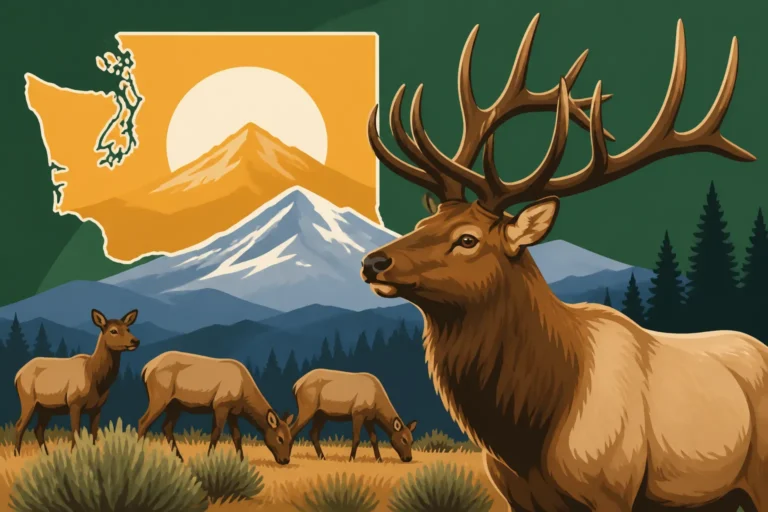
The Willapa Hills, situated in southwestern Washington, is a realm dominated by dense coastal forests and crisscrossed by countless streams and rivers that flow into Grays Harbor and the Columbia River. This isn't your open country, glass-and-grid type of elk hunting. Here, the Roosevelt elk reign supreme, and they thrive in a landscape that often feels impenetrable to humans. Understanding this herd means first appreciating the environment they call home and how it shapes every aspect of their lives, from their movements to their elusive nature.
Geographic Boundaries and Key Areas
The Willapa Hills elk herd primarily inhabits Pacific and Grays Harbor counties, stretching from the coast eastward towards the Chehalis River valley. This region encompasses several Game Management Units (GMUs) that hunters will become intimately familiar with, such as GMU 658 (Capitol Peak), 660 (Minot Peak), 666 (Skookumchuck), 672 (Doty), 673 (Burnt Ridge), 681 (Boistfort), 684 (Puyallup), and 68A (Willapa). These units are characterized by a mosaic of industrial timberlands, state-managed lands (like those managed by the Department of Natural Resources, or DNR), and smaller pockets of private ownership. The topography is a constant series of steep, rolling hills and deep ravines, covered almost entirely in second-growth timber, dense reprod, and a formidable understory of salal and devil's club. Knowing these boundaries is crucial, as regulations and access often shift from one GMU to the next, sometimes even within the same timber company ownership. You'll want to dive deep into understanding what makes each of these GMUs tick before committing to a hunt plan.
Historical Context and Population Trends
The Willapa Hills elk herd has a rich history, being one of the cornerstone populations of Washington Elk Herds and Where They Live. These are primarily Roosevelt elk, a subspecies known for preferring dense, forested habitats. Historically, their numbers have fluctuated, influenced by logging practices, hunting pressure, and disease. In recent decades, the herd has generally been considered robust, though challenges persist. WDFW's management goals often focus on maintaining a healthy population while addressing concerns like elk damage to timber plantations and agricultural lands, as well as the ever-present issue of hoof disease. While specific annual numbers can vary, the overall trend has generally been stable to slightly increasing in many areas, a testament to the resilience of these animals and ongoing management efforts. For hunters, this means there are opportunities, but they come with the expectation of hard work and adapting to the elk's preferred habitat.
Unique Characteristics of Willapa Roosevelt Elk
What truly sets the Willapa Roosevelt elk apart from their Rocky Mountain cousins found east of the Cascades is their adaptation to the coastal rainforest environment. Roosevelt Elk of Western Washington are generally larger in body size, though their antlers tend to be wider and more palmated rather than carrying the dense mass and long tines often seen on Rockies. Their behavior, too, is distinct. They are masters of evasion, utilizing the thick cover to disappear with uncanny efficiency. Unlike Rocky Mountain elk that might herd up in massive numbers in open country, Willapa Roosevelt elk often exist in smaller, more dispersed groups, or even as solitary bulls, making them incredibly difficult to locate. They are also known for their vocal nature during the rut, but don't expect them to come charging in across a clearcut. Their bugles are often a challenge to interpret, and they'll frequently circle downwind or hold up in the deepest, darkest timber, testing a hunter's patience and woodsmanship to its limits.
Habitat and Terrain Challenges
Hunting in the Willapa Hills isn't just about finding elk; it's about navigating some of the most challenging terrain and dense vegetation Washington has to offer. The very elements that sustain the Roosevelt elk population here are also what make the hunting so incredibly tough. If you're not prepared for steep climbs, thick brush, and constant moisture, you're in for a rude awakening.
Dense Coastal Forests and Rainfall
The Willapa Hills are synonymous with dense coastal forests. We're talking about a landscape where visibility can drop to mere yards, even on a sunny day. The dominant tree species like Douglas fir, western hemlock, and Sitka spruce grow in incredibly tight stands, often choked with dense underbrush like salal, huckleberry, and vine maple. And then there’s the rain. This region receives some of the highest annual precipitation in Washington, meaning conditions are frequently wet, muddy, and damp. This impacts everything from gear choices—you need Rain Gear That Survives a Washington Westside Season—to the elk's behavior, as they become even more adept at moving silently through the saturated woods. For hunters, this translates to reduced visibility, muffled sound, and perpetually wet clothing, demanding a high level of physical fitness and mental fortitude. It also means you’ll often be Still-Hunting Blacktails in Wet Washington Brush, a skill that translates perfectly to pursuing elk in these conditions.
Timber Management and Its Impact
Industrial timber harvest is the lifeblood of the Willapa Hills economy, and it profoundly shapes the elk habitat. Large swaths of land are privately owned by timber companies like Weyerhaeuser and Hancock Forest Management, which operate on aggressive harvest rotations. This creates a constantly changing mosaic of clearcuts, young replanted areas (reprod), and older timber stands. Elk utilize all of these areas: clearcuts provide forage in the form of new growth and grasses, young reprod offers excellent bedding and security cover, and older timber provides thermal protection and escape routes. The challenge for hunters is that these changes mean what was a prime hunting spot one year might be a freshly logged moonscape the next. Staying current on logging operations, road closures, and specific timber company access policies is paramount. Tools like GoHunt's mapping system can be invaluable for pinpointing these dynamic changes and understanding land ownership boundaries, which are constantly in flux. It's not enough to scout once; you need to keep tabs on the landscape year-round, perhaps even leveraging E-Scouting Washington GMUs Before the Draw to stay ahead of the curve.
Steep Topography and Drainage Systems
Forget rolling plains; the Willapa Hills are a tangled network of steep ridges, deep valleys, and countless drainage systems. Every creek and river seems to carve its own canyon, making travel across contours a grueling affair. This topography means you'll rarely find flat ground, and ascending or descending can be incredibly taxing, especially when carrying a heavy pack. The elk, however, move through this country with surprising ease. They often utilize the steepest, nastiest slopes for bedding and escape, knowing most human predators will shy away. For hunters, this emphasizes the need for excellent physical conditioning and proper footwear. Boots designed for Boots for Washington's Eastside Rock and Westside Mud are essential, providing ankle support and traction on slippery, uneven ground. Furthermore, these drainages act as natural travel corridors for elk, especially during the rut or when moving between feeding and bedding areas, making them prime spots for ambush if you can position yourself correctly.
Elk Behavior and Adaptations
To consistently find success in the Willapa Hills, you need to think like a Roosevelt elk. Their behavior is a direct response to their environment and the constant pressure they face from hunters and predators. They are notoriously adaptable, making them one of the most challenging big game animals to pursue in Washington.
Seasonal Movements and Feeding Patterns
Willapa Hills elk, like most big game, exhibit seasonal movement patterns, though these are often less dramatic than the long-distance migrations of their Rocky Mountain counterparts. In the lush, temperate climate of the Willapa, food is generally abundant year-round. However, their specific feeding patterns will shift. In spring and early summer, they target succulent new growth in clearcuts and along road edges. As fall hunting seasons approach, they might focus on specific browse species, acorns, or lingering grasses. During the peak of the Washington Archery Deer and Elk Dates and Washington Modern Firearm Deer Seasons, elk will often move into the thickest, most impenetrable cover during daylight hours, only venturing out to feed under the cloak of darkness or during periods of minimal human activity. Understanding these subtle shifts, and pinpointing the areas of fresh forage versus dense bedding, is key to intercepting them.
Rutting Behavior in Thick Cover
The rut for Roosevelt elk in the Willapa Hills is a primal, exhilarating, and often frustrating affair. While Bugling and Cow Calling in Washington's Archery Elk Season can be incredibly effective, the dynamics are different here. Bulls will bugle, often with deep, throaty calls that echo through the timber, but they are incredibly reluctant to expose themselves. Instead of strutting across open meadows, a Willapa bull will typically respond from deep within a timber pocket, challenging other bulls without moving much. They might circle downwind for an hour before even considering showing themselves. This requires immense patience, quiet movement, and a willingness to get into the thickest cover possible. Calling setups often benefit from a two-man approach, with one caller mimicking a cow or satellite bull to draw the herd bull's attention, while a shooter sneaks into position from a different angle. The thick cover demands extremely close-range encounters, emphasizing quiet stalk and accurate shot placement within dense foliage.
Pressure and Nocturnal Habits
Elk in the Willapa Hills are under considerable pressure, not just from human hunters but also from predators like cougars and bears. This constant threat has honed their survival instincts, making them incredibly wary and often pushing them into nocturnal habits, particularly in heavily hunted units. During the day, they will vanish into the densest reprod, the steepest canyons, or the deepest timber patches, often lying motionless for hours. This means still-hunting becomes a crucial tactic – moving slowly, stopping frequently, and using your eyes and ears to detect the slightest flicker of an ear or the snap of a twig. Tracking in fresh snow or soft ground can be effective, but in the typical wet, mossy conditions, it’s a rare luxury. Hunters utilizing scouting tools like GoHunt's advanced mapping can often identify remote, overlooked pockets of timber that might hold daytime elk, even if it means an extra mile or two of brutal hiking.
Hunting Strategies for Success
Okay, so you understand the challenges. Now, how do you actually hunt these incredible animals in such a demanding environment? Success in the Willapa Hills boils down to a blend of old-school woodsmanship, modern scouting techniques, and a hefty dose of persistence.
Still-Hunting and Tracking in Dense Timber
Given the low visibility and dense cover, still-hunting is often the most productive strategy in the Willapa Hills. This involves moving incredibly slowly, taking only a few steps, then pausing for several minutes to scan, listen, and let the woods settle. You're looking for horizontal lines in a vertical world: an elk's leg, a patch of hide, the curve of an antler. Pay attention to changes in terrain that might funnel elk, like saddles, creek crossings, or breaks in heavy timber. Focus on areas with fresh sign – tracks, rubs, droppings – and follow them at a snail's pace, always ready for a shot.
Tracking can also be effective, especially if you find fresh tracks in softer soil or muddy areas. In the Willapa, this is less about following a distinct track line for miles and more about interpreting disturbances in the forest floor, broken twigs, and scuffed moss. The goal isn't necessarily to catch up to the elk, but to determine their direction of travel and then get ahead of them or position yourself for an ambush. This takes a lot of practice and intimate knowledge of how elk move through their environment. Just remember, these elk rarely travel in straight lines and will often hook back to observe their trail.
Calling Tactics for Roosevelt Elk
While calling can be highly effective during the rut, it needs to be adapted for the Willapa Hills. Forget screaming matches from afar; discretion is key. Soft cow calls, chirps, and mews can often entice curious elk or bulls looking for cows. If you get a response from a bull, resist the urge to immediately charge in. Instead, try to pinpoint his location, move quietly into a favorable position (ideally downwind or crosswind), and continue with subtle calling. Sometimes, an aggressive bugle can work, but be prepared for the bull to hold his ground or try to circle you.
Often, the best strategy is a "decoy and shooter" setup. One hunter (the caller) positions themselves strategically to draw the bull's attention, while the other hunter (the shooter) moves silently into a potential shooting lane. This requires excellent communication and trust between hunting partners. Remember, the elk will often try to get downwind, so setting up to intercept them before they can scent you is critical. You'll definitely want to study up on Two-Man Calling Setups on Elk before heading into these challenging woods.
Post-Shot Recovery in the Willapa Hills
Let’s be honest: hitting an elk is just the first step. Recovering it in the Willapa Hills can be as tough, if not tougher, than finding it in the first place. The dense vegetation means blood trails can be minimal or disappear entirely. If you make a shot, meticulously mark the spot where the elk was standing and the direction it ran. Take your time. Wait at least 30-60 minutes for a good shot, or several hours for a questionable one, before beginning to track.
When tracking, focus on every tiny clue: disturbed leaves, broken branches, a single drop of blood. If the blood trail disappears, expand your search in circles or grids in the direction of travel. Use flagging tape to mark the last known blood and your search radius. The thicker the cover, the more challenging it is to find an animal. Having a partner is invaluable for this, as two sets of eyes are always better than one. And be prepared for a grueling pack-out; Blood Trailing in Salal and Devil's Club is no joke, and getting a big Roosevelt out of a steep, brushy ravine is a monumental task that requires proper gear and mental grit, perhaps even techniques like the Gutless Method on an Elk.
Navigating Access and Regulations
Hunting the Willapa Hills means dealing with a complex patchwork of land ownership and ever-changing regulations. It's not always straightforward, and neglecting to do your homework can lead to frustration or worse, legal trouble.
Private Timberland Permits and Gate Systems
Much of the Willapa Hills is privately owned by large timber companies. Historically, many of these lands were open to public access, but that's largely changed. Today, companies like Weyerhaeuser and Hancock Forest Management often require permits for access, and these can range from expensive annual passes to specific daily permits or even lottery-based entry systems. For instance, Weyerhaeuser's hunting access program often requires applying well in advance, and their land may have numerous locked gates, limiting vehicle access to walk-in only areas, even for permit holders. Hancock also offers various access programs, and it's essential to check their specific websites for the most up-to-date information.
The frustration here is real. What was accessible last year might be closed this year, or require a new, costly permit. This is where tools like GoHunt really shine, as they integrate land ownership layers directly into their maps, helping you quickly identify private vs. public land and often providing information on who to contact for access. For more detailed information on navigating these complexities, check out our guide on Timber Company Permits in Western Washington. Don't assume anything; always verify land ownership and access requirements before you go.
WDFW Wildlife Areas and Public Access
Amidst the private timberlands, there are critical public hunting opportunities on lands managed by the Washington Department of Fish and Wildlife (WDFW) and the Department of Natural Resources (DNR). WDFW manages several wildlife areas within or adjacent to the Willapa Hills, such as the Olympic Wildlife Area, which offers pockets of public land access. These areas are vital for hunters who cannot afford private timber permits or prefer to hunt publicly accessible ground.
However, even on WDFW and DNR lands, specific rules apply. You'll often need a Discover Pass for parking on DNR lands, and wildlife areas might have special regulations regarding vehicle access, camping, or specific hunting methods. These public lands can also experience higher hunting pressure, especially on opening weekends. Scouting these areas thoroughly and focusing on less accessible zones can pay dividends. Look for remote corners, areas with challenging terrain, or walk-in only sections that deter many other hunters. Learning to identify and utilize Public Land Scouting in Washington Before Opening Day techniques will be crucial.
Specific GMU Regulations in the Willapa
The various GMUs within the Willapa Hills region each have their own set of hunting regulations, which can change annually. These regulations dictate season dates, weapon restrictions (Washington's Weapon Choice Rule for Deer and Elk), bag limits, and often antler point restrictions for bulls. For example, some units might be general season, while others require Washington Special Hunt Permits and How to Apply. Some areas might be open for any bull, while others might be spike-only or branch-antlered only.
It's absolutely critical to consult the most current WDFW Hunting Regulations pamphlet for the specific GMU you intend to hunt. This is not a suggestion; it's a requirement. Mistakes in reading the regulations can lead to a forfeited animal, fines, or loss of hunting privileges. Pay close attention to the small print, including any late-season opportunities or antlerless permits that might become available. GoHunt's platform is excellent for providing updated season summaries and drawing odds, which can help in planning your strategy.
Conservation and Management Efforts
The Willapa Hills elk herd faces ongoing challenges, and their management is a complex balancing act between supporting a healthy wildlife population and addressing impacts on private landowners. Understanding these efforts can give hunters a broader perspective on the future of hunting in this unique region.
Disease Monitoring and Challenges
One of the most significant challenges facing the Willapa Hills elk herd, and indeed many Western Washington elk populations, is Elk Hoof Disease in Western Washington. This debilitating bacterial infection causes severe lesions and deformities on elk hooves, leading to lameness, reduced mobility, and increased vulnerability to predators and harsh weather. WDFW actively monitors the spread and impact of this disease, relying on hunter reports to track its prevalence.
While there's no widespread cure or vaccine currently available for wild herds, management strategies include focused harvest of affected animals in certain areas and ongoing research. Hunters are encouraged to report any observations of limping or diseased elk to WDFW, and to properly dispose of carcasses to prevent further spread. This disease adds another layer of complexity to herd management and highlights the importance of ethical hunting practices and supporting wildlife conservation efforts.
Predator Management and Its Role
The Willapa Hills is home to a robust population of black bears and cougars, both of which are natural predators of elk, particularly calves. While a healthy predator-prey relationship is essential for ecosystem balance, predator populations can sometimes impact elk recruitment and survival, especially in combination with other factors like disease or habitat changes. Washington manages both bear and cougar seasons, providing hunting opportunities that also serve to help manage their populations.
For cougars, specifically, WDFW implements a harvest guideline system where seasons can close early if a certain number of cougars are taken within a specific GMU. Bear seasons are typically longer, often running from August through November. While the primary goal of these hunts is recreation, they also play a role in maintaining a balanced ecosystem and potentially mitigating impacts on elk and deer herds. Understanding these seasons and participating if you're inclined can be part of a holistic approach to conservation in the Willapa.
Future of Elk Hunting in the Willapa Hills
The future of elk hunting in the Willapa Hills is tied directly to sustainable timber practices, continued WDFW management, and access opportunities for hunters. As timber companies continue to adapt their land management strategies, hunter access will likely remain a dynamic issue, potentially favoring those willing to pay for permits or hike deep into walk-in only areas. The ongoing challenges of hoof disease and adapting to a changing climate will also play a role in herd health and hunter success rates.
However, the Willapa Hills remains a stronghold for Roosevelt elk, offering some of Washington's most rugged and rewarding hunting experiences. With dedicated conservation efforts, proactive hunter participation, and a willingness to embrace the unique challenges this region presents, the opportunity to pursue these magnificent animals will endure for generations to come. For any serious hunter in Washington, dedicating time to understanding and appreciating the Willapa Hills and its elk herd is an essential part of the journey.
| Characteristic | Willapa Hills (Roosevelt) Elk | Eastside (Rocky Mountain) Elk |
|---|---|---|
| Primary Habitat | Dense coastal rainforest, thick timber, reprod, steep terrain | Open timber, sagebrush, wheat fields, clearcuts, mountains |
| Antler Style | Wider, more palmated, often less mass, shorter tines | Taller, more mass, longer tines, often more points |
| Body Size | Generally larger body frame, heavier-bodied | Typically slightly smaller body frame but can be very heavy |
| Herd Behavior | Often smaller, dispersed groups; more elusive, utilizes cover | Can congregate in larger herds, more visible in open areas |
| Rut Vocalizations | Deep, throaty bugles, often more reserved; cautious responses | More varied and frequent bugling, can be more aggressive/responsive |
| Hunting Style | Still-hunting, tracking, close-quarters calling, patience | Glassing, spot-and-stalk, longer-range calling, ambush points |
| Key Challenges | Dense cover, rainfall, difficult access, hoof disease | Open country pressure, specific winter range issues, drought |
Disclaimer
Please remember that hunting regulations and land access policies can change frequently. Always consult the most current Washington Department of Fish and Wildlife (WDFW) regulations pamphlet and relevant land management agency websites (e.g., DNR, US Forest Service, private timber companies) before planning any hunt. This guide is for informational purposes only and does not supersede official regulations.