What Causes Elk Hoof Disease
It's truly heartbreaking to be out in Washington's stunning backcountry, perhaps glassing a promising basin or still-hunting through some prime timber, only to spot an elk struggling to put weight on a leg, limping noticeably, or with a visibly deformed hoof. This sight has become far too common for many of us, and it sparks a lot of questions and a deep sense of frustration. This guide is here to shed light on what exactly causes elk hoof disease, often referred to as Treponeme-associated hoof disease (TAHD), and why it's such a persistent problem in our cherished elk herds.
Understanding Treponeme-Associated Hoof Disease (TAHD)
When we talk about elk hoof disease, we're primarily referring to a specific and nasty bacterial infection known as Treponeme-associated hoof disease, or TAHD. It's a debilitating condition that has unfortunately taken root in many of Washington's elk populations, especially on the west side of the Cascades, causing severe lameness and often leading to an animal's demise. It's not just a simple injury; it's a systemic attack on the very structure that allows these magnificent animals to thrive in our rugged landscapes.
The Bacterial Culprit: Treponema
At the heart of TAHD is a group of spiral-shaped bacteria belonging to the genus Treponema. These aren't just any common bacteria; they're particularly aggressive and capable of causing significant damage. Think of them as microscopic saboteurs, quietly infiltrating the sensitive tissues of an elk's hooves. Once they gain a foothold, they multiply and start to break down the integrity of the hoof capsule itself, leading to the devastating symptoms we observe.
It's important to understand that this isn't usually caused by a single, isolated bacterial strain. Instead, it's often a complex interaction of several types of Treponema working in concert, possibly alongside other opportunistic bacteria. This makes treatment incredibly challenging in a wild setting, as it's not like treating a simple localized infection. The synergistic effect of these bacteria contributes to the severity and rapid progression of the disease, making it a formidable foe for elk health.
How the Disease Progresses in Elk Hooves
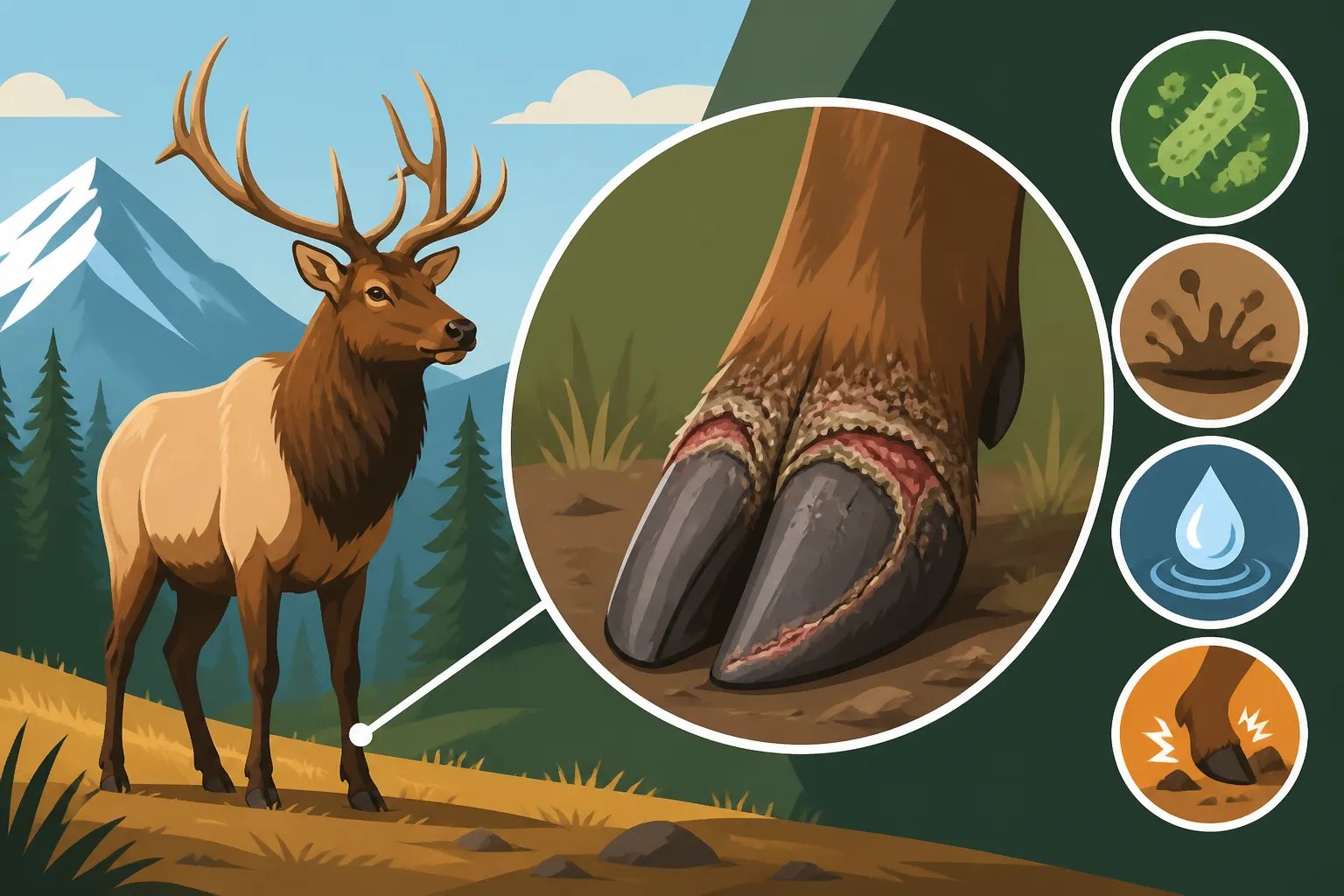
The progression of TAHD is a painful and drawn-out process for an afflicted elk. Initially, you might not notice much more than a slight limp or an unusual gait. However, as the Treponema bacteria take hold, they cause inflammation and small lesions to form around the coronary band – the area where the hair meets the hoof. This is often the first visual cue, but it can be hard to spot in the field.
As the infection deepens, the bacteria begin to literally digest and destroy the sensitive hoof horn material and the underlying laminae, which are the crucial structures that hold the hoof wall to the coffin bone. This separation is excruciatingly painful and is akin to a human having their fingernails or toenails peeling away from the quick. In advanced stages, the entire hoof wall can slough off, leaving the elk walking on raw, exposed tissue. Imagine trying to navigate dense timber or steep hillsides with that kind of injury; it severely impacts their ability to feed, escape predators, and ultimately survive. The sight of an elk with multiple hooves deformed or missing is one of the clearest indications of advanced TAHD. For more details on what to look for, you might check out our article on Elk Hoof Disease Symptoms.
Environmental Factors and Transmission
While the Treponema bacteria are the direct cause, the environment plays a huge role in creating the perfect storm for TAHD to take hold and spread. Washington, with its diverse landscapes, provides certain conditions that are unfortunately conducive to this disease, making it a real challenge for wildlife managers and frustrating for hunters who just want to see healthy herds.
Wet, Soft Soil Conditions
One of the most significant environmental factors contributing to TAHD is prolonged exposure to wet, soft, and muddy soil conditions. Think about how your own skin gets soft and wrinkled after a long bath – now imagine that happening to an elk's hooves, but day in and day out. When hooves are constantly saturated, the horn material softens, making it much easier for the Treponema bacteria to penetrate the hoof capsule and establish an infection.
This is a particular concern in many areas of Western Washington, where rainfall is abundant and the soils can remain saturated for long periods. Lowland areas, river bottoms, and heavily timbered regions with poor drainage can become hotspots. For hunters accustomed to navigating these soggy conditions, it's a double-edged sword – these are often prime elk habitats, but also areas where the disease can flourish. Hunters scouting with tools like GoHunt's mapping features often note these specific terrain types as areas to pay attention to for overall herd health indicators reported by WDFW.
Herd Density and Contact
Just like in human populations, disease transmission in wildlife is often amplified by close proximity and high density. When elk herds are concentrated in certain areas, whether due to attractive forage, specific winter ranges, or human-made features like supplemental feeding sites (where allowed), the chances of direct contact between animals increase dramatically. A diseased elk sharing a wallow, walking the same muddy trail, or feeding in the same field can easily shed bacteria into the environment, which can then be picked up by healthy animals.
Consider an area where a large herd congregates daily; every step an infected elk takes, every time it dips its hoof into mud or water, it's potentially leaving behind Treponema bacteria. These resilient bacteria can survive in moist environments, waiting for the next susceptible host. This creates a challenging cycle, especially in Washington's various Washington Elk Herds and Where They Live, where some units have higher densities than others. Understanding herd dynamics is crucial to grasping the spread of this disease, as discussed further in Elk Hoof Disease Spread in Washington.
Other Contributing Factors
While Treponema bacteria and wet conditions are the primary drivers, it’s rarely a single-factor problem. Other elements can weaken an elk’s natural defenses and make them more susceptible. For instance, any pre-existing hoof injuries, such as cuts from sharp rocks or damage from a fall, can create an easy entry point for the bacteria. These aren't the cause of TAHD, but they can certainly accelerate its onset or worsen its severity.
Furthermore, an elk's overall health and nutritional status can play a role. Animals that are already stressed due to harsh winters, poor forage, or other diseases might have compromised immune systems, making them less able to fight off an infection once exposed. While the Treponema complex is the definitive cause of TAHD, these other factors often act as co-conspirators, weakening the host and allowing the bacteria to establish themselves more effectively. It's a complex puzzle with many pieces.
Distinguishing TAHD from Other Hoof Issues
It’s easy to jump to conclusions when you see a limping elk, especially with the widespread awareness of elk hoof disease. However, not every lameness is TAHD. As ethical hunters and wildlife enthusiasts, it’s important to be able to discern the characteristic signs of TAHD from other common injuries or ailments, both for accurate reporting and our own understanding of what we’re observing in the field.
Injuries and Abscesses
An elk can limp for many reasons that have nothing to do with TAHD. Acute injuries are incredibly common in the rugged terrain our elk call home. Imagine a bull slipping on a mossy log, cutting its hoof on a sharp rock while navigating a scree slope, or twisting an ankle escaping a predator. Fights during the rut, especially among aggressive bulls, can also lead to significant trauma to the legs and hooves. These types of injuries can result in swelling, pain, and a pronounced limp, just like TAHD.
Abscesses are another common issue. These are localized infections, often caused by a puncture wound or a crack in the hoof that allows bacteria (different from Treponema) to enter and form a pocket of pus. While painful, an abscess is typically confined to one area and might eventually rupture and drain, allowing the elk to recover. The key differentiator for TAHD is its often widespread nature, affecting multiple hooves, and the characteristic sloughing or detachment of the hoof wall, rather than a localized swelling or wound.
Management and Reporting
The Washington Department of Fish and Wildlife (WDFW) takes elk hoof disease very seriously and relies heavily on hunter observations to monitor its prevalence and spread. If you encounter a limping elk or one showing severe hoof deformities, it’s vital to report it to WDFW. They collect this data to track the disease, understand its impact, and inform their management strategies. You can find information on how to do this in our guide, Reporting a Limping Elk to WDFW.
| Characteristic | Treponeme-Associated Hoof Disease (TAHD) | General Hoof Injury/Abscess |
|---|---|---|
| Primary Cause | Treponema bacteria complex | Trauma (cuts, sprains, falls), localized bacterial infection |
| Appearance of Hooves | Swelling at coronary band, lesions, hoof sloughing/detachment, overgrown or deformed hooves, often affecting multiple hooves | Localized swelling, puncture wound, crack, visible lameness, typically one hoof affected |
| Progression | Chronic, progressive, debilitating; can lead to total hoof loss | Acute, may heal with time, or rupture/drain if abscess |
| Impact on Elk | Severe lameness, difficulty feeding, increased predation risk, often fatal | Lameness, pain, usually recovers unless severe |
| Smell | Often a foul, necrotic odor | Generally no strong odor unless infected |
| Primary Location | Widespread in Western Washington elk herds | Can occur anywhere, sporadic |
From an ethical hunting standpoint, encountering a severely diseased animal presents a difficult situation. While TAHD does not pose a risk to humans consuming the meat, WDFW advises against consuming meat from animals that appear to be severely ill or emaciated, regardless of the cause. The decision to harvest a diseased animal within legal regulations often comes down to personal ethics and local WDFW guidelines. Staying informed through the annual Washington Big Game Pamphlet Release and WDFW's specific updates on Washington Wildlife Disease Surveillance is always a good practice before heading out for any season, like those covered by the Washington Hunting Licence Year Dates.
Disclaimer
This article is for general informational purposes only and does not constitute professional advice. Laws, prices and regulations vary by location and change over time. Consult a qualified professional for guidance on your specific situation.