Cinnamon and Brown Phase Black Bears
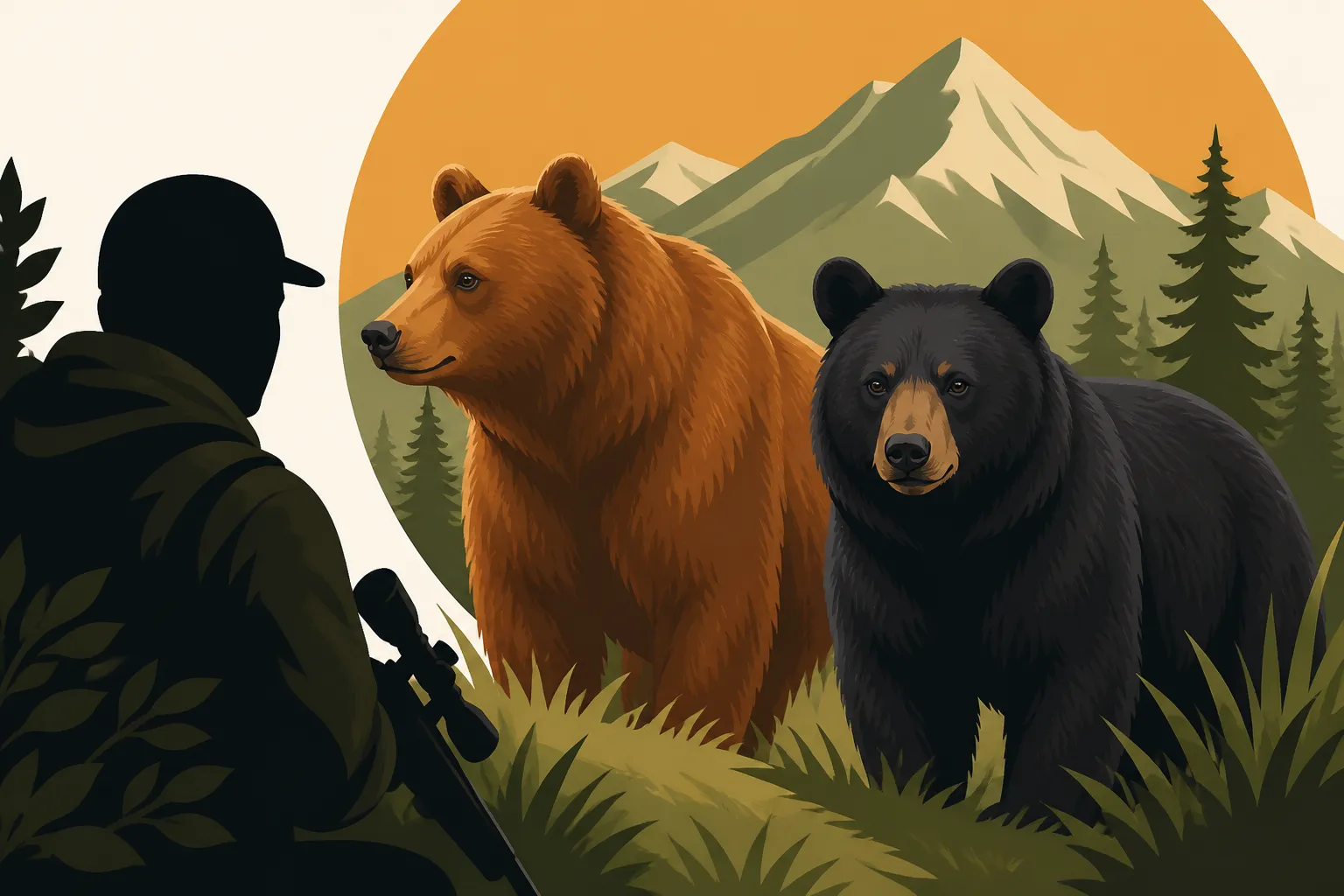
For anyone who’s spent time in Washington’s incredible backcountry, you know the thrill of spotting a bear. But then comes the question that often sparks debate around the campfire: "Was that a brown bear or just a cinnamon black bear?" It's a common point of confusion, and frankly, it can be intimidating to know the difference when every second counts in the field. This guide aims to clear up that mystery, helping you confidently identify the beautiful cinnamon and brown color phases of Washington's black bears, ensuring you're safe, legal, and truly understand the amazing animals we share the wilderness with.
The Spectrum of Washington Black Bears
It's a common misconception that if a bear isn't pure black, it must be a different species. In Washington, that's often not the case at all. Our black bear population is incredibly diverse, displaying a stunning array of colors beyond the familiar jet black. Seeing a bear with a coat ranging from light blond to rich chocolate brown is a truly special experience, and it's vital for hunters and wildlife enthusiasts alike to understand that these are, almost without exception, still Ursus americanus – American black bears.
Dispelling the "Brown Bear" Myth
The biggest hurdle for many folks is the name itself: "black bear." It leads us to believe they must be black. But genetics, environment, and diet all play a role in a bear’s fur color, and in Washington, these factors combine to produce some truly striking individuals. When you spot a bear that looks distinctly brown, your mind might jump to "grizzly" or "brown bear," especially if you’re hunting in areas like the North Cascades or the Selkirks where grizzlies do exist, albeit in tiny, critically endangered numbers. However, the vast majority of brown-colored bears you encounter in our state are simply black bears wearing a different coat. It's a critical distinction, not just for identification, but for safety and legal hunting reasons. Our hunting regulations are very specific, and misidentification can have serious consequences.
What Causes the Color Variation?
So, why aren't all black bears black? It largely comes down to genetics. Just like human hair color, bear fur color is inherited. There's a particular gene responsible for melanin production, and variations in this gene can lead to a wide spectrum of shades. In certain regions, specific color phases are more prevalent. For example, lighter-colored black bears, including cinnamon, blond, and chocolate hues, tend to be more common in the dryer, more open habitats of eastern Washington and other parts of the interior West. Some researchers believe that a lighter coat may offer camouflage advantages in these more arid, sun-drenched landscapes, allowing them to blend better with lighter-colored vegetation and rock formations. It's a fascinating example of natural selection at play, where survival advantages can subtly shift the common appearance of a species over generations.
Common Sightings Across Washington's Landscapes
While black bears are found throughout Washington, from the wet coastal rainforests to the arid eastern plains, the prevalence of certain color phases can differ. On the west side of the Cascades, where dense, dark timber dominates, you're more likely to encounter traditional black-coated bears. These environments offer excellent camouflage for a darker animal moving through deep shadows and thick undergrowth. However, even on the west side, especially in areas with more open clearcuts or deciduous growth, you can certainly find cinnamon or even blonder phases.
Head east of the Cascades, particularly into the Colville National Forest or the Okanogan-Wenatchee, and the chances of seeing a cinnamon or brown phase black bear significantly increase. Here, the landscape often features more sagebrush, pine forests, and open grasslands, where a lighter coat can provide better concealment. It's not a hard-and-fast rule, but generally, the further east you go, the more likely you are to see these lighter-colored variants. Understanding this regional tendency can help you mentally prepare for what you might encounter when you're scouting or hunting in a new area.
Identifying Cinnamon and Brown Phase Black Bears in the Field
When you're out there, whether with binoculars during an early season Spot-and-Stalk Bear Hunting in Washington Without Bait or just hiking, distinguishing a cinnamon or brown phase black bear from a grizzly can be one of the most important identification skills you develop. It's not just about what color they aren't, but what physical characteristics they do possess.
Key Physical Characteristics Beyond Color
Forget the color of the fur for a moment and focus on the bear's overall build and specific features. This is where accurate identification truly happens.
- Shoulder Hump: The most definitive feature for many is the presence or absence of a shoulder hump. Grizzlies (true brown bears) have a very prominent muscle mass over their shoulders, which creates a distinct hump. Black bears, regardless of color, do not have this hump. Their back typically forms a relatively straight line from the neck to the rump, though a particularly well-fed black bear might have a slight rise.
- Facial Profile: Look at the bear’s face. Black bears tend to have a more straight or slightly Roman nose profile. Grizzlies, on the other hand, often have a more dished or concave profile to their face, particularly from the forehead down to the nose. Their snouts can also appear broader.
- Ears: Black bear ears are typically larger in proportion to their head and are more pointed. Grizzly ears tend to be smaller, more rounded, and set further apart on their head.
- Claws: While difficult to see at a distance, grizzly claws are much longer and straighter, adapted for digging. Black bear claws are shorter and more curved, better for climbing trees. If you find tracks, this is a clear differentiator.
- Size: This is often misleading! While grizzlies generally grow larger than black bears, there's significant overlap. A large black bear can easily be bigger than a smaller grizzly. Don't rely solely on perceived size; look for the other anatomical clues. When you're trying to gauge Judging Bear Size at Distance, remember that a big black bear can fool you.
Here’s a quick comparison table to keep these features straight:
| Feature | American Black Bear (all color phases) | Grizzly Bear (True Brown Bear) |
|---|---|---|
| Shoulder Hump | Absent; back is relatively straight | Prominent, distinct hump above the shoulders |
| Facial Profile | Straighter, sometimes slightly Roman | Dished or concave profile from forehead to nose |
| Ears | Taller, more pointed, proportionate | Smaller, more rounded, set further apart |
| Claws | Shorter, more curved (for climbing) | Longer, straighter (for digging), often visible |
| Rump | Higher than or equal to shoulders | Often lower than the prominent shoulder hump |
Distinguishing from True Brown Bears/Grizzlies
This distinction isn't just academic; it's critical. Hunting grizzly bears is illegal in Washington, as they are a federally protected species. Mistaken identity can lead to severe penalties, not to mention the tragic loss of a rare and protected animal. Even if you believe the chances of encountering a grizzly are minuscule in your hunting unit, the risk is real enough that every hunter must be absolutely certain of their target.
When in doubt, do not shoot. That's the golden rule. It's always better to pass on a shot and be safe than to make a mistake you can't undo. Take your time, use your optics, and carefully observe all the features discussed. A good spotting scope or high-quality binoculars are indispensable tools for making these crucial decisions from a safe distance. Using resources like GoHunt to research known bear habitat and general bear populations in your chosen GMU can also help you understand the likelihood of encountering different bear species, though it should never replace careful field identification.
Importance of Lighting and Distance
The trickiness of identifying color phases is compounded by environmental factors. What looks like a deep chocolate brown in the bright midday sun might appear nearly black in the shadows of the timber or during the fading light of dusk. Conversely, a black bear could seem to have a brownish sheen if the light hits its fur just right, or if it’s covered in dust or mud.
Distance also plays a huge role. Features like the shoulder hump or facial profile become much harder to discern at 300 yards than at 50. Always try to close the distance safely and use the best optics you have available. What you see through a riflescope might look different than what you see through a 10×42 binocular. Be patient, observe the animal’s movement and behavior, and mentally run through your identification checklist before ever raising your rifle or drawing your bow.
Habitat and Behavior of Color Phase Black Bears in Washington
Understanding bear habitat and behavior is crucial for hunters, regardless of the bear's color phase. Black bears, whether black, cinnamon, or brown, generally follow similar patterns of activity and diet, but knowing when and where they're likely to be can inform your scouting and hunting strategies.
Preferred Environments and Food Sources
Washington's black bears are incredibly adaptable, inhabiting a wide range of environments from sea level up to alpine meadows. Their habitat choice is largely dictated by food availability. They are omnivores, meaning their Bear Diet Through the Washington Seasons shifts dramatically. In spring, they often seek out green-up areas, feeding on emerging grasses, sedges, and forbs in open avalanche chutes or clearcuts. As summer progresses, berries become a primary food source – huckleberries, blueberries, and salmonberries are prime attractants, often drawing bears to higher elevations or specific slopes. In fall, they gorge on acorns, roots, and any remaining berries, building up fat reserves for hibernation.
You'll find them anywhere these food sources are abundant. This could be in dense timber, on the edges of clearcuts, near riparian zones, or even in orchards bordering wilderness areas. The lighter color phases might be more readily spotted against the lighter hues of eastern Washington's sagebrush flats or drier pine forests, whereas a dark bear could blend seamlessly into deep western Washington hemlock stands. Knowing the general areas bears prefer can guide your e-scouting efforts when you're using tools like the WDFW hunt planner or GoHunt maps to identify potential hotspots.
Seasonal Changes and Bear Activity
Bear activity is highly seasonal. They emerge from hibernation in early spring, often quite lean and focused on finding fresh greens. This is typically when Washington's bear season opens. As the weather warms, they become more active, feeding heavily through summer and fall. Bear season often extends through late summer and into autumn, allowing hunters to target them during these peak feeding times. During the heat of summer, bears might be more crepuscular, active during dawn and dusk, or during cooler parts of the day, seeking shade during the midday sun. As fall approaches and temperatures drop, they often become active for longer periods, consuming as many calories as possible before denning up.
It's also worth noting that different color phases don't behave differently due to their coat color. A cinnamon bear will follow the same drive for food and survival as a black one. The key is to understand the general patterns of black bear behavior in Washington, regardless of their specific hue.
Hunter Considerations for Different Color Phases
From a hunting perspective, the color phase of a black bear can present both opportunities and challenges. A lighter-colored bear, like a cinnamon or blond, might be easier to spot against the backdrop of dark timber, especially if the sun is out. Conversely, against lighter grass or rock formations in eastern Washington, a brown-phase bear might blend in remarkably well. This means your glassing strategy needs to be adaptable.
When you're Spotting Bears on Avalanche Chutes or scanning open hillsides, look for movement, not just a specific color blob. Sometimes it's a flick of an ear, a shadow, or the way the light catches their fur that gives them away. Regardless of color, the core hunting tactics remain the same: quiet movement, attention to wind, knowing your food sources, and meticulous glassing. And remember, Washington’s hunting regulations, including bag limits and legal equipment, apply equally to all black bears, regardless of their color. Make sure you understand Washington Bear Bag Limit and Washington's Legal Equipment Rules by Weapon before heading out.
Hunting Regulations and Ethical Considerations
Successfully hunting bears in Washington requires not only good woodsmanship but also a thorough understanding of the regulations and a strong commitment to ethical practices. This is especially true when dealing with color phase variations that might lead to misidentification.
Washington's Rules on Black Bear Harvest
In Washington, black bears are classified as big game, and a valid hunting license and bear tag are required to pursue them. The seasons, unit restrictions, and bag limits are clearly outlined in the annual WDFW Big Game Hunting Seasons & Rules pamphlet. It's imperative that every hunter reads this document cover to cover before heading afield. Generally, Washington's black bear seasons run from early August through mid-November, depending on the specific Game Management Unit (GMU). However, specific units might have earlier or later closures, or specific limitations.
One critical point that bears directly on color phases is that Washington does not differentiate between black, cinnamon, brown, or any other color variant of the American black bear for hunting purposes. All color phases are considered legal black bears, provided they meet all other hunting criteria (e.g., not a sow with cubs, legal shooting hours, proper tag). There are no "trophy" designations based on color. Your focus should always be on ethical take and proper identification. Remember, there is Why Washington Has No Spring Bear Season, making the fall season crucial for bear hunters.
Avoiding Misidentification: The Critical Importance of Knowing Your Target
We've touched on this, but it cannot be overstated: absolutely, positively, unequivocally know what you're shooting at. Misidentifying a federally protected grizzly bear as a legal black bear is one of the most serious violations a hunter can commit, with severe fines, jail time, and permanent loss of hunting privileges. While grizzly populations are extremely low in Washington, primarily confined to remote wilderness areas in the North Cascades and Selkirk mountains, their presence means the risk, however small, is real.
Beyond grizzlies, it's also critical to accurately identify the bear's legal status. For instance, shooting a sow with cubs is often illegal in many areas or considered unethical by the hunting community. While a mother bear might temporarily separate from her cubs, if you see cubs in the vicinity or suspect a sow is with young, it's best to err on the side of caution. Sows With Cubs and the Legal Line is a critical piece of knowledge for any bear hunter. Take the time to observe the bear's behavior and surroundings for any indications of cubs before taking a shot.
Contributing to Conservation
Every hunter plays a vital role in wildlife conservation. This includes accurate harvest reporting. After harvesting a bear, you are required to report your take to WDFW, typically through your WILD account or by phone. This is not just a bureaucratic hoop; it's how wildlife managers collect crucial data on bear populations, harvest rates, and distribution. Your report contributes directly to the scientific understanding of Washington's bear numbers, helping to ensure healthy populations for future generations. Make sure you understand Washington Harvest Reporting Requirements and submit your information on time.
By diligently identifying your target, following regulations, and reporting your harvest, you're not just a hunter; you're a committed conservationist. The beauty of a cinnamon or brown phase black bear is a testament to the diversity of Washington's wildlife, and it's our responsibility to cherish and manage these resources wisely.
Disclaimer
This article is for general informational purposes only and does not constitute professional advice. Laws, prices and regulations vary by location and change over time. Consult a qualified professional for guidance on your specific situation.