Blacktail Buck Antler Size
For any hunter in Western Washington, the dream of a big blacktail buck is often met with the stark reality of how elusive and generally modest their antler growth can be. You spend hours still-hunting through the rain-soaked salal and devil's club, only to glimpse a flash of antler that disappears before you can truly judge its size or even count its points. It's a frustrating dance, this pursuit of a mature blacktail, especially when you're trying to gauge if that brief glimpse was a legal buck or just another spike. This guide is here to shed some light on what truly influences blacktail buck antler size in Washington, helping you understand what to look for and where to manage your expectations for these wily forest dwellers.
The Reality of Blacktail Antler Potential in Washington
Let's be honest, if you're picturing the massive, wide-racked mule deer of Eastern Washington or the towering typical frames of a Rocky Mountain elk, you might need to adjust your expectations for blacktails. Columbian blacktail deer, specifically, are a subspecies known for their relatively compact body size and, consequently, their often smaller antlers. This isn't to say there aren't giants, but they are certainly the exception, not the rule. The dense, wet environments they call home, combined with their somewhat shy nature, mean that even a solid four-point buck can feel like a trophy.
Nutritional Factors and Habitat Quality
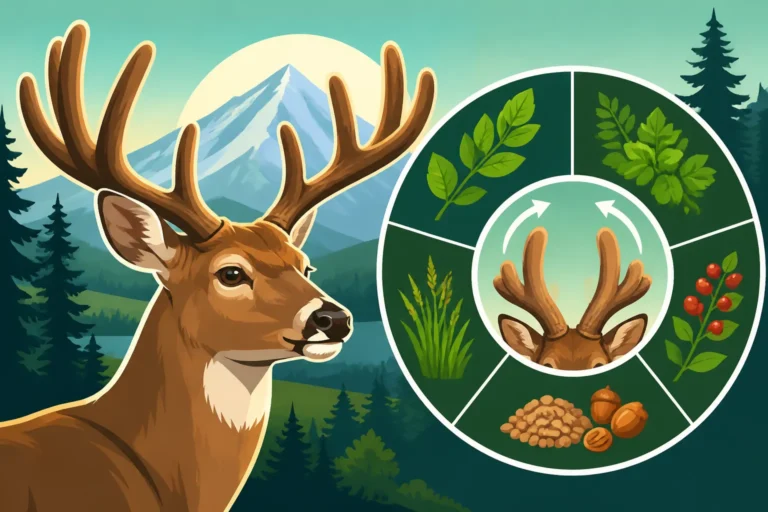
Just like any deer species, a blacktail buck's antler growth is directly tied to the nutrition it receives throughout its life, particularly during the antler growing phase in spring and summer. Western Washington's dense timberlands, while offering excellent cover, don't always provide the protein-rich forage found in more open, agricultural areas.
New growth in clearcuts and recent burns offers critical browse, but the quality can vary. A buck grazing on lush, diverse forage in a fertile valley will typically have better antler development than one struggling to find adequate nutrition in a heavily logged, monoculture forest. Factors like soil mineral content also play a huge role. Areas with readily available calcium, phosphorus, and other trace minerals will generally produce bucks with harder, denser bone and potentially larger antlers. Years with abundant rainfall leading to rich forage growth, followed by mild winters that don't deplete their reserves, often correlate with better antler years. Conversely, drought conditions can significantly stunt antler growth, causing bucks to prioritize body maintenance over rack development.
Genetics and Age as Key Drivers
Beyond nutrition, genetics are a huge, often unseen, component of antler potential. Some bucks simply have the genetic blueprint to grow larger, wider, or more complex antlers, regardless of how much protein they eat. You might see two bucks of the same age and condition, living in the same area, with vastly different racks. This is often a testament to their genetic inheritance. Hunters who consistently pursue blacktails in certain drainages might notice a general trend in antler characteristics over time – perhaps wider frames, or bucks that tend to grow more mass.
Age is arguably the most consistent predictor of antler size. While a buck might show impressive growth at two or three years old, its antlers typically continue to increase in mass, spread, and point count until it reaches its prime, often between 4.5 and 7.5 years old. Younger bucks, often called "forkies" or "spikes," are still putting most of their energy into body growth. As they mature, more energy is diverted to antler development. It takes a lot of skill and often some serious luck to find and harvest an older, mature blacktail buck in Washington's challenging terrain. This is why understanding Blacktail Deer Density in Washington Timber is so important; the more deer, the higher the chance of older bucks.
Deconstructing Blacktail Antler Characteristics
Understanding what you're actually looking at is half the battle when trying to judge a blacktail buck in the field. Unlike some other deer species, blacktails have some distinct characteristics that make them, well, blacktails. It's not just about the number of points; it's about the overall shape and how those points emerge from the main beam.
Typical Forked Horn Structure and Variations
The classic blacktail antler growth pattern is a "forked horn" configuration. This means the main beam curves upward and forward, then typically splits into two distinct points (a fork) near the top. This is the most common form you'll encounter, even on mature bucks. From this primary fork, additional tines can sprout. Many Washington general seasons require a certain number of points, often a "three-point minimum," which can lead to confusion. Does an eye guard count? What about a small nubbin? Generally, a point must be at least one inch long and longer than it is wide. This is a critical detail for hunters trying to avoid a violation. When you're trying to discern this in the field, especially in low light or thick cover, it's incredibly tough. Tools like GoHunt's mapping features can help you scout areas with good habitat, but judging the deer itself is a whole different ballgame.
Beyond the classic fork, you'll see variations. Some bucks will develop a "double fork" on one or both sides, creating a total of three or four points off the main beam. Eye guards (brow tines) are also common and contribute to the point count if they meet the length requirement. The beauty of blacktails, much like their mule deer cousins, is the natural symmetry or beautiful asymmetry they can develop.
Judging Mass, Spread, and Length
When hunters talk about "big" antlers, they're not just referring to the number of points. Mass, spread, and length all contribute to the overall impression of a quality buck.
- Mass: This refers to the circumference or thickness of the antler beams. A truly mature blacktail will have impressive mass, particularly at the bases of the antlers. This mass often carries well up the beams, giving the rack a heavy, robust appearance, even if the tines aren't exceptionally long.
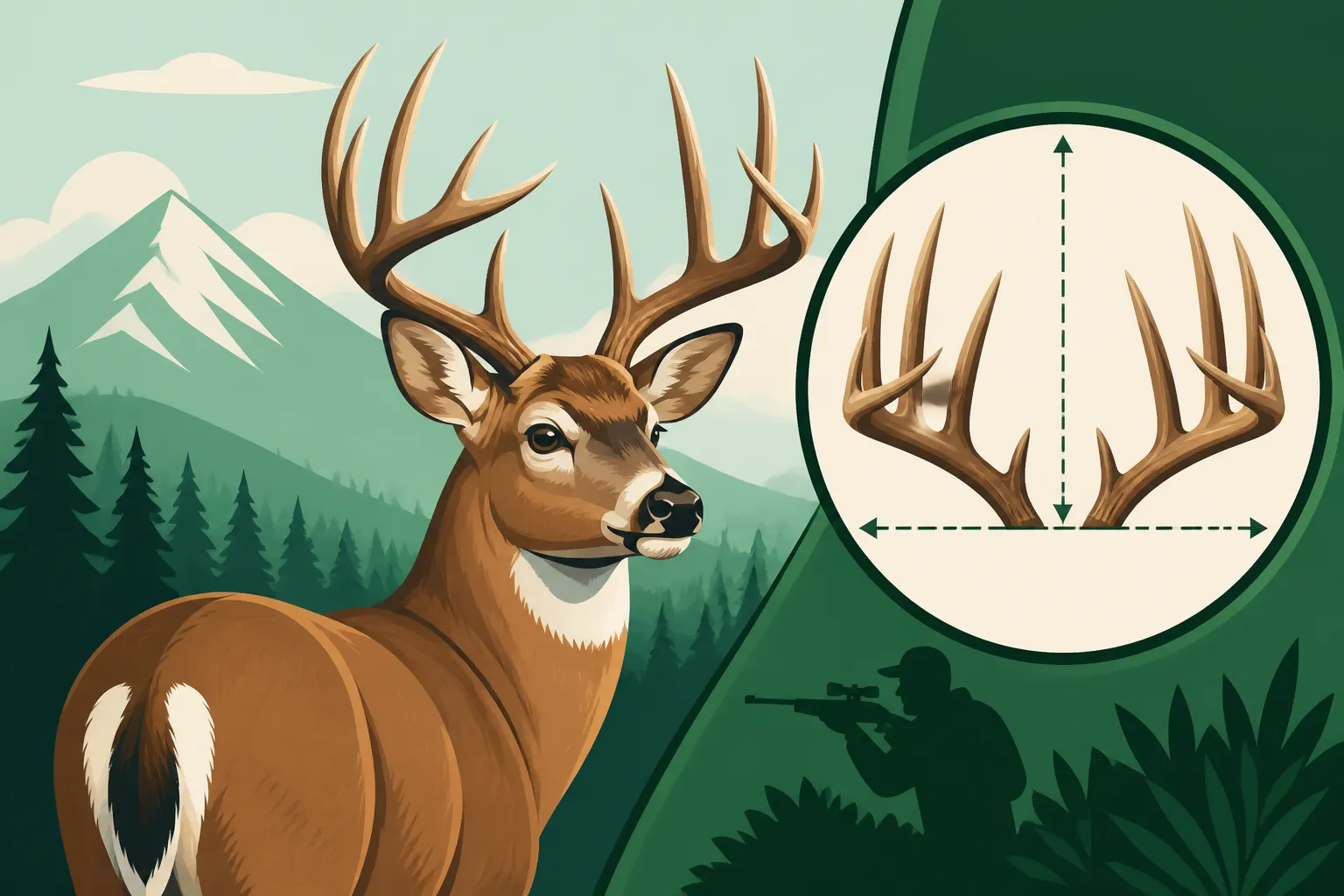
- Spread: This is the distance between the widest points of the antlers. For blacktails, a spread reaching or exceeding the width of the ears (which is roughly 15-18 inches on a mature buck) is often considered a good indicator of a solid animal. Wider spreads are certainly possible, but again, the dense timber doesn't often lend itself to bucks needing exceptionally wide racks.
- Length: This refers to the length of the main beams and the individual tines. While overall length might not be as pronounced as with mule deer, longer tines add to the visual appeal and score.
When you're trying to make a quick decision in the field, these three elements combine to give you the mental image of the buck's overall rack quality. It's a quick calculation under pressure, often after hours of still-hunting through deep forest, like what you'd experience when Still-Hunting Blacktails in Wet Washington Brush.
Here's a simplified look at how antler characteristics might translate to age and quality:
| Antler Characteristic | Young Buck (1.5-2.5 years) | Mid-Aged Buck (3.5-4.5 years) | Mature Buck (5.5+ years) |
|---|---|---|---|
| Typical Points | Spikes to Forked Horn (2-3 pts) | Forked Horn to Small 3- or 4-point | Solid 3- to 4-point, sometimes 5+ |
| Antler Mass | Thin bases, pencil-like beams | Moderate mass, improving density | Heavy bases, good mass throughout |
| Antler Spread | Narrow, often inside ears | Can reach ear width or slightly more | Often wider than ears, good symmetry |
| Main Beam Length | Short to moderate | Moderate to good length | Long, robust beams |
| Tine Length | Short to non-existent | Short to moderate tines | Good length on main tines, brow tines |
| Overall Impression | Lean, often symmetrical | Developing, more impressive | Heavy, dark, commanding |
Realistic Expectations for Washington Blacktails
Let's ground this in reality. While every hunter dreams of a Boone and Crockett buck, the vast majority of blacktails harvested in Washington are not record book animals. And that's perfectly okay! A hard-earned 3-point in Washington's thick coastal mountains is a trophy in itself.
Westside vs. Eastside Blacktails
While blacktails are predominantly a Western Washington species, living in the dense conifer forests, there can be some overlap with mule deer and whitetails as you move towards the Cascade crest. The truly big blacktails, often with heavier mass and wider spreads, tend to come from areas with strong genetics, excellent habitat diversity (think mosaic patterns of mature timber, brushy clearcuts, and riparian zones), and less hunting pressure, allowing bucks to reach older age classes. The Olympic Peninsula, Willapa Hills, and parts of the South Cascades are known for producing solid blacktails. When you're Reading Clearcuts and Reprod for Blacktail Bucks, you're looking for these key areas of varied forage and cover.
Conversely, bucks in heavily hunted or less fertile areas might show smaller antler growth, even at similar ages. It's not uncommon to harvest a mature buck with a respectable body but a relatively modest, although legal, antler configuration.
General Season and Special Permit Hunts
For general season hunters, especially those chasing deer during the main modern firearm or archery seasons, harvesting a mature blacktail with truly large antlers is a significant accomplishment. These hunts are often open to a broad range of legal bucks, meaning younger bucks with smaller racks are frequently taken. This demographic pressure can limit the number of bucks that survive long enough to reach their prime antler-growing years. The challenge of Hunting Washington's Three-Point Minimum Units can be intense, as you're constantly second-guessing that fleeting image.
Special permit hunts, however, often target specific areas or management goals that allow for a higher chance of encountering older, larger-antlered bucks. These permits are much harder to draw, but they offer an opportunity to hunt areas where deer densities might be higher, or where specific age classes are protected, leading to better antler growth. If you're serious about targeting a truly exceptional blacktail, researching and applying for these quality hunts through resources like GoHunt can significantly increase your odds, though the draw odds themselves are often very low.
Scouting and Judging Antler Size in the Field
Actually seeing a blacktail buck, let alone judging its antlers, is a testament to perseverance. These animals are masters of cover, and their habitat is often a tangle of trees, brush, and uneven terrain.
The Challenge of Thick Cover and Optics
Western Washington is defined by its thick forests, dense undergrowth, and frequent rain or fog. This isn't wide-open glassing country like the eastern breaks. Most blacktails are spotted at relatively close range, often through a small window in the brush. This makes judging antlers incredibly difficult. A buck that looks decent at 50 yards in the timber might shrink considerably when you finally get a clear view, or conversely, a buck you initially dismiss might reveal a surprising spread once it steps into the open.
Using good optics, even in dense cover, is crucial. A quality pair of 10×42 binoculars is usually sufficient for these closer encounters, but don't underestimate the value of a Riflescopes for Washington Timber and Open Country with excellent low-light performance. If you are fortunate enough to find an open area, like a recent clearcut or a powerline right-of-way, a spotting scope might help, but often you're relying on quick reads.
Making the Shot Decision: Legal vs. Trophy
Ultimately, every hunter has to define what constitutes a "trophy" for themselves. For many, harvesting any legal blacktail buck, especially after a tough hunt, is a significant achievement. The key is to know your local regulations and confidently identify a legal animal before you commit to a shot. Don't let "buck fever" cloud your judgment.
Take the extra few seconds to confirm points, especially if you're in a unit with antler restrictions like a 3-point minimum. It's always better to pass on a questionable buck than to make an illegal harvest. Practice Counting Points on a Live Buck during the off-season by observing deer or even looking at photos of various bucks. Understanding Washington's Three-Point Rule and What Counts is paramount to staying legal. If you're scouting with trail cameras, try to get good photos that show the rack clearly. Knowing Where Blacktails Bed in Reprod can help you strategically place those cameras. The more confident you are in your ability to judge, the more ethical and rewarding your hunting experience will be.
Disclaimer
This article is for general informational purposes only and does not constitute professional advice. Laws, prices and regulations vary by location and change over time. Consult a qualified professional for guidance on your specific situation.