Suppressors and Washington Hunting Rules
The world of hunting is constantly evolving, and with it, the gear we choose to bring into the field. One piece of equipment that often sparks a lot of conversation and, let's be honest, a fair bit of confusion among Washington hunters is the suppressor. Many folks hear "suppressor" and immediately think of spy movies or illegal activities, but the truth in a hunting context is far more practical and, in many states, completely legal. This guide is here to cut through the noise, clarify the rules surrounding suppressors for hunting in Washington, and help you understand if this tool might be right for your next trip into the backcountry.
The Legal Landscape of Suppressors in Washington
Before you even think about putting a suppressor on your rifle for a Washington hunt, it's absolutely critical to understand the legal framework. This isn't just about state law; it involves federal regulations too, which can make things seem more complicated than they need to be.
Federal vs. State Regulations: What's the Difference?
At the federal level, suppressors are regulated under the National Firearms Act (NFA) of 1934, just like short-barreled rifles, machine guns, and other "Title II" firearms. This means they are legal to own in most states, including Washington, but they are subject to strict federal oversight. The Bureau of Alcohol, Tobacco, Firearms and Explosives (ATF) is the agency responsible for enforcing these laws. You can't just walk into a store and buy a suppressor like you would a box of ammunition. There's a formal process involving extensive background checks, fingerprinting, and a special tax stamp.
Many people get hung up on the federal aspect, not realizing that while federal law regulates the manufacture and transfer of suppressors, individual states have the authority to regulate their possession and use, especially for hunting. This is where the landscape can get a bit muddy, as a suppressor might be federally legal to own, but state law could prohibit its use while hunting certain game, or even entirely. Thankfully, Washington State has a more hunter-friendly approach than some.
Washington State's Stance on Suppressor Ownership and Hunting
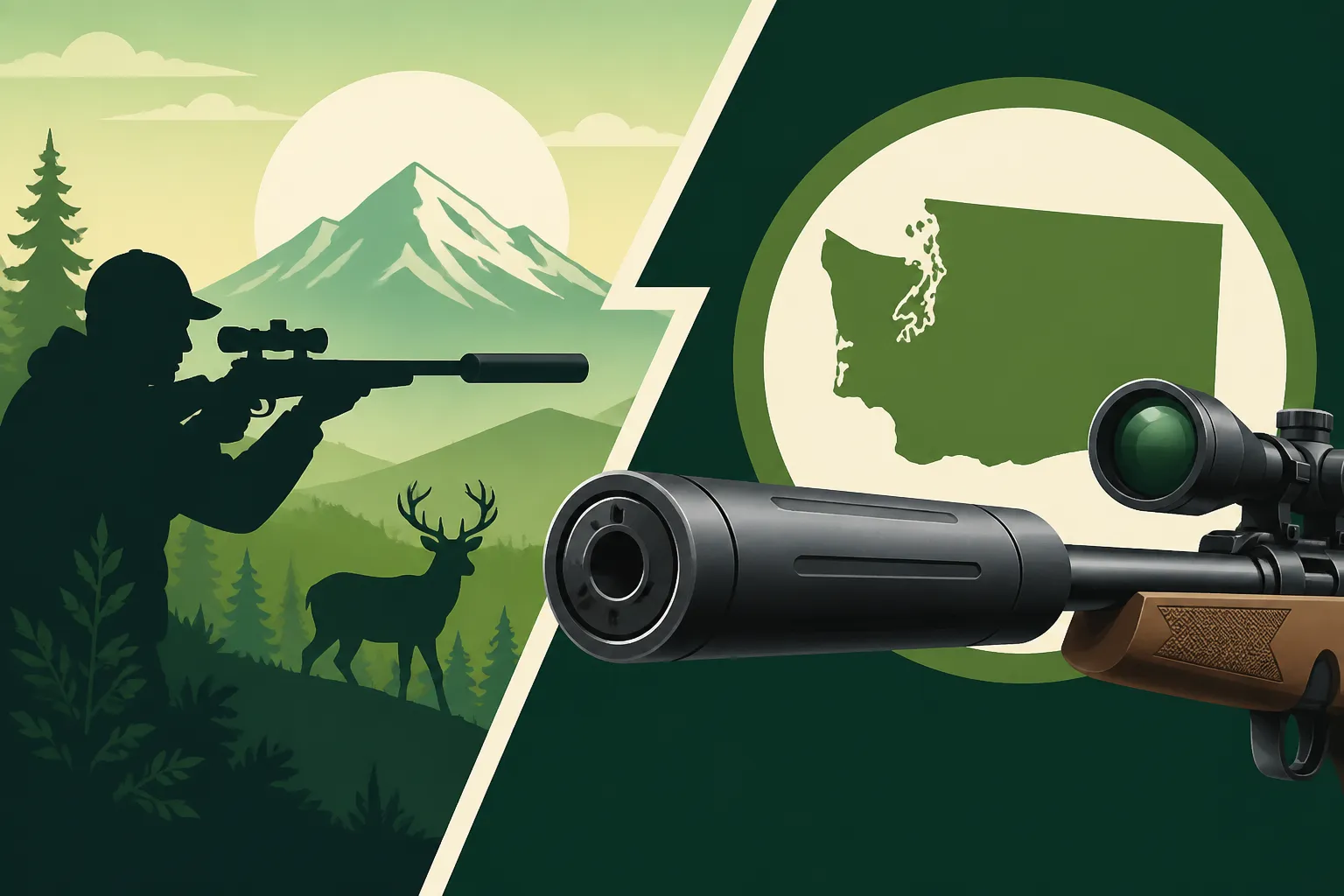
Good news for Washington hunters: it is legal to own and use a suppressor while hunting in Washington State. The Washington Department of Fish and Wildlife (WDFW) regulations do not prohibit the use of suppressors for hunting big game or small game. This means if you've gone through the federal process to legally acquire one, you're generally good to go in the field.
However, "generally good to go" doesn't mean you can throw caution to the wind. Always double-check the latest WDFW hunting regulations pamphlet and any specific GMU (Game Management Unit) rules before your hunt. While the general rule allows suppressors, it's always wise to confirm, especially if you're hunting in unique areas like certain private lands or specific wildlife management areas that might have their own nuanced rules. A quick check on the official WDFW website or consulting with resources like GoHunt can help ensure you're fully compliant with all the current regulations.
Dispelling Myths About Suppressors
Let's clear up some common misconceptions that often plague discussions about suppressors. First, they don't make your rifle "silent." This isn't Hollywood. A suppressor, or more accurately, a "silencer," significantly reduces the sound of the gunshot, often bringing it down to a level that's safer for your hearing and less disruptive to others. Depending on the caliber and ammunition type, it might sound more like a loud clap or a car door slamming, rather than the deafening crack of an unsuppressed rifle.
Second, suppressors aren't just for tactical operations or criminals. In many European countries, suppressors are actually mandated for hunting to protect hearing and reduce noise pollution in rural areas. They are a valuable tool for responsible hunters looking to minimize their environmental impact and safeguard their own long-term health. Lastly, the process to acquire one is rigorous; it's not something criminals can easily bypass, debunking the myth that they are primarily used for illicit purposes.
Hunting with a Suppressor in Washington: The Practicalities
Now that we've covered the legal ground, let's talk about why a hunter in Washington might actually want to use a suppressor and what that looks like in practice out in the woods.
Benefits for Hunters and the Environment
The advantages of hunting with a suppressor are often understated. The most immediate benefit is hearing protection. The concussive blast of an unsuppressed rifle shot, especially in dense timber or a box canyon, can cause permanent hearing damage. Wearing ear protection is crucial, but a suppressor offers an additional, always-on layer of safety. This is a huge deal for personal health, especially if you hunt frequently or are introducing new hunters to the sport. It also means you can often hear your hunting partners better and be more aware of your surroundings immediately after the shot, which is critical for tracking or if another animal appears.
Beyond personal protection, suppressors reduce noise pollution. Imagine you're still-hunting for Blacktail Deer Hunting in Western Washington Timber and take a shot. The suppressed report is far less likely to send every other animal within a mile running for the hills. This can potentially mean less disturbance to wildlife and, importantly, less disturbance to other hunters or nearby landowners. It's about being a good neighbor and a responsible steward of the land.
Another benefit often overlooked is improved accuracy. By mitigating muzzle rise and recoil, suppressors can make it easier to maintain your sight picture during and after the shot. This can lead to greater confidence and, ultimately, more ethical and cleaner kills. Reduced recoil can also be a huge advantage for hunters sensitive to recoil, allowing them to shoot larger calibers more comfortably and accurately. This can be especially important when targeting big game like elk where shot placement is paramount. Rifle Setup for Washington Elk and Deer often includes discussions around recoil, and a suppressor can greatly assist here.
What to Consider Before Bringing a Suppressor to the Field
While the benefits are clear, there are practical considerations. First, a suppressor adds length and weight to your rifle. This might not seem like much on paper, but after a long day of hiking through the steep, broken country of Eastern Washington or navigating thick brush on the west side, that extra few inches and pound or two can feel significant. You'll need to adjust your carrying technique, and your rifle might not balance the same way it did without the suppressor.
Second, a suppressor will likely change your rifle's point of impact (POI). This isn't a flaw; it's just a reality. The added weight and harmonic changes affect how the barrel vibrates. You must re-zero your rifle with the suppressor attached before heading into the field. Never assume your rifle will shoot the same with or without it. Take the time to confirm your zero at various distances, just as you would with any other load development or scope change. This is a non-negotiable step to ensure ethical shot placement.
Finally, practice, practice, practice. Getting comfortable with your rifle's new dimensions and feel is essential. If you typically carry your rifle in a scabbard on horseback or strapped to your pack, test how the suppressed rifle fits. Make sure you can deploy it quickly and quietly. When planning your hunting season and considering gear, tools like GoHunt can be invaluable for researching specific GMUs and understanding terrain, helping you anticipate how the added length of a suppressed rifle might impact your movement.
Respecting Other Hunters and Public Perception
Despite their legality and benefits, suppressors can still be misunderstood. When hunting on public lands, you might encounter other hunters or outdoor enthusiasts who are unfamiliar with suppressors or hold negative preconceived notions. It's important to be a good ambassador. You don't need to preach, but if asked, calmly explain the benefits, particularly hearing protection and reduced disturbance. Avoid being overly conspicuous or drawing unnecessary attention to your suppressed rifle. Our community benefits when we educate others respectfully.
Remember, even with a suppressor, a gunshot is still a gunshot. While the sound is reduced, it's not silent. Always be mindful of your surroundings, especially if hunting near populated areas or other recreational users. Common sense and courtesy go a long way in ensuring that suppressors remain a legal and accepted tool for Washington hunters.
The Process of Acquiring a Suppressor for Washington Hunting
Getting your hands on a suppressor isn't like buying a new pair of boots. It involves a specific federal process that requires patience and adherence to the law.
Navigating the NFA Process: A Step-by-Step Guide
The acquisition process for a suppressor in Washington involves several key steps under the National Firearms Act:
- Find a Reputable FFL (Federal Firearms Licensee): You'll need to locate an FFL in Washington that is licensed to deal in NFA items. Not all gun shops handle suppressors, so call ahead. They will facilitate the transfer.
- Select Your Suppressor: Choose the suppressor you want. Consider the calibers you hunt with most often. Many suppressors are multi-caliber rated, offering versatility.
- Complete the ATF Form 4: This is the core of the process. Your FFL will help you fill out this form, which is an application to transfer and register the NFA item. You'll choose between applying as an individual, a trust, or a corporation. Many hunters opt for a trust as it allows multiple individuals (trustees) to legally possess and use the suppressor.
- Fingerprints and Photos: You'll need to submit fingerprints (typically done electronically at the FFL or through a service) and passport-style photographs.
- Pay the Tax Stamp: A $200 tax stamp fee is submitted with your Form 4 application. This is a one-time federal tax for the transfer of the NFA item.
- The Waiting Game: This is often the hardest part. Once your application is submitted, it goes to the ATF for processing. This can take several months, sometimes even a year or more. There is no set timeline, and patience is key. During this period, the suppressor remains at your FFL.
- Approval and Transfer: Once approved, the ATF will send an approved Form 4 back to your FFL. You can then pick up your suppressor from the FFL. Congratulations, you're now a legal owner of an NFA item!
This process is straightforward but lengthy. Planning ahead is crucial if you want to use a suppressor for a particular hunting season. Don't wait until August to start the process if you hope to use it for archery elk in September or modern firearm deer in October.
Choosing the Right Suppressor for Your Washington Hunt
Selecting a suppressor is an important decision, and there are many factors to consider:
- Caliber Compatibility: Most hunters choose a suppressor that can cover multiple calibers. For example, a .30 caliber suppressor can be used on .30-06, .308, 6.5 Creedmoor, and often smaller calibers like .223/5.56 with appropriate adapters. If you primarily hunt Washington Elk Herds and Where They Live with a .300 Win Mag and Mule Deer of Eastern Washington with a 6.5 Creedmoor, a versatile .30-cal model makes a lot of sense.
- Weight and Length: As discussed, these affect handling. Shorter, lighter suppressors are generally preferred for hunting, especially if you'll be covering a lot of ground. However, longer suppressors might offer slightly better sound reduction. It's a trade-off.
- Material: Suppressors are typically made from stainless steel, titanium, or Inconel. Titanium is lighter but often more expensive. Stainless steel is durable and cost-effective.
- Attachment Method: Most suppressors attach via direct thread (screwing directly onto the barrel) or a quick-detach (QD) system. QD systems are convenient for quickly attaching and detaching but often add a bit more length and weight due to the muzzle device required. Direct thread is generally lighter and more compact but less convenient if you frequently remove the suppressor.
- Durability and Maintenance: Consider how robust the suppressor is and how easy it is to clean. Some are "sealed" and require minimal user maintenance, while others can be fully disassembled.
The market for suppressors is vast, with many reputable brands offering excellent products. Researching options and reading reviews from other hunters can be very helpful. Websites like GoHunt often have forums or articles where hunters discuss their preferred gear, including suppressors.
Ongoing Responsibilities: Storage and Transport
Once you own a suppressor, you have ongoing responsibilities. Legally, you must store it securely to prevent unauthorized access. When transporting it for hunting, keep it unloaded and separate from ammunition, just as you would any other firearm. When traveling out of state, be aware that NFA laws for suppressors can vary by state, so always check the laws of your destination state before crossing state lines. While legal in Washington, it might not be in a neighboring state you plan to visit.
Within Washington, transporting your suppressed rifle to your favorite Public Land Hunting in Washington: Forest, DNR and BLM spots or even for a private land hunt where you've secured Getting Written Permission on Private Land is generally straightforward, following all standard firearm transport laws. The key is that the suppressor is registered to you (or your trust/corporation) and you have the approved Form 4 paperwork to prove it, which you should always keep accessible.
Ethical Considerations and Best Practices
Using a suppressor responsibly goes beyond just following the law. It’s about being a thoughtful hunter and a good representative of our community.
Noise Reduction vs. Complete Silence
It bears repeating: suppressors do not make your rifle silent. They significantly reduce the sound signature, protecting your hearing and minimizing disturbance. This distinction is crucial for managing expectations and for accurately communicating with others. You'll still hear a "thump" or "pop" from the gun, and the projectile itself often breaks the sound barrier, creating its own crack as it flies downrange. The primary goal is noise reduction, not elimination. This means you should still be aware of noise pollution, even when using a suppressor. It's about moderation and respect.
Educating Fellow Hunters and Non-Hunters
As more hunters adopt suppressors, it's inevitable that questions and misconceptions will arise. Embrace the opportunity to educate. When you're at the shooting range or chatting with other hunters around a campfire, if the topic comes up, share your experience in an open and factual manner. Explain the safety aspects – hearing protection for yourself and reduced noise for those around you, including local communities or other outdoor users. Discuss the potential for improved accuracy and reduced recoil, which can lead to more humane harvests. By sharing accurate information, you help demystify suppressors and promote a positive image of responsible hunting.
Staying Informed About Changing Regulations
Hunting regulations are not set in stone. They can change due to new legislation, WDFW commission decisions, or public input. While suppressors are currently legal for hunting in Washington, it's always wise to stay informed. Regularly check the WDFW website for updates, review the annual hunting pamphlets, and keep an eye on news from reputable hunting organizations. Websites like GoHunt are also good resources for staying up-to-date on hunting news and regulation changes that might impact your season planning. Washington Fish and Wildlife Commission Rule Meetings are where many of these decisions are discussed and finalized, and paying attention to their proceedings can provide advanced notice of potential changes.
Always ensure you have the most current information before heading afield, not just about seasons and bag limits, but also about equipment legality. This diligence ensures you're always hunting ethically and within the bounds of the law.
Pros and Cons of Suppressor Use for Washington Hunting
To summarize, here's a quick look at the advantages and disadvantages of using a suppressor while hunting in Washington:
| Aspect | Pros | Cons |
|---|---|---|
| Sound | Significant noise reduction, protecting hunter's hearing, less disturbance to wildlife and other people. | Not completely silent; still produces a detectable sound. |
| Accuracy | Reduced muzzle rise and recoil, potentially leading to improved accuracy and confidence. | May alter point of impact (POI) requiring re-zeroing of the rifle. |
| Comfort | More comfortable shooting experience, especially for recoil-sensitive hunters. | Adds length and weight to the rifle, affecting balance and maneuverability in dense cover or steep terrain. |
| Legality | Federally legal with proper NFA paperwork; permitted for hunting in Washington State. | Requires a lengthy federal application process (ATF Form 4, tax stamp, fingerprints) and significant wait times. |
| Cost | A long-term investment in hearing health and enhanced hunting experience. | Initial purchase cost can be substantial (suppressor itself + $200 tax stamp). |
| Perception | Promotes responsible hunting by reducing noise pollution. | Can be misunderstood by the public and other hunters due to common misconceptions. |
| Maintenance | Generally low maintenance, but specific cleaning requirements vary by model. | Adds another component to clean and maintain after hunts. |
Remember, the decision to use a suppressor for hunting is a personal one, but understanding the rules and realities is the first step toward making an informed choice.
Disclaimer
This article is for general informational purposes only and does not constitute professional advice. Laws, prices and regulations vary by location and change over time. Consult a qualified professional for guidance on your specific situation.