Washington Crossbow Rules for Big Game
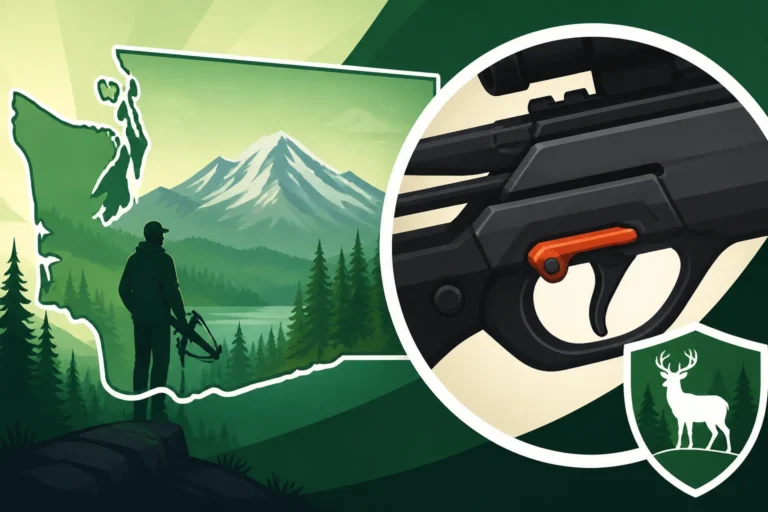
It's easy to feel lost in the maze of Washington's hunting regulations, especially when you're considering a crossbow for big game. Many hunters get confused trying to decipher the specific legalities, often wondering if a crossbow falls under archery, modern firearm, or its own distinct category. This guide aims to demystify Washington's crossbow rules, giving you a clear, comprehensive understanding of how to legally and ethically hunt big game with one in our state.
Understanding Washington's Crossbow Regulations
Crossbow regulations in Washington have evolved over the years, often leading to confusion among both new and seasoned hunters. It’s crucial to understand that while a crossbow might feel like a hybrid between a traditional bow and a firearm, it has its own unique set of rules and limitations within the Washington Department of Fish and Wildlife (WDFW) framework. You can't just assume it's interchangeable with a compound bow or a rifle; doing so could land you in hot water.
The Evolution of Crossbow Rules in Washington
For a long time, crossbows were primarily restricted to hunters with specific disability permits in Washington. This created a perception that they weren't a "true" archery weapon or were somehow less challenging. However, as crossbow technology advanced and their popularity grew nationwide, WDFW revisited these regulations. The shift reflected a broader understanding of crossbows as a legitimate hunting tool, requiring skill and practice, albeit different from traditional archery. This evolution meant more hunters gained access to crossbows, but with that access came new responsibilities to understand the specific rules. It's a prime example of how hunting regulations aren't static; they adapt to equipment, conservation needs, and hunter demand, often leaving a trail of outdated assumptions for us to navigate.
Key Differences from Archery and Modern Firearm
One of the biggest pitfalls for crossbow hunters is assuming their equipment fits neatly into either the "archery" or "modern firearm" box. In Washington, this simply isn't the case. While crossbows share some characteristics with traditional archery—they shoot an arrow-like projectile and rely on a string—they are generally not allowed during general archery seasons without a specific disability permit. On the flip side, they are also distinctly different from modern firearms. They have limited range compared to rifles, require different handling, and are subject to entirely separate rules regarding caliber, projectiles, and season dates. Understanding these distinctions is paramount. For example, you can't carry a crossbow into a "shotgun-only" area just because it doesn't fire a bullet, nor can you use it during any old general archery season unless specified. It's a unique category that demands its own careful study of the WDFW hunting pamphlets.
Eligibility and Permit Requirements for Crossbow Use
So, who can actually hunt with a crossbow in Washington, and what do you need to do to make sure you're legal? This is where many hunters hit a wall of frustration. It’s not as straightforward as just buying a license and a tag; there are specific pathways to consider, particularly if you're not hunting during a general season that explicitly allows crossbows.
General Season Use and Disability Permits
Currently, in Washington, hunters without a disability permit can typically use a crossbow during any modern firearm general big game season. This is a critical distinction and often surprises those who assume it falls under archery. If you're hunting deer or elk during a modern firearm general season, your crossbow is usually a go, provided it meets all the technical specifications we'll get into shortly. However, if you wish to hunt during a designated archery-only season, you must obtain a disability permit from WDFW. This permit requires a physician's certification stating that you have a permanent physical disability that prevents you from being able to hunt with a legal long bow, recurve bow, or compound bow. It's not a loophole for convenience; it's a specific accommodation for those who physically cannot draw and shoot traditional archery equipment. This highlights the state's intent to maintain the integrity of archery seasons while still providing opportunities for all hunters.
Hunter Education and Licensing
Regardless of your weapon choice, hunter education is a fundamental requirement for most hunters in Washington. If you were born after January 1, 1972, you generally need to show proof of completing a hunter education course to purchase a hunting license. This isn't specific to crossbows, but it's a non-negotiable step in becoming a legal hunter in our state. You'll need to complete the course, get your hunter education card, and then purchase your annual hunting license and the appropriate big game tags for the species you intend to pursue. The base big game license covers deer, elk, bear, and cougar, but each species requires its own tag. While a crossbow doesn't change these fundamental licensing steps, understanding Washington Hunter Education and Licensing is crucial for any hunter. Once you have your license and tags, you can then focus on the specifics of weapon choice. Remember, even with a disability permit, all standard licensing and tagging requirements apply.
Technical Specifications for Crossbows and Bolts
Just owning a crossbow isn't enough; it must meet specific technical criteria set by WDFW to be legal for big game hunting. These rules are in place to ensure ethical harvest, promote fair chase, and prevent unnecessary wounding of animals. Cutting corners here isn't just unethical; it's illegal.
Minimum Draw Weight and Bolt Weight
Washington State has clear minimums for crossbows used for big game. Your crossbow must have a minimum draw weight of 125 pounds. This ensures that the projectile has sufficient kinetic energy to humanely harvest larger animals like deer and elk. Don't try to get by with a lighter draw weight, even if it feels more comfortable to cock. The bolts you use also have specific requirements. They must be at least 16 inches long and have a minimum total weight of 350 grains. This 350-grain rule includes the shaft, fletching, nock, and broadhead. Why these specific numbers? It's all about penetration and energy transfer. A lighter bolt, even from a powerful crossbow, might not penetrate deep enough through hide, muscle, and bone for a quick, humane kill on a large animal. Always check your equipment's specifications and weigh your complete bolts to ensure they meet these minimums before you head into the field. This attention to detail is part of being a responsible hunter. For more detailed information, you can always refer to the WDFW hunting regulations pamphlet, which outlines Washington's Legal Equipment Rules by Weapon.
Broadhead Requirements and Safety Features
The business end of your bolt – the broadhead – is just as important as the crossbow itself. Washington has specific rules to ensure broadheads are sharp and effective. For big game, your broadhead must have at least two sharp, cutting edges and a minimum cutting width of seven-eighths of an inch. This means tiny field points or blunt practice tips are strictly out. Mechanical broadheads are generally legal in Washington, provided they meet the minimum cutting width when deployed. However, it's always wise to double-check the latest regulations as rules can sometimes change, and there can be nuances with certain designs. Remember, the goal is a quick, clean kill, and a properly designed, razor-sharp broadhead is critical for that. Beyond the broadhead, crossbows must also have a functional safety mechanism to prevent accidental discharge. This is a standard safety feature on all modern crossbows, but it's something to always verify before and during your hunt. Treat a cocked crossbow with the same respect you'd give a loaded firearm; always engage the safety until you're ready to shoot.
Here’s a quick summary of key crossbow equipment requirements for big game in Washington:
| Feature | Requirement | Notes |
|---|---|---|
| Draw Weight | Minimum 125 lbs | Ensures sufficient kinetic energy for humane harvest. |
| Bolt Length | Minimum 16 inches | Longer bolts often provide better stability and energy. |
| Bolt Weight | Minimum 350 grains (including broadhead, fletching, nock) | Crucial for penetration and ethical kill shots. |
| Broadhead | Minimum 7/8 inch cutting width, at least two sharp cutting edges | Mechanical broadheads are generally legal if they meet these specs. |
| Safety | Must have a functional safety mechanism | Essential for preventing accidental discharge. |
| Optics | No specific restriction on magnification (unlike muzzleloader seasons) | Crossbows can use magnified optics; compare this to Muzzleloader Loading and Ignition in Rain. |
Legal Hunting Seasons and Species with a Crossbow
Navigating Washington's hunting seasons can feel like solving a complex puzzle. When you add a crossbow into the mix, it introduces another layer of complexity. The most crucial takeaway here is that a crossbow is not treated interchangeably with a traditional bow for most general seasons.
Crossbow Use During Archery Seasons
This is where the biggest misconceptions often arise. For the vast majority of hunters, you cannot use a crossbow during a general archery-only big game season in Washington unless you possess a valid disability permit issued by WDFW. This permit is specifically for individuals with a permanent physical disability that prevents them from drawing and shooting a legal longbow, recurve, or compound bow. Without this permit, your crossbow is restricted to general modern firearm seasons for big game. It's vital to check the current WDFW hunting pamphlet for the specific GMU (Game Management Unit) and species you plan to hunt, as some areas might have unique rules or special hunts. Don't rely on word-of-mouth or assumptions from other states; Washington has its own distinct regulations. If you're an archery purist but find yourself limited physically, pursuing a disability permit could be your path back into the archery seasons, allowing you to participate in earlier Washington Archery Deer and Elk Dates.
Specific Species and GMU Restrictions
When planning your hunt, remember that crossbow regulations don't just apply statewide; they can also be influenced by specific species, GMUs, and even special permit hunts. As mentioned, generally, a crossbow is legal during any modern firearm general season for deer and elk. For other big game like bear and cougar, if there's a modern firearm season open, your legal crossbow can typically be used. However, always confirm these details in the current WDFW regulations pamphlet for the year you are hunting. Some GMUs might have firearm restriction areas where only shotguns or specific muzzleloaders are allowed, and while a crossbow isn't a firearm, these areas might have additional considerations. Similarly, special permit hunts often have their own weapon-specific rules. For instance, a quality elk hunt permit might specify "archery-only" or "any legal weapon," and knowing how "any legal weapon" applies to a crossbow is key. Tools like GoHunt can be incredibly helpful for meticulously researching GMU boundaries, season dates, and weapon restrictions. Their mapping overlays often highlight specific regulations for each area, helping you avoid accidental infractions.
Common Misconceptions and How to Avoid Them
The world of hunting regulations is ripe with misunderstandings, and crossbows seem to attract more than their fair share. It's easy to fall into traps set by well-meaning but misinformed advice, or by comparing Washington's rules to those of other states. Let's clear up some common myths.
Crossbows are Not Modern Firearms
This is probably the most significant source of confusion. Many hunters, and even some non-hunters, mistakenly believe that because a crossbow uses a trigger and often has a scope, it's essentially a firearm. This is incorrect in Washington's regulations. A crossbow, while a powerful hunting tool, is not classified as a modern firearm. This distinction is crucial because it means crossbows are not subject to the same laws regarding magazine capacity, barrel length, or caliber that apply to rifles or shotguns. However, this also means they are not automatically allowed wherever a modern firearm is, especially in weapon-restricted areas where only shotguns or muzzleloaders might be permitted. The core idea is that a crossbow is its own category. For example, if a GMU has a "shotgun/muzzleloader only" restriction, you can't just assume your crossbow is good to go. Always check the specific wording in the regulations to confirm crossbow legality in such specialized zones. Understanding Washington's Weapon Choice Rule for Deer and Elk will help clarify these boundaries.
"Any Legal Weapon" Versus Crossbow Specifics
Another common area of misunderstanding revolves around the phrase "any legal weapon." When a season or permit hunt states "any legal weapon," it generally means you can use a modern firearm, a muzzleloader, or a traditional archery setup (longbow, recurve, compound bow), or a crossbow, provided your chosen weapon meets all other state-specific regulations for that species and season. The key is "provided your chosen weapon meets all other state-specific regulations." This means your crossbow must still meet the minimum draw weight and bolt specifications, and you must have the appropriate license and tag. It doesn't mean "anything goes." It's critical to interpret "any legal weapon" not as a free-for-all, but as a broad umbrella under which each specific weapon type must still comply with its own set of rules. For example, you couldn't use a .22 rifle on an "any legal weapon" elk hunt because a .22 does not meet the minimum caliber requirements for elk. Similarly, your crossbow, while legal for "any legal weapon" seasons, must still adhere to its specific technical standards. Resources like GoHunt can help you parse these season descriptions and ensure your equipment aligns with the stated intent.
Practical Tips for Washington Crossbow Hunters
Once you've got the regulations sorted, the next step is preparing for a successful hunt. Washington's diverse terrain and weather demand thoughtful planning, especially when you're hunting with a crossbow.
Scouting and Setup Considerations
Effective scouting is paramount for any hunter, and crossbow hunting is no exception. Because crossbows typically have a more limited effective range compared to high-powered rifles, getting closer to your quarry becomes even more critical. This means focusing on areas with thick cover, natural funnels, and predictable game movement patterns. E-scouting using satellite imagery and topographic maps is an excellent starting point. Pay attention to bedding areas, feeding zones, and water sources, looking for pinch points where deer or elk might pass within your effective shooting range. Once you identify potential areas, a boots-on-the-ground scout is essential. Look for fresh sign, measure shooting lanes, and identify natural blinds or cover where you can set up undetected. Consider how the wind typically blows in the area and plan your approach accordingly. Using trail cameras can give you invaluable insights into animal patterns and the size of game in your target area. For help mapping out these crucial details, using sophisticated mapping apps can make E-Scouting Washington GMUs Before the Draw much more effective.
When it comes to setting up for a shot, whether from a ground blind, a treestand, or still-hunting, remember that a crossbow is often heavier and bulkier than a compound bow. Practice shooting from various positions you expect to encounter in the field. Can you comfortably get into shooting position from your blind without making excessive noise? Can you acquire your target quickly? These practical considerations can make or break a hunt. Furthermore, remember that many timber companies charge access fees, so verify Timber Company Permits in Western Washington if you plan to hunt those lands.
Gear Selection and Maintenance for Washington Conditions
Washington's weather, especially on the west side, can be notoriously wet and unpredictable. This makes gear selection and maintenance critical for crossbow hunters. While crossbows are generally more weather-resistant than traditional bows, keeping your strings and components dry is still important for optimal performance and longevity. Carry a good quality string wax and apply it regularly, and consider a soft crossbow case or cover to protect it from rain and brush while you're moving through the woods.
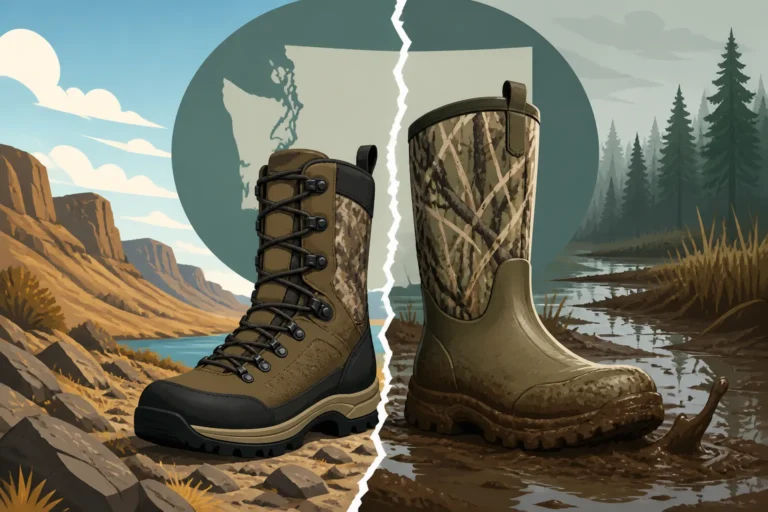
Beyond the crossbow itself, think about your personal gear. Quality rain gear that is both waterproof and quiet is a must. Washington's dense forests and steep terrain demand sturdy, comfortable boots with good ankle support and aggressive tread. You'll be doing a lot of walking, potentially carrying heavy equipment, so proper footwear can prevent injury and keep you in the field longer. Since you're often getting close to game, scent control is also important, even if it's just playing the wind correctly. Don't forget essentials like a good headlamp for those early morning hikes or late-night pack-outs, a reliable knife, and sturdy game bags to protect your harvest. Washington's conditions can be harsh, and being prepared with the right gear can make all the difference between a miserable trip and a successful, enjoyable hunt. Consider reading up on Rain Gear and Layering for Washington Hunts and Boots and Packs for Washington Backcountry for more detailed advice on dressing for success in the Pacific Northwest.
Disclaimer
This article is for general informational purposes only and does not constitute professional advice. Laws, prices and regulations vary by location and change over time. Consult a qualified professional for guidance on your specific situation.