Certified Weed-Free Feed Rules
Bringing livestock or pack animals into Washington's breathtaking wildlands for a hunting trip can be an incredible experience, but it also comes with a significant responsibility: preventing the spread of invasive species. It's a real headache for many to figure out exactly what's required, and the thought of inadvertently harming the very ecosystems we cherish can be daunting. This comprehensive guide will walk you through Washington's certified weed-free feed rules, explaining not just what they are, but why they matter and how to comply so your adventure doesn't leave behind an ecological footprint.
Why Washington Cares About Weed-Free Feed
The untouched beauty of Washington's backcountry, from the high Cascades to the Blue Mountains, is a draw for hunters and outdoor enthusiasts alike. We rely on these lands to sustain healthy populations of elk, deer, and other game. But this delicate balance is constantly threatened by something many might not even consider: tiny weed seeds hitchhiking into pristine areas. These seemingly innocent seeds, often carried in hay or straw, can sprout into aggressive noxious weeds that devastate native plant communities and degrade critical wildlife habitat. It's a frustrating reality to face, knowing that even our best intentions can inadvertently cause harm if we're not careful.
Understanding Noxious Weeds and Their Impact
Noxious weeds are essentially non-native plant species that have been officially designated as harmful to agriculture, ecosystems, human health, or natural resources by federal or state authorities. Unlike native plants, they often have no natural predators or diseases in their new environment, allowing them to outcompete and displace native grasses and forbs that wildlife depend on for food and cover. Think about the extensive monocultures of knapweed or hawkweed you might see along some roadsides in Eastern Washington, or the pervasive medusahead rye that can choke out good forage. These aren't just ugly plants; they're ecological destroyers.
For wildlife, the impact is severe. Native forage, which provides essential nutrients for elk, deer, and other species, gets pushed out. This can lead to reduced carrying capacity of the land, meaning fewer animals can be supported. It also makes hunting more challenging, as deer and elk might avoid areas completely taken over by these unpalatable invaders. Furthermore, some noxious weeds can physically harm animals, causing digestive issues or even poisoning. The seeds themselves are tiny time bombs, capable of remaining viable in the soil for years, just waiting for the right conditions to germinate and unleash another wave of destruction. When we pack in stock, our animals become unwitting accomplices if their feed or manure carries these seeds, spreading the problem deep into previously untainted wilderness.
What "Certified Weed-Free" Actually Means
Given the immense threat posed by noxious weeds, various agencies have developed protocols to prevent their spread, especially into sensitive areas. One of the most effective measures is the requirement for "certified weed-free" feed. This isn't just a casual claim by a farmer; it's a specific designation indicating that hay, straw, or other forage products have undergone a rigorous inspection process to ensure they are free of designated noxious weed seeds. It's a proactive step to protect our shared natural heritage, even if it adds another layer of planning to our hunting trips.
The Certification Process and Standards
The certification process for weed-free feed involves a strict set of standards and inspections, often overseen by state departments of agriculture or local weed boards, in conjunction with guidelines from organizations like the North American Weed Management Association (NAWMA). Before harvest, fields are inspected by state-approved weed-free forage inspectors. These inspectors are trained to identify a long list of noxious weed species. If any of these weeds are found above a very low tolerance level, the field cannot be certified. Once approved, the harvested hay or straw is then often tagged or marked with special colored twine and a certification tag, which indicates its origin, the inspector's name, and the certification date.
These standards are meticulously designed. They typically require a buffer zone around the inspected field, ensuring that weeds from adjacent areas don't contaminate the certified crop. The equipment used for harvesting must also be cleaned to prevent cross-contamination. This whole process guarantees that when you purchase "certified weed-free" feed, you're getting a product that has been independently verified to meet stringent criteria, significantly reducing the risk of introducing new invaders into the backcountry. Always look for these official tags; they are your proof of compliance and your contribution to conservation.
Types of Feed and Forage Requiring Certification
When you're planning to take horses, mules, or llamas into Washington's public lands, especially federal lands like National Forests or designated Wilderness Areas, virtually any forage product you bring in for them is subject to these rules. The primary culprits for seed spread are traditionally baled hay and straw. These are obvious vectors for seeds, and therefore, they are the most commonly regulated. If you're bringing in a traditional bale of hay for your stock, it absolutely needs to be certified weed-free.
However, the regulations aren't just limited to loose hay or straw. Pellets and cubes, while generally lower risk due to the milling and processing they undergo, can sometimes also fall under scrutiny or be recommended as a safer alternative. Many national forests will specify that any hay or straw must be certified. Processed feeds like hay pellets or cubes are often a good choice because the high-heat processing usually destroys weed seeds. Still, it's always best to double-check the specific regulations for the particular Game Management Unit (GMU) or wilderness area you're heading into. When you're packing into areas like the Pasayten Wilderness Hunting Access, opting for pellets is often the safest bet and minimizes your risk of issues.
Navigating Washington's Regulations and How to Comply
Understanding the "why" behind weed-free feed is one thing, but knowing the "how" to navigate the regulations can feel like a maze. Washington's rules, often dictated by federal land management agencies like the U.S. Forest Service or Bureau of Land Management (BLM), aim to protect our most sensitive ecosystems. Non-compliance isn't just an abstract concern; it can lead to fines, and more importantly, contributes directly to the degradation of the very places we love to hunt. It's crucial to take the time to understand where and when these rules apply and to implement best practices for your stock. This is where planning, perhaps even with tools like GoHunt's mapping features to check land ownership and regulations, becomes your best friend.
Where and When the Rules Apply
The certified weed-free feed requirements primarily apply when you're taking pack or saddle stock onto federal lands in Washington. This includes all National Forests, such as the Okanogan-Wenatchee, Gifford Pinchot, and Colville National Forests. Critically, these rules are most strictly enforced within designated Wilderness Areas, like the Wenaha-Tucannon Wilderness in Washington or other remote backcountry regions. These are often the most pristine areas, and therefore, the most vulnerable to invasive species.
It's important to remember that these rules apply to all hay, straw, or other forage products that are brought onto these lands and fed to your stock. This doesn't necessarily mean you can't drive through a National Forest on a paved road with non-certified hay in your trailer if you're not feeding it there. However, the moment you leave the paved road, or certainly when you enter a wilderness boundary or a designated stock-use area, the certified feed requirement kicks in. Always check the specific regulations for your destination GMU, as some state lands or wildlife areas may also have their own requirements. A quick call to the local Forest Service Ranger District or WDFW office for your hunting unit, especially if you're planning a trip deep into the wilderness, can save you a lot of headaches.
Sourcing and Identifying Certified Feed
Finding certified weed-free feed requires a bit of foresight and planning, especially if you're traveling from an area where it's not commonly sold. Your first stop should be local feed stores in Washington, particularly those near popular access points for hunting and packing. Many will stock certified feed during hunting season. When buying, always ask for proof of certification. This typically comes in the form of a special tag or twine on each bale, often a specific color (like blue or orange) with a unique number, or an official invoice stating it's certified. Don't be afraid to ask the feed store staff to show you the certification documentation.
If you're having trouble locating local suppliers, state departments of agriculture or county weed boards often maintain lists of certified producers. Online resources, sometimes associated with NAWMA, can also help you find suppliers. Remember, "weed-free" is not the same as "certified weed-free." Anyone can claim their hay is weed-free, but only certified products have undergone the official inspection process. Planning ahead is key. If you're coming from out of state or a remote part of Washington, factor in time to secure your certified feed before you head to the trailhead. Some outfitters or guides in popular areas will also have certified feed available for purchase or rental, which can be a convenient option. You can also consult resources like E-Scouting a Washington GMU From Home or Finding a GMU Map for Washington to pinpoint your exact hunting grounds and then check the specific regulations for those areas.
Best Practices for Stock Users
Complying with certified weed-free feed rules is just one piece of the puzzle for responsible stock use in the backcountry. Beyond simply buying the right feed, there are several best practices that can further minimize your impact:
- Pre-Trip Feed Transition: Ideally, transition your stock to certified weed-free feed a few days before your trip begins. This helps flush any non-certified feed and seeds out of their digestive system, preventing contaminated manure in the backcountry.
- Storage and Transport: Keep your certified feed separate from any non-certified feed you might have (e.g., for home use). Store it in clean, sealed containers or bags during transport to prevent accidental contamination from other sources.
- Minimize Waste: Only pack in what your animals truly need. If you have uneaten certified feed or manure in the backcountry, pack it out whenever possible. If packing out isn't feasible, scatter uneaten feed very thinly in an open, dry area away from water sources, and disperse manure to prevent concentrated deposits of nutrients or potential seeds. This is especially important when setting up Backcountry Camps in Washington Wilderness.
- Clean Your Gear: Before heading out, thoroughly clean all your tack, trailers, boots, and even your horse's hooves. Weed seeds are notorious for hitchhiking on mud, blankets, and in tire treads. A thorough wash-down can prevent countless seeds from ever reaching the trailhead.
- Know Your Stock's Health: Ensure your animals are healthy and free of any issues before you head out. A healthy animal is less likely to leave behind concentrated waste that could foster weed growth.
- Consult Resources: Before any trip, check the specific regulations for the area you'll be hunting. The WDFW website, National Forest websites, and even apps like GoHunt can provide up-to-date information on restrictions and access for stock. Don't forget to review guidelines on Packing In With Horses or Llamas and Horse and Llama Packing in Washington for broader responsible stock use. These practices not only keep you compliant but also help preserve the wild places we all cherish.
Common Misconceptions and Troubleshooting
Despite the clear guidelines, there are always a few common misunderstandings that trip up even experienced hunters when it comes to certified weed-free feed. It's easy to get confused, especially when dealing with various types of feed and different land management agencies. Let's clear up some of those hazy areas.
One of the biggest misconceptions is equating "weed-free" with "certified weed-free." As we discussed, anyone can say their hay is weed-free, but without that official inspection and tagging, it doesn't meet the legal requirements for entry into most federal lands. The certification is the legal backing, the proof that it's been vetted against specific, recognized standards. You wouldn't trust a "mechanic-free" car without a certified mechanic's inspection, would you? It's the same principle here.
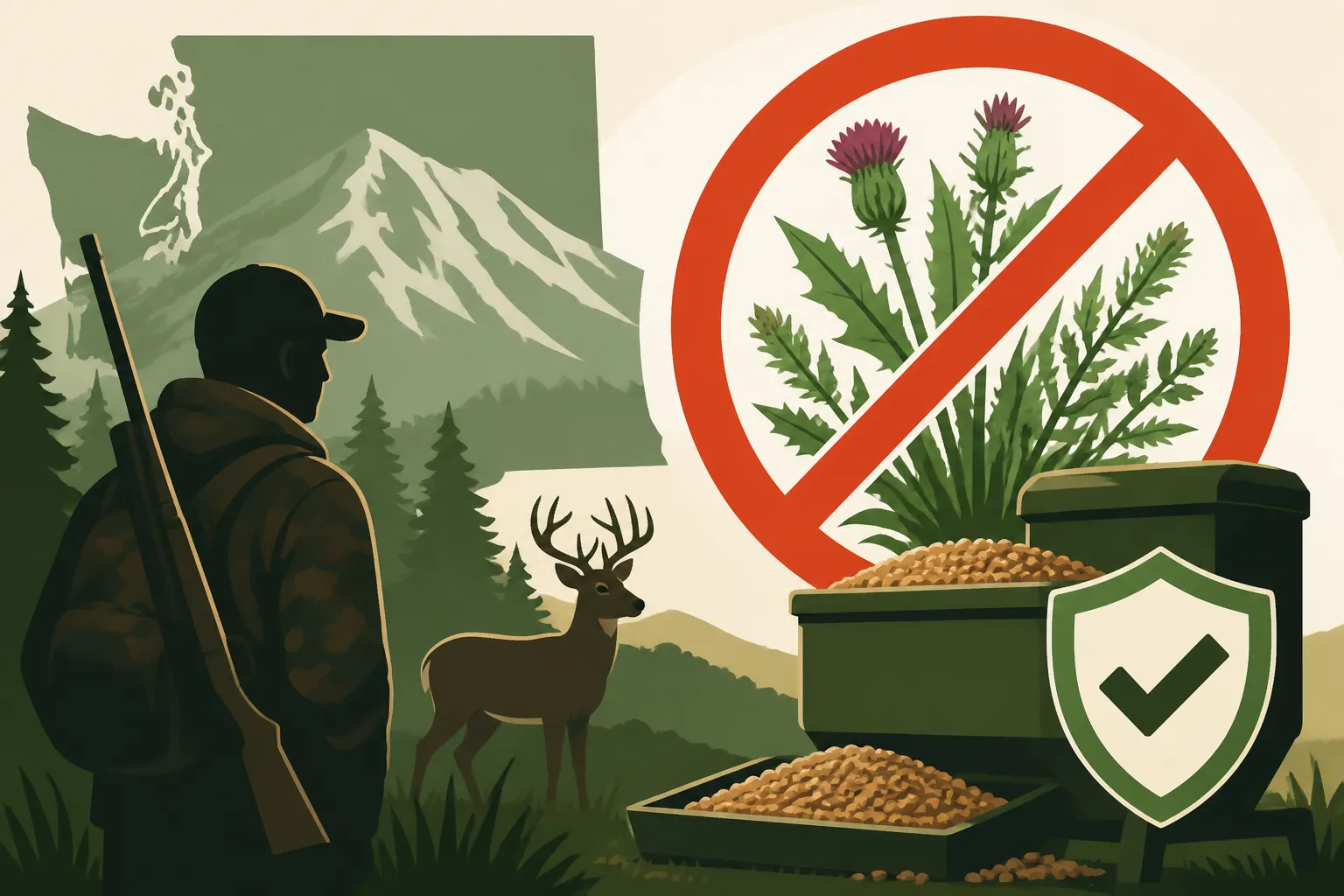
Another question that often arises: "What about pellets or cubes? Are they automatically considered weed-free?" For the most part, yes. The processing involved in making pellets and cubes, including grinding and high-heat compression, typically destroys any weed seeds present. This makes them an excellent, often preferred, option for backcountry trips because the risk of seed dispersal is drastically reduced. However, it's always wise to verify with the specific land management agency governing your hunting area. While most consider processed feeds acceptable, an individual Ranger District might have a unique local rule or recommendation. So, while pellets are generally your safest bet, a quick double-check can prevent any last-minute surprises. This is a good time to remember to Checking Washington Road Closures Before You Go and other regulatory details.
The table below provides a quick comparison to help you choose the right feed for your backcountry adventure.
| Feature | Certified Weed-Free Hay/Straw | Regular Hay/Straw | Processed Feed (Pellets/Cubes) |
|---|---|---|---|
| Certification | Yes, officially inspected and tagged | No official inspection or tag | Not typically certified as weed-free, but low risk |
| Weed Seed Risk | Very Low (negligible) | High | Very Low (seeds destroyed by processing) |
| Cost | Typically higher than regular hay | Varies, usually lower than certified | Can be higher than hay, depends on brand/type |
| Ease of Sourcing | Requires specific suppliers, plan ahead | Widely available | Widely available at feed stores |
| Typical Use in Backcountry | Required for federal lands/wilderness | Not permitted on most federal lands/wilderness | Generally permitted and recommended |
| Weight/Volume | Bulky, can be heavy | Bulky, can be heavy | Dense, more compact, often lighter |
Remember, the goal isn't just about avoiding a fine; it's about being a responsible steward of our wild places. Every seed prevented from spreading is a victory for Washington's native ecosystems and for the wildlife that depend on them.
Disclaimer
Please note that hunting regulations, including those concerning certified weed-free feed, can change. While every effort has been made to provide accurate and up-to-date information in this guide, it is your responsibility as a hunter to consult the most current Washington Department of Fish and Wildlife (WDFW) regulations, U.S. Forest Service guidelines, and any other relevant land management agency rules before embarking on your hunt. Always verify specific requirements for your chosen hunting unit and season.