Coyote Calling in Open Wheat Country
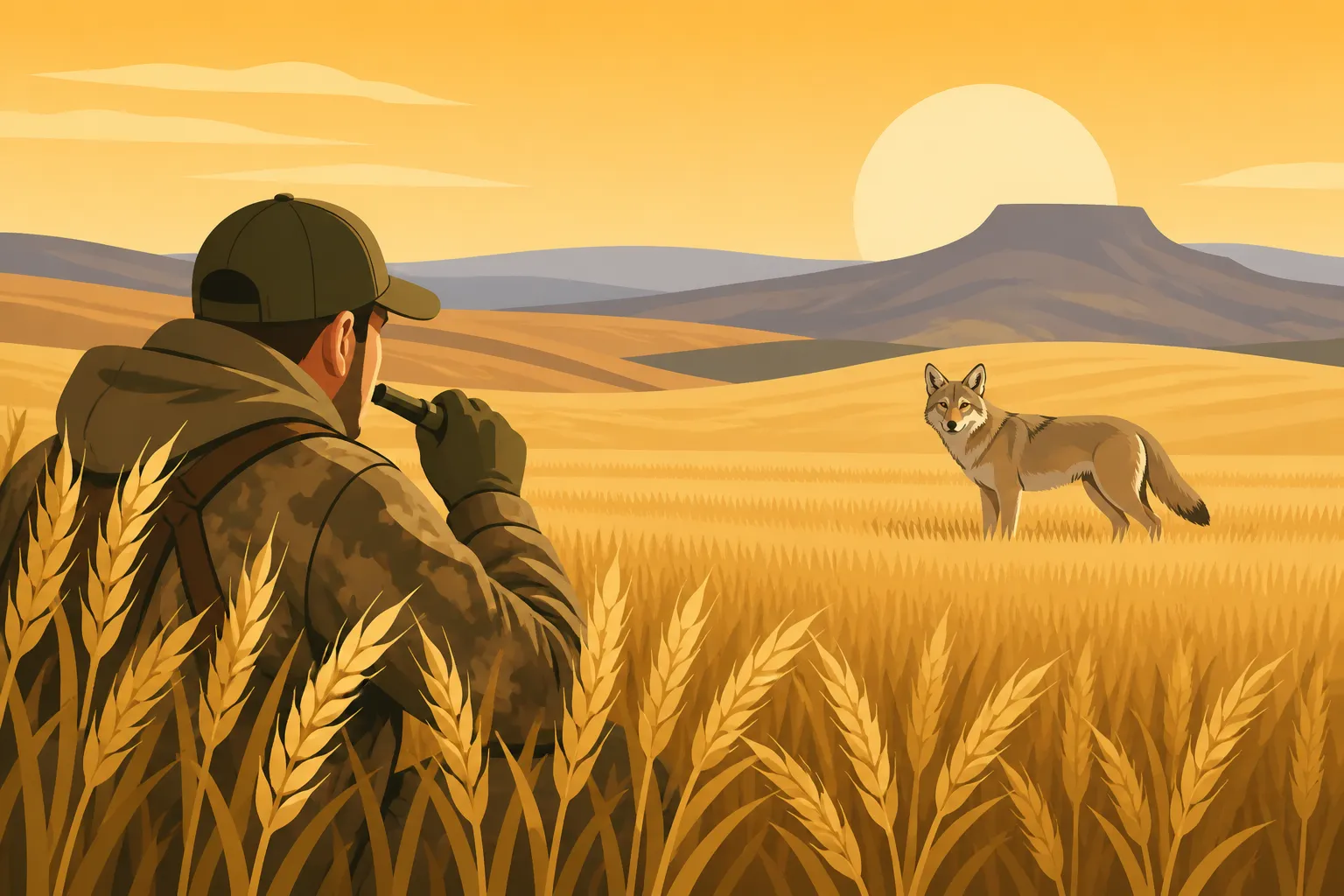
Hunting coyotes in Washington's vast open wheat country can feel like a game of cat and mouse where the mouse often has the upper hand. The sheer expanse of those rolling fields, often stretching for miles, makes it incredibly challenging to get close to these cunning predators. They see you coming from a mile away, and a slight shift in the wind can spoil your perfect setup before you even get a chance to call. This comprehensive guide is designed to equip you with the knowledge, tactics, and gear needed to successfully call coyotes into range in the challenging, yet rewarding, landscapes of Eastern Washington's agricultural heartland.
The Unique Landscape of Washington's Wheat Country for Coyotes
Eastern Washington's wheat country is a sight to behold, a patchwork of golden and green fields that stretch to the horizon, broken only by coulees, draws, and occasional farmsteads. For coyotes, this isn't just a pretty picture; it's a dynamic ecosystem that shapes their every move. Understanding how they interact with this specific environment is your first step toward success.
Seasonal Coyote Habits and Movements
Coyotes are incredibly adaptable, and their lives in the wheat country are deeply tied to the agricultural cycle and the availability of their prey. In spring, when fields are just sprouting, coyotes are often focused on voles, mice, and ground squirrels that thrive in the new growth. This is also when pups are born, and females are tied to dens, making them less prone to ranging far. As the wheat grows taller through late spring and summer, it offers vital cover, turning previously open fields into a dense jungle where coyotes can travel and hunt unseen. They'll also be key predators on turkey poults, pheasant chicks, and even deer fawns hiding in the tall crops.
During the summer months, with the wheat standing tall, coyotes might be harder to see, but they're still there, working the field edges, fencerows, and drainages that offer easy travel. Once harvest begins in late summer and early fall, the landscape changes drastically overnight. Suddenly, all that cover is gone, exposing vast stubble fields. This forces coyotes to adapt, often pushing them toward the remaining pockets of cover like CRP (Conservation Reserve Program) fields, deep coulees, or rocky outcroppings. This post-harvest period can be fantastic for calling, as coyotes are concentrated and often searching for new food sources or simply trying to get away from the immediate disturbance of farm equipment. Winter, of course, brings its own set of challenges, with snow revealing every track and forcing coyotes to work harder for food.
Prime Coyote Hangouts and Travel Corridors
While the wheat fields might seem uniformly open, coyotes instinctively seek out features that offer shelter, travel routes, and hunting advantages. These are your target areas. Look for the edges where wheat fields meet a different type of cover, like a brushy draw, a timber stand, or a riparian area along a creek. These edges provide a transition zone that coyotes frequently use. Deep coulees and draws, which crisscross much of Eastern Washington, are absolute magnets. They offer protection from the wind, visual breaks, and often harbor more diverse vegetation and prey. Coyotes will travel these draws extensively, moving from one hunting ground to the next.
Shelterbelts—rows of trees planted by farmers—are also crucial. Even a thin line of pines or poplars can provide enough cover for a coyote to feel secure, especially on a sunny or windy day. Fence lines, old farm roads, and even subtle changes in elevation that create a visual break can serve as travel corridors. When you're E-Scouting Washington GMUs Before the Draw from home, pay close attention to these features on satellite imagery. Utilize platforms such as GoHunt's map layers to identify public access points, private property boundaries, and those vital pockets of cover. Before you even step foot in the field, a tool like GoHunt can be invaluable for identifying these hotspots and planning your approach and setups, saving you countless hours of unproductive walking.
Mastering Coyote Calling in Expansive Terrain
Calling coyotes in open wheat country requires a nuanced approach. Your sound carries far, and coyotes have an uncanny ability to pinpoint its origin. The challenge isn't just making a sound; it's making the right sound at the right time and in a way that convinces a wary coyote to break cover and commit to your setup.
The Power of Prey Distress Calls
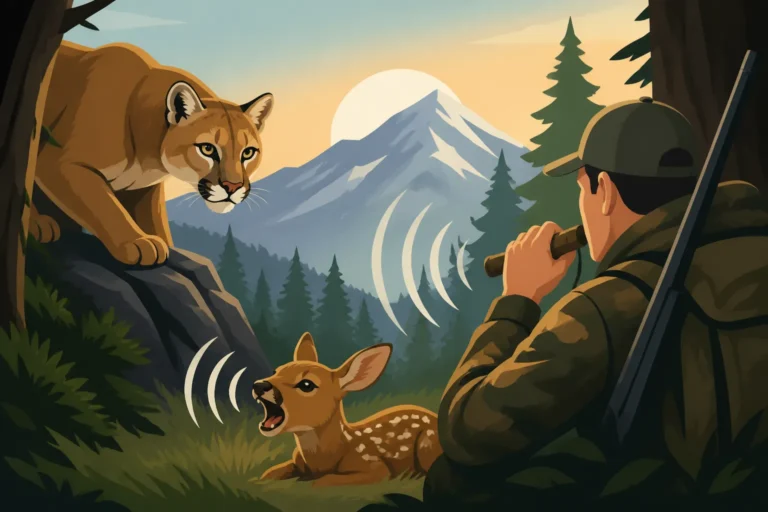
Prey distress calls are your bread and butter when it comes to coyote calling. These sounds mimic an injured or panicked animal and tap directly into a coyote's predatory instinct. In Eastern Washington, common prey animals include cottontail rabbits, jackrabbits, ground squirrels, and even deer fawns. A cottontail distress call is often a great starting point; it's a universal sound that coyotes across the continent recognize.
When using a distress call, volume and duration are key in open country. Start with a series of loud, frantic bursts, holding each note for several seconds to really project the sound across the open fields. Then, back off to shorter, more whimpering sounds, mimicking the last gasps of an injured animal. Wait a few minutes, scanning constantly, before repeating the sequence. Electronic calls shine here, as they allow for realistic, consistent sounds at high volume. Brands like Foxpro or Lucky Duck offer excellent sound libraries, including specific calls for the prey animals found in Washington. However, don't underestimate the effectiveness of a good mouth call, especially for subtle finishing sounds. Remember, the goal isn't just to make noise; it's to paint a picture of an easy meal. Vary your calls, mixing in a jackrabbit distress if you think there might be bigger, more aggressive coyotes in the area, or a fawn distress during late spring and summer when fawns are vulnerable. This helps keep things fresh and can seal the deal on a hung-up coyote.
Strategic Howling and Locator Calls
While distress calls are for luring, howls are for locating and communicating. A series of lone howls or group howls can often elicit a response from coyotes in the distance, telling you exactly where they are. This is especially useful in those vast fields where visual confirmation is difficult. You might let out a short, sharp howl and then listen intently for a return bark or howl. Sometimes, a series of challenging barks can stir up a territorial response, getting a coyote to commit to investigating the intruder.
Don't be afraid to experiment. A few excited pup distress sounds can sometimes draw in an adult coyote, especially during late spring and summer when adults are protective of their young. When you're trying to Predator Calling for Coyotes in Eastern Washington, remember that these sounds serve different purposes. Locator howls help you pinpoint general areas, while distress calls are designed to bring them in. The combination of both, used strategically, can be incredibly effective. Always be prepared for an immediate response after a howl; sometimes they are much closer than you think, and a quick setup might be necessary.
Crucial Considerations: Wind, Concealment, and Setup
In open wheat country, wind direction, concealment, and your setup are arguably more important than the calls themselves. Coyotes have an incredible sense of smell and can bust you from a long distance if your scent drifts their way. Always approach your calling location and set up with the wind in your favor, blowing your scent away from where you expect the coyotes to approach. If the wind shifts mid-call, be prepared to adjust or move. Thermals, the rising and falling air currents, also play a role, especially in hilly terrain, so try to understand how they might carry your scent.
Concealment is critical. Unlike timber hunting, there often isn't much to hide behind. Use whatever natural topography you can find: the crest of a hill, a draw, a clump of sagebrush, or even just the subtle ripple of a stubble field. A quality set of hunting clothes in a good camouflage pattern is essential, and consider adding a face mask and gloves to break up your human outline. Getting elevated, even slightly, on a small knoll can give you a better vantage point without making you too conspicuous. Your setup should allow you to see a wide area while minimizing your exposure. If you're hunting with a partner, one person can be the caller, slightly behind and to the side of the shooter, drawing the coyote's attention away from the gun.
Field Tactics and Equipment for Open Wheat Hunting
Given the nature of the landscape, your gear and how you employ it will differ significantly from hunting dense timber. Long shots are the norm, and superior optics are not just a luxury but a necessity.
Optics and Firearm Selection for Long Shots
In the expansive fields of Eastern Washington, coyotes rarely commit to close range unless you've managed an exceptional setup. You should expect shots ranging from 100 to 400 yards, sometimes even further. This demands a flat-shooting rifle and high-quality optics. Popular calibers include the .223 Remington, .22-250 Remington, .204 Ruger, and even the 6mm Creedmoor, known for their speed and minimal bullet drop at extended ranges. Ensure your Rifle Setup for Washington Elk and Deer is suitable for precision at these distances, with a scope that offers clear magnification and a reliable reticle.
Beyond your rifle scope, a good pair of binoculars is non-negotiable. 10×42 or 12×50 power binoculars are excellent for scanning the vast fields for approaching coyotes. Don't forget a spotting scope, especially if you plan to sit for extended periods or want to confirm distant movement. A quality spotting scope (like a 15-45×60 or 20-60×80) on a tripod allows you to pick apart distant coulees and field edges without fatiguing your eyes. When you're Glassing Sage and Wheat Edges for Washington Mule Deer, the same principles apply for spotting coyotes. They'll often be using similar terrain features. With detailed mapping tools like those found on GoHunt, you can really dial in your approach, ensuring you're setting up in areas with good lines of sight and potential coyote travel lanes.
Approaching and Setting Up for Success
The approach to your calling stand is as important as the stand itself. Coyotes are incredibly alert. Park your vehicle out of sight, ideally several hundred yards from where you plan to start calling. The last thing you want is a coyote spotting your truck as it pulls up. Walk in quietly, using terrain features for concealment. If you can walk along the bottom of a draw or behind a subtle rise, do so.
When you reach your chosen setup, move slowly and deliberately. Scan the area thoroughly before settling in. Consider having multiple calling stands per session, especially if you're covering a large area. A common strategy is to call for 15-25 minutes at one spot, then move a half-mile or more to a new location. This keeps you from "educating" coyotes in a single area and allows you to cover more ground. Patient waiting is also key; some coyotes will come charging in, but others might take 10-15 minutes or longer to show themselves, circling downwind cautiously. Always scan 360 degrees, as coyotes sometimes appear from unexpected directions.
Reading Coyote Behavior and Closing the Distance
Once a coyote responds to your call, the real chess match begins. Pay close attention to its body language. Is it trotting confidently, or is it sneaking in low to the ground? Is it circling downwind to get your scent? A coyote that comes in fast and direct is often less wary, but many will approach cautiously, stopping frequently to survey its surroundings.
If a coyote hangs up out of range, resist the urge to immediately blast a loud distress call again. Sometimes, going silent for a few minutes can pique its curiosity. Or, try a very subtle sound – a soft whimper, a few quiet chirps, or even a low pup distress call. The goal is to make the coyote believe the injured prey is struggling to survive, or that it might be an easy meal to snatch from a rival. If it starts to get downwind, you might have to try a quick, loud series of distress calls to try and pull its attention directly toward you, or be ready for a longer shot.
Troubleshooting Common Scenarios
Even with the best planning and gear, coyotes in open wheat country can throw curveballs. Anticipating these challenges and having strategies to overcome them will significantly increase your success rate.
Dealing with Wary and Hung-Up Coyotes
You’ve made a great call, a coyote is on the way, but it stops 400 yards out, just at the edge of the next field, staring intently. This is the classic "hung-up" coyote scenario, and it's incredibly frustrating. These coyotes have likely been called before and are wary of anything that seems too easy.
When this happens, patience is your greatest ally. Don't move, don't change calls immediately. Sometimes, just waiting will convince them to close the distance. If waiting doesn't work, try switching to a different, softer call. If you were blasting a jackrabbit, try a faint mouse squeak or a subtle bird distress. The idea is to make them believe the situation has changed, or that the "meal" is smaller and less threatening than they initially thought. Another tactic is to use a pup distress call. Sometimes, an adult coyote will respond aggressively to what sounds like an injured pup, especially if it's protecting its own territory or trying to investigate a rival. For these situations, understanding Electronic Calls and What Washington Allows can give you an edge, as you can easily switch sounds and volumes with the push of a button.
Adapting to Weather and Terrain Challenges
The weather in Eastern Washington can be unpredictable, and it dramatically impacts coyote behavior and calling effectiveness. High winds can make calling difficult, as your sound is dispersed, and coyotes struggle to hear. In these conditions, you need to call louder and focus on areas that offer some windbreak, like the leeward side of a ridge or deep within a coulee. Rain can also dampen sound, but it can also make coyotes more active as they seek shelter and easy prey. If you're Tracking Bucks in Fresh Eastern Washington Snow, the same fresh snow will show coyote tracks clearly, revealing their travel patterns.
Snow, especially fresh snow, can be a game-changer. It makes coyotes more visible, reveals their tracks, and often concentrates them around available food sources. However, it also makes you more visible. Layering for the cold and wet is essential, as is wearing appropriate footwear. Consider how topography impacts your visibility. A subtle roll in the landscape can hide a coyote or provide just enough concealment for you to get a shot. Always keep the sun at your back if possible, to minimize glare and make it harder for coyotes to spot your movement.
Remember, every setup is a learning experience. Pay attention to what works and what doesn't in different conditions and terrains.
| Call Type | Primary Purpose | When to Use | Notes for Open Country |
|---|---|---|---|
| Cottontail Distress | Attract immediate interest | All seasons, especially early in a stand | Start loud, then subtle. Universal appeal. |
| Jackrabbit Distress | Aggressive, covers distance | Known jackrabbit areas, to challenge larger coyotes | High volume needed. Expect aggressive approach. |
| Fawn Distress | Predatory, protective instinct | Late spring/summer (fawn season) | Very effective for drawing in protective adults. |
| Mouse/Vole Squeaks | Curiosity, close-range finish | For hung-up coyotes, subtle draws | Low volume, intermittent. Great for sealing the deal. |
| Adult Howl (Lone) | Locator, territorial challenge | To locate coyotes, initiate response | Listen intently for return howls. Gauge their interest. |
| Group Howl | Challenge, identify presence | To assess population density, territorial response | Can provoke a response from multiple coyotes. |
| Pup Distress/Whimpers | Curiosity, protective instinct | For hung-up coyotes, can draw protective adults | Best when used subtly after an initial approach. |
Disclaimer
Always consult the latest Washington Department of Fish and Wildlife (WDFW) regulations before hunting. Season dates, legal equipment, and specific GMU rules can change annually. This guide is for informational purposes only and does not supersede official WDFW publications.