Predator Calling for Coyotes in Eastern Washington
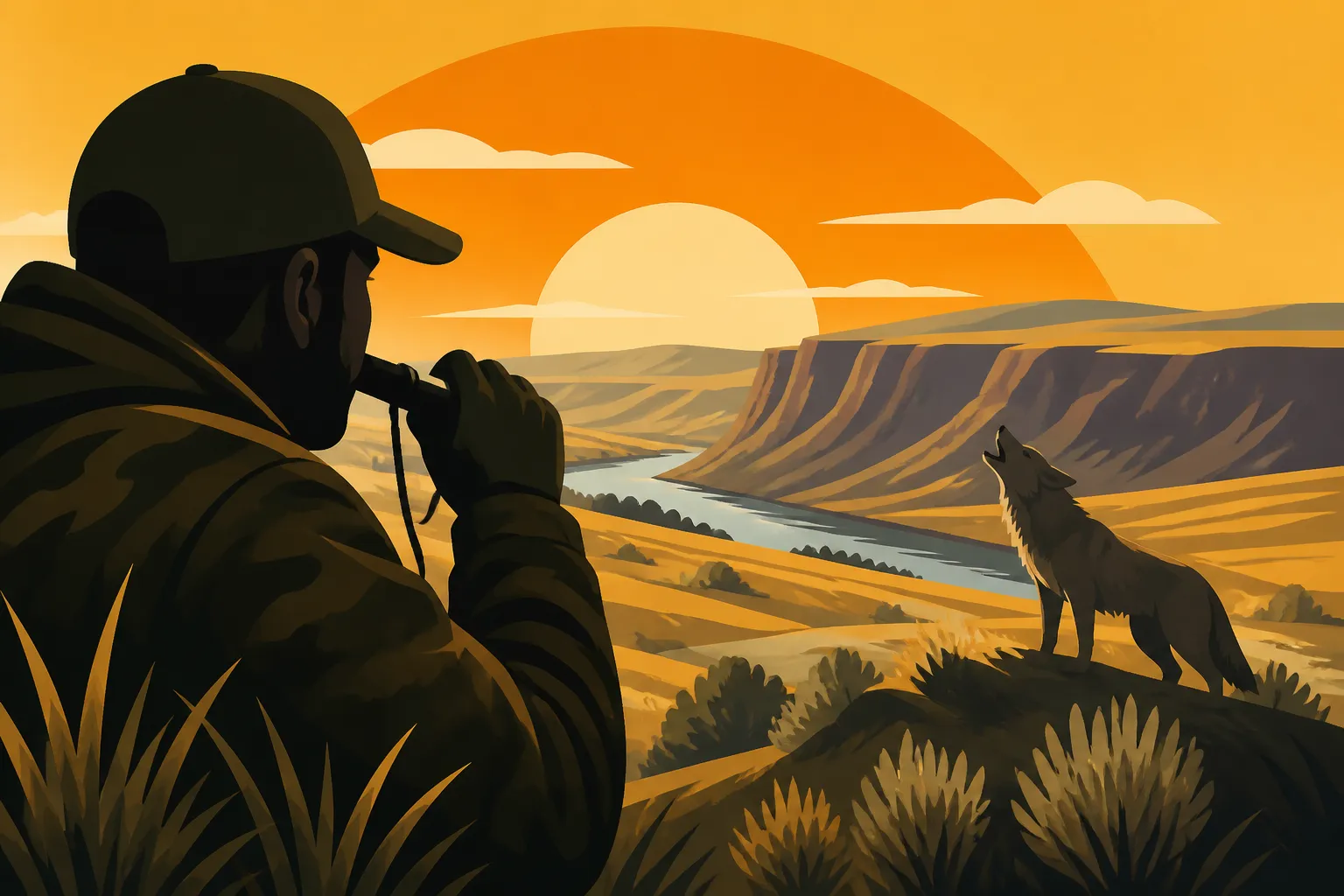
There's nothing quite like the rush of a coyote charging into your call, a blur of fur and intent across the sagebrush or through a distant wheat field. But let's be honest, getting these wily predators to commit, especially in the vast, open, and often heavily hunted landscapes of Eastern Washington, can feel like trying to convince a teenager to clean their room – frustrating, unpredictable, and sometimes, downright impossible. This guide is dedicated to breaking down the art and science of predator calling for coyotes in Eastern Washington, offering practical, field-tested strategies to help you fill your freezer with prime pelts or simply enjoy the thrill of the chase.
Understanding Eastern Washington Coyotes and Their World
To successfully call in coyotes, you first need to understand the world from their perspective. Eastern Washington coyotes are survivors, constantly adapting to a diverse and often harsh environment. From the sweeping wheat fields and sagebrush flats of the Columbia Basin to the rugged breaks of the Snake River and the scattered timber pockets further north, their habits are shaped by food, cover, and the constant pressure of other predators, including humans.
Their Habits and Prey Base
Coyotes in Eastern Washington are incredibly opportunistic omnivores, but their primary diet revolves around small mammals. Think jackrabbits, cottontails, ground squirrels, voles, and mice. These little critters are the lifeblood of a coyote's existence, making up the bulk of their meals, especially during the lean winter months. When you're calling, you're essentially mimicking the sound of these prey animals in distress, broadcasting a dinner bell across the landscape. They also aren't shy about taking advantage of deer fawns in spring or the occasional weak or injured adult deer, particularly if mule deer are abundant in the area, as you might find when Finding Mule Deer in Wheat Stubble Edges.
Beyond small game, coyotes will readily scavenge on carrion, from roadkill to gut piles left by deer and elk hunters. This adaptability is key to their success and explains why they can thrive in such varied habitats. They are constantly on the move, patrolling their territories for any opportunity. Understanding this constant quest for calories is fundamental to effective calling; you're not just making a noise, you're offering a perceived easy meal. This means your call has to sound convincing and urgent enough to pull them away from whatever natural foraging they might be doing.
Seasonal Movements and Activity
Coyote behavior changes with the seasons, impacting your calling strategy. In the late summer and early fall, pups are older, and family units are often still together. This can mean multiple coyotes responding to a call, especially if it's a pup-in-distress sound. As winter approaches, food becomes scarcer, and coyotes become more territorial and competitive. This is often when calling can be most effective, as they are actively seeking any food source they can find. The colder months also mean better fur quality, which is often a primary motivation for predator hunters.
The breeding season, typically from January to March, introduces a whole new dynamic. During this time, male coyotes are actively seeking females, and both sexes are highly vocal. Howls and barks become more frequent, and often, coyotes will respond aggressively to perceived rivals. This is an excellent time to use challenge howls or interrogation howls to bring a dominant male running in to defend his territory or mate. Conversely, during the late spring and summer, when pups are young and vulnerable, you might have success with pup distress calls, as protective parents will often come to investigate. Keep an eye on local conditions and what prey is most active; if there's a rabbit population explosion, those distress calls might be particularly potent.
Reading Sign in the Field
Before you even think about setting up, you need to be a detective in the field. Reading coyote sign is critical for identifying active areas and understanding their travel patterns. Look for tracks in dusty roads, sandy creek beds, or fresh snow – they're typically oval-shaped, with four toes and visible claws, often in a relatively straight line, indicative of their efficient gait. Scat (droppings) is another key indicator. It's usually rope-like, often containing hair, bone fragments, or seeds from their diet. Fresh scat means recent activity.
Rub marks on sagebrush or small trees, especially during breeding season, can indicate a territorial male. And of course, listening is paramount. Howls, yips, and barks can pinpoint their general location and activity levels. If you hear them howling at dawn or dusk, you know you're in an active zone. Look for travel corridors like creek bottoms, fence lines, and the edges of timber blocks or dense cover, especially those leading into open feeding areas. Overlooking these subtle signs is a common mistake; a few minutes of scouting before a call setup can make all the difference in where you decide to broadcast your sounds. Consider checking a resource on Coyote Density in Eastern Washington to get a general idea of populations in the areas you plan to hunt.
Choosing the Right Calls and Calling Sequences
The market is flooded with calls, from simple hand calls to sophisticated electronic units. Knowing which one to use and when, and how to sequence your sounds, is where the real skill comes in. It's not just about making noise; it's about telling a story that a coyote will believe.
Electronic Calls vs. Hand Calls
Both electronic (e-callers) and hand calls have their place in the Eastern Washington coyote hunter's arsenal. E-callers, like those from Foxpro or Icotec, offer a huge advantage in sound variety and volume. You can play a seemingly endless array of distress sounds, howls, and pup calls at realistic volumes, often remotely from a distance, which keeps you further from the sound source and less likely to be spotted. This remote operation is particularly useful in open country where coyotes have excellent long-range vision. Many e-callers also allow for complex custom sequences, which can be a game-changer. Just remember to check Washington's rules on Electronic Calls and What Washington Allows, as regulations can vary. Power management is also key for e-callers, especially on multi-day hunts, so bringing Power Banks and Solar Panels might be a wise choice.
Hand calls, on the other hand, offer intimacy and nuance. They require more practice to master but allow for immediate adjustment in volume, tone, and inflection. A skilled caller can create incredibly realistic sounds that an e-caller might struggle to replicate. They are also lightweight, battery-free, and virtually indestructible. Many hunters carry a mix of open-reed and closed-reed hand calls, as well as a howler. Open-reed calls are versatile, capable of a wide range of rabbit and rodent distress sounds, while closed-reed calls are often easier for beginners to get consistent sounds from. The choice often comes down to personal preference and the specific hunting situation. In thick cover, where shots are closer, a hand call might be all you need. In wide-open plains, an e-caller's reach is invaluable.
Distress Sounds for Coyotes
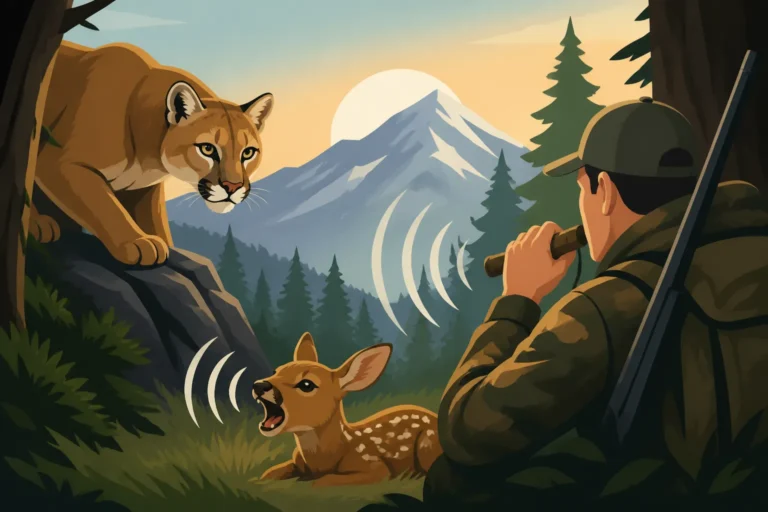
The bread and butter of coyote calling are distress sounds. These mimic injured or dying prey animals, triggering a coyote's instinct to investigate an easy meal. Rabbit distress calls (cottontail, jackrabbit, hare) are perennial favorites and highly effective. They are universal sounds that coyotes recognize as a prime food source. Rodent distress (squeaks, chirps of mice or voles) can also work, especially in areas with high rodent populations. Fawn distress calls can be incredibly potent, particularly during spring and early summer when fawns are vulnerable. Calling Cougars With a Fawn Distress Sound also works on coyotes who view fawns as easy prey.
When using distress calls, start softly and gradually increase volume. Mimic a realistic sequence: a few seconds of crying, then a pause, then more crying. Think about how a real animal would sound – not a continuous, monotonous squeal. The intensity should fluctuate, creating a sense of struggle. The goal is to pique their curiosity and make them believe there's a genuine opportunity nearby. Varying the type of distress sound can also be effective if coyotes in your area have become "call-shy" to a particular sound.
Pup Howls and Locator Calls
Beyond distress, howls and pup calls are powerful tools. Locator howls, often a single, drawn-out howl, are used to pinpoint coyotes without necessarily calling them in. A coyote will often "answer" a locator howl, revealing their position. This is especially useful in broken terrain or large tracts of land where you need to confirm presence before setting up. Don't overdo locator howls; once you get an answer, shift to your setup.
Pup howls and distress calls mimic young coyotes in trouble, which can draw in protective parents or curious other coyotes looking to investigate or perhaps even prey on a vulnerable pup. Combining a pup distress with a subtle adult howl can tell a story of a lost pup seeking its parents, or a pup being attacked, which can be very compelling. During the breeding season, challenge howls (aggressive, shorter howls) can trigger a territorial response from dominant males. These are often used after a few minutes of distress calling to entice a hung-up coyote to commit. Experimentation is key; coyotes in different areas or at different times of the year might respond better to one type of call over another. A good call sequence often starts with distress, transitions to pup calls, and might end with a challenge howl if nothing else works.
| Call Type | Best Use Case | Pros | Cons |
|---|---|---|---|
| Electronic Call | Open country, diverse sounds, remote operation | Huge sound library, high volume, remote control, versatile | Requires batteries, more expensive, can be damaged, less "feel" |
| Open Reed Hand Call | Versatile distress, howls, varying intensity | Highly realistic, no batteries, lightweight, excellent control | Requires significant practice, can be difficult in cold/wet weather |
| Closed Reed Hand Call | Consistent distress sounds, easier for beginners | Easier to learn, good for basic distress sounds, durable | Less versatile than open reed, can sound monotonous if overused |
| Howler | Locating, challenge calls, mimicking territorial sounds | Effective for locating and drawing in dominant coyotes | Limited to howls, not a primary "kill call" for all situations |
| Pup Distress | Spring/Summer, protective adults, curiosity | Triggers parental instinct or curiosity from other coyotes | Can be ignored if no pups are present, might only draw in females |
| Rabbit Distress | All seasons, general attraction, universal food source | Highly effective, widely recognized food source, urgent sound | Coyotes can become call-shy if overused in specific areas |
Setting Up for Success: Wind, Cover, and Concealment
The best calling in the world won't matter if your setup isn't right. Coyotes have incredible senses, and any mistake in your approach, wind direction, or concealment will send them packing before you even see them. It's about being invisible, silent, and positioned correctly.
Playing the Wind Correctly
This is non-negotiable. Coyotes will almost always circle downwind to get your scent before committing. Their nose is their primary defense mechanism, and they trust it implicitly. If the wind carries your scent toward their approach, your hunt is over. Always position yourself so that the prevailing wind is blowing from the direction you expect the coyote to approach towards you, or ideally, across your setup, carrying your scent away from their likely travel lanes.
In open country, this means understanding thermals. In the morning, thermals typically rise, pulling scent upwards. In the evening, they fall, carrying scent downhill. Use these to your advantage, especially in broken terrain. A common strategy is to set up with your back to the wind, but this also means any coyote approaching from behind you will catch your scent. A better approach, if possible, is to have a crosswind, or to anticipate their downwind circle and position yourself to intercept them as they try to get your scent. Always check the wind with a wind checker before you commit to a spot. This simple step can turn a frustrating empty stand into a successful harvest.
Concealment and Camouflage Strategies
Coyotes have excellent eyesight, especially for movement. Camouflage is crucial, but it's not just about what you wear; it's about how you use the natural landscape. Break up your outline by sitting against a dark background, under a bush, or in the shadow of a rock outcropping. Don't skyline yourself on a ridge. Even subtle movements can spook a wary coyote, so stay still. Avoid bright colors and shiny objects that can reflect light.
Consider your entire setup. If using an e-caller, place it 50-100 yards upwind or crosswind from your shooting position, facing the direction you expect coyotes to approach. This draws their attention to the caller, not to you. If you're hunting with a partner, one person can operate the call while the other watches for incoming coyotes, minimizing movement. In areas like the open wheat fields or sagebrush flats of Eastern Washington, concealment can be challenging, but even a slight depression in the terrain, a small clump of sage, or the shade of a fence post can make a difference. The goal is to blend in completely, becoming an unnoticeable part of the environment.
Elevated Positions and Visibility
While not always possible, finding an elevated position can give you a distinct advantage, especially in the rolling terrain and vast expanses of Eastern Washington. A slight rise, a small knob, or the edge of a canyon can allow you to see coyotes approaching from a distance, giving you more time to prepare for the shot. This is especially useful for glassing the surrounding country, using your binoculars or spotting scope to pick out incoming predators. This ability to spot coyotes from afar is critical, particularly in the big country of the east side, where coyotes might come in from a quarter-mile or more.
However, an elevated position also means you're more susceptible to being silhouetted, which coyotes are quick to pick up on. If you choose an elevated spot, ensure you have a dark, cluttered background behind you to break up your outline. Never set up on the very top of a ridge; drop back a few yards below the crest to avoid being sky-lined. This slight adjustment allows you to see out without being seen yourself, especially important when a coyote tries to skirt around your position. Remember, visibility for you is good, but visibility of you is bad.
Calling Tactics for Different Eastern Washington Terrain
Eastern Washington is a tapestry of varied landscapes, and what works in one area might be a bust in another. Tailoring your calling strategy to the specific terrain you're hunting is paramount.
Open Sagebrush and Wheat Fields
This is classic Eastern Washington coyote country, where distances are long and visibility is high. The challenge here is the coyote's keen eyesight and tendency to hang up at long distances. You'll often see them commit from hundreds of yards out, only to stop and observe before coming within shooting range. For these wide-open spaces, an e-caller is almost a necessity to project sound effectively. Start with loud, urgent distress calls like a jackrabbit or hare distress to grab attention across the vastness.
Once a coyote is spotted, switch to softer, more subtle sounds to coax them closer. A common mistake is to keep blasting loud calls; this can make a cautious coyote nervous. Instead, think about making softer squeaks or whines. A good pair of binoculars, like those you might use for Optics for Washington Elk and Deer Hunting, is absolutely vital here to spot coyotes far off and judge their approach. Set up with the wind in mind, anticipating their downwind circle, and ensure you have a good shooting rest for those longer shots. Often, they'll pop up over a rise or out of a depression, so be ready for quick target acquisition. This is where Coyote Calling in Open Wheat Country goes into even greater detail.
Canyon and Breaks Country
The rugged canyons, coulees, and river breaks of Eastern Washington, like those along the Snake or Columbia rivers, offer different challenges and opportunities. Here, sound can carry and echo strangely, and coyotes can appear and disappear quickly within the folds of the terrain. Instead of broadcasting widely, focus on specific draws, benches, and sheltered areas where coyotes might travel or bed. Distress calls still work well, but consider mixing in howls to locate coyotes within the complex topography.
When setting up in breaks country, look for vantage points that overlook likely travel routes, but remember that coyotes might use the terrain to approach unseen. You might have to adjust your setup to cover multiple approach angles. Often, coyotes will use the wind swirling through the canyons, making wind detection a tricky but vital skill. Setting up near the top of a rise overlooking a canyon can be effective, allowing you to see into the depths while maintaining a relatively secure position. Always be ready for a close-range shot, as a coyote might suddenly appear from a hidden fold in the ground. Good scouting, perhaps using tips from Glassing Breaks at First Light, can help you identify these hidden travel routes.
Timber Edges and River Bottoms
While less common than sagebrush and wheat, parts of Eastern Washington, particularly in the northern and eastern reaches, feature more timbered areas and dense river bottoms. These areas offer coyotes more cover and concealment, meaning they might be more willing to come in close. Hand calls can be particularly effective here, allowing you to create more intimate and varied sounds. Think about less urgent sounds, like mouse squeaks or bird distress, especially if you suspect coyotes are close by.
In these environments, visibility is reduced, so you need to be extra vigilant. Set up in areas that allow for some shooting lanes, but still provide plenty of cover for you. River bottoms, with their dense brush and occasional timber, are often prime locations for coyotes, offering both food and shelter. Use the edges of timber blocks where they meet open fields, as these transition zones are natural travel corridors. Coyotes frequently patrol these edges, looking for opportunities. Be prepared for faster, closer shots, and always be aware of your backdrop and potential hazards beyond your target.
Gear Essentials for Eastern Washington Coyote Calling
Having the right gear isn't about being fancy; it's about being prepared for the conditions and demands of Eastern Washington's diverse landscape and its cunning coyotes. From your optics to your firearm, every piece plays a role in your success.
Optics for Spotting and Ranging
In the vast open country of Eastern Washington, quality optics are non-negotiable. A good pair of 10×42 binoculars is a solid starting point, offering a wide field of view and enough magnification to spot coyotes at considerable distances. If you're spending long hours glassing wide-open terrain, or trying to confirm if that distant speck is a coyote or just a rock, a 15×56 binocular or even a spotting scope mounted on a tripod can be incredibly valuable. These larger optics allow you to scrutinize distant objects, saving you countless steps and preventing you from calling in an area that's empty. For example, when you're glassing a massive sagebrush flat or a wheat field, being able to pick up the slight movement of a coyote stretching or trotting in the distance is what turns a hopeful scan into a successful setup.
A rangefinder is equally important. Knowing the exact distance to your target is crucial for precise shot placement, especially with the long shots often presented by wary Eastern Washington coyotes. Look for a rangefinder with angle compensation if you'll be hunting in hilly or canyon country, as bullet trajectory changes significantly on inclines and declines. Brands like Vortex, Leupold, and Sig Sauer offer excellent options that can withstand the rigors of field use. These tools aren't just for luxury; they are essential for ethical and effective hunting.
Firearm and Ammunition Considerations
For coyotes in Eastern Washington, you'll want a flat-shooting, accurate rifle chambered in a cartridge capable of handling shots from close range out to several hundred yards. Common choices include the .223 Remington, .22-250 Remington, .204 Ruger, and .243 Winchester. These calibers offer a good balance of velocity, accuracy, and relatively mild recoil. For those who prefer larger calibers, a .22 centerfire is generally the minimum for legal coyote hunting, as outlined in rules related to Rifle Setup for Washington Big Game. It's important to choose a bullet designed for varmints, typically a lighter, frangible bullet that expands rapidly upon impact, minimizing ricochet and maximizing humane dispatch.
Accuracy is paramount. Your rifle should be sighted in precisely, and you should be comfortable taking shots from various field positions. A good bipod or shooting sticks are almost a necessity for steadying your shot in open country. While often overshadowed by the choice of call, your firearm and ammunition are the tools that ultimately bring the hunt to a close. Make sure your rifle is in top condition and you've practiced extensively with the ammunition you intend to use.
Clothing and Comfort for the Hunt
Eastern Washington weather can be incredibly unpredictable, swinging from bitter cold to surprising warmth, often with wind as a constant companion. Layering is key, just as it would be for Layering for Wet Cold Weather on a deer hunt. Start with a moisture-wicking base layer, add an insulating mid-layer (fleece or synthetic down), and top it off with a windproof and water-resistant outer shell. This allows you to adapt to changing conditions throughout the day. Given the sometimes long waits on stand, warmth and comfort are critical for maintaining focus and stillness.
Camouflage patterns that blend with the local vegetation are ideal, whether it's sagebrush, dry grass, or the muted tones of wheat stubble. Don't forget a warm hat, gloves, and comfortable, waterproof boots that can handle anything from dusty trails to muddy fields or even light snow. Sitting still for extended periods in cold wind can quickly lead to discomfort and distraction, so investing in good quality, appropriate clothing is an investment in your success and enjoyment. Remember, you're not just dressing for the weather, you're dressing to disappear into the landscape.
Common Mistakes and How to Avoid Them
Even seasoned callers make mistakes, but recognizing the most common pitfalls can significantly improve your odds. Coyote hunting is a game of chess, and every move counts.
Overcalling and Educating Coyotes
One of the biggest mistakes, especially for enthusiastic beginners, is overcalling. Blasting calls continuously or using the same loud, urgent sounds repeatedly can quickly "educate" coyotes in an area. These smart predators quickly learn that a specific sound often leads to danger, not dinner. Once a coyote has been called to and shot at, or even just seen you and spooked, they become incredibly wary of that particular sound or calling sequence.
To avoid this, vary your calling. Start softly, pause, and listen. If nothing responds, gradually increase volume or change the type of sound. Don't call constantly; mimic a real animal's distress – a few cries, then a pause, then more. Move locations frequently, especially if you're not getting responses. If you hunt the same property often, try rotating your call types, using different distress sounds, or incorporating more subtle vocalizations. Sometimes, less is more; a few convincing squalls are better than a long, monotonous blast. Think about the concept of Two-Man Calling Setups on Elk where the caller and shooter are separate; this helps mitigate the coyote seeing the source of the sound.
Ignoring the Wind
We've touched on it, but it bears repeating: ignoring the wind is the single most common reason for failure in coyote calling. A coyote will bust you every time if they get your scent. It's not just about starting with the wind right; it's about staying aware of subtle shifts throughout your stand. Wind can swirl unexpectedly in canyons or shift as thermals change.
Always use a wind checker (a small bottle of powder or thread) to constantly monitor wind direction. If the wind shifts unexpectedly and starts blowing your scent into a likely approach corridor, it's often better to pack up and move to a new setup than to sit there hoping. Never compromise on wind direction, even if it means sacrificing a seemingly perfect vantage point. Your nose is useless; theirs isn't.
Impatience and Early Movement
Coyote hunting demands patience. It's not uncommon for a coyote to take 10, 15, or even 20 minutes to commit to a call, especially if they're coming from a distance or being particularly cautious. Many hunters give up after 5 or 10 minutes, pack up, and walk directly into an incoming coyote they never knew was there. A coyote might approach slowly, circling downwind, pausing to observe, before finally stepping into view.
Once you've set up and started calling, commit to at least 20-30 minutes of motionless waiting. If you're using an e-caller, place it a good distance from you. Keep your gun up and ready, minimizing any movement. Your eyes should be constantly scanning, not just in front of you, but to the sides and even behind you, as coyotes are notorious for appearing unexpectedly. Only when you're sure nothing else is coming should you cautiously stand up and scan the area before leaving. This patience is often the thin line between success and failure in the subtle game of predator calling. It's about out-waiting and out-thinking one of the smartest predators out there.
Finally, while many public lands and private properties enrolled in programs like Hunting Washington's Register to Hunt Properties offer great opportunities, always be mindful of access rules and potential road closures. Before heading out, make sure you've done your due diligence and checked for any Checking Washington Road Closures Before You Go to ensure you can reach your desired hunting grounds without issue. Programs like GoHunt also provide mapping tools and unit data that can be extremely helpful for pre-scouting and understanding access.
Disclaimer
Hunting is an inherently dangerous activity. Always prioritize safety, follow all local and state regulations, and ensure you have the proper licenses and permits. The information provided in this guide is for informational purposes only and should not replace professional instruction or personal due diligence.