Night Hunting Rules for Predators in Washington
It's late, you've spotted fresh tracks around the edges of your property or a local farm, and the thought crosses your mind: "Can I hunt this predator after dark?" The rules around night hunting for predators in Washington can feel incredibly murky, especially with the state's strict general prohibitions on nighttime hunting. Many hunters get frustrated trying to decipher the nuances, worried about accidentally breaking a rule. This guide is designed to cut through that confusion, clarifying exactly which predators you can pursue after sunset, under what conditions, and with what equipment, so you can hunt confidently and legally.
Understanding Washington's General Prohibition on Night Hunting
Let's be clear from the start: Washington State has a very strong stance against hunting big game species like deer and elk between official sunset and sunrise. This isn't just a minor regulation; it's a fundamental principle of hunting safety and fair chase in our state. The Washington Department of Fish and Wildlife (WDFW) sets these rules to ensure public safety, prevent the misidentification of animals in low light, and reduce the chances of illegal spotlighting of protected species.
Why Night Hunting Big Game is Banned
Imagine trying to positively identify an elk or deer in the fading light, let alone discern its sex or antler points. It's incredibly difficult, even for experienced hunters. The ban on night hunting big game is primarily in place to prevent accidental shootings of non-target animals, livestock, or even other hunters. When you introduce artificial light sources, there's a strong temptation to use them to "spotlight" big game, which is illegal and unethical, often associated with poaching. Furthermore, hunting in the dark makes it much harder to track wounded animals, leading to unnecessary suffering. This general prohibition means you cannot be out there with your rifle, bow, or muzzleloader trying to fill your deer or elk tag once the sun dips below the horizon.
Key Exceptions for Predator Species
Now, here's where it gets interesting for those of us looking to manage predator populations or simply enjoy a different kind of hunting challenge. While the general rule prohibits night hunting, WDFW does provide specific exceptions for certain unclassified species, primarily those considered nuisances or overpopulated in certain areas. This is usually restricted to coyotes, and sometimes bobcats or raccoons, though the exact regulations can vary year to year, so always check the most current WDFW pamphlet. These exceptions acknowledge the role predators play in livestock depredation and game animal populations, and sometimes allow landowners or authorized hunters to pursue them after hours to help mitigate these issues. It's not a free-for-all, but it does open up opportunities for responsible hunters.
Legal Predator Species and Methods for Night Hunting
When it comes to legal night hunting in Washington, coyotes are almost always the primary target. Their adaptable nature, broad distribution across the state, and impact on livestock and game populations make them a common focus for year-round predator management. Other species like raccoons and opossums might also fall under general non-game animal regulations, but coyotes are the big one for most night hunters.
Coyotes: The Primary Night Target
Coyotes are found throughout Washington, from the deep timber of the Olympic Peninsula to the sagebrush flats of Eastern Washington. They are incredibly wary during daylight hours, making night hunting a highly effective strategy for some. For a long time, WDFW regulations have allowed the hunting of unclassified species like coyotes at night, provided you adhere to specific lighting and weapon rules. This generally means you can hunt coyotes at night using artificial light, typically on private property or with explicit permission on public lands where such activity is permitted. It's crucial to understand that "artificial light" has specific definitions and limitations.
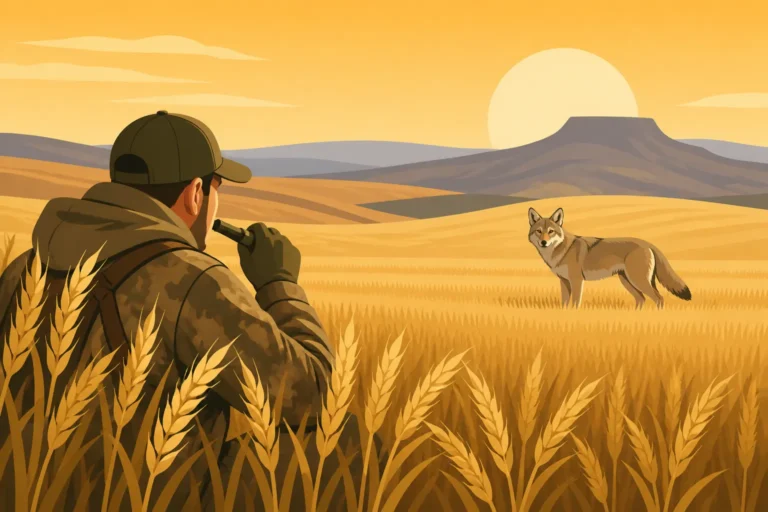
When pursuing coyotes after dark, hunters often rely on distress calls that mimic prey animals. These can range from hand-operated calls to electronic calls and what Washington allows. These calls effectively draw in curious or hungry coyotes. In open agricultural areas, like those found in Eastern Washington, "Coyote Calling in Open Wheat Country" can be incredibly productive under the cover of darkness. Using mapping tools like GoHunt can help you identify prime locations, understand land ownership, and pinpoint suitable areas for calling setups during your daytime scouting.
Regulations on Artificial Light Sources
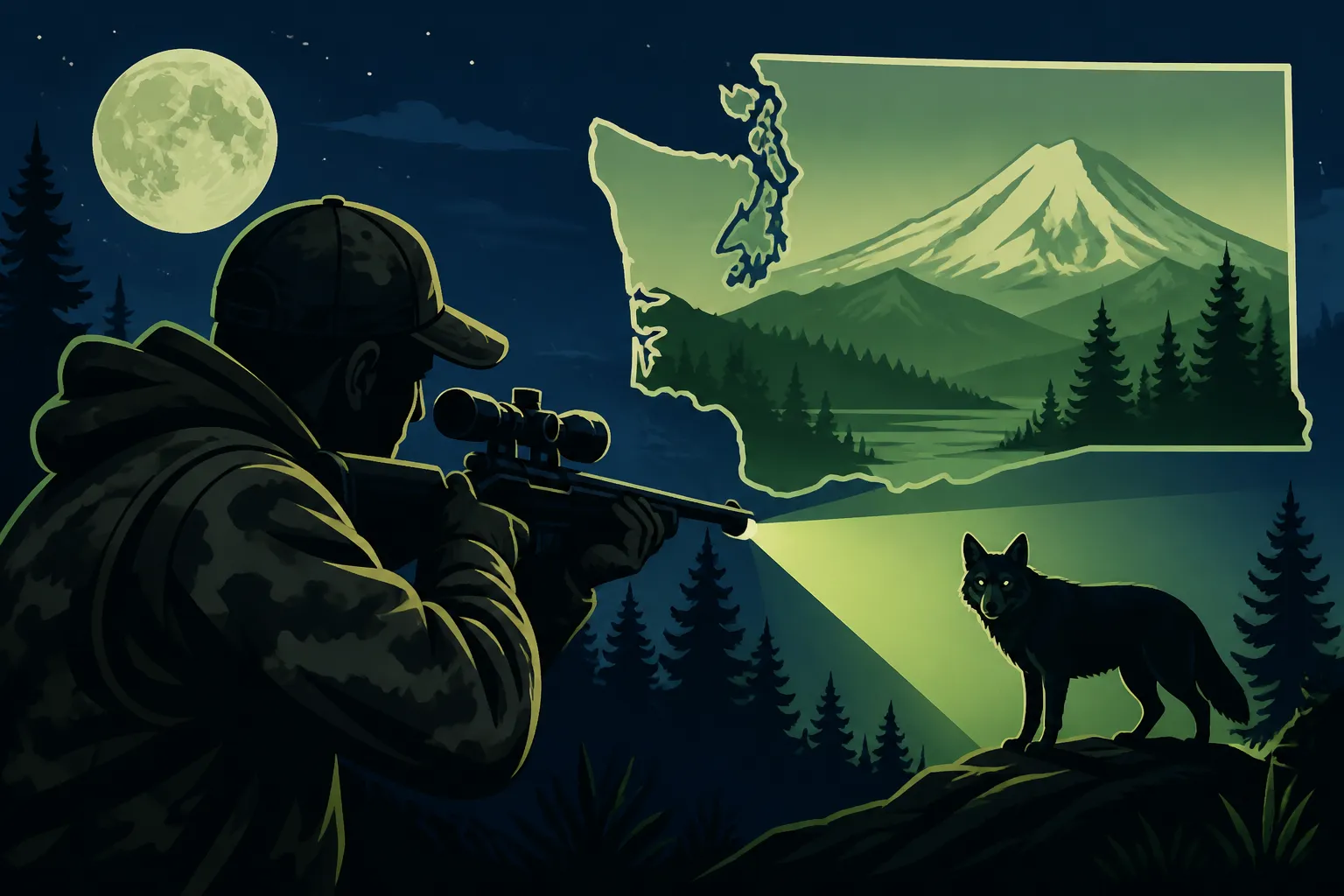
This is perhaps the most critical component of legal night hunting for predators in Washington. You absolutely cannot just drive around with a spotlight. WDFW regulations typically permit the use of "artificial lights" to aid in the hunting of unclassified wildlife (read: coyotes) only if you are on foot and not using a motor vehicle as an aid to locate, pursue, or kill the animal. This means you need to be out there on your own two feet, either walking or sitting, using a handheld flashlight, a weapon-mounted light, or even certain night vision or thermal imaging devices.
The light must be used solely to identify the target and aid in the shot, not to "spotlight" large areas from a vehicle. It's about careful, ethical hunting. Using a red or green light can sometimes be less alarming to coyotes than a bright white beam, giving you a better chance to make a clean shot. Ensure your light source is robust enough for positive identification but not so powerful that it creates glare or impairs your vision beyond the immediate target zone.
| Light Type | Legality (Coyotes) | Primary Use Case | Considerations |
|---|---|---|---|
| Handheld Flashlight | Legal | Scanning, target identification | Requires steady hand, separate from weapon |
| Weapon-Mounted Light (White) | Legal | Integrated aim and illumination | Can startle animals, check zero with light on |
| Weapon-Mounted Light (Red/Green) | Legal | Less alarming to animals, preserves night vision | Check color settings, brightness |
| Night Vision (Generation 1-3) | Legal | Passive light amplification | Excellent for scanning, costly, limited range |
| Thermal Imaging Device | Legal | Detects heat signatures, excellent detection | No light emission, costly, can't identify sex |
| Vehicle-Mounted Spotlight | Illegal | Prohibited for hunting | Associated with poaching, highly illegal |
Weapon and Ammunition Restrictions
For night hunting coyotes, the same general weapon regulations that apply during the day usually hold true, but it's always wise to double-check the current WDFW regulations for any specific amendments related to nighttime activities. Typically, you can use modern firearms, archery equipment, or even shotguns. For modern firearms, remember Washington's .24 Caliber Minimum Explained for big game, but for predators like coyotes, smaller centerfire cartridges like a .223 Remington or .22-250 Remington are very popular due to their flat trajectory and minimal recoil.
When it comes to ammunition, ensure you're using appropriate rounds for coyotes. Varmint-specific bullets are designed to expand rapidly, minimizing ricochet risk and ensuring humane kills on smaller game. If you're using a shotgun, typically smaller shot sizes like BB or #2 are effective at closer ranges. For archery, ensure your broadheads meet the legal requirements for width and sharpness. While rare, if you were to encounter a cougar during a night predator hunt, remember that "The .22 Centerfire Exception for Cougar" exists for damage control, but general cougar hunting rules are distinct and often managed through harvest guidelines, not night hunting.
Safety and Ethical Considerations for Hunting After Dark
Hunting at night brings a whole new set of challenges and responsibilities. The lack of natural light reduces visibility, amplifies sounds, and can play tricks on your eyes. Because of this, safety and ethical conduct become even more paramount than during daylight hours. A responsible night hunter doesn't just know the rules; they understand the increased risks and take every precaution to mitigate them.
Positive Target Identification
This is the golden rule of night hunting: know your target and what is beyond it. In the darkness, it's incredibly easy to mistake a coyote for a domestic dog, or even for other protected wildlife. Before you even think about putting your finger on the trigger, you must have 100% positive identification of your target. Use your artificial light source responsibly, illuminating the animal fully to confirm it's a coyote, and not, say, a badger, fox, or someone's runaway pet. This is where high-quality optics and lighting become critical. A simple flashlight might not be enough; sometimes, even thermal imaging, while great for detection, may not provide enough detail for positive identification without a follow-up with white light or night vision.
Always ensure you have a clear shot and a safe backstop. Sound travels differently at night, and what seems like an open field might have unseen obstacles or structures. Never shoot at just a pair of glowing eyes; always confirm the entire animal. This diligence prevents tragic accidents and upholds the integrity of our hunting traditions.
Knowing Your Surroundings and Property Boundaries
Hunting at night, especially in unfamiliar territory, is asking for trouble. Before you ever venture out after dark, you should have thoroughly scouted the area during daylight hours. This means knowing the terrain like the back of your hand: where the fences are, where the property lines lie, where roads might be, and where residential areas are located. Using tools like onX or GoHunt mapping apps to download offline maps for Washington is absolutely essential. These apps allow you to mark potential stands, identify property boundaries, and understand the topography, even when you're out of cell service.
Many hunting areas, especially Washington Wildlife Area Rules, will have specific access times and potentially even night hunting restrictions that differ from general statewide regulations. It's your responsibility to know these local rules. If you're hunting private land, ensure you have explicit, written permission for night hunting from the landowner, and understand their specific concerns or requests. Getting written permission on private land should always be your first step. Remember, you're a guest, and their comfort and safety are paramount.
Communication and Emergency Preparedness
Even if you're hunting with a partner, communication is key. Carry two-way radios and legal channels to stay in touch, especially if you're splitting up. If you're hunting solo, which many predator hunters do, it's even more critical to take extra safety precautions. Always leave a trip plan at home with a trusted person, detailing where you're going, your expected return time, and who to call if you don't check in.
A well-stocked first aid kit for a remote hunt is non-negotiable. Night hunting often means colder temperatures, and the risk of hypothermia risk on a wet hunt is real, even in seasons that aren't typically frigid. Pack extra layers, a headlamp with spare batteries, and a way to start a fire. A satellite messenger device, like a Garmin inReach or Zoleo, can be a literal lifesaver, allowing you to send messages or an SOS even when you have no cell service. Don't rely on your phone's battery life in cold weather; it will die much faster than you expect. Being prepared isn't just about successful hunting; it's about making it home safe.
Setting Up for a Successful Night Predator Hunt
Once you understand the regulations and have committed to safety, planning your night hunt becomes a strategic endeavor. It’s less about brute force and more about patience, stealth, and using the darkness to your advantage. A well-executed setup can make all the difference between a frustrating night and a successful one.
Choosing Your Stand Location
Selecting the right spot for your night hunt is crucial. You'll want to choose an area that offers good visibility for target identification, a safe shooting lane, and a clear backstop. Consider prevailing wind direction – coyotes have an incredible sense of smell, and you don't want your scent blowing directly into your calling zone. Often, areas bordering agricultural fields, open pastures, or recent clearcuts that transition into thicker cover make excellent locations. These edge habitats are where coyotes often travel and hunt.
During daylight hours, use E-Scouting a Washington GMU From Home and boots-on-the-ground scouting to identify natural travel corridors, game trails, and potential den sites. Look for areas with fresh tracks or scat. Knowing your terrain intimately will allow you to move quietly and set up effectively without alerting nearby animals. Remember, even though it's dark, ambient light from the moon or nearby towns can reveal your silhouette, so try to break up your outline against natural features.
Effective Calling Sequences
Calling is the bread and butter of most predator hunting, and it's particularly effective at night. Electronic calls and what Washington allows are powerful tools, offering a wide range of realistic sounds from rabbit distress to pup howls. Start with a non-threatening sound, like a lone howl, to gauge interest, then transition to a distress sound once you're ready. Vary your calling sequence, incorporating short bursts of sound followed by periods of silence to mimic a natural scenario. A common mistake is to overcall; sometimes, less is more.
Pay close attention to the wind, as coyotes will often circle downwind to scent-check the source of the sound. Position yourself to account for this approach, giving you a shot opportunity before they catch your scent. Be patient; coyotes can take a long time to commit, especially if they're wary. Sometimes, a series of short, sharp distress cries is all it takes to bring one in, while other times, a longer, more drawn-out sequence is required. Experimentation and observation are key.
Minimizing Light and Noise Signature
The essence of night hunting is blending into the darkness. This means minimizing any light or noise you produce. Use red-light headlamps or weapon lights for navigation and setup, as red light preserves your night vision better than white light and is less likely to spook animals. Avoid unnecessary talking or shuffling once you're on stand. Every movement, every rustle of clothing, and every accidental clink of gear can be amplified in the quiet of the night.
Dress in dark, non-reflective clothing. While camouflage patterns might seem ideal, solid dark colors are often more effective at night. Silence is your friend. If you need to check your phone or GPS, do so discreetly, shielding the screen glow. The less you draw attention to yourself, the more likely a coyote is to approach unaware, giving you the best chance for a clean, ethical shot. Remember, the goal is to disappear into the night, becoming just another part of the environment until it's time to make your move.
Disclaimer
The information provided in this guide is for general informational purposes only and is not legal advice. Hunting regulations in Washington State can change frequently. It is the hunter's sole responsibility to consult the most current Washington Department of Fish and Wildlife (WDFW) hunting regulations pamphlet and relevant county ordinances before engaging in any hunting activity. Failure to do so may result in legal penalties.