Elk Migration Timing in Washington
For many Washington hunters, predicting elk movement feels like trying to read tea leaves in a blizzard. You spend months scouting, hoping to nail down where the herds will be, only for an early snow or a late dry spell to throw all your plans out the window. It’s a classic frustration, especially when your tag hinges on knowing when those animals will finally make their move from high summer country to their wintering grounds, or vice-versa. This guide will dive deep into the fascinating, yet often unpredictable, world of elk migration timing in Washington, helping you understand the forces at play and how you can better anticipate their movements.
Understanding the Rhythms of Washington Elk Migration
Elk migration isn't a flip of a switch; it's a dynamic, seasonal journey driven by fundamental needs: food, cover, and survival. Across Washington's diverse landscapes, from the rugged peaks of the Cascades to the rolling hills of the Blue Mountains and the dense timber of the Olympic Peninsula, elk herds follow these ancient patterns, adapting to the specific conditions of their home range. It's less about a calendar date and more about a series of environmental cues that trigger these large-scale movements.
The Annual Cycle of Elk Movement
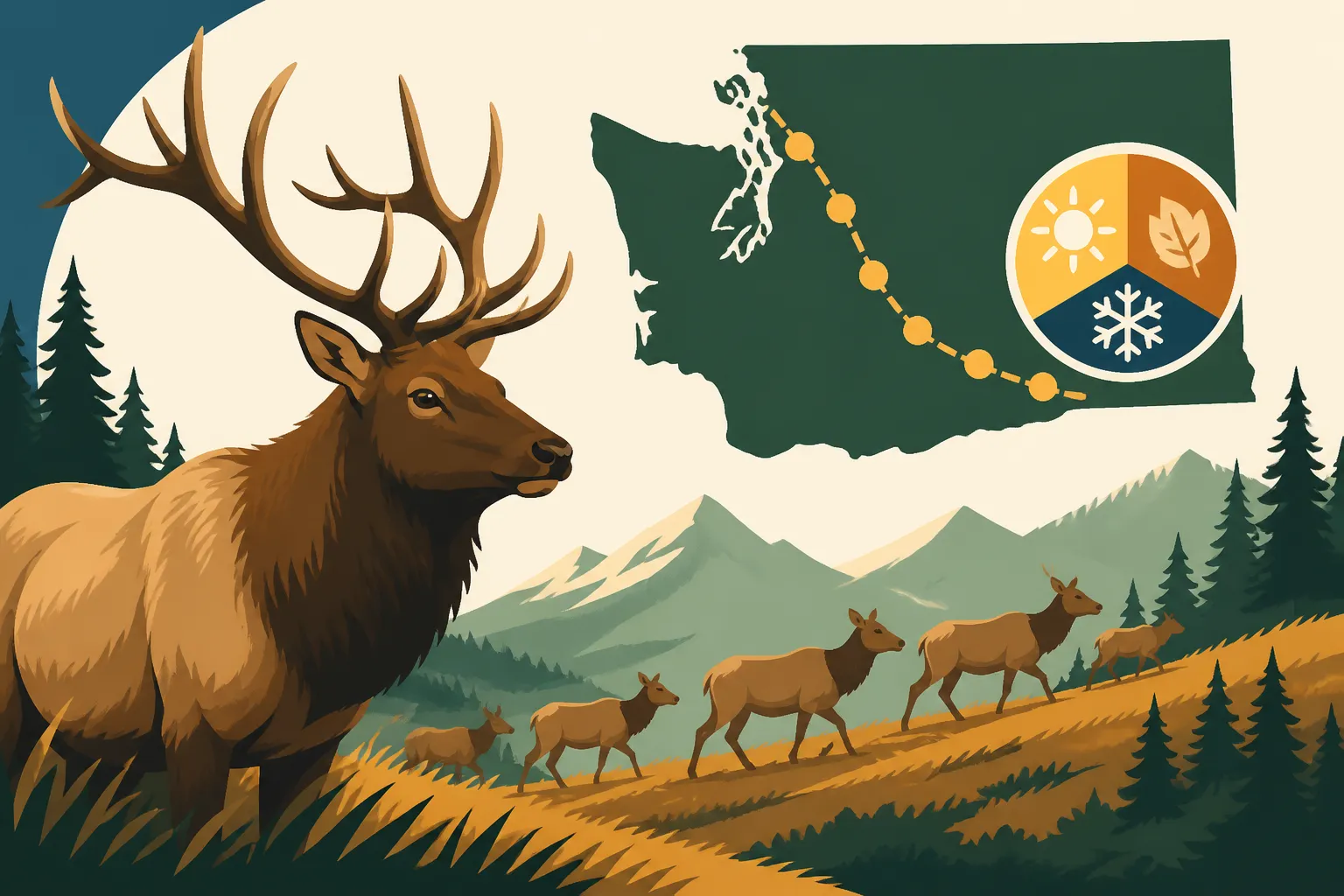
Think of the elk's year as a grand, repeating expedition. In spring, as the snow recedes and green-up begins, elk push uphill, following the new growth. They're looking for nutrient-rich forage to recover from winter and to support the growth of new antlers for bulls, and gestation for cows. This upward movement continues into the summer, with herds often dispersing into higher elevation basins and timbered benches where food and water are abundant, and human disturbance is minimal. It's a time of growth and fattening.
As fall approaches, the energy shifts. The rut is a period of intense activity, and bulls will often move aggressively to establish dominance and breed cows. After the rut, as temperatures drop and the first significant snows begin to fall at higher elevations, the downward migration starts. This is the movement most hunters are keen to understand, as it can funnel elk into more accessible areas, often near winter range. This annual cycle defines not only where elk live but also how accessible they are to hunters during various seasons. Understanding the overall pattern is the first step to becoming a more effective elk hunter in Washington.
Not All Elk Migrate the Same Way
It’s easy to think of "elk migration" as one universal event, but the truth is, not all elk herds behave identically, and even within a single herd, individual animals might have varying movement patterns. For instance, some segments of a herd might be truly migratory, moving dozens of miles between distinct summer and winter ranges. These are the elk that can disappear from one area completely, only to reappear in another a month later.
On the flip side, you have what are often called "resident" or "altitudinal migrant" elk. These animals might only shift a few miles, simply moving up and down in elevation within a relatively small geographical area, staying in familiar terrain. For example, in the dense coastal forests of Western Washington, where heavy snow isn't as much of a widespread deterrent, Roosevelt elk might simply move from higher, mature timber stands to lower, more sheltered valleys or even clearcuts, seeking protection from wind and wet weather, rather than undertaking a long-distance journey. The type of migration (or lack thereof) will drastically impact your hunting strategy and scouting efforts.
Key Factors Influencing Elk Migration Timing
Elk are creatures of habit, but those habits are deeply intertwined with environmental conditions. There's no single date you can mark on your calendar for "elk migration day" because the timing is dictated by a complex interplay of weather, forage availability, and hunting pressure. Getting a handle on these factors is crucial for predicting when and where those big animals might be headed.
The Role of Weather: Snowpack and Temperature
Undoubtedly, the most significant drivers of elk migration are snowpack and temperature. When those first persistent snowfalls hit the high country, it's like a signal going out to the elk: time to move. Deep snow makes foraging difficult, covering up their food sources and expending more energy to move through. More critically, it pushes them out of areas that become inaccessible or energy-intensive.
- Early Season Snow: If Washington experiences an early, heavy snow event in September or early October, elk can be pushed down rapidly and intensely. This might concentrate them in lower elevations sooner than expected, which can be a boon for hunters. But it can also make access challenging if roads become impassable. A light dusting, however, might only encourage them to seek thicker cover, not necessarily initiate a full migration.
- Persistent Cold: Even without deep snow, prolonged freezing temperatures can impact forage quality and availability, encouraging elk to move to areas where green-up lasts longer or where browse is more accessible. Critically, these movements are often to areas like winter range closures that end late hunts, making proper research vital.
- Rain and Wind: While less of a direct migration trigger, persistent heavy rain and strong winds, especially in Western Washington, can cause elk to seek out dense thermal cover in the timber, changing their daily movement patterns and making them harder to locate. This might not be a migration, but it's a significant shift in behavior.
Forage Availability and Quality
Food is the ultimate currency for elk, and its availability and quality play a massive role in their movements. They are constantly seeking the best bang for their caloric buck.
- Summer Green-up: In spring and early summer, elk follow the "green wave" up the mountainsides. They are attracted to the new, succulent growth that is rich in protein and easily digestible. This is why you often find them at higher elevations where snow has just melted, exposing fresh vegetation.
- Fall Curing and Decline: As fall progresses, higher elevation forages cure and lose their nutritional value. At the same time, lower elevation plants might still offer palatable browse or grass. Elk will often move in search of these better food sources, especially those critical for putting on fat reserves before winter.
- Mast Crops and Browse: In areas where oak or other mast-producing trees are present, elk can key in on these food sources, temporarily altering their normal migration routes to take advantage of them. Similarly, areas with abundant preferred browse species like huckleberry, willow, or serviceberry can act as magnets. Scouting for these specific food sources can be just as important as watching the weather.
Hunting Pressure and Human Disturbance
Let's be real: we, as hunters, are a significant factor in elk movement. While weather and food are natural forces, hunting pressure can cause sudden, dramatic shifts in elk behavior and location.
- Opening Day Dispersal: The sheer volume of hunters on opening day, especially in easily accessible general units, can shatter patterns established over months of peaceful summer grazing. Elk that were happily feeding in a valley can be pushed deep into timber, over ridges, or onto private land within hours of the season opening.
- Seeking Sanctuaries: Elk quickly learn where they are safe. This could be thick, inaccessible timber, remote wilderness areas, or private land where hunting pressure is nonexistent. Many "resident" elk simply go nocturnal or move into these sanctuaries during hunting season, only to reappear once the pressure subsides.
- Pushing Towards Winter Range: While not always the primary driver, sustained hunting pressure can accelerate the natural downward migration process. If elk are continually bumped and stressed at higher elevations, they may choose to drop to winter range earlier than they would otherwise, seeking refuge in more sheltered, often regulated, areas. It’s a combination of natural instinct and learned avoidance.
Eastside vs. Westside Migration Nuances
Washington is essentially split down the middle by the Cascade Mountain Range, creating two vastly different ecosystems, and consequently, two different styles of elk migration. The Rocky Mountain elk of Eastern Washington and the Roosevelt elk of Western Washington each have their own unique patterns and challenges when it comes to predicting their movements.
Rocky Mountain Elk and Eastern Washington Dynamics
East of the Cascades, where the landscape is generally more open, drier, and prone to harsher winters, Rocky Mountain elk often exhibit more pronounced migratory behaviors. Their summer ranges are typically in higher elevation timber, subalpine meadows, and forest fringes, sometimes extending into federal lands like the Okanogan-Wenatchee Forest.
- Triggering the Downward Push: For Eastside elk, the timing of their move to lower winter ranges is almost always directly tied to significant snowfall. When the high country gets hammered with a foot or more of snow, making forage inaccessible and travel arduous, you'll see a noticeable push. This is often in late October or November, but it can certainly happen earlier.
- Established Migration Corridors: Many Eastside herds, like those in the Yakima or Colockum units, utilize well-defined migration corridors. These are often funnel points like saddles, creek drainages, or specific timber breaks that connect their summer and winter grounds. Identifying these corridors, perhaps through E-Scouting Washington GMUs Before the Draw, can be incredibly valuable. Tools like GoHunt's mapping features can be excellent for identifying historical migration routes and potential pinch points.
- Winter Range Reliance: Eastern Washington has extensive, crucial winter ranges, many of which are managed by WDFW. These areas, like the Wenas Wildlife Area or Oak Creek Wildlife Area, are often lower in elevation, have south-facing slopes that melt out faster, and provide essential browse. Understanding when Washington Winter Range Closures That End Late Hunts become active is paramount, as elk will gravitate to these sanctuaries.
- Impact of Drought: In dry years, forage in the high country might cure earlier, potentially causing elk to drop to areas with more available water or green-up sooner than average, even without heavy snow. This makes understanding local conditions critical each season.
Roosevelt Elk and Western Washington Adaptations
On the western side of the Cascades, the environment is dominated by dense, often rainforest-like timber, abundant rainfall, and generally milder winters. Roosevelt elk, being forest dwellers, tend to have less dramatic, long-distance migrations compared to their Eastern counterparts.
- Altitudinal Shifts, Not Long Journeys: Roosevelt elk are more likely to make altitudinal shifts, moving up and down within a more confined area. They might spend summers in higher elevation clearcuts or mature timber and then drop into lower, sheltered valleys, thick second-growth, or dense riparian zones as winter sets in. The transition might only be a few miles, or even a few hundred feet in elevation.
- Cover is King: For Western Washington elk, thermal and security cover are just as important as forage, especially during relentless rain and wind. They seek out dense timber stands that offer protection from the elements. This means they might "migrate" into a dark timber ravine rather than crossing an entire mountain range. Understanding Roosevelt Elk of Western Washington behavior means recognizing their reliance on these thick hideouts.
- Pressure-Induced Movements: With less extreme weather driving large-scale migrations, hunting pressure often becomes a more significant immediate factor for Roosevelt elk movement. When hunters push into accessible areas, elk will quickly retreat into the nastiest, thickest cover they can find. This can be a "migration" of sorts, albeit a localized, pressure-driven one.
- Early vs. Late Season: In early archery season, elk might still be higher up, utilizing open clearcuts for feed. As the season progresses into late rifle hunts, they'll likely have moved into thicker, lower elevation timber, often on south-facing slopes, and may be harder to find without a dedicated approach to still-hunting in wet Washington brush.
Anticipating Elk Movements for Hunting Success
Knowing the factors that influence migration is one thing, but translating that knowledge into actionable hunting strategies is where the rubber meets the road. It means constantly observing, adapting, and using all the tools at your disposal to stay ahead of the game.
Scouting for Migration Corridors and Funnel Points
Before the season even begins, diligent scouting can reveal potential migration pathways. Look for natural funnels like narrow canyons, saddles between ridges, or the edges of dense timber blocks that connect high country to lower wintering areas. These are often bottlenecks where elk are forced to travel, making them prime spots for intercepts.
- E-Scouting is Your Friend: Use satellite imagery from tools like GoHunt or WDFW's online maps to identify elevation changes, timber transitions, and potential bottlenecks. Look for subtle terrain features that might concentrate animal movement. This is a critical first step for Public Land Scouting in Washington Before Opening Day.
- Boots on the Ground: Nothing beats putting in the legwork. Hike potential routes, look for old rubs, well-used game trails, and bedding areas. These signs will tell you where elk have traveled in the past, giving you clues about future movements. Pay attention to areas where you find evidence of repeated use.
- Historical Data: If you’ve hunted an area for years, you’ll start to notice patterns. Did elk move through a specific draw every time a certain amount of snow fell? Keep a hunting journal to track these observations, building your own database of historical migration timing and routes.
Adapting to Real-Time Conditions
Since migration isn't scheduled, your ability to react to current conditions is vital. This means being a weather watcher and understanding how changes might impact the elk you're pursuing.
- Monitor Weather Forecasts: Keep a close eye on long-range forecasts, especially for significant snow events at higher elevations. A heavy snow dump can trigger a migration almost overnight. Conversely, a warm, dry fall might delay movements, keeping elk higher longer.
- Check Snow Lines: If you have local access, driving or hiking to observe the current snow line can be incredibly informative. Are the peaks white while the lower slopes are clear? That's a good indicator of pressure building on the elk to move down.
- WDFW Updates: Pay attention to WDFW's big game pamphlet release and any emergency closures or winter range access restrictions. These often go into effect to protect migrating animals, and knowing about them means you can adjust your plans and hunt in legal, open areas.
Hunting the Intercept
Instead of chasing elk once they’ve migrated, try to hunt the "intercept"—positioning yourself along their likely travel routes. This strategy relies on patience and understanding where they will be rather than just where they are.
- Setup on Travel Routes: If you anticipate a snow event, focus your efforts on saddles, ridge lines, and timbered draws that connect higher bedding and feeding areas to lower, more sheltered locations. These are the natural highways elk use.
- Pressure as a Tool (Carefully!): In general units, hunting pressure can sometimes work to your advantage, pushing elk towards you if you're set up on a downwind escape route. However, be mindful of other hunters and never compromise safety.
- Late Season Opportunities: Sometimes, the best opportunities come in the late season when most of the migration has occurred, and elk are settled into their winter patterns. This is when understanding elk behavior in deep snow becomes paramount, as they often concentrate in specific areas, making them more predictable.
Table: Eastside vs. Westside Elk Migration Triggers and Behavior
| Feature / Trigger | Eastern Washington (Rocky Mountain Elk) | Western Washington (Roosevelt Elk) |
|---|---|---|
| Primary Migration Type | Often long-distance, distinct summer to winter range | More altitudinal shifts, localized movements |
| Key Migration Trigger | Significant, persistent high-elevation snowfall | Heavy, prolonged rain/wind, light snow, hunting pressure |
| Typical Migration Timing | Late October – November (can be earlier with storms) | October – early December (more gradual) |
| Terrain Features Utilized | Canyons, ridges, saddles, open forest breaks | Dense timber, thick clearcuts, sheltered valleys |
| Food Influence | Seeking accessible browse, lower elevation green-up | Seeking sheltered browse, conifer needles, huckleberry |
| Hunting Pressure Impact | Can push elk quickly into lower, often restricted, winter ranges | Drives elk into thickest, nastiest cover immediately |
| Scouting Focus | Winter range boundaries, migration corridors, south slopes | Dense timber blocks, riparian zones, historical bedding |
Elk migration timing in Washington is a dance with nature, a constant adaptation to the environment. By understanding the underlying drivers—weather, food, and pressure—and dedicating time to both digital and on-the-ground scouting, you can dramatically improve your chances of being in the right place at the right time when those majestic animals make their move. It’s challenging, no doubt, but that’s precisely what makes elk hunting in Washington so rewarding.
Disclaimer
This article is for general informational purposes only and does not constitute professional advice. Laws, prices and regulations vary by location and change over time. Consult a qualified professional for guidance on your specific situation.