Mule Deer Migration Corridors
It’s a scenario every Washington hunter has faced: you’ve scouted a great area, seen some sign, but come opening day, the deer are simply gone. You scratch your head, wondering if they just vanished into thin air. More often than not, especially with our elusive eastern Washington mule deer, this disappearing act isn't magic; it's migration. Understanding the intricate dance of mule deer migration corridors is absolutely essential for anticipating their movements and drastically improving your odds in the field. This guide will walk you through the seasonal journey of these magnificent animals, helping you decode their routes and plan your hunts effectively.
The Seasonal Dance: Understanding Mule Deer Migration Corridors in Washington
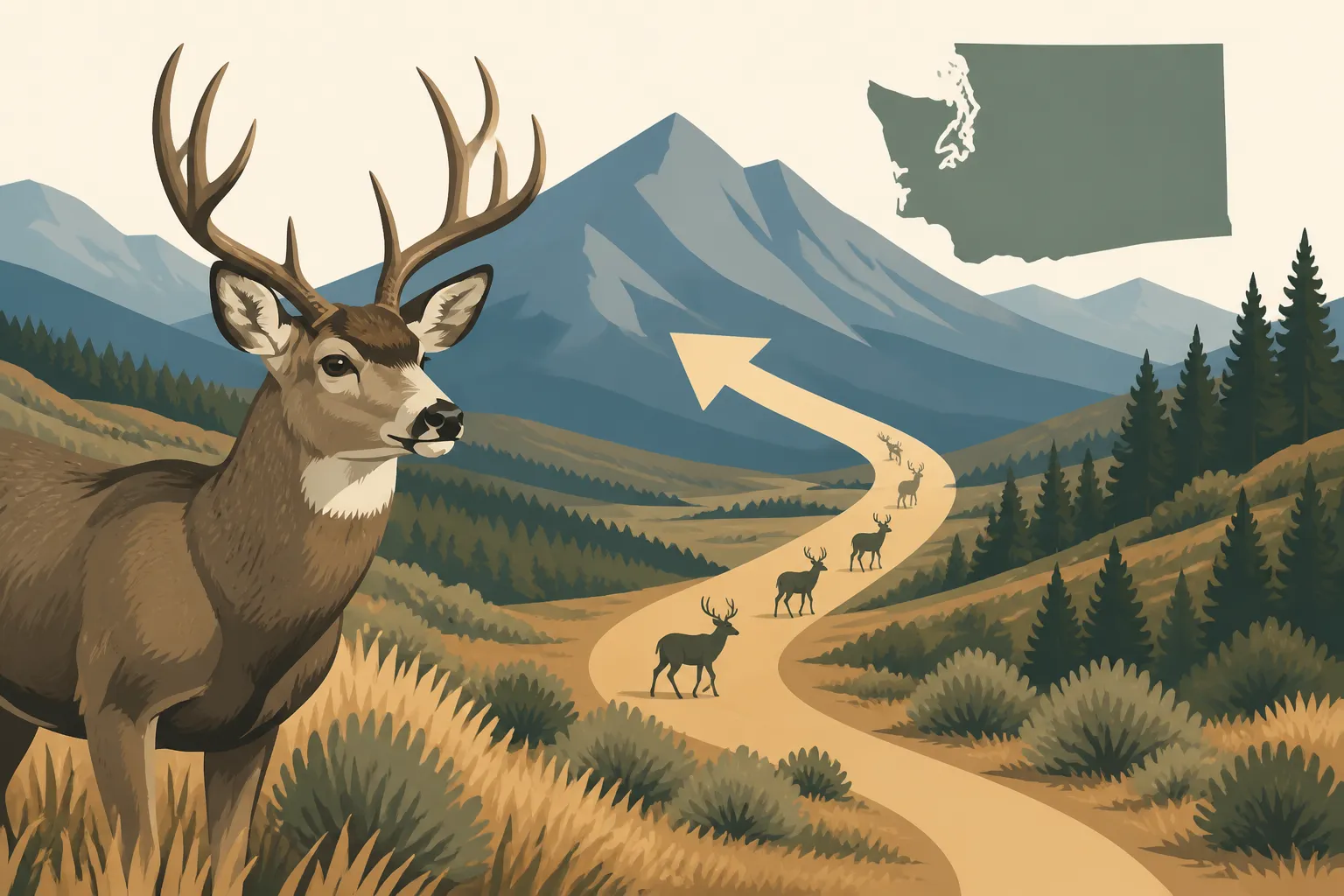
When we talk about mule deer migration corridors, we're not just talking about a little trail in the woods. These are vital, often ancient pathways that connect different seasonal habitats, allowing deer to access necessary resources throughout the year. For the mule deer of eastern Washington, these corridors are lifelines, crucial for their survival, and consequently, for hunters who aim to intercept them.
What Exactly is a Migration Corridor? More Than Just a Trail
A migration corridor is a sustained, linear pathway that animals use to move between seasonal ranges. Think of it less like a simple deer trail worn into the dirt, and more like a regional highway system for wildlife. These corridors aren't always visible paths; they can span vast distances, sometimes dozens of miles, and incorporate diverse terrains like forested ridges, open sagebrush flats, river bottoms, and even agricultural land edges. They're characterized by predictable use patterns, often passed down through generations of deer.
The primary reason mule deer engage in these epic journeys is survival. As the seasons change, so do their needs. Summer offers lush forage and widespread cover in high elevations. But as winter approaches, those high country havens become snow-choked death traps with scarce food. That's when the urge to migrate kicks in, compelling them to descend to lower elevations where snow depth is less prohibitive and crucial winter browse, like bitterbrush and sage, is more accessible. This push and pull, driven by food availability and escape from harsh weather, dictates the very essence of migration.
The Unique Challenges of Washington's Diverse Landscape on Migration
Washington’s eastern side, with its dramatic elevation changes, deep river breaks, and varied vegetation zones, presents a complex tapestry for migrating deer. From the towering peaks of the North Cascades to the rolling hills of the Blue Mountains, mule deer here must navigate a mosaic of public and private lands, crossing highways, traversing clearcuts, and sometimes even skirting suburban fringes.
This complexity can be incredibly frustrating for hunters. You might scout an area in July and see dozens of bucks, only to return in November and find nothing but old tracks. It's easy to feel defeated, wondering what you did wrong. But often, it's not about doing something wrong; it's about not fully grasping the dynamic nature of their seasonal movements. The mule deer you saw in the high country were likely summer residents, and they’ve since moved on to their wintering grounds, using specific, often subtle, corridors to get there. Understanding where these corridors lie, and when deer use them, is the key to unlocking consistent success. It transforms the question from "where are the deer?" to "where are the deer going to be?"
Pinpointing Washington's Mule Deer Migration Routes
Deciphering the specific migration routes of mule deer in Washington is a blend of scientific understanding, geographical knowledge, and diligent scouting. It’s about more than just looking at a map; it's about understanding the "why" behind their movements and how the landscape facilitates those journeys.
Summer Range to Winter Range: The Primary Drivers and Typical Movement Timing
The annual cycle for Washington's mule deer typically begins in late spring and early summer, with deer moving from their wintering grounds to higher elevation summer ranges. These summer areas, often in national forests or rugged DNR lands, provide abundant forage, cooler temperatures, and ample cover for fawning and antler growth. If you’re hunting early season, this is often where you'll find them. For those interested in the habits of these particular animals, our guide on Mule Deer of Eastern Washington offers a deeper dive into their characteristics.
As autumn progresses and temperatures drop, a distinct shift occurs. The first significant snowfalls in the high country, usually in late October or November, act as the primary trigger, pushing deer down towards their traditional winter ranges. These lower elevations, often characterized by sagebrush, bitterbrush, and south-facing slopes, offer critical escape from deep snow and provide essential browse to sustain them through the lean months.
For example, deer summering in the higher elevations of the Okanogan Highlands will descend into the lower, brushier river breaks and agricultural edges as snow accumulates. Similarly, mule deer in the Blue Mountains, discussed further in Mule Deer Numbers in Eastern Washington, will move from subalpine parks down into the major river drainages and private agricultural lands that provide shelter and food. The timing of this descent isn't fixed; it's directly tied to weather patterns. A warm, open fall might delay migration, while an early, heavy snowstorm can trigger a rapid, dramatic movement.
The Role of Topography and Habitat: How Land Features Dictate Routes
Mule deer aren't just wandering aimlessly; their migration routes are heavily influenced by the physical features of the landscape. They naturally seek out paths of least resistance, safety, and consistent forage.
- Ridge Lines and Saddles: These elevated features often provide easier travel through dense timber or across rough terrain. Deer use ridges to navigate, and saddles (low points along a ridge) become natural funnels where deer concentrate as they cross between drainages or descend from high country.
- River Bottoms and Drainages: During certain phases of migration, especially when moving between different elevation bands, deer will follow riparian corridors or the bottoms of large drainages. These areas often offer cover, water, and browse, making them attractive travel routes.
- Pinch Points and Bottlenecks: These are critical areas where geographic features constrain deer movement into a narrower path. This could be a steep canyon that forces deer through a small opening, or a narrow strip of timber between two large clearcuts. These are prime locations to focus your hunting efforts.
- Specific Vegetation Types: Deer will often migrate along areas that offer consistent food sources or cover. A long strip of old-growth timber providing thermal cover, or a belt of specific browse species like bitterbrush or serviceberry, can serve as an integral part of a migration corridor. They’ll stick to areas with food and shelter, which also informs why understanding Mule Deer Winter Range and Survival is so critical.
Leveraging Technology and Local Knowledge: Tools and Tips for Mapping These Routes
Thankfully, modern technology gives us incredible tools to help identify potential migration corridors. Platforms like GoHunt and onX Hunt allow you to pour over satellite imagery, identifying key topographical features, changes in vegetation, and potential pinch points. Look for areas where dense timber transitions to open slopes, or where a ridgeline funnels into a narrow canyon. Pay attention to north-facing slopes for summer cover and south-facing slopes for winter sun exposure. E-scouting is a powerful tool, and you can learn more about it in our article on E-Scouting Washington GMUs Before the Draw.
However, technology is only part of the puzzle. Local knowledge is invaluable. Talk to long-time residents, ranchers, and other hunters. They often have decades of experience observing deer movement in specific areas. Sometimes, a casual conversation at a local diner can yield insights that hours of satellite imagery can't.
WDFW (Washington Department of Fish and Wildlife) also conducts studies and has general information about various herd units. While they won't give you pinpoint GPS coordinates, they can provide a broader understanding of general herd movements and winter range designations, which are often the end points of major migration corridors.
| Region (Washington Eastside Focus) | Typical Summer Range | Typical Winter Range | Primary Migration Triggers | Best Time to Intercept |
|---|---|---|---|---|
| Okanogan Highlands | High Elevation Conifer Forests | Lower Sagebrush/Bitterbrush Slopes, River Breaks | Heavy Snow Depth, Decreased Forage | Late Fall (First Major Snow) |
| Blue Mountains (SE WA) | Subalpine Parks, Higher Ridges | River Valleys, Lower Timbered Slopes, Agricultural Edges | Snow Accumulation, Cold Temperatures | Mid to Late Fall |
| Central Washington Shrub-Steppe | Mid-Elevation Breaks, Scattered Timber | River Breaks, Private Agriculture, South-facing Slopes | Forage Availability, Extreme Cold | Late Fall to Early Winter |
| Northeast Washington (Selkirks) | Higher Elevation Mixed Forests | Lower Timbered Slopes, Private Lands | Snow Depth, Intense Cold | Late Fall |
Hunting Strategies for Migrating Mule Deer
Once you have a grasp of why and where mule deer migrate, you can start to develop strategies to intercept them. This isn't about setting up a trail camera on a trail and hoping for the best; it's about understanding the flow of the landscape and positioning yourself strategically.
Timing Your Hunt to the Migration: When to Intercept Deer Moving
The most crucial element when hunting migrating mule deer is timing. You want to be in position when the deer are actively moving, not before they start or after they've settled into their winter range.
- Pre-Snow Movements in Early Fall: Even before heavy snow, mule deer often begin making subtle, shorter movements down in elevation in response to dropping temperatures and changing forage quality. This can happen in early to mid-October in many parts of Eastern Washington. While not full migration, these movements can concentrate deer in mid-elevation transition zones.
- Heavy Snow Push in Late Season: This is often the prime time for intercepting migrating mule deer. When a significant snowfall hits the high country, deer are forced to move, and they move with purpose. This usually happens from late October through November, coinciding with many modern firearm seasons. The urgency of their movement can make them less wary, but also means they are covering ground quickly. This is where scouting for fresh tracks in the snow, as detailed in Tracking Bucks in Fresh Eastern Washington Snow, becomes invaluable.
- The "Sweet Spot" Where Deer Concentrate: There's often a window, a few days or a week, when deer are actively migrating through specific corridors before settling onto their winter range. During this time, you might see an increased number of animals in areas that previously seemed sparse. This is the "migration bottleneck" and it can offer incredible hunting opportunities. It takes consistent observation and a keen eye on weather forecasts to hit this window just right.
Setting Up Along Known Corridors: Tactics for Ambushing Migrating Deer
Knowing when they're moving is good; knowing where they're moving is better. Setting up along identified migration corridors requires careful planning and a deep understanding of mule deer behavior.
- Scouting for Sign: Before the season, or even during a preliminary scouting trip, look for consistent sign in potential corridors. Not just single tracks, but multiple tracks indicating regular travel. Look for rub lines (especially from previous years, indicating a traditional route) and significant droppings. These aren’t just random trails; they are established routes.
- Ambush Points: Saddles, Creek Crossings, Pinch Points: These topographical features are natural funnels. A high mountain saddle connecting two drainages, a creek crossing that offers the easiest path over a water feature, or a narrow timber strip that deer are forced through – these are your key ambush locations. Deer, especially bucks, tend to stick to cover while traveling, so look for these features within or adjacent to timber. If you're hunting more open country, consider how Glassing Sage and Wheat Edges for Washington Mule Deer might reveal these subtle funnels.
- Consider Wind Direction and Escape Routes: Always set up to hunt into the wind, or with a crosswind that won't carry your scent directly into the travel corridor. Mule deer rely heavily on their sense of smell. Also, consider the deer's likely escape route. If you spook a deer, where will it go? Can you position yourself to get a follow-up shot or at least understand its movement patterns? This is especially critical in thick timber.
- Patient Observation: Hunting migration corridors often demands patience. You might sit for hours without seeing anything, then suddenly, a string of deer appears. Be ready. Your optics, like powerful binoculars and a spotting scope, become crucial for patiently scanning these routes. Don’t forget that even in open country, deer can blend in surprisingly well with the sage and wheat. Our guide on Finding Mule Deer in Wheat Stubble Edges shares valuable tips for spotting them.
Ethical Considerations and Respecting Winter Range
While hunting migrating deer can be incredibly productive, it's paramount to do so ethically and responsibly. These animals are under immense stress during migration, burning calories and facing new threats.
- Understanding the Stress of Migration: Pushing deer hard during migration can be detrimental. Repeatedly spooking animals can force them to expend critical energy reserves, making them more vulnerable to starvation or predation on their winter range. Aim for quick, clean kills and minimize disturbance.
- Legal Closures of Winter Range: Washington has designated winter range closures, often clearly marked, to protect deer and elk during the most vulnerable times of year. These closures are legally enforced and it's your responsibility to know them. Always check the current regulations and maps for areas like Washington Winter Range Closures That End Late Hunts to ensure you're not inadvertently hunting in a closed area.
- Leaving Deer Unpressured During Critical Times: Once deer have settled onto their winter range, they are often grouped up and conserving energy. Harassing them during this period can have significant negative impacts on their survival. It’s a good practice to avoid excessive pressure on critical wintering areas, especially late in the season. Respecting these boundaries and the animals' need for peace is part of being a responsible hunter.
Challenges to Migration and Their Impact on Mule Deer Populations
Mule deer migration corridors are not static; they are constantly threatened by human activity and environmental shifts. Understanding these challenges is not just for conservationists; it's vital for hunters to comprehend the broader landscape affecting mule deer populations and, consequently, future hunting opportunities.
Habitat Fragmentation: Roads, Development, Fences Interrupting Natural Pathways
One of the most significant threats to mule deer migration corridors in Washington, and across the West, is habitat fragmentation. This refers to the breaking up of large, continuous habitats into smaller, isolated patches.
- The Increasing Pressure on Traditional Routes: As human populations grow and spread, development inevitably encroaches on traditional deer migration routes. New roads, housing developments, commercial zones, and even increased recreational use can cut directly across these ancient pathways. What was once a seamless journey from summer to winter range can become a perilous obstacle course.
Imagine a herd that has used a particular saddle to cross a ridge for generations. Suddenly, a new housing development springs up, or a major highway is expanded, effectively severing that route. The deer are then forced to find new, often less optimal, routes, or risk dangerous crossings. This increased risk can lead to higher mortality rates due to vehicle collisions or increased stress. - How Development Impacts Mule Deer Winter Range and Survival: The pressure isn't just on the migration routes themselves; it also heavily impacts the critical winter ranges. These lower elevation areas, often more accessible and desirable for human settlement, are precisely where deer need undisturbed space and reliable forage to survive the harsh winter months. Development on winter range reduces the carrying capacity of the land, meaning fewer deer can be supported. This direct loss of vital habitat has a ripple effect on the overall Mule Deer Winter Range and Survival, making it harder for herds to bounce back even after mild winters. Fences, too, can pose significant barriers, especially traditional barbed wire fences that can prevent deer from accessing critical patches of browse or escaping predators.
Climate Change and Weather Variability: Unpredictable Snow Patterns Affecting Timing
Our changing climate introduces another layer of uncertainty for migrating mule deer. The predictability of seasonal patterns, which mule deer have evolved to rely on, is becoming less reliable.
- Early Snows, Late Thaws, Their Impact on Migration Urgency: Unseasonably early heavy snowfalls can trap deer in high elevations, forcing them into premature and urgent migrations before their bodies are fully prepared. Conversely, late thaws can prolong the period of deep snow on winter ranges, delaying the spring dispersal to summer grounds and stressing animals that have already depleted their fat reserves. These erratic patterns disrupt the delicate balance of their annual cycle.
- The Challenge for Deer to Adapt: Mule deer are adaptable, but rapid, unpredictable changes in weather patterns make adaptation incredibly challenging. They rely on cues like day length, temperature, and initial snowfalls to trigger their movements. When these cues are inconsistent, it can lead to confusion and suboptimal timing of their migrations, increasing their vulnerability. Hunters relying on historical migration timing also face increased challenges, as traditional knowledge may not hold true in a year with abnormal weather. This variability means that resources like GoHunt, which often have historical weather data and allow for extensive E-scouting, become even more essential for adapting your plans.
Conservation Efforts: What's Being Done to Protect These Vital Corridors
Recognizing the critical importance of migration corridors, various conservation efforts are underway in Washington and beyond.
- Land Acquisitions and Easements: State agencies, federal programs, and private conservation groups are working to acquire or place conservation easements on lands that encompass critical migration corridors and winter ranges. These efforts ensure these lands remain open and undeveloped, providing safe passage and habitat for wildlife.
- Wildlife Crossings: In areas where highways bisect major migration routes, states are increasingly investing in wildlife crossing structures – overpasses or underpasses – designed specifically to allow animals to safely cross busy roads. While expensive, these structures have proven highly effective in reducing vehicle-animal collisions and restoring connectivity for migratory species.
- Collaboration and Data Collection: Organizations work with WDFW to map and study migration routes using GPS collars, allowing biologists to understand the exact pathways deer use. This data is crucial for informing land-use planning and identifying priority areas for conservation. For hunters, being aware of these efforts and supporting conservation organizations is a way to ensure the future of Washington's mule deer. While you're learning about specific game management units in Washington, also check out resources like Washington Game Management Units Explained to better understand the regulatory framework around these conservation areas.
Ultimately, understanding mule deer migration corridors is about more than just finding a deer to hunt. It's about respecting the incredible journeys these animals undertake, appreciating the intricate ecosystems they inhabit, and playing our part in ensuring these migrations continue for generations to come. Whether you're planning a trip into the Eastern Washington Hunting Country or scouting for next year, keep these corridors in mind.
Disclaimer
This article is for general informational purposes only and does not constitute professional advice. Laws, prices and regulations vary by location and change over time. Consult a qualified professional for guidance on your specific situation.