Chelan Unit High Country
The Chelan Unit High Country can feel like an entirely different world from the typical low-elevation timber hunts many Washington hunters are familiar with. The sheer scale, rugged terrain, and often unpredictable weather present unique challenges that can quickly overwhelm the unprepared. This guide is designed to help you decode the complexities of hunting this stunning, yet demanding, region, offering insights into its unique landscape, crucial access points, effective hunting strategies, and the essential gear you’ll need to increase your chances of success.
Understanding the Chelan Unit High Country Terrain and Habitat
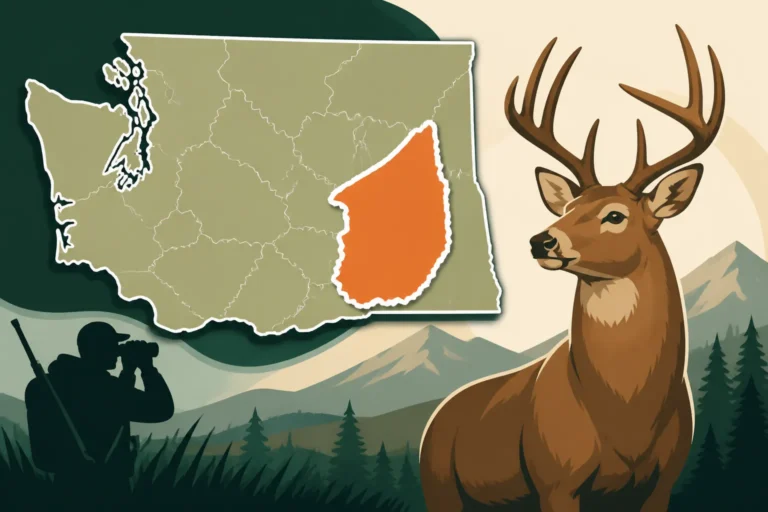
The Chelan Unit, or GMU 245 as it's officially designated, covers a vast area that stretches from the shores of Lake Chelan up into the rugged peaks of the North Cascades. It's a land of dramatic elevation changes, deep canyons, open timbered slopes, and sparse alpine ridges. This isn't country where you can just wander in and expect to stumble upon game; it demands calculated planning and a deep respect for its challenging environment. The high country specifically refers to those upper elevations, often above 5,000 feet, where the forest thins, views open up, and big game finds sanctuary.
Geographic Features and Elevations
When you talk about the Chelan high country, you're talking about serious elevation. We’re often looking at areas that range from 4,000 feet all the way up to over 8,000 feet. This isn't gentle rolling hills; it's steep, broken country characterized by granite outcroppings, scree fields, and glacial cirques. Think of the country south of Lake Chelan, like the ridge systems leading up towards Chelan Butte, or the more remote reaches near the Entiat Wilderness boundary. These elevations mean thinner air, colder temperatures, and snow arriving earlier and sticking longer than in the valleys. Hunters need to be prepared for rapid weather shifts, where a sunny morning can turn into a whiteout blizzard in a matter of hours. The drainages here are often steep and brushy at the bottom, opening up to more manageable, but still challenging, slopes higher up. This verticality often dictates game movement, with animals using thermal cover in dense timber during the day and moving to higher, more open feeding areas in the mornings and evenings.
Dominant Flora and Wildlife Sign
The vegetation in the Chelan high country shifts dramatically with elevation. At lower to mid-elevations, you'll find ponderosa pine and Douglas fir forests, giving way to subalpine fir, lodgepole pine, and larch as you ascend. Once you get above the timberline, or into sparse, rocky areas, it's more open sagebrush, bitterbrush, and various grasses, interspersed with small pockets of timber. These open, high-elevation benches and basins are often prime feeding grounds for mule deer and Rocky Mountain elk, especially during the early and mid-seasons. Looking for wildlife sign in this varied terrain means understanding what game is eating and where they're bedding. Fresh elk droppings and rubs on saplings in a high subalpine meadow are gold. For mule deer, you'll often find them browsing on bitterbrush or aspen shoots, and their tracks might lead you to small, sheltered pockets of timber where they bed during the day. Don't forget to look for mineral licks or springs, especially in drier years, as these can be magnets for game. Learning to identify these distinct habitat zones and the corresponding sign is paramount to finding animals consistently.
Navigating Access and Regulations in Chelan
Getting into and around the Chelan high country is half the battle, and it's not always straightforward. This area is a patchwork of public and private lands, with varying access rules that can change year to year. Knowing exactly where you stand and what rules apply is crucial to a successful and legal hunt.
Public Versus Private Land Considerations
The Chelan Unit is primarily made up of U.S. Forest Service lands within the Okanogan-Wenatchee National Forest, which is fantastic for public land hunters. However, interspersed throughout are sections of Washington State Department of Natural Resources (DNR) land and private parcels, especially at lower elevations closer to human development or timber operations. It's absolutely vital to know these boundaries. I can’t stress enough how important it is to use a reliable mapping tool like onX Hunt. This app allows you to see land ownership in real-time on your phone, even without cell service once you've downloaded the maps. You can clearly distinguish between National Forest, DNR, and private land, preventing accidental trespass. Often, private timberland adjacent to public ground might be accessible through specific programs or permits, but these change, so always check the latest regulations from the WDFW and the timber companies themselves. Don't assume that just because it looks wild, it's public. Always verify before you step foot on it. Finding Legal Access in Washington is a topic that can save you a lot of headache.
Road Systems, Gates, and Foot Travel
Access into the Chelan high country often starts with a network of Forest Service roads, some of which are well-maintained, while others are rough, unmaintained, or seasonally closed. Many of these roads eventually lead to trailheads for foot travel into the true high country. It's common to encounter "Green Dot Roads" in Washington, which have specific rules for motorized access during hunting seasons, so make sure you understand those designations for the specific area you're planning to hunt. Remember that road closures, whether seasonal or permanent, are there for a reason – often to protect fragile habitat or wintering game. Checking Washington Road Closures Before You Go should be a mandatory step in your planning. Beyond the roads, be prepared for extensive foot travel. Hiking miles into a basin or up a ridge is often necessary to get away from other hunters and find unpressured game. This means planning your pack weight carefully, considering water sources, and having good navigation skills. A GPS unit or a reliable mapping app like onX Hunt, with offline maps downloaded, is indispensable.
Strategies for Hunting Elk and Deer in the Chelan High Country
Hunting the Chelan high country isn't just about showing up with a tag; it requires a strategic approach tailored to the specific game species, season, and terrain. Both mule deer and Rocky Mountain elk frequent these upper elevations, but their behavior can differ significantly.
Early Season Scouting and Game Movement
For archery seasons in September, or early rifle hunts, the high country can be exceptional. Animals are often still high, enjoying the last of the green feed before snow pushes them lower. This is prime time for extensive glassing, which means finding a good vantage point, setting up your optics, and patiently dissecting every patch of timber, every rocky outcrop, and every open meadow. Using a spotting scope with a wide magnification range can be a game-changer here, allowing you to pick out the flicker of an ear or the sheen of an antler from miles away. Glassing Breaks at First Light is a tactic that pays huge dividends.
Early season scouting, even without a weapon, is invaluable. Before the season, take a few trips to hike into promising areas. Look for fresh tracks, droppings, and rubbed trees. Identify bedding areas on north-facing slopes for cool daytime shade and south-facing slopes for morning sun. Note key travel corridors between feeding and bedding areas. Elk, especially, will use these well-worn paths. Understanding the subtle shifts in game movement from August to September, as forage changes and hunting pressure begins, will give you a significant advantage. Tools like GoHunt can provide historical harvest data and unit-specific insights that complement your physical scouting efforts.
Mid-Season Tactics and Weather Impacts
By mid-season, usually October, the Chelan high country starts to feel the chill. Snow can begin to fall in earnest at higher elevations, and temperatures drop significantly. This is when game movement becomes more critical. As the high country gets dusted with snow, elk and deer often begin to transition towards lower elevation wintering grounds or seek out south-facing slopes that get more sun exposure. This migration isn't always a mad dash; it can be a slow, deliberate movement over several weeks, punctuated by periods where animals hold tight in thick timber to escape storms.
Hunters need to be adaptable. If the weather turns, focus your efforts on those south-facing slopes or lower fringes of the high country where animals might be staging. Still-hunting through dense timber becomes a more viable tactic, especially during heavy weather, as visibility is reduced and animals are less likely to move far. Being prepared for rapidly changing weather, including packing extra layers and waterproof gear, isn't just about comfort—it's about staying in the hunt. For those pursuing mule deer, knowing Tracking a Buck After a Fresh Snow can lead to some incredible opportunities.
Late Season Opportunities and Winter Range
Late season in the Chelan high country, typically November into early December for some permits, can be brutal but highly rewarding. This is when severe weather often dictates game movement down to designated winter ranges. These areas are typically at lower elevations, often outside the GMU’s high country designation, but the animals you’re pursuing originated from those higher elevations. Sometimes, late-season permits specifically target these wintering areas. The key here is to have a good understanding of where the game has to go when the snow gets too deep or the browse disappears up high. This involves studying WDFW maps for winter range designations and understanding the historical migration routes.
Hunting these late-season conditions often means dealing with significant snow, ice, and extremely cold temperatures. Physical fitness and appropriate gear are non-negotiable. While the high country itself might be inaccessible, understanding its relationship to the lower winter range is critical for late-season success. Sometimes, a particularly mild late season means animals linger higher than expected, offering a rare opportunity, but don't count on it.
Essential Gear and Preparedness for Chelan High Country Hunts
Hunting the Chelan high country is an expedition, not a casual stroll. The right gear won't just make you more comfortable; it could literally save your hunt, or even your life. From specialized optics to robust footwear, every piece of equipment plays a critical role.
Optics for Distant Glassing
In this expansive country, your eyes are your most valuable tool, and good optics extend their reach exponentially. Investing in quality binoculars, typically 10×42 or even 12×50 for wider fields of view, is a must. Even better, a good spotting scope (20-60x or 25-75x magnification) on a sturdy tripod allows you to pick apart distant hillsides and identify game that would be impossible to see with just binoculars. This is where you might spend hours glassing, meticulously scanning every shadow and ridge for movement.
| Optic Type | Ideal Use Case | Key Feature for Chelan |
|---|---|---|
| 10x Binoculars | General scanning, quick checks, closer encounters | Portable, wide field |
| 12x Binoculars | Extended scanning, bridging gap to spotting scope | More magnification |
| Spotting Scope | Long-range identification, counting points, confirming gender | High magnification |
| Rangefinder | Confirming shot distance, especially in broken terrain | Angle compensation |
Remember that high-country weather can bring fog, haze, and glare. Look for optics with excellent light transmission and durable, fog-proof construction. A chest harness for your binoculars keeps them secure and readily accessible without bouncing around or getting snagged on brush. Choosing Binoculars for Washington Glassing and Spotting Scope Magnification Range are excellent resources to help you pick the right tools for your specific needs in this vast landscape.
Physical Conditioning and Backpacking Essentials
The steep ascents, descents, and covering miles of uneven ground in the Chelan high country demand peak physical condition. This isn't just about bagging an animal; it's about getting back out safely, potentially with a heavy load of meat. Start your conditioning months in advance, focusing on cardio, leg strength, and carrying a weighted pack. Practice hiking with the actual pack you'll use, simulating the weight of an elk quarter, so you know what to expect.
Beyond physical fitness, your backpacking gear needs to be top-notch. A robust backpack with a good frame is crucial for hauling meat. Even if you're only planning a day hunt, always carry enough water, food, first-aid supplies, fire-starting equipment, and emergency shelter for an unexpected overnight. The weather can turn instantly, and a twisted ankle far from the trailhead can become a serious situation quickly. Layered clothing, including a waterproof outer shell, is essential. Good quality boots that are broken in and provide excellent ankle support are non-negotiable for navigating rocky, uneven terrain. Consider trekking poles, especially for steep descents with a heavy load, as they can save your knees. Packs Sized for a Washington Elk Quarter and Boots for Washington's Eastside Rock and Westside Mud offer more detailed advice on selecting these critical items. And always, always let someone know your detailed trip plan, including your route and expected return time.
Disclaimer
This article is for general informational purposes only and does not constitute professional advice. Laws, prices and regulations vary by location and change over time. Consult a qualified professional for guidance on your specific situation.