Mayview Unit Country in the Blue Mountains
Navigating the vast, often intimidating landscape of Washington's Blue Mountains can feel like trying to read a treasure map written in a foreign language, especially when you're focused on a specific area like the Mayview Unit. Many hunters feel overwhelmed by the sheer scale, the steep canyons, and the confusing patchwork of public and private lands. This guide is here to untangle that knot for you, offering a comprehensive look at what it really takes to hunt the Mayview Unit, from understanding its unique terrain to effective hunting strategies and essential gear.
Understanding the Mayview Unit's Terrain and Habitat
The Mayview Unit, nestled within the sprawling Blue Mountains of southeast Washington, isn't your typical flatland hunting ground. It's a land of extremes, defined by dramatic elevation changes, dense timber, and open, windswept slopes. If you're going to hunt here successfully, you need to understand the lay of the land almost as well as the animals do.
Key Topographical Features and Elevation Changes
Imagine a crumpled blanket, stretched out and then pushed up into sharp peaks and deep creases—that's a pretty good mental picture of the Mayview Unit. You're looking at deeply incised canyons that drop sharply into drainages, only to rise again into steep, timbered ridges. Elevations can swing wildly, often by thousands of feet, within a relatively short horizontal distance. This isn't just a physical challenge for us flatlanders; it dictates how elk and deer live their lives here. They'll use these steep slopes for thermal cover, escaping the heat of the day in cool, north-facing timber, or bedding on sun-drenched southern exposures during colder periods to soak up warmth. Knowing these patterns, and how they change with the weather, is absolutely critical.
These topographical features aren't just for show; they're the highways and hiding spots for big game. During the early morning, you might find elk moving from bedding areas high on a timbered ridge down into a draw to feed, only to climb back up before the sun gets too high. Mule deer, on the other hand, might favor the more broken, rocky outcrops along the rim of a canyon, using the ruggedness as their primary defense. Understanding these elevation shifts and how they influence animal movement is a core component of any effective hunting plan in Mayview. It forces you to constantly consider where an animal would want to be at any given time of day, factoring in sun, wind, and cover.
Vegetation Zones and Their Impact on Game
The vegetation in the Mayview Unit is a direct reflection of its varied topography and elevation. You'll encounter a mosaic of habitats, from dense mixed conifer forests dominated by Douglas fir and ponderosa pine in the cooler, higher elevations and north-facing slopes, to more open, grassy hillsides and pockets of brush in the lower, drier areas. Interspersed throughout are small, often hidden, meadows and clearings that act as critical feeding grounds. This diverse habitat directly impacts where you'll find game. Elk thrive in areas where dense timber provides security cover close to open feed, allowing them to graze and then quickly retreat into safety.
Mule deer, particularly the Mule Deer of Eastern Washington, often gravitate towards the brushy draws and broken terrain, where the scattered cover allows them to disappear quickly. You'll find them browsing on bitterbrush, serviceberry, and other shrubs that dot the more arid slopes. Knowing what types of vegetation provide preferred forage, bedding, and security cover is like having an X-ray vision into the animals' world. For instance, a clearcut that's grown up with young saplings might be a black hole of cover for a big bull during the day, while a south-facing sagebrush slope might hold a mule deer buck soaking up the morning sun. Learning to read these vegetative cues as you hike through the unit will tell you where to slow down and glass, and where to keep moving.
Water Sources and Their Importance
In a unit like Mayview, especially during the warmer early seasons or dry falls, water is life, both for you and for the game. The Blue Mountains are crisscrossed with numerous seasonal creeks, perennial streams, and hidden springs, all feeding into larger drainages. Identifying these water sources on your map and scouting them beforehand is paramount. Animals, particularly elk, will often orient their movements around reliable water, especially when the weather is warm. A well-worn game trail leading to a hidden spring can be a goldmine for spotting activity.
Don't underestimate the small, seeping springs or damp spots in a draw; these can be just as critical as a flowing creek, especially if they're secluded. In drought years, larger streams might dwindle, making these smaller, consistent sources even more valuable. For example, in an August archery season, finding a wallow or a muddy spring could be the key to locating a bachelor herd of bulls. Conversely, knowing which water sources might dry up can help you rule out certain areas and focus your efforts. Keep an eye out for tracks and sign around any water source, as it will tell you exactly who's been visiting and when.
Accessing and Navigating Mayview Unit Country
Getting into and around the Mayview Unit can be half the battle. This isn't a place for casual strolls; it demands preparation, the right tools, and a healthy respect for the rugged environment. Without a solid plan for access and navigation, you'll spend more time lost or stuck than hunting.
Primary Access Points and Road Conditions
Most hunters will approach the Mayview Unit from paved roads like Highway 12 or State Route 129, then transition onto a network of county and Forest Service roads. These secondary roads can range from well-maintained gravel to deeply rutted, rocky, or even muddy tracks that require a high-clearance, four-wheel-drive vehicle. A good example is heading in from the Snake River side; you'll gain significant elevation quickly on roads that can be incredibly steep and winding. Conditions change rapidly, especially with weather. A road that was dry and passable in August might become a slick, muddy nightmare after a September rain, or completely snowed in by October. Always check conditions before you go, and be prepared for the worst.
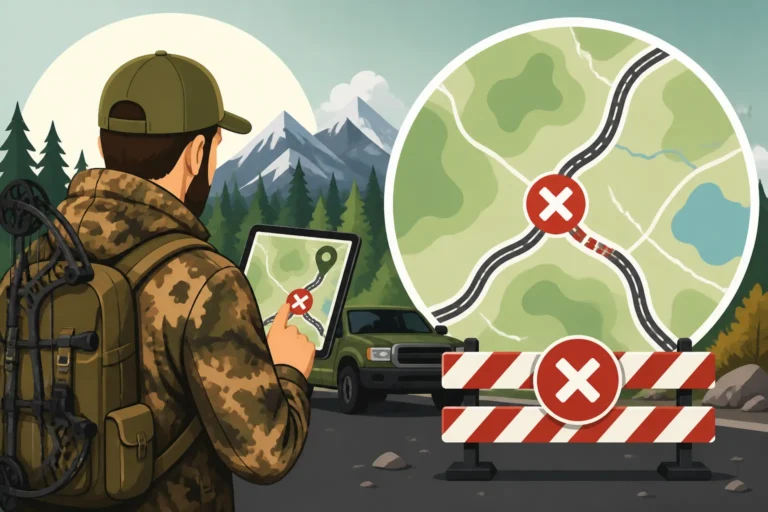
It's not uncommon to find gates on these roads, some of which are permanently closed, while others might be seasonal or require special permission, particularly on private timberlands. Always pay close attention to signs and use current maps. Utilizing resources like the onX Hunt app can be a game-changer here, as it often shows current road closures and land ownership boundaries. Trust me, finding yourself miles deep on a closed road that you thought was open is a frustration you absolutely want to avoid. Remember to also check for specific regulations like Checking Washington Road Closures Before You Go from official WDFW sources or the Forest Service, as these can impact your hunt dramatically.
Navigating on Foot and Horseback
Once you leave the truck, the real work begins. The Mayview Unit demands physical fitness, plain and simple. Hiking those steep canyons and ridges, especially with a pack, will test your endurance. There are some established trails, but much of the best hunting will require bushwhacking through dense timber, navigating fallen trees, and side-hilling on treacherous slopes. This is where good navigation skills become not just helpful, but essential. Relying solely on a phone can be risky; battery life is always a concern, especially in cold weather.
Always carry a physical map and compass, and know how to use them. Supplement this with a GPS device or a robust phone app like onX Hunt for redundancy. Offline maps are non-negotiable, as cell service is spotty to non-existent in much of the unit. For those willing and able, horses or llamas can be an incredible asset for covering ground and packing out game, though they come with their own set of challenges, including navigating steep trails and finding suitable grazing or feed. Whether on foot or horseback, knowing where you are and where you're going at all times will not only keep you safe but allow you to hunt more effectively.
Private Versus Public Land Considerations
The land ownership in the Mayview Unit, like much of Washington, is a complex checkerboard. You’ll find a mix of U.S. Forest Service land, Washington Department of Natural Resources (DNR) holdings, and significant tracts of private timber land. While Forest Service and most DNR lands are generally open to public hunting, private timber companies often have their own access rules, which can include permits, fees, or complete closures. It’s absolutely crucial to know whose land you're on, and that means doing your homework before you ever step foot in the woods.
This is another area where a good mapping application really shines. Tools like onX Hunt are invaluable for clearly delineating private versus public boundaries, showing you exactly where you can and cannot go. Don't rely on old paper maps alone, as ownership can change, and signs on the ground might be missing or confusing. Getting caught trespassing, even accidentally, can lead to serious consequences and reflects poorly on all hunters. Always ensure you are familiar with Finding Property Lines on Washington Public Land to avoid any issues. If you plan to hunt private timber land, check the specific company's website (e.g., Hancock, Weyerhaeuser) for their current access policies, permit requirements, and seasonal closures. Many will have a small fee or require registration for access.
Hunting Strategies for Mayview Unit Big Game
Hunting the Mayview Unit requires a blend of physical stamina, mental toughness, and strategic thinking. Whether you're chasing elk or deer, understanding their behavior in this specific environment is key. This isn't a place for half-hearted efforts; it demands dedication and smart hunting.
Targeting Elk in Mayview's Steep Country
The Mayview Unit is home to healthy populations of Rocky Mountain Elk East of the Washington Cascades, and hunting them here is a true mountain experience. Given the steep, broken country, successful elk hunting often hinges on a combination of aggressive glassing, patient still-hunting, and smart calling. During early seasons (archery, early muzzleloader), elk will be higher up, often in or near dense timber patches, moving to and from water sources. Look for subtle benches or saddles on ridges where they might travel, or dark timber stands where they bed during the day.
Your primary tactic should be to get high and glass, especially at first light and last light. Use good optics to pick apart distant hillsides, looking for subtle movements or the tell-tale gleam of an antler. Once you spot elk, the challenge shifts to making a strategic move. This can involve a long, arduous stalk through rugged terrain, using the contours of the land and timber to conceal your approach. During the rut, calling can be highly effective. Understanding different Cow Calls That Pull a Bull Off His Herd or even using a bugle to locate animals can be crucial. Remember, these elk are used to rugged terrain, so don't expect them to stay put for long; be ready to move with purpose. For those who like to do their homework, services like GoHunt can offer valuable insights into draw odds and unit specifics, helping you pick your areas more effectively.
Mule Deer Tactics in the Breaks
Mule deer in the Mayview Unit are different beasts than the elk. They often prefer the more open, broken, and brushy terrain found along the rims of canyons, the numerous draws, and the drier, south-facing slopes. These are not the dense timber dwellers; they use the "breaks" of the country to their advantage, disappearing into seemingly sparse cover. Hunting mule deer here is primarily a glassing game, especially at dawn and dusk. Get to a high vantage point before legal shooting light and systematically pick apart the opposite slopes and draws.
Look for patches of bitterbrush, sage, or junipers where deer might be browsing or bedded. Pay close attention to subtle movements – a flick of an ear, a patch of antler, or the dark shape of a bedded deer. Once you spot a buck, the stalk can be incredibly challenging due to the lack of continuous cover. You'll need to be patient, use every piece of terrain to your advantage, and often crawl to get within range. Still-hunting slowly through brushy draws and along canyon edges can also be effective, moving at a snail's pace and stopping frequently to glass ahead. These deer are masters of camouflage in their preferred habitat, so keen eyes are your most important tool.
General Season vs. Special Permit Hunts
Understanding the difference between Washington's general season and special permit hunts is vital for any hunter eyeing the Mayview Unit. Most hunters will participate in the general seasons, which typically allow for over-the-counter tag purchases and specific weapon types (modern firearm, archery, muzzleloader) within defined dates. These seasons usually have broader areas and higher hunter density. Success rates can be lower due to pressure, but opportunity is abundant. For instance, you might buy a general elk tag for the Eastern Washington region and hunt Mayview during the designated modern firearm season.
Special permit hunts, on the other hand, are lottery-based draws for specific units, species, and sometimes even antler restrictions (like Hunting Washington's Three-Point Minimum Units for deer). These hunts are often designed for higher quality animals or specific management goals, meaning fewer tags are issued, and hunter density is much lower. If you're serious about hunting a trophy animal in Mayview, applying for special permits is often your best bet, though draw odds can be long. It's crucial to understand Washington General Season Versus Special Permit Hunts and how to apply, including researching previous year's draw odds and unit reports. The application window is typically in the spring, so planning well in advance is essential. Don't forget that scouting these specific permit areas, often through tools like E-Scouting Washington GMUs Before the Draw, can dramatically increase your chances if you're lucky enough to draw a tag.
Essential Gear and Safety for Mayview Hunts
Hunting in the Mayview Unit isn't just about finding the animals; it's about being prepared for the environment. The steep terrain, unpredictable weather, and often remote nature of the area demand a well-thought-out gear list and a strong emphasis on safety. Cutting corners here can lead to a miserable, or even dangerous, experience.
Footwear, Layering, and Rain Gear
Your feet are your foundation in Mayview. Investing in high-quality, waterproof, and well-broken-in boots with excellent ankle support is non-negotiable. You'll be traversing steep, often rocky, and potentially muddy slopes for miles, and blisters or wet feet can quickly end a hunt. Consider a boot specifically designed for mountain hunting, with a stiff sole for side-hilling. When it comes to clothing, layering is key. The weather in the Blue Mountains can shift dramatically from crisp mornings to warm afternoons, and then back to chilly evenings, often with rain or even snow. Start with a moisture-wicking base layer, add insulating mid-layers (fleece or puff jacket), and top it with a bomb-proof rain shell.
Even though Mayview is on the "Eastside," the Blues can get plenty of moisture, so don't skimp on rain gear. Think durable, quiet, and truly waterproof. While some swear by specific brands, the material and construction are what matter most. Look for a jacket and pants that can handle heavy downpours and thick brush. Forget cheap ponchos; they'll tear in minutes. Remember, staying dry is about staying warm, which directly impacts your comfort and safety. Proper Rain Gear for Westside Hunting principles often apply just as well here. And don't underestimate the need for good gloves that offer warmth and dexterity, even when wet. Learning Layering for Wet Cold Weather isn't just a suggestion; it's a survival strategy.
Navigation and Communication Tools
In an area as vast and remote as the Mayview Unit, reliable navigation and communication are paramount. As mentioned, a high-quality GPS device or a mapping app like onX Hunt loaded with offline maps is essential. This allows you to track your movements, mark waypoints (like a kill site or a hidden spring), and know your precise location relative to property lines and unit boundaries, even without cell service. Always carry extra batteries or a power bank for electronic devices. But don't just rely on electronics; a physical map of the GMU and a compass are your analog backup and should always be in your pack.
Communication, especially if you're hunting solo or in a small group that might split up, is also critical. While cell service is rare, two-way radios can be effective for short-range communication with hunting partners. For true emergency situations or for peace of mind when hunting alone in remote areas, a satellite messenger or a satellite phone is highly recommended. Devices like the Garmin inReach allow you to send texts, share your location, and, most importantly, send an SOS signal even when miles from any cell tower. Consider the insights from Satellite Messengers for Solo Washington Hunts to choose the right device for your needs. Leaving a detailed trip plan with someone back home is also a non-negotiable safety measure.
Packing Out Game and Meat Care
This is where the rubber meets the road, or more accurately, where your boots meet the steep, muddy trail with a heavy load. If you're fortunate enough to harvest an elk or a deer in the Mayview Unit, be prepared for a serious packing job. Given the rugged terrain, it's often not feasible to get an animal whole, or even in large pieces, out of a deep canyon. This is where field dressing and quartering skills become crucial. Learning the "gutless method" for elk can save you immense effort and is often the only practical way to get an animal out of a truly steep, remote spot. You'll need a sharp knife (or several replaceable blade knives), a good bone saw, and plenty of game bags to protect the meat from dirt, flies, and debris.
Once the animal is quartered and bagged, the real test of your pack system and physical endurance begins. A sturdy external frame pack or a robust internal frame pack with a load shelf is essential for comfortably carrying heavy, awkward quarters. Think about your Pack Weight One Hunter Can Carry and be realistic about how many trips it will take. Speed is also important, especially in warmer early season hunts. Getting the meat cooled down quickly is paramount to preserving its quality. If it's warm, consider hanging quarters in the shade and allowing air to circulate, or even covering them with cool, wet game bags to promote evaporative cooling. Have a plan for getting the meat from the trailhead to a processor or cooler as quickly as possible; this is crucial for Getting a Carcass Cooled Fast.
| Aspect | Mayview Unit Characteristics | Hunter Preparedness |
|---|---|---|
| Terrain | Deep canyons, steep ridges, varied elevation, dense timber, open breaks. | High physical fitness required. Durable, waterproof boots with ankle support. |
| Vegetation | Mixed conifer forests, ponderosa pine, sagebrush, bitterbrush, scattered meadows. | Understand animal preferences for cover and forage based on species. Focus glassing and still-hunting in appropriate zones. |
| Access | Network of county & Forest Service roads, potentially rough, steep, muddy. Private timber lands. | High-clearance 4×4 vehicle often necessary. Check road conditions and closures. Use mapping apps (e.g., onX Hunt) for land boundaries and access rules. |
| Navigation | Limited cell service, challenging terrain for visibility. | GPS (with offline maps) and physical map/compass. Satellite messenger for emergencies. |
| Elk Strategy | Rocky Mountain Elk, respond to calling during rut, use timber for cover, feed in openings. | Glassing at dawn/dusk, strategic still-hunting in timber, understanding Bugling and Cow Calling in Washington's Archery Elk Season. |
| Mule Deer Strategy | Prefer broken country, brushy draws, canyon rims. Masters of camouflage. | Extensive glassing, slow still-hunting, focusing on transition zones and broken terrain. |
| Meat Care | Remote, steep terrain means long packing distances. | Plan for "gutless method," good game bags, sturdy pack frame. Rapid cooling of meat is critical, especially in early season. Consider Cooler Size for a Bull Elk and transport plan. |
Disclaimer
This article is for general informational purposes only and does not constitute professional advice. Laws, prices and regulations vary by location and change over time. Consult a qualified professional for guidance on your specific situation.