Olympic Peninsula Hunting Access
The Olympic Peninsula in Washington State is a hunter's dream, yet it often presents a bewildering maze of land ownership, access rules, and terrain that can leave even seasoned hunters scratching their heads. It's a place where majestic Roosevelt elk roam ancient rainforests and blacktail deer ghost through dense timber, but finding legal and practical access to pursue them can feel like solving a complex puzzle. This comprehensive guide is designed to cut through that confusion, helping you understand the lay of the land, navigate the various access points, and equip you with the knowledge to plan a successful and ethical hunt on Washington's remarkable Olympic Peninsula.
Understanding the Olympic Peninsula Landscape for Hunters
The Olympic Peninsula isn't just a place; it's an ecosystem, a mosaic of towering mountains, sprawling temperate rainforests, and rugged coastlines. For hunters, understanding this unique environment is the first step to unlocking its potential. It's not like the open, glassing country east of the Cascades; this is often up-close, personal hunting that demands a different set of skills and preparation.
Geography and Habitat Types
Imagine stepping out of your truck into a world shrouded in mist, where giant firs and cedars scrape the sky, and the undergrowth is a dense, tangled mess of salal, huckleberry, and devil's club. That's a common scene in the lower elevations of the Olympic National Forest and surrounding state lands. These areas, particularly on the western and northern flanks, receive an incredible amount of rainfall, fostering a jungle-like environment. Roosevelt elk thrive here, often using the thick cover for bedding and escaping pressure. Hunting in these areas means still-hunting through nearly impenetrable brush, relying more on sound and scent than sight, and being prepared for truly physical days.
As you climb higher, the landscape shifts dramatically. The rainforest gradually gives way to subalpine forests and then to the vast, open alpine meadows and rocky peaks of the Olympic Mountains themselves. While the highest reaches are often within the Olympic National Park (where hunting is prohibited), the transition zones and upper forested slopes of the surrounding national forest offer different opportunities. Here, you might find blacktail deer feeding in high mountain basins or bears foraging for berries before denning. Access to these higher elevations typically means longer hikes, often through old-growth forests that are less dense than the lower rainforests but still present significant challenges in terms of navigation and steep grades. It's a land of incredible beauty, but it asks a lot of the hunter in return.
Key Game Species and Their Haunts
The undisputed king of the Olympic Peninsula is the Roosevelt elk. These magnificent animals, larger than their Rocky Mountain cousins, are a true challenge to hunt. They inhabit the dense, wet forests of the national forest, DNR lands, and private timber holdings. During the early archery seasons in September, you might hear their bugles echoing through the valleys, especially in areas like the Hoh, Bogachiel, and Wynoochee drainages. Later in the season, when the leaves are falling and the weather turns colder, elk tend to move to lower elevations, sometimes even venturing onto agricultural fields adjacent to forested areas. Understanding their seasonal movements and preferred bedding cover – often in the thickest, darkest timber patches – is crucial for success. Roosevelt Elk of Western Washington talks more about these impressive animals.
Columbian blacktail deer are another primary target, and they are incredibly adept at disappearing into the dense coastal vegetation. Unlike the open country mule deer, blacktails are masters of stealth. You'll find them throughout the timbered regions of the peninsula, from the coastal foothills right up into the subalpine zones. They often frequent clearcuts and young timber stands (known as "reprod") where they can browse on new growth, but they rarely linger in the open. Hunting blacktails typically involves slow, methodical still-hunting or carefully watching natural travel corridors. Their rut usually kicks in later in the fall, offering a window of increased activity. Columbian Blacktail Deer in Western Washington is an excellent resource for learning more about these elusive deer. Bears and cougars also call the Olympic Peninsula home, offering additional hunting opportunities within specific seasons. Black bears are common across most forested areas, particularly in spring and fall when foraging for food, while cougars are present wherever their prey (deer and elk) exists, though they are notoriously difficult to spot.
Navigating Public Lands on the Olympic Peninsula
Access on the Olympic Peninsula is a patchwork, and understanding the different types of public land is key. This isn't one big, open-access area; each land manager has their own set of rules, and knowing them can make or break your hunt.
Olympic National Forest Access and Rules
The Olympic National Forest makes up a substantial portion of huntable public land on the peninsula, enveloping the Olympic National Park on three sides. This is often the first place hunters look, and for good reason—it offers vast tracts of diverse habitat. Many roads, particularly the main arteries, are generally open to vehicle traffic, providing access to trailheads and dispersed camping areas. However, not all roads are created equal. You'll encounter active logging operations, which can mean temporary closures or heavy truck traffic, requiring extra caution. It's always a good idea to check the Olympic National Forest website or contact a local ranger station for current road conditions and any area-specific restrictions.
Within the National Forest, you'll also find designated Wilderness Areas, such as the Olympic Wilderness (which borders the National Park). Hunting is permitted in these Wilderness Areas, but motorized vehicles, mechanized transport like bicycles, and even game carts are strictly prohibited. This means packing in on foot or with horses/llamas and packing out your game the same way. This adds a significant layer of challenge and requires careful planning and physical fitness, but it also offers a truly wild hunting experience away from vehicle noise and crowds. Familiarize yourself with the boundaries and regulations for these specific areas before venturing in. Olympic National Forest Hunting Areas delves deeper into these regulations.
Washington Department of Natural Resources (DNR) Lands
Interspersed with the National Forest and private holdings are extensive tracts of Washington State Department of Natural Resources (DNR) land. These lands are primarily managed for timber production but are generally open to public recreation, including hunting. DNR lands often provide good access, especially through a network of logging roads, some of which may be seasonally open or closed. The "Green Dot" road system, a DNR initiative, designates certain roads for public access, often indicating areas where motor vehicles are allowed on specific days or seasons. Always look for the green dots on maps or roadside signs.
However, DNR lands can be tricky. Some areas require a Discover Pass for parking, and gates are frequently locked to prevent unauthorized vehicle access, especially during fire season or to protect vulnerable road systems. It's critical to consult the DNR's recreation map resources and check for current access restrictions. You might find fantastic hunting opportunities on DNR lands, particularly for blacktail deer that thrive in regenerating clearcuts, but you need to be diligent about verifying access. Many of these areas are actively logged, meaning recent clearcuts can offer excellent browse for deer and elk, but also present a challenging landscape of slash piles and steep terrain. Washington DNR Land Open to Hunting provides further detail on these areas.
Olympic National Park: Know the Boundaries!
This is a critical point: hunting is strictly prohibited within the boundaries of Olympic National Park. This large national park occupies the heart of the Olympic Peninsula and is clearly marked. It's not uncommon for elk and deer to move in and out of the park boundaries, especially during hunting season when they seek refuge from pressure. As a hunter, it is your absolute responsibility to know exactly where you are at all times and to ensure you are not pursuing game or discharging a firearm or bow within park limits.
Using reliable mapping tools is non-negotiable here. A simple mistake could lead to severe penalties, including fines, confiscation of gear, and loss of hunting privileges. Always double-check your location, especially near what appears to be a seamless transition between national forest and national park land. The park boundary is often marked with signs, but these can be subtle or obscured by vegetation. Educating yourself on Olympic National Park Versus Forest Hunting is paramount for a legal and responsible hunt.
Private Timber Lands and Permitted Access
Beyond the public lands, vast portions of the Olympic Peninsula are owned by private timber companies. These lands can hold excellent hunting opportunities, but gaining access often requires more proactive planning and sometimes a fee.
The Reality of Industrial Timber Ownership
Companies like Weyerhaeuser, Hancock Forest Management, and other private timber entities own enormous blocks of land across the Olympic Peninsula. Historically, much of this land was open to public access, but in recent decades, many companies have transitioned to permit-based or controlled-access systems. This is often driven by a need to manage recreational impacts, mitigate fire risk, and ensure operational safety during logging activities. It can be incredibly frustrating to see prime hunting habitat behind a locked gate, especially when it feels like it used to be open.
The reality is that these companies manage their land primarily for timber production, and public access is a secondary consideration. Hunters often find themselves staring at a "No Trespassing" sign, even when the forest beyond looks perfect for elk or deer. This necessitates understanding each company's specific access policies, which can change from year to year. While these policies can be restrictive, they also often translate into reduced hunting pressure within the permitted areas, which can be a huge advantage for those willing to do the legwork to gain access.
How to Secure Access Permits and What to Expect
Each timber company has its own process for issuing permits, and these can vary widely. Some, like Hancock Forest Management (often operating under names like Campbell Global or other subsidiaries), might offer seasonal permits for a fee, sometimes through an online lottery or direct purchase. These permits might grant access to specific geographic areas or allow walk-in access only. Weyerhaeuser also has various access programs, some of which are very competitive and limited. You might find a permit for vehicular access to certain road systems, or walk-in access to others.
It's crucial to start researching these opportunities well in advance of hunting season, often as early as spring or summer. Visit the websites of the major timberland owners in the specific GMU you're interested in, and look for their recreation or public access sections. Be prepared for a fee, which can range from a nominal charge to several hundred dollars for an annual permit. If you secure a permit, read all the rules carefully, as they often include restrictions on vehicle types, open gates, fire regulations, and even specific hunting dates. A permit is a privilege, and adhering strictly to the rules is essential for ensuring continued access for all hunters. Private Timber Access Permits in Washington offers more detailed information.
Access Challenges and Solutions
Hunting on the Olympic Peninsula isn't always about pristine trails and open roads. It often involves navigating challenging terrain and overcoming specific access hurdles.
Road Closures and Green Dot Systems
One of the most persistent challenges on the Olympic Peninsula is locked gates and road closures. These closures can be seasonal, permanent, or temporary due to logging activity, road damage, or fire danger. The Washington DNR's "Green Dot" road system is a concerted effort to manage public access on their lands, using a series of numbered roads marked with green dots on maps and in the field. A green dot generally means the road is open for public motorized vehicle access during specific seasons, while an unmarked road might be gated or closed. It's a system designed to regulate vehicle traffic and reduce road hunting pressure while still providing access to walk-in hunters.
However, many roads, both on DNR and National Forest lands, will simply be gated and locked. This isn't necessarily a bad thing for the truly dedicated hunter. A locked gate often means less pressure beyond it, transforming what might have been a road hunt into a legitimate backcountry experience. This is where your physical fitness and willingness to walk come into play. Always be prepared to hike several miles beyond a locked gate to reach your desired hunting grounds. For specific information, Washington Green Dot Road Systems is a valuable resource that can help you decipher these rules.
Hiking and Non-Motorized Access
Given the prevalence of locked gates and road closures, a significant portion of hunting on the Olympic Peninsula is done on foot. This is particularly true in the extensive roadless areas within the Olympic National Forest and on private timberlands where walk-in access is permitted. Embracing the hike-in philosophy can open up vast, less-pressured areas. For blacktail deer, still-hunting slowly through dense timber or along old logging spurs can be highly effective. For elk, getting several miles deep into areas away from vehicle noise often increases your chances of encountering undisturbed animals.
When planning for non-motorized access, consider your gear carefully. A comfortable pack that can handle a heavy load is essential, as you'll be packing in all your supplies and, hopefully, packing out meat. Trekking poles can be a game-changer on steep, slick slopes or when navigating blowdowns. You'll need durable, waterproof boots with excellent traction for the typically wet and uneven terrain. This kind of hunting is physically demanding, but it offers a profound sense of accomplishment and a genuine wilderness experience. It's a different kind of challenge than glassing miles of country, but equally rewarding.
River Crossings and Coastal Fringe Access
The Olympic Peninsula is crisscrossed by numerous rivers and creeks, many of which can become significant obstacles, especially during periods of heavy rain or snowmelt. Hunters often need to cross streams to access certain areas, and these crossings can range from easy rock-hops to dangerous, swift-flowing rivers. Never underestimate the power of moving water; if a crossing looks unsafe, it probably is. Always carry a sturdy hiking staff or trekking poles for stability, and consider bringing extra socks or even dedicated river-crossing footwear if you anticipate getting wet. Planning your route to minimize dangerous crossings or identify safer alternatives is a smart strategy.
In some coastal GMUs, hunting might involve navigating the rugged Pacific coastline or the fringes of saltwater estuaries. While this is less common for big game, understanding the tides and coastal features can be crucial if your hunting area is near the shore. Always be aware of rapidly changing weather conditions, especially on the exposed coast, and understand the difference between public tidelands (which may have access restrictions) and adjacent private or tribal lands. For more on the specific challenges of packing out a large animal, consider Packing an Elk Out of Washington's Backcountry.
Tools and Resources for Planning Your Hunt
In today's hunting world, especially on complex landscapes like the Olympic Peninsula, good tools are indispensable. They don't replace boots on the ground, but they can dramatically improve your efficiency and chances of success.
Digital Mapping Applications
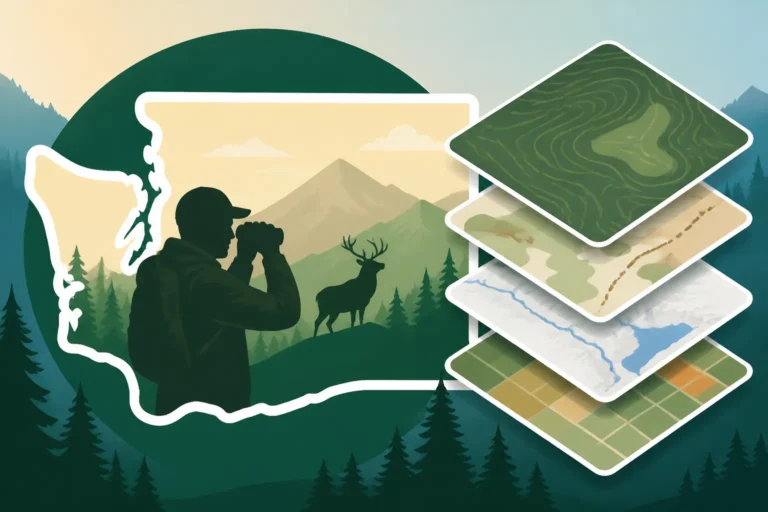
Modern digital mapping applications are arguably the most valuable tool a hunter can have when navigating the Olympic Peninsula's varied land ownership and challenging terrain. Services like onX Hunt and GoHunt provide detailed satellite imagery, topographic maps, and crucially, land ownership overlays that clearly show public (National Forest, DNR) versus private land. This allows you to identify huntable areas, locate specific parcels of private timber that might require a permit, and avoid unintentional trespassing.
With onX Hunt, for example, you can download maps for offline use, which is critical since cell service is often nonexistent in the backcountry. You can mark waypoints for potential hunting spots, trailheads, or locked gates, measure distances, and track your movements. GoHunt also offers robust mapping features, often integrated with hunt-planning tools that help research draw odds and unit information. These apps empower you to scout virtually from home, identifying potential access points, terrain features, and escape routes. They're not just a convenience; they're an essential safety and legality tool on the Olympic Peninsula. GPS Units Versus Phone Apps further explores the utility of these modern navigation aids.
Official WDFW Resources and GMU Pamphlets
While digital apps are fantastic, they should always be complemented by official Washington Department of Fish and Wildlife (WDFW) resources. The WDFW website is the authoritative source for hunting regulations, season dates, bag limits, and specific GMU rules. Before you even start looking at maps, familiarize yourself with the current Big Game Hunting Seasons and Regulations pamphlet. This document outlines everything from weapon restrictions (like Washington's Legal Equipment Rules by Weapon) to species-specific requirements.
The WDFW website also offers downloadable GMU maps, which, while not as detailed as a mapping app, clearly delineate Game Management Unit boundaries. These boundaries can sometimes follow natural features like rivers or ridge lines, but just as often, they follow roads or invisible survey lines. Knowing your GMU is paramount, as regulations can vary significantly from one unit to the next, even if they appear similar. Use the WDFW resources to understand the legal framework of your hunt, then use your mapping apps to navigate within that framework.
Preparing for a Successful Olympic Peninsula Hunt
Hunting the Olympic Peninsula is an adventure that requires specific physical and mental preparation, as well as the right gear. It's not a place to cut corners on readiness.
Physical Demands and Gear Considerations
The Olympic Peninsula is physically demanding. Regardless of whether you're chasing elk or blacktails, you'll be contending with steep grades, thick undergrowth, and often relentless rain. This isn't flat ground hunting. Developing a strong cardio base and leg strength is crucial. Hitting the trails with a weighted pack in the months leading up to your hunt is excellent preparation. Imagine hiking several miles uphill, through wet brush, and then having to pack out an elk quarter on your back—that's the reality for many successful Peninsula hunters.
Your gear selection needs to prioritize staying dry and comfortable in wet, cool, and often cold conditions. High-quality rain gear is non-negotiable. Forget cheap plastic ponchos; you need durable, waterproof, and breathable outerwear that can withstand days of drizzle, downpours, and pushing through wet brush. Layering is key, with moisture-wicking base layers, insulating mid-layers, and a waterproof outer shell. As for footwear, invest in high-quality, waterproof boots with excellent ankle support and aggressive traction. Nothing will ruin a hunt faster than wet, blistered feet. Gaiters are also a lifesaver for keeping water and debris out of your boots when busting through wet vegetation. Rain Gear and Layering for Washington Hunts and Boots for Washington's Eastside Rock and Westside Mud are essential reading.
Safety in Remote and Rugged Country
Hunting on the Olympic Peninsula means venturing into truly remote and rugged country, often without cell service. Safety must be your top priority. Always let someone know your exact hunting plan, including your route, expected return time, and contingency plans. Carry a reliable navigation device (GPS or a mapping app with offline maps) and know how to use it. A satellite messenger or personal locator beacon (PLB) is a wise investment, especially for solo hunters, as it allows you to communicate or call for help even without cell service.
Beyond navigation, be prepared for unexpected weather changes, which can happen rapidly in the mountains. Carry emergency fire-starting supplies, a first-aid kit, and enough extra food and water for an unplanned overnight stay. Wildlife encounters are also a possibility; be bear and cougar aware, carry bear spray, and know how to use it. Furthermore, always be mindful of firearm safety, especially when navigating dense brush with other hunters potentially in the area. The Olympic Peninsula offers incredible hunting, but it demands respect and thorough preparation for a safe and successful experience.
| Land Type | Typical Access Method | Permit/Pass Required? | Common Game Species | Terrain Characteristics |
|---|---|---|---|---|
| Olympic National Forest | Vehicle on main roads, hike-in on trails | Northwest Forest Pass/Discover Pass (some trailheads) | Roosevelt Elk, Blacktail Deer, Bear, Cougar | Varied: dense rainforest, subalpine forest, steep mountainsides |
| Washington DNR Lands | Vehicle on Green Dot roads, hike-in (gated) | Discover Pass (for parking) | Blacktail Deer, Roosevelt Elk, Bear | Actively managed timberland, clearcuts, dense young forest, steep |
| Private Timber Lands | Company-specific permits, walk-in | Yes (often for a fee) | Roosevelt Elk, Blacktail Deer, Bear, Cougar | Clear-cuts, young growth, mature timber, extensive road systems (many gated) |
| Olympic National Park | Foot/horse (recreation only) | National Park Pass | No Hunting Allowed | Pristine wilderness, high peaks, ancient rainforest |
Disclaimer
This article is for general informational purposes only and does not constitute professional advice. Laws, prices and regulations vary by location and change over time. Consult a qualified professional for guidance on your specific situation.