Okanogan and North Cascades Hunting Areas
Hunting in the vast and rugged Okanogan and North Cascades regions of Washington State presents a unique set of challenges and incredible rewards, often leaving hunters feeling overwhelmed by the sheer scale and diverse terrain. This comprehensive guide aims to break down the complexities of these iconic hunting areas, offering practical advice and deep insights to help you navigate the landscape, understand the game, and prepare for a successful and safe experience in some of Washington's most breathtaking wild places.
Understanding the Okanogan and North Cascades Region
The Okanogan and North Cascades region encompasses a vast swathe of Washington State, stretching from the arid, sagebrush-covered hills of the Okanogan Valley eastward to the higher, timbered peaks and westward into the incredibly rugged and glaciated North Cascades. This isn't just one type of hunting; it's a tapestry of diverse ecosystems, each demanding a slightly different approach and offering distinct opportunities. The scale alone can be daunting, with millions of acres of public land, from rolling foothills to precipitous alpine environments. Many hunters, especially those new to the area, often underestimate the physical demands and the logistical planning required to hunt effectively here.
Geographical Overview
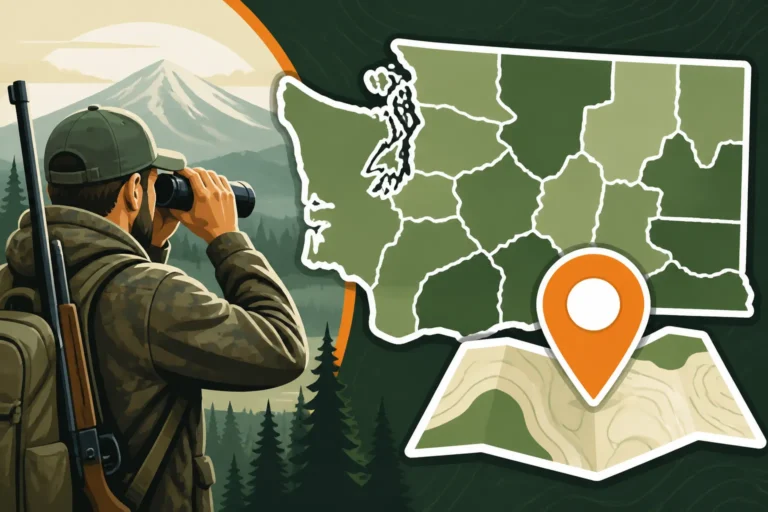
Imagine a landscape carved by ancient glaciers and restless rivers, where towering peaks give way to deep, winding valleys, and dense conifer forests eventually transition into open sagebrush flats. That's the Okanogan and North Cascades. To the east, the Okanogan Valley and Highlands are characterized by drier, more open terrain, with ponderosa pine forests, sagebrush, and expansive private agricultural lands interspersed with public holdings. As you move west, toward the North Cascades, the elevation rises dramatically, and the landscape becomes much more forested, rugged, and remote. This is true mountain hunting, with steep slopes, dense timber, and high alpine basins. The sheer size of this region means that a "one size fits all" hunting strategy simply won't work; you need to understand the nuances of each specific area you plan to tackle.
The region is bordered by British Columbia to the north, offering a sense of boundless wilderness. To the east, it blends into the vast national forest and private timber lands of the Selkirk Mountains. The Columbia River forms a significant southern boundary in parts, providing unique riparian habitats. This varied geography directly influences game movement, access points, and the type of hunting experience you can expect. For example, the open country of the Okanogan lends itself well to glassing, while the steep, thick timber of the North Cascades might demand more still-hunting or tracking.
Climate and Terrain
The climate across this expansive region is as varied as its geography. The eastern Okanogan experiences a more continental climate, characterized by hot, dry summers and cold, snowy winters. Fall hunting seasons often begin with warm, dry conditions, rapidly transitioning to crisp, cool days and eventually significant snowfall, especially at higher elevations. This means dust and fire danger can be concerns early in the season, while late-season hunts can involve deep snow and icy conditions. The terrain reflects this dryness, with exposed rock, scree slopes, and drought-resistant vegetation.
Conversely, the North Cascades, particularly the western slopes, are influenced by moisture-laden air from the Pacific, leading to wetter, milder conditions at lower elevations and heavy snowfall in the mountains. Even in September, you can encounter rain, fog, and quickly changing temperatures. The terrain here is notoriously steep, with dense forests of fir, cedar, and hemlock, thick undergrowth, and a maze of drainages and ridges. Traveling through this country is physically demanding, often requiring significant elevation gain and bushwhacking. Preparing for both extremes – dry, dusty heat and cold, wet conditions – is paramount if you plan to explore different parts of this region. Layering for Wet Cold Weather is not just a suggestion, it's a necessity.
Key Game Species
The Okanogan and North Cascades are renowned for their diverse big game populations, making it a prime destination for Washington hunters. While the specific density and distribution of animals vary greatly by GMU, you'll find opportunities for several species here.
Mule Deer: This region is arguably Washington's premier mule deer country, particularly on the eastern side of the Cascades. These magnificent deer thrive in the open ponderosa pine forests, sagebrush hills, and rocky breaks. Hunters often focus on mature bucks during the archery, muzzleloader, and modern firearm seasons. Mule Deer Numbers in Washington are strong in many of these units, and careful scouting can yield impressive results.
Elk: Both Rocky Mountain elk (east of the Cascades) and Roosevelt elk (in the western fringes of the North Cascades, though less common here than further south or west) can be found. The Colockum and Okanogan herds offer the primary elk opportunities. Elk hunting here is typically a physically demanding endeavor, often requiring hunters to access remote areas and navigate steep terrain. Understanding Washington Elk Herds and Where They Live is crucial for targeting the right areas.
Black Bear: The entire region, especially the timbered slopes and drainages, provides excellent black bear habitat. Spot-and-stalk hunting in open avalanche chutes or clearcuts is a popular method. Bears are opportunistic feeders, so finding areas with ripe berries or active foraging can be key. Where Bears Feed in Early Fall can give you an edge.
Cougar: Washington's rugged and heavily timbered landscapes are prime cougar habitat. While challenging to hunt, the Okanogan and North Cascades offer some of the best opportunities. Hunters typically focus on tracking fresh sign, particularly in areas with healthy deer populations. Cougar Hunting in Washington After the Hound Ban requires a different approach.
Other Species: While less common for general seasons, moose, bighorn sheep, and mountain goats exist in very limited numbers within the region, typically requiring highly sought-after special permits. Turkey, grouse, and other small game are also present, offering additional hunting opportunities.
Major Game Management Units (GMUs) in the Region
The Okanogan and North Cascades are divided into numerous Game Management Units (GMUs), each with unique characteristics, access rules, and game populations. Understanding these units is the first step in planning any hunt. The Washington Department of Fish and Wildlife (WDFW) hunting pamphlet is your bible, but a deeper dive into specific units can reveal hidden gems and avoid common pitfalls. The sheer number of units can feel overwhelming, but grouping them by similar characteristics or game focus can help.
The Methow Valley and Surrounding Units
The Methow Valley, encompassing GMUs like the Methow (218) and Pearrygin (215), is iconic mule deer country. These units are characterized by a mix of private agricultural land in the valley bottoms, transitioning to vast stretches of public land managed by the Okanogan-Wenatchee National Forest. Hunters often focus on the benches, timbered draws, and south-facing slopes. Access can be a mix of well-maintained forest roads and more primitive spur roads.
Many hunters flock to these areas during the general season, but there are still opportunities for solitude if you're willing to hike away from the road systems. Early season archery hunts often involve glassing clearcuts and burns for deer feeding on browse, while late-season rifle hunts might see bucks pushed into timbered sanctuaries by pressure or snow. The challenge here is balancing public land access with respecting private property boundaries, which can be a checkerboard in many areas. Tools like onX Hunt become indispensable for clearly identifying land ownership and staying legal.
Okanogan Highlands Units
Moving eastward into the Okanogan Highlands, GMUs like the Okanogan (204), Chelan (224), and Withrow (242) present a different landscape. Here, you'll find a greater mix of whitetail deer, alongside good mule deer populations. The terrain generally becomes more rolling, with extensive grasslands, ponderosa pine, and aspen groves. The eastern portions of this region are often less steep than the immediate Cascades foothills, but don't mistake that for easy hunting. Vehicle access on main roads is often good, but side roads can be rough and require a high-clearance vehicle.
These units offer fantastic opportunities for both whitetail and mule deer, often within the same general area, though their preferred habitats can differ. Whitetails tend to stick closer to riparian areas, dense timber patches, and agricultural fields, while mule deer prefer the more open, sage-steppe country and higher benches. Scouting for Finding Mule Deer in Wheat Stubble Edges can be a great tactic here. These units also tend to have solid black bear populations, especially in the more heavily timbered draws and along fruit orchards in the valleys.
North Cascades Wilderness Adjacent Units
For the truly adventurous, the units bordering or encompassing parts of the North Cascades Wilderness, such as parts of the Pasayten (218), Gardner (218), and Devil's Peak (209) GMUs, offer a deeply remote and challenging experience. These areas are defined by steep, rugged mountains, dense old-growth forests, and high alpine basins. Access is often limited to foot or pack animal, with many trailheads requiring significant drives on rough roads. Pasayten Wilderness Trailheads in Washington are your gateway here.
While game densities might be lower than in more accessible units, the quality of animals can be exceptional, and the hunting pressure significantly less. This is primarily a backcountry experience, often involving multi-day trips. Elk, particularly Rocky Mountain elk, can be found here, often in the higher timbered basins. Mule deer will utilize the alpine meadows and ridges during the summer and early fall before snow pushes them lower. Bear hunting can be excellent in these remote areas, with large mature bears inhabiting the untouched wilderness. This is not for the faint of heart; proper gear, physical fitness, and wilderness skills are absolutely essential.
Accessing Public Lands in the Okanogan and North Cascades
Public land is the backbone of hunting opportunities in the Okanogan and North Cascades. However, "public land" isn't a monolithic entity. It's a patchwork managed by various agencies, each with its own set of rules, road systems, and recreational focuses. Navigating this mosaic can be confusing, but understanding the differences is key to successful and legal hunting. Many hunters get frustrated by closed gates or unexpected landownership changes, but with a bit of research and the right tools, you can minimize surprises.
National Forest Lands
The vast majority of public hunting land in this region falls under the management of the U.S. Forest Service, primarily within the Okanogan-Wenatchee National Forest and, further east, the Colville National Forest. These lands offer extensive road networks, though many are gated seasonally or permanently. Okanogan-Wenatchee Forest Access is often seasonal due to snow.
Hunting on National Forest lands typically allows for dispersed camping, providing excellent opportunities for setting up spike camps close to your hunting grounds. However, always check for fire restrictions, especially during dry fall seasons. Road access can range from paved highways to rough, single-lane dirt tracks. A high-clearance 4×4 vehicle is often recommended, if not essential, for reaching prime areas. Maps from the Forest Service, coupled with digital mapping apps, are vital for navigating these extensive areas. Pay close attention to motor vehicle use rules, as many roads are closed to motorized vehicles to protect wildlife or prevent resource damage.
Washington DNR Lands
The Washington Department of Natural Resources (DNR) manages state-owned lands, often interspersed with National Forest or private timber lands. These lands are generally open to public recreation, including hunting, but often come with specific regulations. A Discover Pass is typically required for parking at DNR trailheads and recreation sites. Washington DNR Land Open to Hunting can be found by consulting their maps and resources.
DNR lands can offer excellent hunting opportunities, particularly for blacktail deer in the transition zones between timber and agriculture. They often have less developed road systems than National Forests in some areas, or conversely, are managed for timber production, leading to active logging operations. Always be aware of active logging, as areas may be temporarily closed for public safety. It's not uncommon to find clearcuts and replanted areas on DNR land, which can be excellent for deer and bear habitat.
Green Dot Road Systems and Motorized Access
One of the unique aspects of hunting access in Washington, particularly in the eastern part of the state, is the "Green Dot" road system. This system, primarily managed by WDFW in cooperation with timber companies and other landowners, designates roads that are open to public motorized vehicle use. Roads without a green dot are typically closed to vehicles. Washington Green Dot Road Systems are designed to manage access, reduce road densities, and provide quality hunting experiences by limiting vehicle disturbance.
Understanding the Green Dot system is absolutely critical. Driving on a closed road can result in fines and loss of privileges. These systems are typically well-signed, but it's easy to get turned around, especially in unfamiliar territory. Rely on up-to-date maps from WDFW or digital mapping tools like onX Hunt which often layer in Green Dot information. These roads are often unpaved and can be rough, so prepare your vehicle accordingly. Walking behind closed gates on Green Dot lands is usually permitted, offering prime opportunities to get away from road hunters.
| Public Land Type | Primary Managing Agency | Access Considerations | Typical Game Species |
|---|---|---|---|
| National Forest Land | U.S. Forest Service | Extensive roads, seasonal closures, dispersed camping | Mule Deer, Elk, Black Bear, Whitetail (eastern fringes) |
| Washington DNR Land | WA Department of Natural Resources | Discover Pass often required, active logging areas | Blacktail Deer, Black Bear, Whitetail |
| Green Dot System Roads | WDFW & Private Landowners | Specific motorized access rules, walk-in access behind gates | Mule Deer, Elk, Black Bear, Whitetail |
| Wilderness Areas | U.S. Forest Service | Foot/pack animal only, special regulations | Mule Deer, Elk, Black Bear, Mountain Goat |
Special Considerations for High-Country Hunting
Hunting in the higher elevations of the Okanogan and North Cascades is a truly rewarding but demanding experience. It's a world apart from road hunting or chasing deer in low-country timber. The challenges are amplified by elevation, extreme weather, and the sheer remoteness of the terrain. Hunters often overlook the critical importance of physical fitness and appropriate gear when planning these adventures.
Wilderness Area Regulations
Within the Okanogan and North Cascades, you'll find designated Wilderness Areas, such as the Pasayten Wilderness, Glacier Peak Wilderness, and parts of the Alpine Lakes Wilderness. These areas are managed to preserve their wild character, meaning motorized vehicles, mechanized equipment (like mountain bikes), and even some forms of camping are restricted. Hunting is generally allowed in Wilderness Areas, but you must adhere to strict "Leave No Trace" principles. Washington Wilderness Rules on Motorized Carts are often a point of confusion for new hunters.
Obtaining permits for overnight stays might be required for some popular trailheads, though this varies. Group size limits are also common, designed to minimize impact. For hunters, this means packing everything in and out on your back or with approved pack animals like horses or llamas. This kind of hunting requires careful planning for water sources, shelter, and packing out game. It's a commitment to a truly immersive backcountry experience.
Planning for Extreme Weather
The high country is notorious for its rapidly changing weather patterns. A sunny, crisp morning can quickly turn into a raging snowstorm or torrential downpour by afternoon. Temperatures can drop dramatically with elevation gain or the onset of night. Hypothermia is a very real risk, even in early fall. Hunters must be prepared for everything.
This means carrying appropriate rain gear, extra layers of insulation (wool or synthetic), and a reliable shelter system. Always check detailed mountain forecasts before you go, but understand that conditions can change faster than any forecast can predict. Late-Season Snow and Road Access can cut off escape routes, so having an emergency plan and extra supplies is critical. Don't rely solely on fair-weather gear; assume the worst and pack for it. Staying dry is often the biggest challenge and the most important factor in staying warm and safe.
Physical Demands and Acclimatization
Hunting in the steep, rugged terrain of the Okanogan and North Cascades requires a high level of physical fitness. You'll be gaining and losing thousands of feet of elevation, often with a heavy pack, over uneven ground. Hauling an animal out of a deep canyon or off a high ridge is an undertaking that should not be underestimated. Many hunters train specifically for months to prepare for these types of hunts.
If you're coming from sea level, consider spending a day or two at moderate elevation to acclimatize before attempting strenuous hunts at higher altitudes. Staying hydrated is also key. Pack light but intelligently, prioritizing essential gear that can keep you safe and comfortable. Trekking poles can save your knees and provide stability on steep ascents and descents, especially when carrying a heavy load. Remember, the challenge isn't just getting to the game; it's getting it out. Packing an Elk Out of Washington's Backcountry is no small feat.
Navigating Private Land and Timber Company Access
While public lands offer immense opportunities, private property, particularly industrial timberlands, plays a significant role in the Okanogan and North Cascades hunting landscape. The checkerboard ownership patterns can be confusing and lead to accidental trespass if not understood properly. Successfully hunting these areas often means knowing how to identify land ownership and how to legally access private ground.
Timber Company Permits
Many large timber companies own extensive tracts of land throughout Western Washington and into the eastern foothills of the Cascades. Historically, some of these lands were open to public access, but increasingly, companies like Weyerhaeuser and Hancock are implementing permit systems or charging fees for recreational access. While these are more prevalent west of the Cascades, similar patterns can exist on the eastern side. Timber Permit Cost in Western Washington can vary greatly.
It's crucial to research the specific timber companies that own land in your target GMU and understand their access policies before you go. Some offer annual permits, while others might have walk-in access policies behind closed gates. These permits often open up significant hunting grounds that receive less pressure than readily accessible public lands. However, rules can change annually, so always check their current regulations directly. Never assume access where it's not explicitly granted.
Washington's Private Lands Access Programs
WDFW works with private landowners through several programs designed to provide public hunting access. These programs vary in scope and type of access, and many are found in the Okanogan and North Cascades regions, particularly in areas with a mix of agricultural and timber lands.
- Feel Free to Hunt: These are typically private lands where landowners have voluntarily opened their property for public hunting without explicit permission needed beyond adhering to WDFW rules. They are usually well-marked with signs.
- Register to Hunt: For these properties, hunters need to sign in or register before hunting, usually at a designated kiosk. This helps landowners and WDFW monitor use. Getting a Register to Hunt Permission Slip is often quick and easy.
- Hunt by Written Permission: On these lands, hunters are required to obtain written permission directly from the landowner before hunting. This is a common arrangement for smaller parcels or properties with specific management goals. Getting Written Permission Before Opening Day is key.
- Hunt by Reservation: Less common for general big game seasons, but available for specific hunts or species, these require hunters to make a reservation through WDFW or directly with the landowner.
Always consult the current WDFW Private Lands Access booklet or their online mapping tools to identify these properties. They can provide excellent, often less pressured, hunting opportunities, especially for whitetail deer or those seeking a spot away from the crowds.
Using Mapping Tools for Land Ownership
This is where modern technology truly shines and becomes an absolute necessity in the Okanogan and North Cascades. Given the complex patchwork of public, private, and tribal lands, relying solely on outdated paper maps can lead to serious problems. Digital mapping apps, like those from onX Hunt and GoHunt, are game-changers.
These applications allow you to see detailed land ownership boundaries in real-time on your smartphone or GPS device, even without cell service (by downloading maps beforehand). They show you whether you're on National Forest, DNR, private, or tribal land, along with property owner information for private parcels. This prevents accidental trespass, helps you find unpressured public land, and identifies potential areas to seek landowner permission. You can mark waypoints, track your movements, and navigate confidently. E-Scouting Washington GMUs Before the Draw is exponentially more effective with these tools, as you can analyze access and terrain from your living room.
Hunting Strategies for the Diverse Terrain
Hunting successfully in the Okanogan and North Cascades requires adaptability. What works in a sagebrush basin won't necessarily work in dense timber, and vice versa. Developing a diverse skillset and understanding the nuances of animal behavior in different habitats is crucial.
Mule Deer Tactics in Open Sage and Timber Patches
The eastern side of the region, with its expansive views, is ideal for glassing. This means spending significant time behind your binoculars or spotting scope, systematically scanning open hillsides, sagebrush flats, and timber edges for deer. Glassing Breaks at First Light is often the most productive time. A quality pair of 10x or 12x binoculars, mounted on a tripod, is essential, as is a good spotting scope for evaluating distant animals. Optics for Washington Elk and Deer Hunting are your most important tool here.
Once a buck is spotted, a careful spot-and-stalk approach is typically required. Use topography and vegetation to your advantage, keeping the wind in your face and minimizing noise. In more broken or timbered country, slow still-hunting can be effective. Move slowly, pause frequently to scan and listen, and look for horizontal lines (a deer's back) or movement in the vertical world of trees. Focus on south-facing slopes in the morning for bedding areas and north-facing slopes or draws in the afternoon.
Elk Hunting in Mountainous Terrain
Elk hunting in the Okanogan and North Cascades, particularly for Rocky Mountain elk, is generally a backcountry affair. Herds can be highly migratory, moving between summer and winter ranges, and their location depends heavily on forage, water, and hunting pressure. During the early archery season, bugling and cow calling can be highly effective, especially when bulls are actively rutting. Bugling and Cow Calling in Washington's Archery Elk Season is an art form, but one that can lead to close encounters.
In modern firearm seasons, or when elk are less vocal, focusing on feeding areas (clearcuts, burns, meadows), water sources, and bedding thickets is key. Elk prefer thick cover for bedding, often on north-facing slopes or in dense timber, and will move to feed in more open areas during low-light hours. Look for fresh sign – tracks, droppings, rubs, and wallows. Often, the best strategy is to get deep into roadless areas, away from the crowds, and hunt slowly through known elk habitat.
Bear and Cougar Opportunities
Black bears are found throughout the region, with good populations in the forested areas. Early season bear hunting often involves Spotting Bears on Avalanche Chutes or recent clearcuts, where bears feed on berries and other vegetation. Glassing these open areas at first light and last light is a productive strategy. Look for movement, and pay close attention to the color phase, as many bears in Washington are not just black but can be brown or cinnamon.
Cougar hunting, especially since the statewide ban on hound hunting, primarily involves still-hunting or tracking. This is notoriously difficult. Focus on areas with high deer and elk populations, as cougars follow their prey. Look for fresh tracks, scat, and kill sites. Hunting after a fresh snow can significantly increase your odds by making tracks easier to find and follow. Calling Cougars With a Fawn Distress Sound can sometimes draw a curious cat in, but patience is absolutely essential. These hunts often involve covering a lot of ground in challenging terrain.
Essential Gear and Preparedness for the Region
The rugged and often unforgiving nature of the Okanogan and North Cascades demands robust, reliable gear. Cutting corners on essential equipment can lead to discomfort, inefficiency, or even dangerous situations. Preparing properly means thinking about self-sufficiency and redundancy.
Optics for Long-Range Glassing
For mule deer and bear hunting in the more open country, high-quality optics are not a luxury; they are a necessity. You'll spend hours behind glass, so comfortable and clear optics are paramount. A good pair of 10×42 or 12×50 binoculars, preferably mounted on a tripod for stability, will allow you to pick apart distant hillsides. For detailed evaluation of animals or for covering vast open terrain, a spotting scope (15-45x or 20-60x) is invaluable. Best Binocular Magnification for Elk Hunting applies equally to mule deer in open country.
Rangefinders are also critical, especially in the steep, broken terrain, where judging distance can be deceiving. Look for models with angle compensation to get accurate ballistic solutions. Ensure your rifle scope is clear and holds zero, and practice shooting at various distances and angles, as shots in this country can often be long and downhill.
Backcountry Camping and Survival Gear
If you plan to get away from the roads, a solid backcountry camp setup is essential. A lightweight, durable tent or shelter system that can withstand wind and rain is a must. A warm sleeping bag rated for colder temperatures than you expect, paired with an insulated sleeping pad, will keep you comfortable. Backcountry Camps in Washington Wilderness require careful planning.
Beyond camp, your survival kit should include a reliable headlamp with spare batteries, a first-aid kit, fire-starting materials, a water filter or purification tablets, sufficient food for your trip plus an extra day, and emergency signaling devices. Remember that cell service is often non-existent in much of this region, so don't rely on your phone for emergencies.
Navigation and Communication
A reliable navigation system is paramount. While paper maps and a compass are foundational skills, a modern GPS unit or a smartphone with a downloaded mapping app (like onX Hunt or GoHunt) is highly recommended. Make sure to download offline maps for your entire hunting area before you leave home, as cell service will be spotty at best. Downloading Offline Maps for Washington is a critical step.
For communication in remote areas, especially if hunting solo or in a small group, a satellite messenger (like a Garmin inReach or Zoleo) is an excellent investment. These devices allow you to send and receive text messages and, more importantly, trigger an SOS call in an emergency. Two-way radios can be useful for communicating within a hunting party in areas without cell service, but understand their range limitations in mountainous terrain. Always leave a detailed trip plan with someone responsible back home.
Conservation and Ethical Hunting Practices in the North Cascades
Hunting in the Okanogan and North Cascades is a privilege that comes with significant responsibilities. As stewards of these wild places and their wildlife, ethical practices and a strong commitment to conservation are paramount. Your actions directly impact the future of hunting in Washington.
Respecting Wildlife and Habitat
This region is home to sensitive ecosystems and diverse wildlife beyond just game animals. Minimize your impact by staying on established trails and roads whenever possible. Avoid disturbing non-target species, and be mindful of critical winter range areas, which are often closed to human entry during sensitive periods to protect animals. Washington Winter Range Closures That End Late Hunts are designed to protect game during critical stress periods.
Practice proper shot placement to ensure a quick, ethical kill. Do everything in your power to recover any animal you shoot, no matter how difficult the blood trail or terrain. Leaving a wounded animal in the field is a profound disservice to the animal and to the hunting community. If you harvest an animal, make every effort to utilize as much of the meat as legally required and ethically possible.
Understanding Regulations and Reporting
Washington's hunting regulations are complex and can vary significantly by GMU and species. It is your responsibility to thoroughly read and understand the current WDFW Big Game Hunting Seasons and Regulations pamphlet. Pay close attention to specific season dates, legal weapons, bag limits, and antler point restrictions for your chosen unit. Washington's Three-Point Rule and What Counts is a common point of confusion.
Harvest reporting is mandatory in Washington, even if you don't harvest an animal. Failure to report your hunt can result in penalties and affects the data WDFW uses to manage game populations. Report your harvest accurately and in a timely manner. If you witness poaching or any wildlife violation, report it to WDFW. You are the eyes and ears in the field, and protecting the resource from illegal activities is vital. Reporting Poaching in Washington helps maintain healthy herds for everyone.
Fire Safety and Leave No Trace
The Okanogan, in particular, is prone to wildfires, especially during dry fall hunting seasons. Fire restrictions can be in place, ranging from campfire bans to complete burn bans. Always check current fire danger and restrictions for the area you plan to hunt. Carry a shovel and fire extinguisher if driving on primitive roads, and never leave any heat source unattended. Checking Washington Fire Closures Before You Go can literally save lives and forests.
Practice "Leave No Trace" principles at all times. Pack out everything you pack in, including all trash and food scraps. Bury human waste properly away from water sources and campsites. If camping in the backcountry, aim for established campsites or choose durable surfaces for your camp. Leave wildflowers and other natural objects undisturbed. Preserve the beauty and wildness of the Okanogan and North Cascades for future generations of hunters and outdoor enthusiasts.
Disclaimer
This article is for general informational purposes only and does not constitute professional advice. Laws, prices and regulations vary by location and change over time. Consult a qualified professional for guidance on your specific situation.