Waterfowl and Upland Birds After Washington’s Big Game Closes
That feeling, right? That bittersweet ache when the last modern firearm season closes, your elk tag is punched (or wasn't, darn it all), and the crisp autumn air starts to truly bite. For many of us, the end of big game season can feel like the end of something special, leaving a void until next fall. But for the dedicated hunter, Washington offers a vibrant, challenging, and incredibly rewarding world of waterfowl and upland bird hunting that keeps the adventure going well into winter and even early spring. This guide will walk you through how to pivot your passion to the skies and fields, ensuring your hunting season never truly ends.
The Post-Big Game Blues and the Call of Wings
It's a common refrain among hunters: what do I do now? We spend months planning, scouting, and dreaming of deer and elk, investing so much of ourselves into those pursuits. When the rifle gets put away or the bow is hung up for the year, a certain kind of emptiness can settle in. You've honed your skills, spent countless hours in the wild, and now suddenly, that singular focus is gone. It's tough to let go of that rhythm, that connection to the land and the pursuit.
Why We Keep Hunting When Deer and Elk Are Done
For many, hunting isn't just about punching a tag; it's a way of life, a deep-seated desire to be outdoors, to understand the landscape, and to provide for our families. The end of big game season doesn't switch that off. Instead, it prompts us to look for new challenges and different ways to engage with nature. The thrill of the chase, the strategic planning, and the simple joy of a day spent in the crisp air are all reasons why we seek out other opportunities. Waterfowl and upland birds fill that void perfectly, offering distinct hunting experiences that challenge different skill sets and open up new areas of our beautiful state.
Washington's Diverse Winged Opportunities
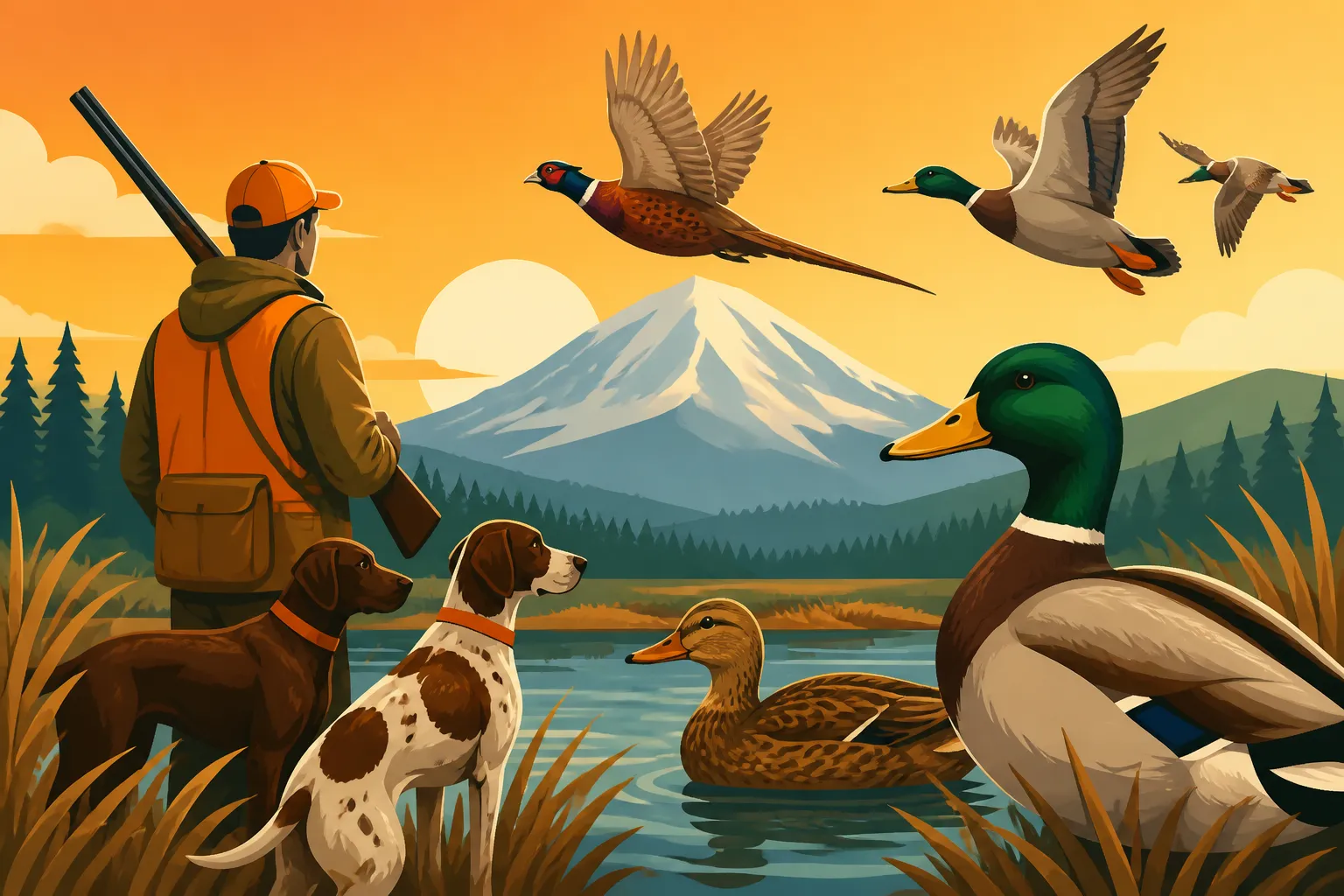
Washington is incredibly diverse, from the rugged coastlines and dense forests of the west side to the dry sagebrush and agricultural fields of the east. This geographical variety translates directly into an amazing array of bird hunting opportunities. You can be chasing pintails on the Columbia River one weekend and then hiking steep chukar hills the next. From the explosive flush of a pheasant in a cattail draw to the whistle of a mallard cupping into your decoy spread, the experiences are as varied as the landscapes themselves. It truly offers a continuous learning curve and an endless supply of unforgettable moments in the field.
Deciphering Washington's Waterfowl Seasons
Ducks and geese offer some of the most consistent hunting opportunities long after the big game tags have been filled. The seasons often run well into January, and sometimes even February for certain species or areas, giving you plenty of time to shake off the post-big game slump.
Duck and Goose Seasons: A Moving Target
Unlike the relatively static dates for most big game species, Washington's waterfowl seasons can feel a bit like a jigsaw puzzle with split seasons, early openers for certain species like Canada geese, and late closures. Typically, duck seasons across most of the state run from mid-October through the end of January. Goose seasons, especially for Canada geese, can open earlier in September and often extend into February or even early March in specific areas like the Southwest Washington and Eastern Washington Goose Management Areas. It’s crucial to consult the annual WDFW Migratory Waterfowl and Upland Game Seasons pamphlet, as zones and specific dates can change slightly each year. Familiarizing yourself with the nuances of these seasons, which often allow for more liberal bag limits for common species like mallards and wigeon, will help you maximize your time afield.
Hunting during these later periods often means facing colder temperatures and potentially snow, which can dramatically change bird behavior. Migratory patterns become more pronounced, and birds will be focused on finding open water and consistent food sources. This is where scouting becomes paramount – identifying new flight paths or areas where birds are feeding heavily, especially in agricultural fields, can make all the difference. Remember, getting your Washington Migratory Bird Permit is a mandatory step before heading out to pursue these incredible birds.
Essential Waterfowl Gear and Tactics
Waterfowl hunting is often gear-intensive, but for good reason. Success hinges on being able to blend into the environment and convincingly trick birds into range. A good spread of decoys, appropriate for the species you're targeting (mallards, pintails, wigeon, divers, or various goose species), is fundamental. You'll also need effective calls, and more importantly, the skill to use them to mimic the sounds of feeding and contented birds. Layout blinds or natural cover are essential for concealment, especially in open fields or on the edges of ponds. Your shotgun will need to be capable of handling non-toxic shot, as lead shot is prohibited for all waterfowl hunting, and a good understanding of choke and shot size selection for different ranges and species is vital.
Beyond the basic gear, understanding the environment is key. Hunting small potholes and ponds might involve a few dozen decoys and a simple blind, while chasing geese in vast agricultural fields could require hundreds of decoys, multiple layout blinds, and careful coordination with hunting partners. On larger rivers like the Columbia or Snake, or on coastal tidal flats, boat access and specialized blinds or floating platforms might be necessary. Paying attention to prevailing winds and setting your spread to allow birds to cup into the wind directly over your decoys will significantly increase your success. After all, the aim is to create as natural a looking and sounding scenario as possible to lure those wary birds within shooting distance.
Upland Bird Hunting: Beyond the Big Game Rush
While waterfowl hunting often demands specialized gear and specific habitats, upland bird hunting is often more about legwork, keen eyes, and, ideally, a good dog. These seasons also extend well past big game, providing ample opportunity to stretch your legs and experience a different kind of pursuit.
Chasing Pheasant and Quail in the Basins and Prairies
Eastern Washington, particularly the Columbia Basin and surrounding agricultural areas, is prime territory for pheasants and California quail. Pheasant season typically runs from late October into January, with many areas actively stocked by WDFW, especially early in the season, to boost opportunities. These birds thrive in the edges of farmlands, CRP (Conservation Reserve Program) fields, dense riparian zones along creeks, and cattail sloughs. They are known for their explosive flush and vibrant plumage, making them a thrilling target. Quail, on the other hand, are often found in larger coveys in similar habitats, particularly where there's good cover like brushy draws, plum thickets, and field edges. Their distinctive "chi-ca-go" call is a hallmark sound of the eastern Washington countryside.
Hunting pheasants and quail demands patience, persistence, and usually, a good pointing or flushing dog. A well-trained bird dog is an invaluable asset, not just for finding birds in dense cover, but also for retrieving downed birds that might otherwise be lost. Without a dog, expect to put in significantly more mileage and accept that many birds will simply outsmart you in the thick stuff. Your gear requirements are simpler: a good 12 or 20-gauge shotgun, comfortable, durable boots for long walks, and appropriate upland vests or jackets for carrying shells, water, and birds. Pay close attention to public access areas like Washington Wildlife Area Rules or enrolled private lands through programs like Washington Feel Free to Hunt Properties to find prime bird habitat.
Grouse Hunting: The Forest's Hidden Gems
For those who prefer the quiet solitude of the forest, Washington offers three species of grouse: the Ruffed, Dusky (often called Blue), and Spruce grouse. Grouse seasons typically open in September and often run through December or even into mid-January in some areas, providing excellent opportunities that overlap and extend beyond the peak big game seasons. Ruffed grouse are commonly found in younger forests, alder thickets, and riparian zones, particularly in Western Washington. They are notoriously difficult to spot until they burst into flight with a thundering wingbeat, making them a challenging target. Dusky grouse, the largest of the three, prefer higher elevations and open pine forests, often encountered along old logging roads or clearcut edges, especially in Eastern Washington. Spruce grouse are a bit more docile, found in dense conifer forests at higher elevations, primarily in the northern parts of the state.
Hunting grouse often involves still-hunting slowly through likely habitat or walking old logging roads and trails. Dogs can be used for grouse, but many hunters find success simply by being observant and quick on the draw when a bird flushes. The key is to move deliberately, pausing often to scan for movement or the tell-tale shape of a grouse against a log or branch. A lightweight 20-gauge or even a .410 shotgun is often favored for grouse, given the close ranges and dense cover. The experience is less about volume and more about the sudden surprise and the quiet beauty of the forest. If you're looking for an alternative to big game that still involves peaceful walks in nature, grouse hunting is an excellent choice.
The High Desert Challenge: Chukar Hunting
Perhaps the most physically demanding, yet incredibly rewarding, upland bird hunting in Washington is chasing chukar partridge. These birds are found almost exclusively in the steep, rocky, sagebrush-covered canyons of Eastern Washington, particularly in the Columbia Basin and along its major rivers. Their season typically runs from late September well into January, offering a deep-winter challenge. Chukar are famous for their ability to run uphill at incredible speeds and for their distinct "chuk-chuk-chuk" call that echoes across the canyons. They live in brutal country that tests both hunter and dog to their limits.
Success with chukar isn't just about good shooting; it's about physical endurance, mental fortitude, and a top-notch bird dog. You'll be climbing thousands of vertical feet in a day, often on scree slopes where every step is a challenge. Good Boots for Washington's Eastside Rock and Westside Mud are absolutely non-negotiable, as is carrying plenty of water. Your dog needs to be in peak condition, as they'll be covering even more ground than you, navigating thorns, sharp rocks, and steep inclines. The tactic is typically to climb above the birds, then work your way down, pushing them to flush downhill, which offers better shooting angles. There's a certain camaraderie among chukar hunters, forged in the shared suffering and the incredible satisfaction of a covey rise high on a windswept ridge. It's a hunt that truly earns your birds.
Navigating Regulations, Licenses, and Access
Before you even think about stepping into the field for birds, you need to make sure your paperwork is in order. Washington has specific requirements for small game and migratory birds that differ from big game.
Washington Migratory Bird Permit and Small Game License
First and foremost, to hunt any small game in Washington, you'll need a current Washington Small Game Licence Cost. This is your baseline permit. However, if you plan on hunting migratory birds like ducks, geese, coots, or snipe, there are additional requirements. You'll need to purchase a Washington State Migratory Bird Permit, and critically, a Federal Migratory Bird Hunting and Conservation Stamp, commonly known as a Federal Duck Stamp. This federal stamp is mandatory for all waterfowl hunters 16 years of age or older and must be physically signed across its face. Don't forget to get your HIP (Harvest Information Program) validation, which is free but required to collect harvest data.
Beyond the licenses, understanding the regulations is paramount. The WDFW publishes a comprehensive "Migratory Waterfowl and Upland Game Seasons" pamphlet annually. This pamphlet is your bible for bag limits, possession limits, shooting hours (which are typically half an hour before sunrise to sunset), and specific rules for various species and management areas. For example, some goose management areas have special permit requirements or blind reservations. Always check for current regulations before each hunt, as rules can change. Many experienced hunters find that digital tools and apps like GoHunt can be incredibly useful for quickly checking regulations, identifying land ownership, and even scouting satellite imagery before heading out.
Public and Private Land Access for Birds
Just like big game, finding places to hunt birds involves understanding land ownership and access rules. Washington offers a wealth of public lands for bird hunting, including extensive tracts within National Forests (like the Okanogan-Wenatchee or Colville), DNR (Department of Natural Resources) lands, and BLM (Bureau of Land Management) holdings. Additionally, WDFW manages numerous wildlife areas across the state specifically for wildlife habitat and public recreation, many of which are fantastic for bird hunting. Familiarize yourself with the Washington Wildlife Area Rules for these properties, as they often have specific regulations regarding vehicle access, non-toxic shot zones, and other activities.
Private land access is also a significant component of bird hunting, especially for pheasants and waterfowl in agricultural areas. WDFW has programs like "Feel Free to Hunt" and "Register to Hunt" which allow public access to private lands under specific conditions. You can find these properties listed on the WDFW website. However, many successful bird hunters build relationships with private landowners and gain written permission. Always assume private land is closed unless explicitly stated otherwise or you have direct permission. Using mapping tools, such as the ones available through a GoHunt membership, can aid significantly in identifying property boundaries and public access points, helping you plan your hunts effectively and ethically. Always respect landowner property and wishes, and leave no trace behind.
Strategic Planning for Successful Winter Bird Hunts
Hunting after the big game seasons close isn't just a change in species; it's a shift in strategy. The landscape is different, the weather is colder, and the birds' behavior is dictated by survival in harsh conditions.
Scouting After Big Game: A Different Approach
You might be used to looking for rubs, tracks, and elk droppings, but bird scouting requires a completely different mindset. Instead of vast sweeps of the mountainside, you're now looking for specific features that concentrate birds: food sources, water, and thermal cover. For waterfowl, this means identifying agricultural fields where geese and ducks are feeding, noting flight patterns between roosting and feeding areas, and finding open water on rivers or ponds that haven't frozen over. For upland birds, you're looking for dense cover (thickets, cattails, brushy draws) near food sources like grain fields, berry bushes, or weed seeds. Tracks in the snow can reveal where pheasants are roosting or moving, and listening for covey calls can pinpoint quail or chukar locations.
E-scouting remains an incredibly powerful tool. Platforms like onX Hunt or even the WDFW Hunt Planner maps allow you to overlay satellite imagery with land ownership, helping you identify potential habitats and access points from the comfort of your home. You can often spot natural pinch points, water sources, and dense cover that would otherwise take hours to locate on foot. Combining this digital scouting with real-world drives and walks, especially on E-Scouting a Washington GMU From Home, can save you valuable time and put you in the right place when the season opens. Remember that bird populations can fluctuate rapidly due to weather or hunting pressure, so recent scouting is always more effective than relying on old information.
Weather, Conditions, and Species Behavior
Winter weather is the ultimate driver of late-season bird behavior. Snow and extreme cold can push waterfowl to seek out larger, unfrozen bodies of water, or concentrate them in specific feeding fields. A sudden cold snap might push new waves of migratory ducks and geese into Washington, presenting fresh opportunities. For upland birds, heavy snow can make access difficult but can also concentrate birds in thermal cover or in areas where food is still accessible. Chukar, for example, often move to lower, more protected elevations with lighter snow cover. Late-Season Hunting in Washington Snow can be incredibly productive, but also demands careful planning for safety and access.
Understanding the daily patterns of your target species is also crucial. Ducks and geese typically feed in the mornings and evenings, spending the middle of the day resting on open water. Upland birds often feed actively in the early morning and late afternoon, often dusting or loafing in thick cover during the warmer midday hours. Tailoring your hunting times to these behaviors will drastically improve your chances. Moreover, being prepared for the weather with appropriate Rain Gear for Westside Hunting and warm layers will keep you comfortable and focused, ensuring you can stay out longer and take advantage of every opportunity.
Washington's Top Post-Big Game Bird Species
To help you get started, here's a quick look at some of the most popular species to target and what makes them special.
| Species | Primary Habitat | Season Length | Key Gear & Tactics | Challenge Level |
|---|---|---|---|---|
| Ducks | Ponds, rivers, wetlands, agricultural fields | Oct – Jan (split) | Decoys, calls, blinds, non-toxic shot | Medium |
| Geese | Agricultural fields, major rivers, estuaries | Sept – Mar (zone-dep.) | Large decoy spreads, layout blinds, calls | Medium-High |
| Pheasant | Farm edges, CRP, cattails (Eastern WA) | Oct – Jan | Bird dog, 12/20ga shotgun, good boots | Medium |
| California Quail | Brushy draws, farm edges (Eastern WA) | Sept – Jan | Bird dog, light shotgun, stealth | Medium |
| Ruffed Grouse | Young forests, alder thickets (Western WA) | Sept – Jan | Stealth, keen eyes, quick snap shots | Medium |
| Dusky (Blue) Grouse | High elevation forests, logging roads (E/W WA) | Sept – Jan | Still-hunting, walking roads, 12/20ga shotgun | Medium |
| Chukar Partridge | Steep, rocky canyons, sagebrush (Eastern WA) | Sept – Jan | Extreme fitness, dog, aggressive hunting, water | High |
| Turkey (Fall) | Forests with oak/pine, agricultural edges | Sept – Dec (permit-dep.) | Calls, camouflage, pattern shotgun (separate tags) | Medium |
| Note: Turkey hunting requires a separate tag and is often managed with fall permit drawings or specific season dates. Always check the current WDFW regulations for specific details on Washington Turkey Seasons and Tags. |
The Rewards of Winter Bird Hunting
The pursuit of waterfowl and upland birds after big game seasons close isn't just about extending your time in the field; it's about embracing a different kind of hunting culture. It's often more social, involving friends and dogs, huddling in blinds, and sharing laughs. It teaches you to read different signs, adapt to rapidly changing weather, and appreciate the incredible diversity of Washington's wildlife. The meat you harvest is lean, delicious, and a perfect complement to the venison and elk that fill your freezer. So, don't let the end of big game season get you down. Grab your shotgun, bundle up, and answer the call of the wild. Washington's skies and fields are still buzzing with adventure, waiting for you.
Disclaimer
The information provided in this guide is for general informational purposes only and is not intended as legal advice. Hunting regulations in Washington State are subject to change annually. It is the responsibility of every hunter to consult the most current Washington Department of Fish and Wildlife (WDFW) hunting pamphlets, regulations, and any emergency rules before participating in any hunting activity. Always confirm season dates, bag limits, weapon restrictions, and land access rules with official WDFW sources.