Where Washington’s Biggest Bucks Come From
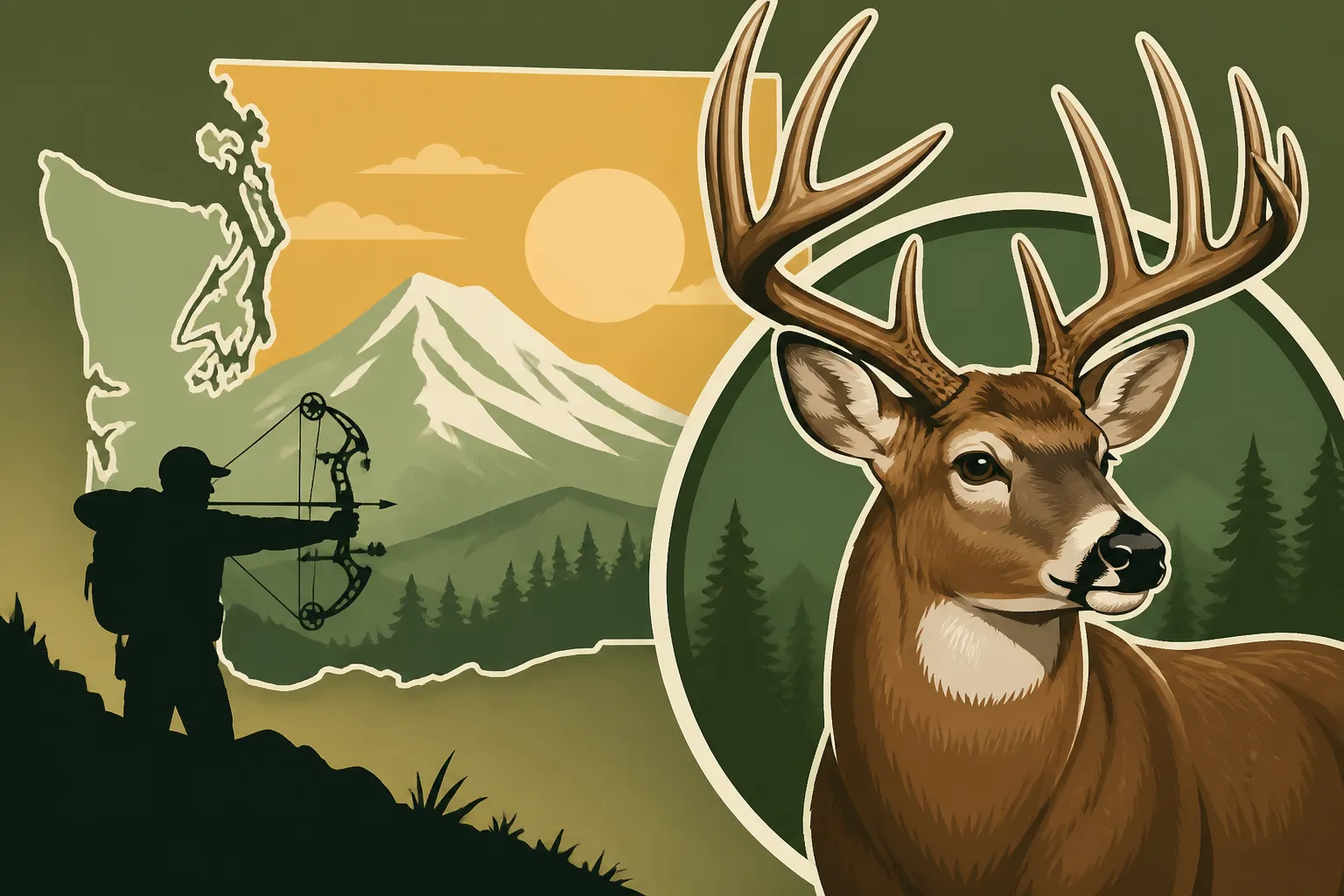
For many of us Washington hunters, the dream of bagging a truly impressive buck—one with a rack that tells a story of age and wild living—feels like an almost impossible feat. We hear whispers and see a few photos, but where do these giants actually come from in a state known for its challenging terrain and often dense cover? This guide will pull back the curtain, exploring the specific regions and critical factors that allow Washington's biggest bucks to grow to their full potential, helping you understand where to focus your efforts.
The Science of Size: Genetics, Nutrition, and Age
Before we dive into specific locations, it's crucial to understand the fundamental building blocks that contribute to a deer growing a truly big rack. It’s not just about stumbling into a lucky spot; it’s a complex interplay of inherited traits, what they eat, and simply how long they manage to avoid a hunter or a cougar.
Genetic Potential: Inherited Advantage
Just like people, deer have genetic predispositions. Some deer lineages are simply wired to grow larger antlers, given the right conditions. This isn't something you can easily see from satellite imagery or a hunting pamphlet, but it's a real factor. In some areas, the deer herd has, over generations, developed the genetic code for impressive bone growth. You might find two bucks of the same age in different areas, both with excellent nutrition, but one will consistently grow a larger rack due to superior genetics. This is why certain regions consistently produce bigger deer even without necessarily having the highest deer densities. It’s about the quality of the genes flowing through that specific population. While WDFW doesn't track specific genetic lines for antler growth, observing harvest trends over decades in certain General Management Units (GMUs) can give us clues about which areas tend to produce above-average bucks.
Nutrition: The Fuel for Antlers
Antler growth is an incredibly energy-intensive process. A buck needs a consistent supply of high-quality forage throughout the year, but especially during the antler-growing season from spring through summer. Think of antlers as a direct reflection of a buck’s overall health and the richness of its diet. Areas with diverse forage, including nutrient-rich forbs, succulent browse, and access to agricultural crops, will naturally foster larger antler growth. A mild winter followed by a wet spring can be a boon for antler development, as it means more lush, protein-packed vegetation is available when bucks are channeling massive amounts of energy into growing their headgear. Conversely, a harsh winter or a dry summer can quickly stunt antler growth, even in a genetically superior buck. This is why you often hear of certain years being "big antler years"—it's usually tied directly to favorable weather patterns and abundant food sources.
Age: The Ultimate Factor
This is perhaps the single most critical, yet often overlooked, component in growing a true trophy buck. A deer, whether a blacktail, mule deer, or whitetail, doesn't reach its peak antler potential until it's mature—typically between 4.5 and 6.5 years old. Younger bucks might have nice racks, but they haven't had enough seasons to truly maximize their bone growth. For a buck to reach this venerable age, it needs to be savvy, lucky, and often inhabit an area with enough cover or low hunter pressure to avoid being harvested. This is why heavily hunted, easily accessible public lands might have lots of deer, but fewer truly old, big-racked individuals. The areas that consistently produce big bucks are often those where deer can simply live long enough, sometimes due to the sheer ruggedness of the terrain, private land sanctuaries, or units with specific antler restrictions that protect younger bucks.
Eastern Washington's Trophy Hotspots: Mule Deer and Whitetails
When we talk about big bucks in Washington, the Eastside of the Cascades often comes to mind first, and for good reason. It boasts both impressive mule deer and some surprising whitetail opportunities.
Northeast Washington's Whitetail Gold
If your dream is a massive whitetail, look no further than Northeast Washington, specifically the counties of Stevens, Pend Oreille, and parts of Spokane. This region offers a unique blend of dense timber, rolling hills, and rich agricultural interfaces. The habitat provides excellent cover for deer to hide and grow old, while nearby farms offer a consistent, high-energy food source. Bucks here can live relatively undisturbed, reaching those crucial older age classes. The thick cover makes hunting challenging, often favoring still-hunting or stand hunting tactics over long-range glassing. The whitetail population here is robust, and given the right combination of genetics and diet, these bucks can grow heavy, wide racks. If you're looking for where Washington's biggest whitetails come from, this corner of the state is consistently at the top of the list. Understanding Whitetail Range in Northeast Washington is key to focusing your efforts.
Columbia Basin and Okanogan Mule Deer Giants
The vast, arid, and often rugged landscapes of the Columbia Basin and the Okanogan region are renowned for producing some truly exceptional mule deer. Areas like the Beezley, Desert, and Okanogan units are vast and challenging. While deer densities might not be as high as in other regions, the bucks that survive and thrive here are often giants. These areas provide unique forage, including sagebrush and bitterbrush, mixed with irrigated alfalfa fields and wheat stubble in agricultural areas. The sheer scale of the landscape and its broken, canyon-riddled topography allow mature bucks to find incredible escape cover and avoid hunter pressure. Hunters willing to put in the miles, often relying heavily on good optics and extensive glassing, can be rewarded with truly magnificent, wide-racked mule deer. The GoHunt platform can be particularly useful here for scouting these expansive areas, identifying potential water sources, and understanding terrain features. For more on these incredible animals, check out Mule Deer of Eastern Washington and specifically Okanogan Unit Mule Deer Country.
The Blue Mountains: A Unique Mule Deer Niche
Southeast Washington's Blue Mountains offer a different flavor of mule deer hunting, but one that can also produce impressive bucks. GMUs like the Blue Creek, Mayview, and Peola are characterized by steep, timbered slopes interspersed with open meadows and basalt breaks. The mule deer here are often larger-bodied than their more arid cousins to the north, benefiting from the richer mountain forage and ample timber for cover. These units can be incredibly challenging to hunt, requiring excellent physical conditioning and a willingness to get off the beaten path. Antler restrictions in some units (like the well-known three-point minimum) can help younger bucks survive to reach older age classes, increasing the chances of encountering a truly mature animal. It's a combination of rugged terrain, specific habitat, and sometimes management strategies that contribute to these unique opportunities.
Western Washington's Elusive Blacktail Bruisers
Western Washington often gets a bad rap for antler size, but don't be fooled. While blacktails might not typically grow antlers as large as mule deer or whitetails, this region consistently produces mature, impressive blacktail bucks for those willing to put in the work. The challenge lies in finding them.
The Coastal Rainforest Advantage
The dense, wet, and seemingly impenetrable rainforests of the Olympic Peninsula and Southwest Washington are prime habitat for mature Roosevelt elk, but they also hide some formidable blacktail bucks. The sheer difficulty of hunting these areas means that many bucks simply live longer, reaching older age classes where their antlers really start to shine. Areas within the Olympic National Forest or the Willapa Hills region, where cover is king, offer this advantage. While the antlers might not have the massive mass or width of an Eastside mule deer, a truly old blacktail buck will sport heavy, dark antlers, often with unique character from years of rubbing. This is a place where still-hunting is paramount, and patience is rewarded. The deer density might seem lower because they are so well-hidden within the Blacktail Deer Density in Washington Timber.
Timber Company Lands: Hidden Potential
A significant portion of Western Washington's prime blacktail habitat lies within private industrial timberlands. Companies like Weyerhaeuser and Hancock manage vast acreages, and while access often requires purchasing permits or adhering to specific walk-in only rules, these lands can be incredibly productive for big blacktails. The constant cycle of logging creates a mosaic of clearcuts, young replanted forests (reprod), and mature timber. These areas provide an abundance of varied forage in the clearcuts and young growth, combined with excellent cover in the thicker reprod and older stands. Bucks can find everything they need to grow and hide, often reaching maturity without constant hunter pressure due to access restrictions. Successfully hunting these areas involves understanding Timber Company Permits in Western Washington and knowing how to navigate Walk-In Only Gates on Industrial Timber. It’s about leveraging the challenges of access to your advantage, as fewer hunters often mean older bucks.
Age and Solitude: The Blacktail Secret
The secret to big blacktails, perhaps more than any other species in Washington, is age. Due to their genetic predisposition and the nature of their dense, brushy habitat, blacktails need several years to develop truly impressive antlers. A 4.5 or 5.5-year-old blacktail in Western Washington might look like a 2.5 or 3.5-year-old mule deer to an untrained eye. The advantage of Western Washington is the habitat itself. The incredibly thick salal, devil's club, and dense conifer forests provide unparalleled security. Bucks can vanish into a few acres of dense cover and effectively be invisible. This natural sanctuary allows them to grow old, and with age comes bigger antlers. Hunters who commit to learning the specific patterns of blacktails in their dense environment and are willing to put in the effort to penetrate these thickets will find opportunities for mature animals.
Strategic Hunting: Leveraging Knowledge for Success
It's one thing to know where big bucks can come from, and another entirely to actually find one. Success hinges on thorough preparation and smart hunting strategies.
Intelligence Gathering and E-Scouting
In today's hunting world, your best friend before you even set foot in the woods is often your computer or smartphone. E-scouting, using tools like satellite imagery, topographic maps, and land ownership overlays, is absolutely vital. Platforms like GoHunt provide invaluable data, allowing you to identify potential bedding areas, feeding zones, water sources, and travel corridors from the comfort of your home. You can mark access points, understand road closures, and even analyze historical fire data or timber cuts that might create new forage. This pre-season homework allows you to narrow down vast areas into manageable sections, focusing your boots-on-the-ground scouting efforts on high-probability zones. It’s about understanding the specific characteristics of your chosen GMU, whether it’s the vast breaks of Eastern Washington or the dense timber of the Westside. Learning E-Scouting a Washington GMU From Home is a game-changer.
The Value of Patience and Persistence
Hunting big bucks, especially in Washington, is rarely a quick affair. It requires a level of patience and persistence that can be mentally and physically demanding. These mature animals are not only inherently wary but have survived multiple hunting seasons precisely because they are good at avoiding detection. This means spending significant time in the field, observing, learning their patterns, and sometimes just enduring the weather. Whether it's sitting quietly for hours overlooking a key feeding area in the Northeast, or grinding out miles glassing vast landscapes in the Okanogan, or slowly still-hunting through a thick clearcut in the Willapa Hills, consistent effort is the common denominator. Don't expect instant gratification; often, it’s the third or fourth trip into a spot that finally reveals a mature buck. Consider how Public Land Scouting in Washington Before Opening Day helps build that crucial knowledge base.
Understanding Harvest Data and Regulations
The Washington Department of Fish and Wildlife (WDFW) publishes harvest reports annually, and while they don't explicitly list "trophy bucks," you can glean valuable insights. Units with higher average antler points or older age structures often stand out. Additionally, understanding specific GMU regulations, especially antler restrictions like Washington's Three-Point Rule and What Counts, can point you towards areas where management is focused on allowing bucks to reach older age classes. For those seeking truly exceptional opportunities, the special hunt permits are your best bet. While the draw odds can be challenging, these permits are allocated to units specifically managed for quality hunting experiences, often leading to encounters with older, larger bucks. Resources like GoHunt can help you navigate draw odds and analyze past success rates for these coveted tags. Applying for Washington Special Hunt Permits and How to Apply is a long shot, but it's where some of the biggest opportunities lie.
| Region | Primary Species | Key Factors | Typical Hunting Style Needed | General Terrain |
|---|---|---|---|---|
| Northeast Washington | Whitetail Deer | Agriculture, dense cover, low pressure areas | Still-hunting, stand hunting, careful tracking | Timbered hills, agricultural interfaces, private parcels |
| Columbia Basin/Okanogan | Mule Deer | Vastness, diverse forage, escape cover, arid conditions | Extensive glassing, spot & stalk, long-range shooting | Arid breaks, sagebrush flats, wheat fields, canyons |
| Blue Mountains | Mule Deer | Timber/open mix, specific unit management | Spot & stalk, still-hunting, glassing | Mountainous, mixed conifer forests, open slopes |
| Western Coastal/Timber | Blacktail Deer | Extreme cover, high rainfall, age, challenging access | Slow still-hunting, tracking in thickets, patience | Dense rainforest, clearcuts, steep timber |
Disclaimer
This article is for general informational purposes only and does not constitute professional advice. Laws, prices and regulations vary by location and change over time. Consult a qualified professional for guidance on your specific situation.