Rio Grande Turkeys in Washington
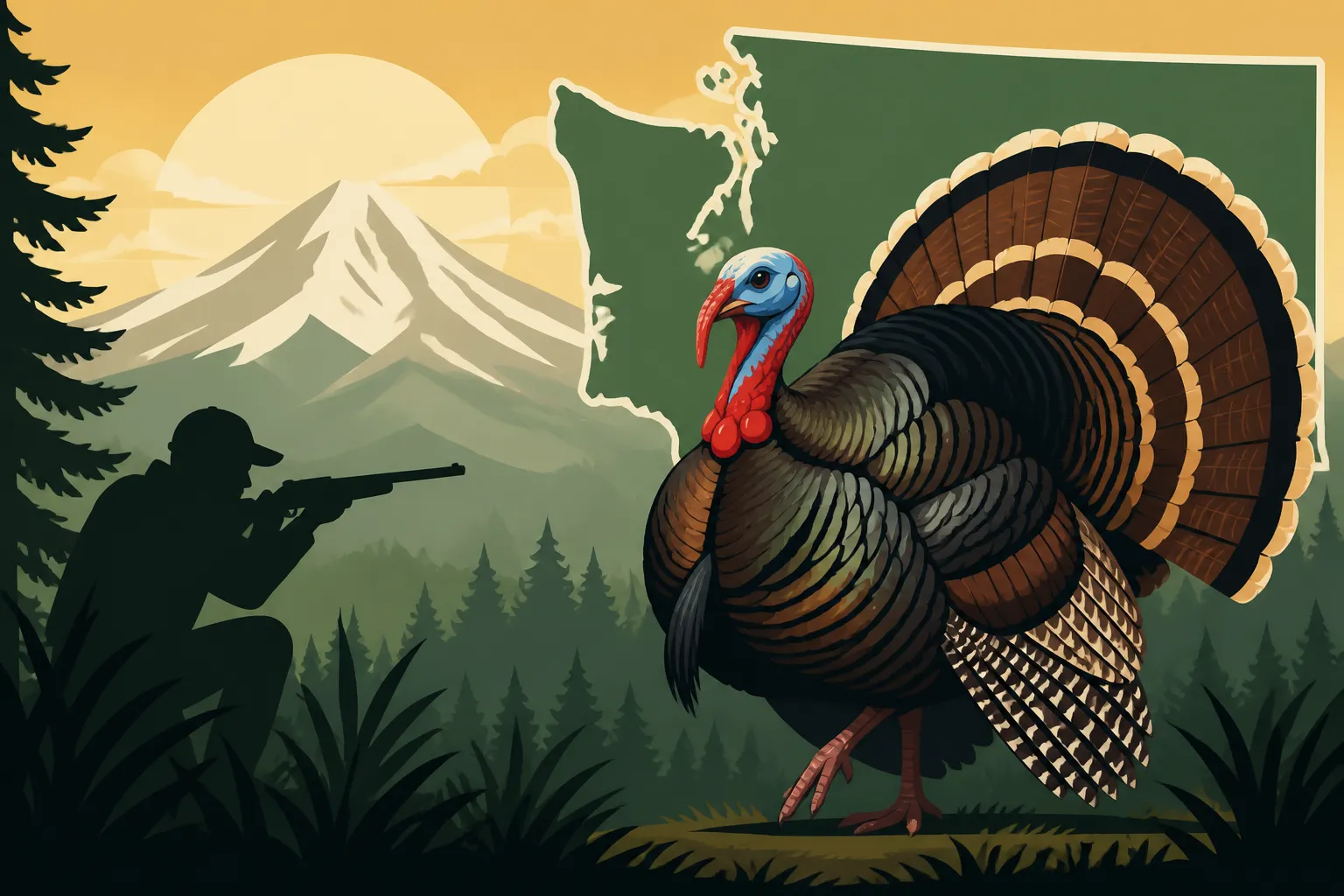
It's easy to assume that a turkey is just a turkey, especially when you're geared up for the spring woods here in Washington. But anyone who's spent a fair bit of time chasing gobblers knows that not all turkeys are created equal, and understanding the specific subspecies you're pursuing can make a huge difference in your success. This guide is all about one of Washington's less-discussed but equally exciting turkey subspecies: the Rio Grande. We’ll dive into where they came from, what makes them unique, and how to approach hunting them in our diverse Washington landscapes.
The Story of Rio Grande Turkeys in Washington
Many hunters, when thinking about turkeys in Washington, often default to the Merriam's subspecies, which are indeed widespread and a fantastic challenge. However, the state's turkey population has a more complex history, including the strategic introduction of Rio Grande turkeys in certain areas. These introductions weren't just random acts; they were carefully planned efforts by wildlife managers to establish viable turkey populations in habitats that best suited them, aiming for genetic diversity and robust numbers.
Early Introductions and Adaptation
The journey of Rio Grande turkeys to Washington is a testament to conservation efforts and the adaptability of these birds. Unlike their Merriam's cousins who thrive in mountainous, pine-forested regions, Rio Grandes typically prefer more open, riparian habitats, often intertwined with agricultural lands. This preference dictated where early stocking efforts focused. Washington, with its diverse landscape ranging from dense western forests to arid eastern plains, offered pockets of ideal habitat for several subspecies. The initial releases of Rio Grandes were typically into areas featuring a mosaic of brushy river bottoms, oak woodlands, and adjacent agricultural fields, particularly in the drier eastern and south-central parts of the state. These areas mirrored the native range of Rio Grandes in states like Texas and Oklahoma, giving them a fighting chance to establish themselves.
The success of these introductions wasn't immediate or universal. It took time, careful monitoring, and sometimes additional releases to ensure populations took hold. Hunters and landowners often played a crucial role, reporting sightings and habitat conditions, which helped wildlife agencies understand where the birds were thriving and where they struggled. It's a real boots-on-the-ground understanding that built the foundation for the populations we hunt today.
Current Distribution and Population Trends
Today, Rio Grande turkeys are primarily found in specific regions of eastern and south-central Washington, often overlapping with the fringes of Merriam's territory. Key areas include the lower elevations along major river systems like the Columbia and Snake, and their tributaries, where agricultural lands meet wooded draws and thick riparian zones. You'll also find them in some of the more open, rolling country that features scattered oak and pine stands mixed with sagebrush. Washington Turkey Population Growth is a topic often discussed among hunters, and the Rio Grande populations contribute to that growth, albeit in a more localized fashion than the Merriam's.
Monitoring these populations is an ongoing process. Wildlife agencies track harvest numbers, conduct surveys, and assess habitat health to ensure sustainable hunting opportunities. While not as numerous or widespread as Merriam's, the Rio Grande populations offer a unique hunting experience, challenging hunters to adapt their tactics to the specific behaviors and preferred habitats of these birds. Understanding these trends can help hunters pinpoint areas with higher densities and better success rates, often by observing local habitat conditions and asking questions from folks who live or hunt in those specific drainages.
Identifying Rio Grande Turkeys in the Field
When you're out hunting, especially in areas where multiple turkey subspecies might overlap, knowing how to tell a Rio Grande from a Merriam's can be incredibly useful. Not only does it deepen your appreciation for the animal, but it can also inform your scouting and calling strategies. They do have distinct characteristics, even if they're subtle to the untrained eye.
Key Physical Characteristics
The most prominent physical difference often lies in the tail fan and tail covert feathers. Rio Grandes typically have tail feathers that are tipped with a buff, light tan, or sometimes even a yellowish color. This contrasts with the Merriam's, whose tail feathers are usually tipped with white or cream. Another tell-tale sign can be found on the main body feathers. Rio Grandes tend to have a coppery or bronzy sheen with a more greenish iridescence, particularly on the back and body feathers, whereas Merriam's often exhibit a more iridescent, purplish-bronze sheen.
You might also notice subtle differences in leg coloration and overall size. While size can vary greatly depending on age, nutrition, and individual genetics, Rio Grandes tend to be a bit smaller on average than their Merriam's counterparts, with a slightly less robust build. Their legs are often a reddish-pink hue. These details might seem minor, but when you're trying to differentiate between two gobblers strutting in the distance, these small cues can give you the answer.
Here's a quick comparison table to help visualize the differences:
| Characteristic | Rio Grande Turkey | Merriam's Turkey |
|---|---|---|
| Tail Feather Tips | Buff, light tan, or yellowish | White or creamy |
| Body Sheen | Coppery/bronzy with greenish iridescence | Purplish-bronze iridescence |
| Leg Color | Typically reddish-pink | Often gray to grayish-pink |
| Overall Size | Generally medium-sized, slightly less robust | Often larger, more robust build |
| Primary Habitat | Open woodlands, riparian areas, agriculture | Mountainous, pine and fir forests |
| Gobble Volume | Can be louder and more drawn out | Often sharp and distinct |
Behavioral and Habitat Distinctions
Beyond physical appearance, Rio Grandes exhibit distinct behavioral patterns and habitat preferences that are crucial for hunters to understand. As mentioned, they are birds of the open country, often frequenting river bottoms, creek drainages, and areas adjacent to agricultural fields – think wheat fields, corn, or even hay meadows. They gravitate towards areas where dense cover for roosting and security (like large cottonwoods or oaks) is close to open feeding areas. This means you might find them strutting in a greening pasture in the morning, then retreating to a brushy draw along a creek during the heat of the day.
Their social structures can also be slightly different. While all turkeys are social, Rio Grandes are often observed in larger, more spread-out flocks outside of the breeding season. During the spring, they tend to be highly responsive to calls, often gobbling aggressively, especially in areas with less hunting pressure. However, they can also be notoriously wary, particularly in wide-open terrain where they can spot danger from a distance. Their tendency to roam larger areas can make them challenging to pin down. When Where Washington Turkeys Roost, you'll often find Rio Grandes utilizing the tallest trees along a river or drainage, using these natural highways to move between feeding and roosting sites.
Hunting Rio Grande Turkeys in Washington
Hunting Rio Grandes in Washington offers a unique set of challenges and rewards. Their preferred habitat and behavior necessitate a different approach compared to hunting Merriam's in dense timber. It requires a blend of keen observation, strategic calling, and a willingness to cover ground.
Preferred Habitats and Scouting
To consistently find Rio Grandes, you need to understand their habitat. They thrive in those transitional zones where open country meets dense riparian cover. Focus your scouting efforts along river and creek bottoms, particularly those bordered by agricultural fields or open rangeland. Look for large, mature cottonwood trees or oaks, which are prime roosting sites. You'll often find dusting bowls in dry creek beds or on sunny slopes, and tracks along muddy field edges or trails leading to water.
E-scouting tools can be incredibly valuable here. Platforms like GoHunt allow you to identify potential roosting areas by pinpointing large tree stands along waterways, and then connect those to nearby feeding grounds like alfalfa fields or pastures. You can also trace old two-track roads or game trails that might funnel birds between these key areas. E-Scouting a Washington GMU From Home is a skill that translates directly to turkey hunting, allowing you to narrow down vast landscapes to manageable hunting blocks. Pay attention to private land boundaries, as Rio Grandes often utilize both public and private ground that offers the right mix of food and cover.
Calling Strategies for Rio Grandes
Rio Grandes are often described as talkative birds, especially in the spring. They respond well to aggressive calling, but the key is to understand the rhythm and situation. Start with locator calls like owl hoots or crow calls at dawn to pinpoint roosted birds. Once you get a gobble, move in closer, but cautiously, always using terrain features for cover.
When you're ready to set up, start with some soft tree yelps and purrs. Once the bird is on the ground, switch to more assertive hen yelps and cutts. Rio Grandes can be quite social, and if you hear multiple gobblers, don't be afraid to try some fighting purrs or even a jake gobble to stir up their competitive nature. However, always be prepared for them to circle widely before committing, especially if they're coming across open ground. They are masters of using topography to stay out of sight until the last possible moment. A good strategy can be to mimic a lost hen, moving away slightly after a series of calls, which can sometimes pull a wary gobbler into view. Remember, consistency and confidence in your calling are often more important than perfection.
Decoy Use and Setup Tactics
Decoys can be a game-changer when hunting Rio Grandes, particularly in open country where visibility is high. A single hen decoy or a jake/hen combination can be very effective. The visual cue of another turkey can often seal the deal for a gobbler that's hung up out of range or hesitant to cross a fence line. Set your decoys up where they are highly visible from the direction you expect the turkey to approach, ideally within your effective shooting range. For shotgun hunters, this is typically 20-30 yards.
Consider the terrain when placing decoys. In open fields, setting them slightly downhill from your position can make the gobbler feel dominant as he approaches. If you're hunting along a river bottom with limited sight lines, place decoys in a small clearing or along a trail where they are easily spotted. Remember to set up with adequate back cover to break up your silhouette, and remain absolutely still once you've committed to a setup. A gobbler's eyesight is legendary, and any movement will often send him scurrying away. Knowing Washington Turkey Seasons and Tags will help you plan your hunt to coincide with peak gobbling activity, making decoys even more effective.
Ethical Considerations and Regulations
As with all hunting, ethical considerations and adherence to regulations are paramount. Always ensure you have the correct Washington Turkey Tag Cost and understand the specific season dates for your chosen GMU. It's crucial to identify your target clearly, ensuring it's a legal bird (typically a visible beard for spring gobblers) and that you have a safe, clear shot. Shot placement is critical for a clean, ethical harvest.
Be mindful of property boundaries, especially when hunting in areas that mix public and private lands. Always obtain Getting Written Permission on Private Land if you plan to access private property. Respect landowners and leave no trace. Additionally, be aware of any specific regulations regarding shot size, weapon types, or electronic calls in your hunting unit. Staying informed and practicing responsible hunting helps ensure healthy turkey populations and continued hunting opportunities for everyone in Washington.
Disclaimer
This article is for general informational purposes only and does not constitute professional advice. Laws, prices and regulations vary by location and change over time. Consult a qualified professional for guidance on your specific situation.