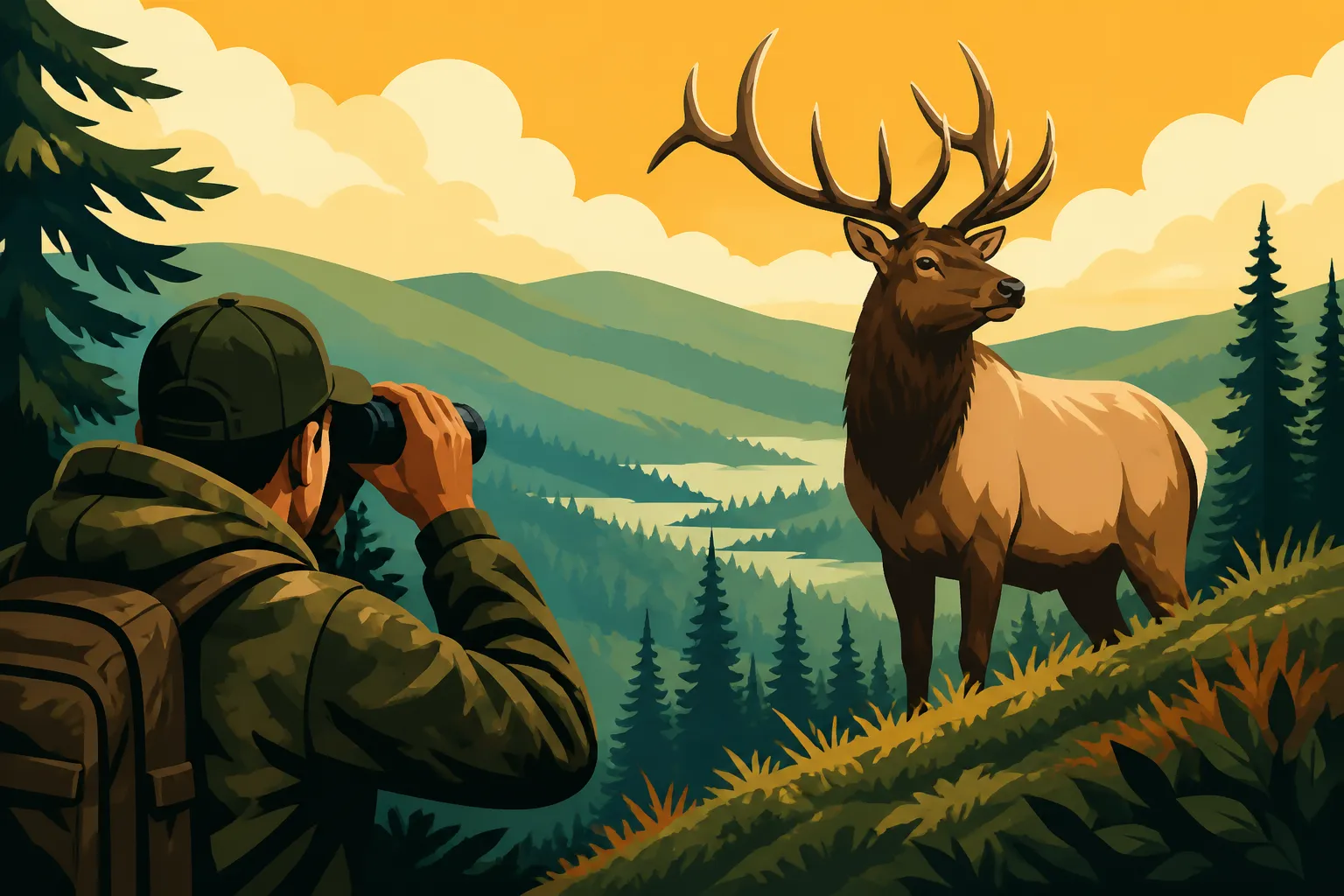
Willapa Hills Elk in Wahkiakum County
Hunting the Willapa Hills in Wahkiakum County presents a unique challenge, often leaving hunters feeling overwhelmed by the dense, unforgiving terrain and the constant question of where legal access truly lies. This guide aims to cut through that frustration, providing a comprehensive look at what it takes to successfully pursue elk in this iconic Western Washington landscape, from understanding the specific nature of the Roosevelt elk here to navigating the intricate patchwork of public and private land.
Understanding the Willapa Hills Elk Habitat
The Willapa Hills, nestled in the southwest corner of Washington, are a formidable hunting ground, defined by steep, often muddy hillsides, a relentless canopy of second-growth timber, and the persistent dampness of a coastal climate. This is the domain of the Roosevelt Elk of Western Washington, a magnificent subspecies adapted to thick cover and rugged terrain. Hunters often underestimate the sheer physical demand of pursuing these animals here.
The Landscape of GMU 506
Wahkiakum County largely falls within Game Management Unit (GMU) 506, which encompasses the heart of the Willapa Hills. This area is characterized by a mix of mature timber, expansive clearcuts in various stages of regrowth, and a labyrinth of old logging roads. The vegetation is incredibly thick, making visibility often limited to mere yards, which means your hunting style needs to adapt dramatically from what you might use in Eastern Washington's more open country. The persistent rainfall creates soft, muddy ground, which can be both a blessing for silent stalking and a curse for maintaining footing on steep slopes. Understanding the micro-terrain, such as small draws and benches within the dense reprod, is far more critical than spotting animals at great distances.
The Willapa Hills elk herd thrives in this environment, using the constant cover to their advantage. They are not typically found in large, open herds like their Rocky Mountain cousins. Instead, you'll often encounter smaller groups, sometimes just a cow and calf, or a solitary bull making his way through the brush. Their behavior is intrinsically tied to the dense timber, providing both food and security. Expect to work hard for every encounter, as the elk here are masters of concealment. Knowing their preferred bedding areas, which often align with thick, undisturbed pockets of timber near water sources, is key to developing a sound hunting plan. For an idea of herd numbers and trends, researching information on the Willapa Hills Elk Herd Size can give you a baseline, though actual field conditions will always be the best indicator.
Roosevelt Elk Behavior in Dense Timber
Roosevelt elk in the Willapa Hills are notorious for being less vocal than their Rocky Mountain counterparts, especially outside the peak of the rut. While you might hear bugles in September, they're often softer, more contained, and can be incredibly difficult to pinpoint through the dense foliage. Their primary defense mechanism is stealth and cover. They often move through the quietest, nastiest tangles of salal, devil's club, and young conifer stands, making an astonishing amount of noise sound like nothing at all to an untrained ear. This means still-hunting becomes less about visual spotting and more about listening for subtle sounds – a twig snap, a branch rustle, the quiet tearing of vegetation.
Their diet shifts with the seasons, but generally, they utilize the abundant forage provided by clearcuts and forest openings, retreating into the security of thick timber when disturbed or for bedding. They are also known to frequent areas with water, especially during drier spells, and will travel established game trails through the dense understory. Unfortunately, one challenge the Willapa Hills, like other areas of Western Washington, faces is the prevalence of Elk Hoof Disease in Western Washington. While this doesn't preclude hunting, it's something to be aware of; reporting any limping or affected animals to WDFW is important for wildlife management. Their movement patterns are highly influenced by hunting pressure, so areas accessible to vehicles will often hold more wary animals that quickly retreat into roadless or thick core areas.
Navigating Access and Terrain Challenges
The single biggest headache for many hunters in the Willapa Hills isn't necessarily finding elk sign, but figuring out where you can legally put boots on the ground. This region is a complex mosaic of public and private lands, with timber companies owning vast tracts that come with varying access rules. Ignorance of these boundaries can quickly turn a promising hunt into a frustrating, or even legally problematic, situation.
Public Land Access in Wahkiakum County
While most of Wahkiakum County is privately owned timberland, there are still crucial pockets of public land, primarily managed by the Washington Department of Natural Resources (DNR) and small portions of federal land. These public parcels are often interspersed with private holdings, creating an "checkerboard" effect that demands careful navigation. DNR lands typically require a Discover Pass for parking at designated access points, though general hunting access is usually permitted. However, even on DNR lands, some roads may be closed to motorized vehicles, requiring walk-in access. It's vital to research specific DNR access points and regulations for the area you intend to hunt. Washington DNR Land Open to Hunting can provide a broader overview, but localized maps are your best friend.
A critical tool for identifying public land boundaries is a reliable mapping application like onX Hunt. Before you even leave home, you can pore over satellite imagery and parcel data, identifying those precious green-shaded areas that signify public access. Remember, just because a piece of public land exists doesn't mean it's easily accessible; a lot of it can be landlocked or require traversing private property to reach. This is where pre-season scouting, both physically and virtually, becomes non-negotiable. Look for designated walk-in access points, parking areas, and any posted signage from DNR or other land managers. Don't assume anything.
Private Timber Lands and Paid Permits
The vast majority of the timbered landscape in the Willapa Hills is owned by large industrial timber companies, most notably Weyerhaeuser and Hancock Forest Management. These companies manage their lands for timber production, and public access is often restricted or requires a paid permit. Weyerhaeuser, for instance, operates a permit system that grants access to specific areas, often through a lottery or first-come, first-served basis. These permits can be costly and limited, making it essential to plan well in advance if you intend to rely on this access. Hunting Behind Timber Company Gates is a reality in this part of Washington, and understanding the specific company's rules is paramount.
Hancock Forest Management also has its own access programs, sometimes offering day-use or seasonal permits. The terms and availability can change year to year, so always check their official websites or contact their local offices directly. It's a tough pill for many hunters to swallow, having to pay for access to what feels like traditional hunting grounds, but it's the reality of the landscape. Without a permit, trespassing on these private timber lands is a serious offense, and it's heavily enforced. Even if you have a permit, be sure to understand the specific rules: are there designated parking areas? Are certain roads open or closed? Are ATVs allowed? The devil is truly in the details when dealing with private timber access.
Road Systems and Terrain Navigation
The Willapa Hills are crisscrossed by an extensive network of logging roads, some well-maintained, others overgrown and barely passable. Many of these roads are behind locked gates, whether on public or private land, enforcing walk-in only access. Washington's "Green Dot" road system is prevalent in some areas, indicating roads that are open to vehicles during specific hunting seasons or for specific purposes, but these are more common on the east side and in certain federal forest lands, not as much in the private timber mosaic of the Willapa. Always verify road status before you go, as changes can occur rapidly due to logging operations, weather, or fire danger.
The terrain itself is relentless. Expect steep climbs, slippery descents, and thick underbrush that will try to trip you at every step. A significant portion of your "hunting" will be spent simply trying to move quietly and efficiently through this challenging environment. Elevation changes, while not as dramatic as the high Cascades, are constant and can wear you down quickly, especially if you're packing a heavy rifle or a pack full of gear. When planning your route, look for subtle features like old skid trails, natural benches, or less dense timber stands that might offer slightly easier travel. Always factor in extra time for travel in these conditions, as a mile in the Willapa Hills can feel like three anywhere else.
Hunting Strategies for Willapa Hills Elk
Hunting Roosevelt elk in the Willapa Hills demands patience, persistence, and a willingness to get into the thickest cover imaginable. Unlike hunting in open country where you might glass for hours, here your senses of hearing and smell, along with careful observation of tracks and sign, become your most valuable assets.
Still-Hunting and Tracking in Dense Cover
Still-hunting is arguably the most effective method for Willapa Hills elk. This involves moving incredibly slowly, taking a few steps, then stopping for several minutes to observe, listen, and scan. The goal is not to cover ground quickly, but to move so subtly that you merge with the forest, ideally catching an elk unaware. Focus on areas of transition: the edges of clearcuts, the junctions of different timber types, or benches below ridgelines where elk might bed. The soft, damp ground often allows for quiet movement, but you still need to be mindful of snapping twigs or rustling dry leaves. Still-Hunting Blacktails in Wet Washington Brush offers excellent transferable advice, as the techniques are very similar for both species in this environment.
Tracking can also be highly productive, especially after a fresh rain when tracks are distinct. Look for fresh tracks, droppings, and rubbed trees. A large, well-defined elk track heading into a particularly thick stand of timber is often your best invitation to follow. However, be prepared for elk to travel through the absolute worst brush, so tracking can be a slow, arduous process. Patience is crucial; follow the freshest sign slowly, stopping frequently to listen for any subtle sounds of movement ahead. Wind direction is always important, but even more so in dense cover where thermals can swirl unpredictably in the draws and valleys. Trying to slip in on a bedding elk requires extreme caution and a keen awareness of your scent cone.
Calling and Decoying Tactics
While bugling is less effective here than for Rocky Mountain elk, it's not entirely useless, especially during the early to mid-September archery season. Archery Elk Hunting in Washington's September Season demands a nuanced approach to calling. Often, soft cow calls or mews can be more effective than aggressive bugles, as they mimic the more subdued communication style of Roosevelt elk. A herd bull might answer a bugle, but he's more likely to come in silently or circle downwind if he's feeling pressured. Your best bet is often a subtle cow call and waiting game, trying to get an elk to investigate from close quarters rather than challenging him from a distance.
Decoys can be a game-changer in some situations, particularly during the rut. A cow decoy, or even a rag horn bull decoy, can draw an inquisitive bull into bow range. However, the thick cover limits visibility, so careful placement is key. You'll need to set up in a spot where the decoy is visible to an approaching elk, but also where you have clear shooting lanes. Always hunt with a partner if using a decoy, with one person calling and the other positioned to shoot, as elk can come in quickly and from unexpected directions. Remember, in dense cover, calling often serves to confirm an elk's presence and direction rather than to pull them across vast distances. Once an elk responds, it's time to close the distance carefully and get ready for a shot.
Seasonal Considerations and Weapon Choice
The Willapa Hills offer general seasons for both archery and modern firearm, and understanding the nuances of each season is crucial. Archery season in September often coincides with the rut, presenting opportunities for calling. However, the thick cover means bowhunters need to be prepared for very close-range shots, often inside 30 yards. Modern firearm seasons typically run later in the fall. During these seasons, elk will be more dispersed and pressured, making spot-and-stalk or still-hunting even more critical. Rain and wind are constant companions through much of the fall, adding to the challenge but also aiding quiet movement. Choosing a weapon type depends on your preferred hunting style and tag availability; Choosing a Weapon Season for a Washington Elk Tag is an important decision.
For rifle hunters, a good Rifle Setup for Washington Elk and Deer suitable for dense cover is essential. This often means a lighter, shorter barrel that's easier to maneuver through brush, and a scope with a wide field of view and lower magnification for quick target acquisition at close ranges. Shot opportunities can be fleeting, so quick, ethical shooting is paramount. The Willapa Hills also fall under general harvest reporting requirements, so make sure you understand Washington Harvest Reporting Requirements for any animals you successfully take. Regardless of weapon, the physical demands of these hunts mean you need to be in excellent shape.
Preparing for Your Willapa Hills Hunt
A successful hunt in the Willapa Hills isn't just about finding elk; it's about being prepared for the punishing conditions, the arduous physical demands, and the logistical challenges of the area. Preparation is half the battle here.
Essential Gear for Westside Conditions
The number one gear consideration for the Willapa Hills is robust, reliable rain gear. This isn't just about staying dry; it's about staying warm and comfortable enough to remain effective in the field for long hours. Look for durable, waterproof, yet breathable outer layers that can withstand constant abuse from brush and rain. Rain Gear That Survives a Washington Westside Season is an article worth diving into, as cheap rain gear simply won't cut it. Layering is key, with moisture-wicking base layers and insulating mid-layers to manage fluctuating temperatures and high exertion levels. You'll sweat climbing those hills, then cool off quickly when you stop to glass or call.
Footwear is equally critical. You'll need waterproof, sturdy boots with excellent traction for steep, muddy slopes. Gaiters are highly recommended to keep mud, water, and debris out of your boots and off your pant legs. A comfortable, well-fitting pack capable of carrying not only your day-hunt essentials but also potentially an elk quarter is a must. The likelihood of packing an elk out over challenging terrain means you need a pack built for heavy loads. Packing an Elk Out of Washington's Backcountry is often done in sections, and a good frame pack can make multiple trips less grueling. Don't forget a headlamp, first-aid kit, water filter, and plenty of high-energy snacks.
Pre-Season Scouting and Planning
Pre-season scouting, both digital and physical, is paramount for a Willapa Hills hunt. Start your planning at home using digital mapping tools. onX Hunt is an invaluable resource for identifying land ownership boundaries, potential access points, and terrain features. You can mark promising clearcuts, timber fringes, and likely bedding areas before you ever step foot in the woods. Cross-reference this with satellite imagery from different times of the year to observe changes in vegetation or clearcut growth. Resources like GoHunt can also provide valuable insights into specific GMU success rates, draw odds, and general unit characteristics, helping you focus your efforts.
Once you've identified potential areas, a physical scouting trip is highly recommended. This allows you to check road conditions, identify actual access points, and get a feel for the terrain and cover density. Look for fresh elk sign: tracks, droppings, rubs, and wallows. Pay attention to how the elk are moving through the area and where they seem to be feeding and bedding. Knowing the lay of the land, even if it's just a small section, can give you a massive advantage when the season opens. Even if you hold Washington Multi-Season Deer and Elk Tags, scouting for each specific season and species is still advisable. Always leave a detailed trip plan with someone at home, including your intended route and expected return time.
Regulations, Safety, and Meat Care
Before heading afield, thoroughly review the current Washington hunting regulations. Pay close attention to GMU boundaries, season dates, weapon restrictions, and harvest limits for GMU 506. Ignorance of the law is no excuse, and regulations can change annually. Ensure your license and tags are in order. Safety is paramount, especially when hunting solo in rugged, remote country. Carry a reliable communication device, like a satellite messenger or a fully charged cell phone (though service is spotty), and know how to use it. Make sure your firearm is sighted in and you've practiced shooting from various positions, as quick, off-hand shots are common in dense timber.
Finally, consider your meat care plan. The Willapa Hills, particularly during early seasons, can be warm and humid. Getting an elk field dressed and cooled quickly is critical to preserve the meat. Knowing how to perform the gutless method can save you time and effort, especially if you're packing out solo. Carry quality game bags to protect the meat from dirt and flies. Having a plan for transporting the meat out of the woods and to a cooler or processor quickly will ensure your hard-won trophy doesn't go to waste.
| Aspect | Willapa Hills (GMU 506) Characteristics | Hunter's Approach & Gear |
|---|---|---|
| Terrain | Steep, wet, heavily timbered (second-growth fir, cedar), dense underbrush (salal, devil's club), numerous clearcuts in various stages of regrowth. | Physical Fitness: Excellent conditioning required for constant climbing and difficult footing. Footwear: Waterproof, high-traction boots, gaiters. Navigation: GPS/mapping app (e.g., onX Hunt) with offline maps. |
| Elk Behavior | Roosevelt elk, smaller herds, primarily cover-oriented, often less vocal, use stealth and thick timber for security. | Strategy: Still-hunting, tracking. Calling: Soft cow calls, mews. Limited aggressive bugling. Senses: High reliance on hearing and scent; less on long-distance glassing. |
| Access | Mix of public (DNR, small federal) and extensive private industrial timberlands (Weyerhaeuser, Hancock). Many roads gated. | Research: Thorough pre-season land ownership research (onX Hunt, WDFW maps, timber company websites). Permits: Factor in potential costs/availability of private timber permits. Scouting: Both virtual and physical scouting essential. |
| Weather | Coastal climate: frequent rain, fog, high humidity, moderate temperatures (can fluctuate). Muddy conditions are common. | Clothing: High-quality, durable, waterproof, breathable rain gear. Layering system (merino/synthetic base, insulation). Pack: Waterproof pack cover or dry bags inside. Weapon: Maintain dry bowstring/muzzleloader. |
| Visibility | Often very limited (10-50 yards) due to dense vegetation. | Weapon Choice: Shorter-barreled rifles, low-power scopes. Bows for close-range shots. Optics: Binoculars for quick scans, not long-range glassing. Shot Prep: Practice quick, close-range shots in realistic scenarios. |
Disclaimer
This article is for general informational purposes only and does not constitute professional advice. Laws, prices and regulations vary by location and change over time. Consult a qualified professional for guidance on your specific situation.