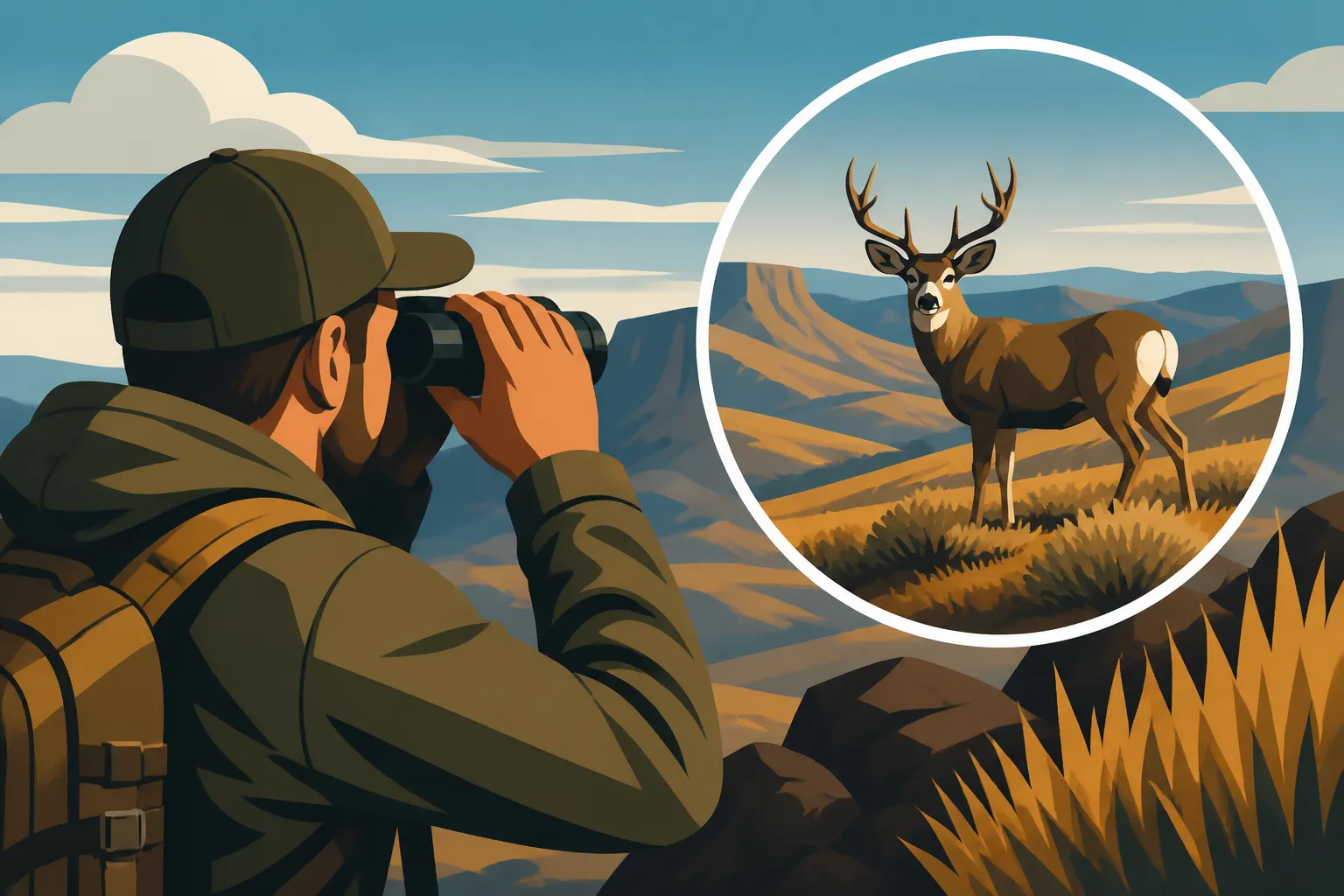
Glassing Eastern Washington Breaks for Mule Deer
The vast, rugged breaks of Eastern Washington can feel like an impossible puzzle when you're trying to locate a wary mule deer. That feeling of staring at a seemingly empty landscape, knowing deer are there but just not seeing them, is one of the most common frustrations for hunters in this challenging terrain. This comprehensive guide is designed to transform your approach to glassing, helping you break down those immense landscapes, identify subtle clues, and ultimately spot more mule deer in the sage, basalt, and sparse timber that defines this unique hunting ground.
Understanding Eastern Washington Mule Deer Habitat
Before you even lift your binoculars, a deep understanding of the environment and the animals that call it home is absolutely critical. Eastern Washington mule deer aren't like their whitetail cousins; they're creatures of expansive, often broken terrain, and their habits are dictated by the sun, wind, and available cover. Knowing their preferences and patterns will give you a significant advantage when you start to pick apart the landscape with your optics.
The Landscape of the Breaks
Eastern Washington's breaks are a mosaic of steep, rocky canyons, rolling sagebrush flats, basalt cliffs, and often scattered pockets of junipers, Ponderosa pines, or even small aspens. This is not dense timber hunting; it's wide-open country where a deer can disappear behind a single sagebrush or rock outcropping. The terrain itself is the cover. You'll find yourself looking down into drainages, across vast benches, and up at sun-baked slopes. The scale is immense, and it can be overwhelming without a systematic approach. Often, the most productive areas are those transition zones where sagebrush meets timber, or where a deep draw cuts into a flat, offering both feed and immediate escape cover.
The ground cover in these areas varies dramatically, from sparse grasses and rocky scree to dense patches of bitterbrush and serviceberry. Understanding what these deer eat throughout the season is key to pinpointing feeding areas. While some areas might be actively farmed, leading to Finding Mule Deer in Wheat Stubble Edges, many of the best mule deer spots are uncultivated and truly wild. The basalt formations create natural thermal pockets and windbreaks, offering shelter from harsh sun in summer or bitter winds in late fall. These features aren't just scenic; they are critical components of a mule deer's daily life, and you need to train your eye to see them as such.
Mule Deer Behavior and Movement Patterns
Mule deer are generally creatures of habit, but those habits are often dictated by security and food availability. In the breaks, they typically prefer to bed on elevated ground that offers good visibility, allowing them to spot potential threats from a distance. Think about a buck lying on a bench below a ridge line, with a clear view of the drainage below and an escape route over the top. They'll often bed on north-facing slopes to stay cool during the day in early season, or switch to south-facing slopes to soak up warmth in late season.
Their movement patterns revolve around feeding, bedding, and watering. At first light and last light, they'll typically be up and moving, browsing on forbs, shrubs, and grasses. During the midday, especially when the sun is high and temperatures rise, they'll seek the shade and security of a bed. Understanding this diurnal rhythm is paramount to successful glassing; you're not always looking for a moving deer, but often a bedded one. Their keen eyesight and hearing mean they’re masters of detecting danger before you even know they’re there, which is why glassing from a distance is so effective. You're observing without being observed, giving them the space they need to behave naturally.
Seasonal Considerations for Glassing
The time of year dramatically influences where and how you'll find mule deer in Eastern Washington. Early season (archery or early rifle) means warmer temperatures and more abundant forage. Deer might be higher up, spread out across more country, and spending more time bedded down in thick cover to escape the heat. They'll also be in their summer coats, which can blend incredibly well with the golden grasses and sage. Focus your efforts on north-facing slopes, shaded draws, and areas with good thermal cover.
As the season progresses into late fall and the rut approaches, patterns shift. Bucks become more active during daylight hours, pushing does and moving more aggressively. Food sources might become scarcer, concentrating deer in specific areas like riparian zones or browse-rich pockets. In colder weather, south-facing slopes become important for warmth. When snow begins to fall, deer will often migrate to lower elevations or areas with accessible forage. This is when understanding Mule Deer Winter Range and Survival becomes vital. The landscape changes, and your glassing strategy must adapt with it, always keeping in mind what the deer need for survival and reproduction at that specific time.
Essential Glassing Equipment for Eastern Washington
Glassing in Eastern Washington isn't just about having good eyes; it's about having the right tools and knowing how to use them effectively. The sheer scale of the country demands high-quality optics and accessories that can withstand the elements and provide the clarity needed to pick out a deer at extreme distances. Skimping on your glassing setup is like bringing a butter knife to a steak dinner – you're just making it harder on yourself.
Binoculars and Spotting Scopes: The Dynamic Duo
For Eastern Washington's open country, a good pair of binoculars is your primary tool. Most experienced hunters opt for 10×42 or 10×50 binoculars as their go-to, offering a good balance of magnification, field of view, and light-gathering capability for all-day use. These are excellent for initial scans, picking apart closer terrain features, and tracking moving animals. Brands like Vortex, Leupold, and Maven offer excellent quality at various price points. For even more power and to pick apart distant hillsides, many hunters move up to 12×50 or even 15×56 models, which really start to pull distant objects closer and reveal more detail. However, anything above a 10x will generally require a tripod for steady viewing, as even the slightest hand tremor will cause significant image shake. For a more detailed look into your options, check out our guide on Choosing Binoculars for Washington Glassing.
The spotting scope is where you take your glassing to the next level. This is the tool for identifying antler points, judging the size of a deer, and confirming whether that brown patch is truly an animal or just another rock. Magnification typically ranges from 20x to 60x, allowing you to scrutinize details kilometers away. A spotting scope is absolutely essential for verifying a buck that's on a distant ridge. Without one, you risk making a long, arduous stalk only to find it's a spike, or worse, just a shadow. While a 65mm objective is a good all-around choice, an 80mm or larger will gather more light, which is particularly beneficial in low-light conditions or when dealing with heat shimmer. Our article on Spotting Scopes and When You Need One dives deeper into selecting the right model for your needs.
Tripods and Accessories for Stability
You simply cannot effectively glass in the breaks without a sturdy tripod for your binoculars and spotting scope. Hand-holding anything above 8x magnification for extended periods will lead to eye strain, missed details, and ultimately, frustration. A tripod allows you to lock your optics in place, eliminating shake and letting you truly study the landscape. This stability makes a monumental difference in your ability to detect subtle movements or distinguish a piece of antler from a twig. When choosing a tripod, prioritize stability over extreme lightweight if you can manage the extra ounces. Carbon fiber models are generally lighter but can be more expensive than aluminum.
Beyond the tripod itself, you'll need a good fluid head or ball head that allows smooth, controlled panning and tilting. Quick-release plates are also incredibly useful for swiftly switching between binoculars and spotting scope. Don't forget a binocular adapter, which is essential for mounting your binos to the tripod. Additionally, a comfortable cushion or small chair can make those long hours behind the glass much more tolerable. Remember, glassing is often a waiting game, and being comfortable will help you stay focused and patient for longer periods.
Rangefinders and Other Digital Aids
While not strictly glassing equipment, a quality rangefinder is an indispensable companion. Once you've spotted a deer, knowing the precise distance is crucial for planning your stalk or making an accurate shot if it presents itself. In the steep, broken terrain of Eastern Washington, angle compensation is a must-have feature on your rangefinder, as shots will rarely be perfectly flat. Investing in a unit that can range out to 1,000 yards or more is highly recommended, as mule deer are often spotted at great distances. Our guide on Rangefinders for Steep Washington Terrain provides excellent insights into choosing the right model for this kind of hunting.
Modern technology has also given us powerful digital aids in the form of mapping apps. Tools like GoHunt (and others like onX Hunt) allow you to view topographical maps, satellite imagery, and public/private land boundaries right on your phone or tablet. This is incredibly valuable for e-scouting, marking potential bedding areas or travel corridors before you even leave home. It also helps you pinpoint your exact location in relation to the deer you're glassing and plan your approach. Don't forget to download offline maps, as cell service is often nonexistent in these remote areas. For more details on leveraging such tools, refer to GPS Units Versus Phone Apps and Downloading Offline Maps for Washington. These digital tools complement your optical glassing, giving you a holistic view of the hunting area and enhancing your ability to strategize effectively.
Strategic Glassing Techniques
Glassing isn't just about pointing your binoculars at a hillside; it's an art and a science that involves discipline, patience, and a methodical approach. The best glassers aren't just looking at the landscape; they're actively studying and dissecting it, searching for anything that looks "wrong" or out of place. This systematic approach is what truly separates successful glassing from merely scanning.
Segmenting the Landscape: Grid vs. Slice
When faced with a vast expanse of Eastern Washington breaks, the natural inclination is to quickly scan the entire area. This is a common mistake. Instead, you need to break the landscape down into manageable sections. Two popular methods are the "grid" and "slice" techniques. With the grid method, you mentally divide the hillside into a series of smaller squares or rectangles. Start in one corner, systematically glassing that section, then move to the adjacent section, working your way across the entire area in a grid pattern. This ensures every inch is covered thoroughly, and nothing is overlooked.
The slice method, sometimes called "the horizontal scan," involves starting at the bottom of a hillside and slowly moving your optics horizontally across the terrain, from left to right. Once you reach the end, you drop your optics slightly and scan back from right to left, moving upwards in a series of overlapping "slices." This is particularly effective for picking out animals moving horizontally or bedded along contour lines. Whichever method you choose, the key is discipline. Resist the urge to jump around. Commit to systematically covering an area, and only move on once you are confident you've thoroughly examined it.
Optimizing Light and Shadow Conditions
Light is arguably your best friend and worst enemy when glassing. The position of the sun can either highlight a deer perfectly or turn it into an indistinguishable silhouette. The golden hours — first light and last light — are often the most productive for spotting deer, not just because they are active, but because the low-angle light creates long shadows and distinct contrasts that can reveal animals. When glassing in the morning, try to position yourself with the sun at your back, illuminating the slopes in front of you. This reduces glare and helps reveal details that would otherwise be hidden in shadow. This is especially true for Glassing Breaks at First Light, when deer are most likely to be moving.
Conversely, in the afternoon, as the sun begins to drop, position yourself to look at slopes that are still receiving direct sunlight. Avoid glassing directly into the sun, as this creates intense glare and makes it nearly impossible to pick out anything. Midday glassing, especially on bright, sunny days, can be tough due to harsh light and heat shimmer. During these times, focus more on shaded areas, dense cover, and steep canyons where deer will seek refuge. Understanding how light plays on the terrain and adjusting your position accordingly is a skill that takes practice but yields significant results.
Patient Observation and Pattern Recognition
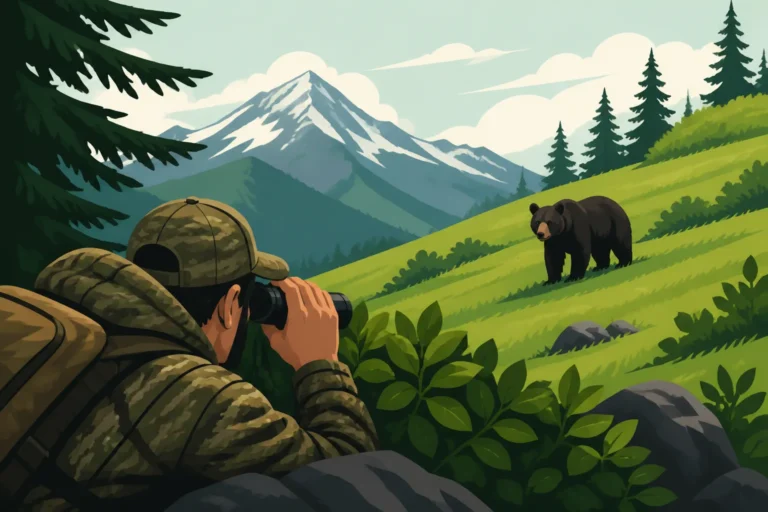
Glassing for mule deer in Eastern Washington demands immense patience. It's not about seeing a whole deer right away; it's often about detecting a subtle glint of antler, the flicker of an ear, a horizontal line in a vertical world, or a patch of color that simply doesn't belong. You're looking for anomalies. A buck might be bedded so perfectly that only a small portion of his back or an antler tip is visible above the sage. These are the details you'll miss if you're rushing.
Once you've identified a suspicious spot, stay on it. Don't just glance and move on. Stare at it. Wait for five, ten, even fifteen minutes. Often, what looks like a rock will eventually move an ear, blink an eye, or shift its position, confirming it's a deer. This is where the stable platform of a tripod becomes invaluable. Train your eyes to recognize the distinct shapes and colors of a mule deer. Pay attention to the subtle curve of an antler, the dark eye, the contrast of their white rump patch, or the distinctive dark "V" on their forehead. The more time you spend behind your glass, the more attuned your brain will become to these subtle patterns, making you a more effective and successful glasser.
Reading the Terrain: Where to Focus Your Optics
The vastness of Eastern Washington's breaks means you can't just glass randomly. You need a strategy for where to direct your attention. Mule deer aren't just anywhere; they are in specific locations for specific reasons, and learning to identify these key areas is a crucial step in narrowing down your search. This requires understanding their fundamental needs and how the terrain provides for them.
Identifying Prime Bedding Areas
Mule deer choose bedding areas for security and comfort. For security, they prefer spots that offer good visibility, allowing them to see danger approaching from below, with a quick escape route to higher ground or thick cover. Often, these are benches or shelves just below a ridge line, or on a slope that transitions into a deeper draw. They'll also seek areas that offer thermoregulation: cool, shaded spots on north-facing slopes in early season, or sunny, south-facing slopes in colder, late-season conditions. Look for thick patches of bitterbrush, clumps of junipers, or the shadows cast by large basalt formations.
When glassing for bedded deer, pay close attention to the contours of the land. Deer will often bed where the terrain offers natural concealment, blending seamlessly with their surroundings. The key is to look for shapes and colors that don't quite fit the natural environment. A horizontal back, a patch of grey-brown fur, or the distinctive curve of an antler tine against a backdrop of vertical sagebrush stems are all clues. Don't forget that deer will often bed downwind of their primary escape route, allowing them to scent anything approaching from behind while they watch their front. A skilled glasser can identify these "classic" bedding setups and systematically pick them apart.
Locating Feeding Zones and Water Sources
Mule deer are browsers, meaning they primarily eat leaves, twigs, and bark from shrubs and trees, though they will also graze on grasses and forbs. In the breaks, this means areas with good concentrations of bitterbrush, serviceberry, sagebrush, and other palatable vegetation are prime feeding zones. These are often found on the edges of draws, along riparian corridors, or in areas where past burns or disturbances have encouraged new growth. At dawn and dusk, these areas are where you'll most likely catch deer up and moving, actively foraging. Focus your glassing efforts on these transition zones and areas of lush forage.
Water sources, especially in the arid conditions of Eastern Washington, are magnets for deer. This can include small springs, seepages, stock ponds, or creek bottoms. During dry periods, deer will be more concentrated around these limited water points. Identify potential water sources on your maps (like with GoHunt's mapping features) and make a point to glass the surrounding areas thoroughly, particularly during warmer parts of the day when deer might be heading in for a drink. The trails leading to and from these water sources are also excellent indicators of deer presence and movement. Even if you don't spot a deer at the water itself, the dense network of game trails can indicate heavy usage, suggesting a bedding or feeding area nearby.
Understanding Escape Routes and Travel Corridors
Mule deer, above all else, are survivalists, and their daily movements are heavily influenced by the need for security. They consistently use the same routes for travel between bedding, feeding, and watering areas. These travel corridors are often the paths of least resistance, such as saddles between ridges, benches along a hillside, or the bottoms of drainages. Look for these natural "highways" in the landscape. These are often areas where deer can quickly disappear over a ridge or into a deep draw if threatened.
Escape routes are simply where deer will go when they sense danger. In the steep breaks, this often means quickly bounding up a steep slope to gain higher ground, or plunging into a brushy canyon to break visual contact. By identifying these potential escape routes, you can better anticipate a deer's movements if you spook it, or more importantly, position yourself to intercept a deer moving through a high-traffic area. Reading a Washington GMU Boundary might give you an idea of where deer movement could be concentrated due to specific habitat features or land use patterns. Observing how the terrain funnels animals or provides natural cover for their quick getaways will immensely improve your ability to predict where a mule deer might appear or disappear.
Overcoming Glassing Challenges in the Breaks
Eastern Washington presents unique challenges to glassing that can test even the most patient hunter. From distorted views caused by heat to obstructions from natural vegetation, these hurdles require specific strategies and equipment to overcome. It's not always a clear, crisp view, and you need to be prepared for less-than-ideal conditions.
Dealing with Heat Shimmer and Dust
One of the most frustrating aspects of glassing in Eastern Washington, especially during early seasons, is the omnipresent heat shimmer. As the sun beats down and warms the ground, rising air currents create a wavy, distorted image through your optics, making it incredibly difficult to discern details, especially at long distances. This "heat haze" can make a massive buck look like a blurry blob. There's no magic bullet to eliminate shimmer entirely, but you can minimize its effects. Try glassing earlier in the morning before the day heats up, or later in the evening as temperatures begin to drop.
Using higher-quality optics with better coatings can help, but physics is physics. Sometimes, you simply have to wait it out or focus on closer terrain. When shimmer is severe, try to concentrate your efforts on areas where there's some shade or moisture, as these spots tend to produce less thermal distortion. Dust can also be a significant issue, stirred up by vehicles on dirt roads or even by strong winds. Always keep your lens cloths and lens cleaning solution handy, and develop a habit of protecting your optics when not in use. Regular cleaning of your lenses, even when they don't look visibly dirty, can make a surprising difference in image clarity.
Battling Wind and Vegetation Obstructions
The wind in Eastern Washington can be relentless. It doesn't just make it feel colder; it can make glassing a real pain. Strong winds will cause your tripod to shake, making it nearly impossible to hold a steady image, especially with high-powered optics. Find natural windbreaks whenever possible – the lee side of a ridge, a large rock, or even the side of your truck (if legal and safe). If you're using a lighter tripod, you might need to add weight to its hook to improve stability. Sometimes, simply kneeling or sitting low to the ground can reduce your exposure to the wind's buffeting.
Vegetation, particularly dense sagebrush, can also be a significant obstruction. While mule deer often bed in the sage, the thick canopy can obscure them from view. This means you need to be extra meticulous in your glassing, picking apart every clump and shadow. Look for the "holes" in the vegetation, or areas where the sage is slightly sparser. Remember that deer are masters of using even minimal cover to hide. Don't be afraid to change your vantage point if a particular angle is too obstructed. Sometimes, moving just a few yards left or right can open up an entirely new view into a previously hidden pocket of cover. This often means Boots for Steep Eastside Country are essential for traversing such demanding landscapes.
The Mental Game: Staying Focused and Avoiding Burnout
Glassing for extended periods can be mentally taxing. Your eyes can get tired, your mind can wander, and boredom can set in, leading to missed opportunities. Staying focused is a skill that needs to be practiced. One technique is to set small, achievable goals, like "I'm going to thoroughly glass this one drainage for the next 20 minutes, no matter what." Taking short breaks to rest your eyes, stretch, or grab a snack can also help reset your focus. It's not a race; it's a marathon.
Avoid "buck fever" for every suspicious patch. It's easy to get excited and rush your inspection, only to realize it's just a rock. Develop a disciplined checklist: "Does it have the right color? Does it have the right shape? Is there a horizontal line? Is there movement?" Trust your system. It also helps to hunt with a partner and take turns glassing, allowing one person to rest while the other remains vigilant. Discuss what you're seeing, even if it's just a false alarm. The communal effort can help keep spirits high and maintain focus. Remember, the next time you lift your binoculars could be the moment you spot that big Eastern Washington mule deer you've been dreaming about.
Post-Glassing Strategy and Stalking Considerations
Spotting a mule deer with your optics is only half the battle; the real work often begins once you've located your target. The transition from glassing to stalking requires careful planning, strategic thinking, and flawless execution. A poorly planned stalk can quickly turn a potential opportunity into a frustrating bust, especially in the unforgiving, open terrain of Eastern Washington.
Confirming the Animal and Planning Your Approach
Once you've spotted a deer, the first thing is to confirm what it is. Is it a buck? How many points? Is it legal? This is where your spotting scope truly shines. Get a good, solid look at the animal, verify its sex and antler configuration, and assess its behavior. Is it bedded? Moving? Feeding? Pay attention to any other deer in the vicinity, as they can complicate your stalk. Mark the exact location of the deer on your GPS or mapping app (like the ones from GoHunt). Also, mark your current position. This is crucial for planning your route and preventing you from getting disoriented once you start moving.
Now, it's time to plan your approach. This is arguably the most critical step. Mentally (or physically, if using a map) trace a route that keeps you out of sight, downwind, and on stable ground. Identify natural features like ridges, draws, and dense clumps of sage that can provide concealment. Consider the wind direction – it's non-negotiable to stay downwind of the deer. Also, think about the sun's position; you don't want to silhouette yourself against the sky or cast a long shadow directly towards the deer. Visualize every step, anticipating potential obstacles or changes in terrain. This forethought, while time-consuming, drastically increases your chances of a successful stalk.
Using Terrain to Your Advantage During the Stalk
The broken terrain of Eastern Washington, while challenging to glass, can be your best friend during a stalk. Every ridge, every draw, every rock outcropping is an opportunity for concealment. Your goal is to move from one piece of cover to the next, always staying out of sight. This often means moving slowly, pausing frequently to re-evaluate your position and confirm the deer's location, and utilizing every undulation in the landscape. Don't be afraid to crawl, belly-crawl, or even take a circuitous route if it keeps you hidden.
When moving, focus on the ground directly in front of you. Avoid crunching on dry sagebrush stems or dislodging rocks. Silence is paramount. Use your ears to listen for the deer's movements, and your eyes to scan for any changes in its behavior. If the deer stands up, freezes, or looks in your direction, you need to freeze instantly and assess the situation. Often, a deer will stare for a few minutes and then return to its business if it doesn't detect further threat. Be patient, move slowly, and let the terrain mask your presence.
Wind, Scent, and Sound Management
These three elements are the holy grail of stalking mule deer in the breaks, and messing up any one of them can ruin your hunt. The wind is the most critical. Mule deer have an incredible sense of smell, and even a slight shift in wind direction can carry your scent directly to them, sending them bounding away. Always confirm the wind direction before and during your stalk. Carry a wind checker (a small bottle of powder or milkweed seeds) and use it constantly. If the wind shifts unfavorably, you may need to abort the stalk and try again later, or quickly adjust your route.
Scent control goes hand-in-hand with wind management. While not as critical as in dense timber, anything you can do to minimize your human odor is beneficial. Wear clean hunting clothes, avoid strong scents like cologne or deodorant, and consider using scent-eliminating sprays. As for sound, this means moving slowly and deliberately. Every step should be intentional. Avoid snapping twigs, shuffling through dry leaves, or scraping against rocks. Your goal is to be a ghost, blending seamlessly with the environment and leaving no trace of your presence for the deer to detect. If you combine these three principles – impeccable wind management, minimal scent, and absolute silence – your chances of getting into shooting range dramatically increase.
Advanced Tips for Consistent Success
Becoming a consistently successful mule deer hunter in Eastern Washington isn't just about good gear or basic techniques; it's about developing a holistic strategy that combines preparation, technology, and continuous learning. These advanced tips will help you refine your approach and elevate your game, turning those frustrating empty glassing sessions into rewarding encounters.
Pre-Season Scouting and E-Scouting Integration
The hunt for a mule deer in the breaks starts long before opening day. Pre-season physical scouting, especially in the weeks leading up to the season, is invaluable. This allows you to identify active game trails, locate water sources, find fresh sign, and pinpoint potential bedding and feeding areas without the pressure of an active hunt. You'll learn the terrain, understand access points, and get a feel for the deer's current patterns. This real-world knowledge is irreplaceable.
However, physical scouting can be time-consuming, especially for vast areas. This is where e-scouting becomes a game-changer. Using online mapping tools and satellite imagery (like from GoHunt or other platforms) from the comfort of your home, you can meticulously study the topography, identify remote basins, locate potential migration corridors, and even mark out glassing knobs before you ever set foot in the field. This allows you to prioritize areas for physical scouting, saving you valuable time and effort. Our comprehensive guide on E-Scouting Washington GMUs Before the Draw offers detailed strategies for leveraging these digital tools effectively, helping you arrive in the field with a well-researched plan.
Utilizing Technology and Mapping Tools
Beyond e-scouting, technology continues to play a vital role in the field. Modern GPS devices and smartphone apps are powerful navigational tools that can keep you oriented in complex terrain and help you execute your hunting plan flawlessly. Use them to mark prominent features, such as glassing points, water sources, and especially the precise location of any deer you spot. This is critical for planning a stalk and ensuring you don't lose track of the animal. Always have a backup, whether it's a paper map and compass or a secondary GPS device.
Offline maps are absolutely essential since cell service is often non-existent in remote areas of Eastern Washington. Most hunting apps allow you to download map layers for your chosen Game Management Unit (GMU) before you leave home. This ensures you always have access to crucial topographical information, public/private land boundaries, and your marked waypoints, even without a signal. Understanding Downloading Offline Maps for Washington is a must for any hunter venturing into the backcountry. These tools not only enhance your efficiency but also contribute significantly to your safety in unfamiliar territory.
Learning from Every Outing
Every single hunting trip, successful or not, is an opportunity to learn and refine your skills. After each outing, take some time to reflect. What worked well? What didn't? Why did the deer you spotted choose that particular bedding area? Did you misjudge the wind? Did your stalk fail because of a noisy step or an exposed position? Keep a hunting journal, noting the weather conditions, terrain features, deer behavior, and your glassing strategies. Over time, this personal data will reveal patterns and insights specific to the areas you hunt and your personal style.
Don't be afraid to experiment. Try new glassing locations, adjust your approach to different weather patterns, or test new gear. The mule deer in Eastern Washington are tough, intelligent animals, and consistent success comes from adapting and continuously improving your craft. Even if you don't fill a tag, a day spent in the breaks, observing wildlife and honing your glassing skills, is never a wasted day. The more you learn about the terrain, the deer, and yourself, the more you'll transform from a hopeful scanner into a master glasser, capable of picking apart even the most challenging Eastern Washington landscapes.
Disclaimer
Hunting is an inherently dangerous activity. Always prioritize safety, understand and follow all Washington hunting regulations, and respect private property. The information provided in this guide is for informational purposes only and should not replace proper training, local knowledge, or professional guidance. Always hunt ethically and responsibly.