Glassing From a Tripod All Day
For many of us who hunt Washington's incredibly diverse and often challenging landscapes, the idea of sitting still for hours, peering through optics, might seem counter-intuitive to the active pursuit of big game. Yet, the frustration of covering miles on foot only to jump animals we never saw, or missing that subtle flick of an ear across a canyon, is a common experience. This guide is all about embracing the power of patience and precision, showing you how glassing from a tripod all day can transform your hunting strategy, revealing elusive game in ways you never thought possible.
The Washington Hunter's Edge: Why All-Day Tripod Glassing Works
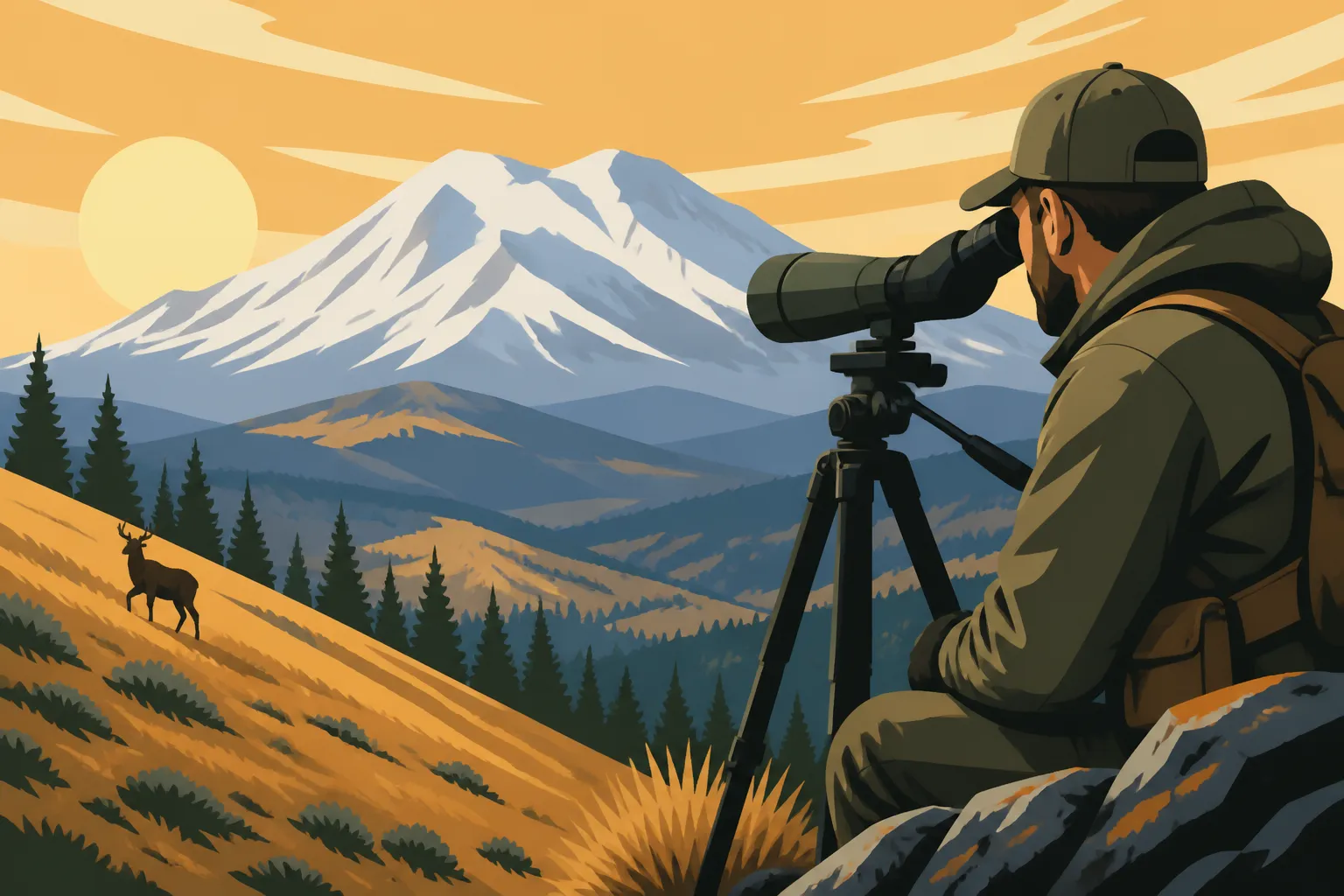
Hunting in Washington isn't like hunting the wide-open plains of the Midwest. Here, whether you're chasing Rocky Mountain Elk East of the Washington Cascades or Columbian Blacktail Deer in Western Washington, you're often contending with dense timber, steep slopes, clearcuts, and broken country. It’s easy to get caught up in the "walk and stalk" mentality, but sometimes, the best strategy is to find a vantage point and let your optics do the walking. All-day tripod glassing isn't just about being lazy; it's about being incredibly efficient and effective.
Overcoming Washington's Challenging Landscapes
Imagine the vastness of the Okanogan, or the endless folds of the Blue Mountains. Covering every inch on foot is simply impossible. By getting above the landscape and using a quality tripod setup, you can systematically break down vast areas that would take days to walk. Instead of blindly pushing through brush, you're pinpointing key features like saddle crossings, feeding benches, and bedding areas from a distance. This is especially critical in areas where game sign might be sparse or where animals are highly pressured and prone to moving quickly if disturbed. You're effectively expanding your reach without expending all your energy.
Think about glassing those sprawling Eastern Washington breaks for mule deer. If you're constantly moving, you're only seeing a fraction of what's out there. But from a high point, you can pick apart every coulee, every rock slide, and every timber patch. Similarly, for Blacktail Deer Hunting in Western Washington Timber, while the timber is thick, there are still logging roads, power lines, and clearcuts that benefit immensely from a patient glassing approach. You'd be surprised what you can find tucked away in a shadowed corner of a clearcut that you'd walk right past otherwise.
The Power of Observation for Elusive Game
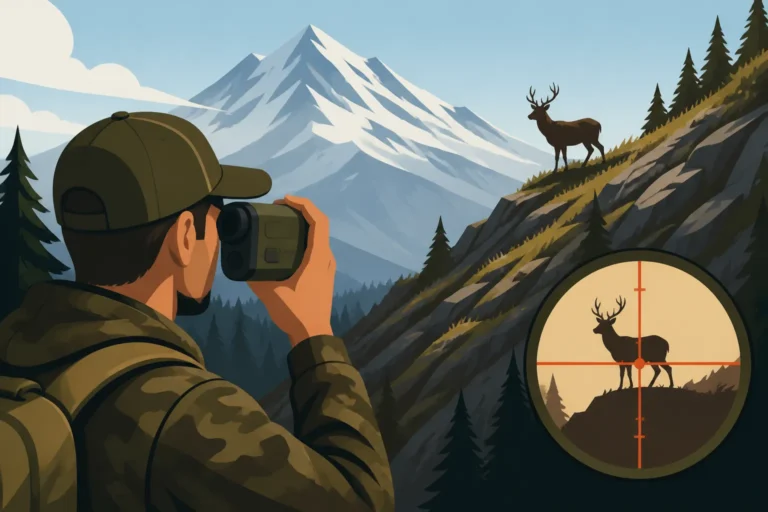
Washington's big game animals, particularly mature deer and elk, are masters of camouflage and stillness. They often move during low light and bed down in seemingly impenetrable cover during the day. This is where your tripod setup shines. Instead of trying to find the whole animal, you're looking for parts of an animal: an ear twitch, a horizontal line in a vertical forest, a patch of hide that doesn't quite match the surrounding rock or timber. It's an exercise in pattern recognition, and it requires sustained focus that's hard to maintain without the stability of a tripod.
A slight wobble from free-handing your binoculars can turn a distinct deer leg into a tree branch. When your optics are rock-solid on a tripod, those subtle movements become obvious. You can scrutinize a distant hillside for minutes, even hours, and then, suddenly, a deer will materialize out of nowhere because your eye was trained on that specific spot, picking up the slightest shift in its environment. This deep level of observation is often the difference between filling a tag and going home empty-handed, especially when chasing trophy animals that know how to avoid detection. You might be interested in Glassing Sage and Wheat Edges for Washington Mule Deer for more specific tactics.
Energy Conservation for the Long Haul
Hunting Washington's steep, rugged terrain can be physically brutal. Anyone who's packed an elk out of the backcountry knows the toll it takes. Constantly hiking, climbing, and pushing through thick brush burns an incredible amount of energy. All-day glassing from a comfortable vantage point allows you to conserve that precious energy for when it truly matters: the stalk and the pack-out.
Instead of blowing out your lungs covering ground that might not hold game, you're using your optics as an energy-efficient scout. You're covering more ground optically with far less physical exertion. This means when you do spot that bull or buck, you're not already exhausted. You're fresh, focused, and ready to execute a smart, deliberate stalk. It's about working smarter, not just harder. For hunters considering Packing an Elk Out of Washington's Backcountry, conserving energy on the front end can make a huge difference on the back end.
Essential Gear for Your All-Day Glassing Setup
You can't effectively glass all day without the right tools. This isn't just about having good binoculars; it's about having a system that provides stability, comfort, and efficient operation for hours on end. Skimping on this gear can lead to eye strain, missed opportunities, and general frustration, making the whole "all-day glassing" concept less appealing.
Choosing the Right Tripod and Head
The foundation of your all-day glassing setup is, unsurprisingly, the tripod itself. You need something sturdy enough to eliminate wobble, but light enough that you'll actually carry it into the field. Carbon fiber tripods are often a great balance of weight and rigidity, though they come with a higher price tag. Aluminum options can work too, but check their weight. Look for models with easily adjustable legs that lock securely, especially if you're on uneven terrain.
The tripod head is equally crucial. A fluid head, often used in video, or a pan-and-tilt head designed for optics, allows for smooth, precise movements. Ball heads are popular for photography but can be finicky for fine adjustments when trying to track an animal or methodically grid a hillside. A good fluid or pan head lets you scan an area with minimal effort and then lock down firmly on a suspected animal. Brands like Slik, Manfrotto, and even some of the more hunting-specific brands offer excellent options. Make sure the quick-release plate is easy to operate, so you can quickly attach and detach your optics.
Pairing Your Optics with the Tripod
Once you have your tripod, the next step is attaching your primary optics. While a spotting scope is often the star of a tripod setup, many hunters also find immense value in mounting their binoculars. A binocular adapter is essential for this, keeping your binos steady and your eyes comfortable. For sustained viewing, a 15×56 for Washington Open Country binocular is fantastic, offering a wider field of view than most spotting scopes while still providing significant magnification. For closer, denser terrain, a Best Binocular Magnification for Elk Hunting like a 10×42 can still benefit from tripod stability.
Spotting scopes come into their own when you need to really pick apart details at extreme distances – like counting points on a bull across a canyon or determining if that black spot is a bear or just a stump. They're invaluable for verifying what your binoculars might have hinted at. Look for scopes with good light transmission and reasonable zoom ranges. Don't forget lens covers and a small cleaning kit to keep your glass pristine; a smudge can quickly turn into a phantom animal.
Comfort and Organization for Prolonged Stands
Sitting still for hours demands comfort. A lightweight, portable chair or a small, insulated sit pad can make a world of difference. You'll also want to organize your gear efficiently. A small pack that holds your tripod, optics, and accessories, along with essentials like water, snacks, and extra layers, is a must. Many packs have external strapping points perfect for tripods.
Consider items like a sun shade for your spotting scope, especially in bright, sunny Eastern Washington afternoons. A small, dry bag for your electronics (phone, GPS, rangefinder) is also a good idea, given Washington's propensity for sudden rain showers. The goal is to minimize distractions and discomfort so you can maintain focus on the terrain in front of you. Think about what you'll need at arm's reach so you don't have to constantly dig through your pack.
Mastering the Art of All-Day Glassing
Having the right gear is only half the battle; knowing how to use it effectively is the other. All-day glassing is a skill that improves with practice, but there are fundamental techniques that can immediately boost your success. It's about being deliberate, patient, and knowing what to look for.
Strategic Positioning and Angle Management
Your glassing position is paramount. You want a vantage point that offers a wide, unobstructed view of the terrain you intend to cover, ideally with the sun at your back or to your side to avoid glare. Consider prevailing winds so you don't spook anything if you need to move. Always have a clear escape route or stalking path in mind should you spot something.
Angle management refers to how you position yourself relative to the terrain. High points are great, but sometimes a slightly lower, more concealed position allows you to peek into shaded pockets or draw bottoms that higher positions might overlook. Avoid glassing straight down into deep canyons, as animals will often be bedded against the opposite slope, making them harder to spot. Instead, try to find a spot that allows you to look across or up into the terrain. Being on the same horizontal plane as the animals you're looking for can reveal more details. For insights into E-Scouting Washington GMUs Before the Draw, identifying potential glassing knobs is a critical step. Many hunters use tools from GoHunt to scout these high-point positions. Their mapping layers allow you to identify potential glassing perches from the comfort of your home.
Systematic Grid Searching and Pattern Recognition
Once you're set up, resist the urge to randomly scan the landscape. Instead, employ a systematic grid search. Start at one edge of your viewing area, typically the closest point, and slowly pan horizontally across the landscape, then drop down a small increment and pan back the other way. Repeat this process until you've covered the entire area. The key is to move slowly, letting your eyes truly process what they're seeing. Don't rush; many animals are only revealed by sustained scrutiny.
As you scan, you're not just looking for an entire animal. You're looking for anomalies:
- Horizontal lines: In a world of vertical trees, a horizontal backline or belly can stick out.
- Contrasting colors: A patch of brown or tan that doesn't quite match the surrounding gray rock or green foliage.
- Shapes: The curve of an antler, the distinct outline of an ear, the straightness of a leg.
- Movement: Even a slight flick of a tail, a head bob, or an animal shifting its weight.
- Light and shadow: Animals often bed in shaded areas, but a shaft of light catching an antler can make all the difference.
Over time, you'll develop an instinct for what "looks wrong" in the landscape. GoHunt's mapping resources can also help here by identifying specific terrain features like north-facing slopes, historical burn areas, or dense timber patches where animals might seek refuge, guiding your systematic search more effectively.
Dealing with Environmental Factors
Washington's weather and light conditions can change rapidly, and you need to adapt your glassing strategy accordingly.
- Wind: Strong winds can make stable glassing difficult, even on a tripod. Try to find a sheltered position, or use your body to block some of the wind's effects. Animals also often move less or bed tighter in high winds, making them even harder to spot.
- Rain and Fog: These are common on the Westside. Optics coatings help, but rain on the lenses will obscure your view. Keep a lens cloth handy. In heavy fog, glassing ranges will shrink dramatically, forcing you to focus on closer terrain or wait for breaks in the weather.
- Sun and Shadow: Early morning and late evening light create long shadows that can hide animals. Use these shadows to your advantage, focusing on their edges where game might be moving from bed to feed. Mid-day sun can create harsh glare; a sun shade for your spotting scope can be very beneficial.
- Heat Shimmer: In Eastern Washington, especially later in the morning, heat rising from the ground can create a "shimmer" effect that distorts your view at longer distances. This is why early morning is often the best time for long-range glassing. When the shimmer starts, focus on closer terrain or take a break until conditions improve.
Beyond the Glass: Sustaining Your Focus and Body
All-day glassing is as much a mental game as it is a physical one. Maintaining focus, battling boredom, and knowing when to adjust your strategy are crucial for success.
Mental Fortitude and Patience
The biggest challenge with all-day glassing isn't the physical act of sitting, but the mental endurance required. It can be incredibly boring at times, especially if game isn't moving. This is where true patience comes in. Remind yourself why you're there: that one second of movement, that one flash of antler, is all it takes. Break up your glassing into segments. Focus intensely for 20-30 minutes, then take a short break to rest your eyes, stretch, eat a snack, or just appreciate the scenery.
Don't let the lack of immediate sightings discourage you. Often, animals that were bedded deep in cover in the morning will shift positions or stand up to stretch in the mid-day, offering a fleeting opportunity. The best glassers aren't just looking at the landscape; they're trying to anticipate what animals will do and where they will be. Having a systematic approach and faith in your method, combined with the comprehensive data available from GoHunt, can bolster your patience by confirming you're in a good area.
Physical Preparation and On-Stand Comfort
While glassing is less physically demanding than hiking, prolonged sitting can still take a toll. A comfortable sit pad or lightweight chair is essential to prevent stiffness and discomfort. Bring plenty of water and snacks to keep your energy levels up. Dehydration and hunger can quickly erode your focus. Dress in layers, especially in Washington, as temperatures can fluctuate wildly throughout the day. You might start in the cold morning, warm up by midday, and then need those layers again as evening approaches. Layering for Wet Cold Weather is a skill every Washington hunter needs to master.
Periodically stand up, stretch, and move around to keep your blood flowing. Even a few minutes of walking in place can refresh you. If you're using a small spotting scope, consider bringing a small pillow or neck rest to lean against the tripod or your backpack for increased comfort during long periods of viewing. Your body needs to be comfortable so your mind can remain sharp.
When to Pack Up and Move
While the goal is "all-day" glassing, there are times when it makes more sense to pick up and move to a new vantage point.
- No new terrain: If you've thoroughly gridded your entire glassing area several times over several hours and haven't seen anything or any fresh sign (like ravens circling over a carcass), it might be time for a change of scenery.
- Poor conditions: Heavy fog, rain that won't let up, or severe heat shimmer making long-range viewing impossible are good reasons to reposition, perhaps to a closer, denser area where a still-hunt might be more productive.
- Change in strategy: You might have spotted an animal that requires a different approach, perhaps a stalk into thick timber where glassing is no longer the primary method. Always have a plan B, and don't be afraid to adapt. Spot-and-Stalk Bear Hunting in Washington Without Bait often transitions from glassing to a focused stalk.
- Time of day: As evening approaches, animals often become more active. If your current spot isn't yielding results, moving to a known feeding area or a travel corridor might be more productive for the last hour of light.
Remember, all-day tripod glassing is a powerful tool in the Washington hunter's arsenal, not a rigid rule. It's about maximizing your odds by leveraging patience and technology. So, next time you head out, consider finding that perfect perch, setting up your glass, and letting the landscape slowly reveal its secrets to you.
Disclaimer
This article is for general informational purposes only and does not constitute professional advice. Laws, prices and regulations vary by location and change over time. Consult a qualified professional for guidance on your specific situation.