Rain Jacket Fabrics That Stay Quiet
There's almost nothing worse than getting caught in a classic Washington downpour when you're deep in the timber, trying to sneak up on a blacktail, only to have your rain gear announce your presence with every single step. That constant crinkle, swish, swish can absolutely destroy a stalk, turning a hopeful encounter into a frustrated retreat. This guide is all about finding rain jacket fabrics that keep you dry without turning you into a human noise machine, so you can focus on the hunt, not on silencing your outerwear.
The Frustration of Noisy Rain Gear in Washington's Woods
We've all been there. You spend hours scouting, planning, and finally get into position, the wind is perfect, and a light drizzle starts. You reach for your rain jacket, pull it on, and suddenly every movement sounds like you're rustling through a bag of potato chips. In Washington, where wet weather is often the norm, particularly on the west side, having quiet rain gear isn't just a luxury—it's a necessity for success.
Why Silence Matters So Much to Hunters
Animals, especially big game like elk and deer, are incredibly attuned to their environment. They rely on their senses, primarily hearing and smell, to detect predators and stay safe. A natural sound, like a branch snapping or leaves rustling underfoot, is one thing. But the synthetic whish-whish of nylon fabric or the stiff crackle of a waterproof membrane is distinctly unnatural and immediately puts them on high alert. Imagine trying to still-hunt a wary bull elk in dense timber, only for your jacket to give away your position every time you lift a foot. It's a quick way to educate the local wildlife and send them crashing through the brush, long before you even get a glimpse.
Even in more open country, like the sagebrush flats of Eastern Washington where you might be glassing for mule deer, noise can be an issue. While less critical for still-hunting, if you need to make a move, adjust your position, or even just shift in your binos, a noisy jacket can cause deer to pick up their heads and pinpoint your general location. It introduces an element of risk you just don't need, especially when trying to maintain the element of surprise that good hunters cherish.
The Sound of Rain on Hard Shells
Traditional hard shell rain jackets, while incredibly effective at keeping you dry, often come with a significant acoustic drawback. Many are constructed with a durable nylon or polyester face fabric that, when combined with a waterproof-breathable membrane like Gore-Tex, can be quite stiff and loud. The sound isn't just from movement; the actual drumming of raindrops on a taut, hard surface can be surprisingly audible. This is particularly noticeable when you're sitting patiently, hoping to catch movement, and the rain picks up, turning your jacket into a tiny drum kit.
On the west side of the Cascades, where dense foliage and persistent drizzle are common, this amplified sound becomes a real problem. Still-Hunting Blacktails in Wet Washington Brush requires stealth, and a noisy jacket makes that almost impossible. The stiff fabric also tends to catch on branches and thorns, adding more unwelcome sounds and potential snags. It's a frustrating trade-off: stay dry but be heard, or risk getting soaked for silence. Hunters often feel trapped between these two undesirable options, leading to countless ruined stalks and missed opportunities.
Different Hunting Scenarios, Different Noise Needs
The ideal "quiet" rain jacket can vary depending on your specific hunting style and the environment you're in. If you're primarily tree stand hunting in relatively static positions, a slightly heavier, softer, and quieter fabric might be your top priority, even if it's less durable for bushwhacking. The occasional rustle won't be as detrimental as constant noise from movement.
However, for active hunting, like tracking elk through the dark timber of the Gifford Pinchot National Forest or navigating thick coastal reprod for Roosevelt Elk of Western Washington, you need something that holds up to constant movement and abrasion without betraying your presence. This is where the balance becomes tricky. You need a jacket that can shrug off rain and brush, breathe well enough for strenuous climbs, and still remain quiet enough to get within range of game. Many gear reviewers, including those you find on platforms like GoHunt, often highlight this aspect, pointing out that what works for one hunter might not work for another. It's not a one-size-fits-all solution, making the choice even more critical.
Understanding Rain Jacket Fabrics and Their Noise Profiles
The world of rain jacket fabrics can seem a bit overwhelming with all the technical jargon and proprietary names. But breaking it down helps you understand why some jackets whisper while others shout. It's generally a combination of the membrane, the face fabric (the outer layer), and sometimes even the inner lining or "backer." Each component plays a crucial role in how well the jacket sheds water, breathes, holds up to abuse, and, most importantly for us, how much noise it makes.
The Spectrum of Waterproof-Breathable Materials
At the heart of any good rain jacket is its waterproof-breathable membrane. These are the magic layers that prevent water from getting in while allowing sweat vapor to escape. Brands like Gore-Tex are household names, but there are many others, including eVent, Pertex Shield, and various proprietary membranes from jacket manufacturers. While the membrane itself is generally quiet, its stiffness and how it's laminated to the face fabric can influence the overall noise profile. A thicker, less flexible membrane might contribute to a stiffer, louder jacket, especially if the face fabric isn't designed for silence.
The key is often in the lamination process. Some membranes are bonded directly to the face fabric, creating a rigid structure, while others might be more pliable. The number of layers also plays a role. A "3-layer" jacket, where the face fabric, membrane, and inner liner are all laminated together, tends to be more durable but can sometimes be stiffer than a "2.5-layer" jacket, which has a protective print on the inside instead of a full fabric liner. This might seem like a small detail, but when you're trying to achieve maximum stealth, every little bit counts.
Soft Shells and Hybrid Designs
For hunters prioritizing silence, soft shells and hybrid designs often come up in the conversation. A true soft shell jacket is typically not fully waterproof; it's water-resistant and highly breathable, great for light precipitation or dry, cold weather. However, many manufacturers now create "waterproof soft shells" or hybrid jackets that incorporate a waterproof-breathable membrane within a softer, quieter face fabric. These often feature brushed polyester or nylon outer layers that feel more like fabric and less like plastic.
The trade-off here is usually in the absolute waterproofness and long-term durability compared to a traditional hard shell. A soft shell might wet out faster in a torrential downpour, especially if the Durable Water Repellent (DWR) coating wears off. But for the persistent, light-to-moderate rain often experienced in places like the Olympic Peninsula, they can be an excellent choice. They offer more flexibility and significantly less noise, making them ideal for active hunting where constant movement is required. Think of them as a fantastic option for those days when you anticipate rain but also need to be constantly on the move, silently slipping through the woods.
The Role of Face Fabric and Backer
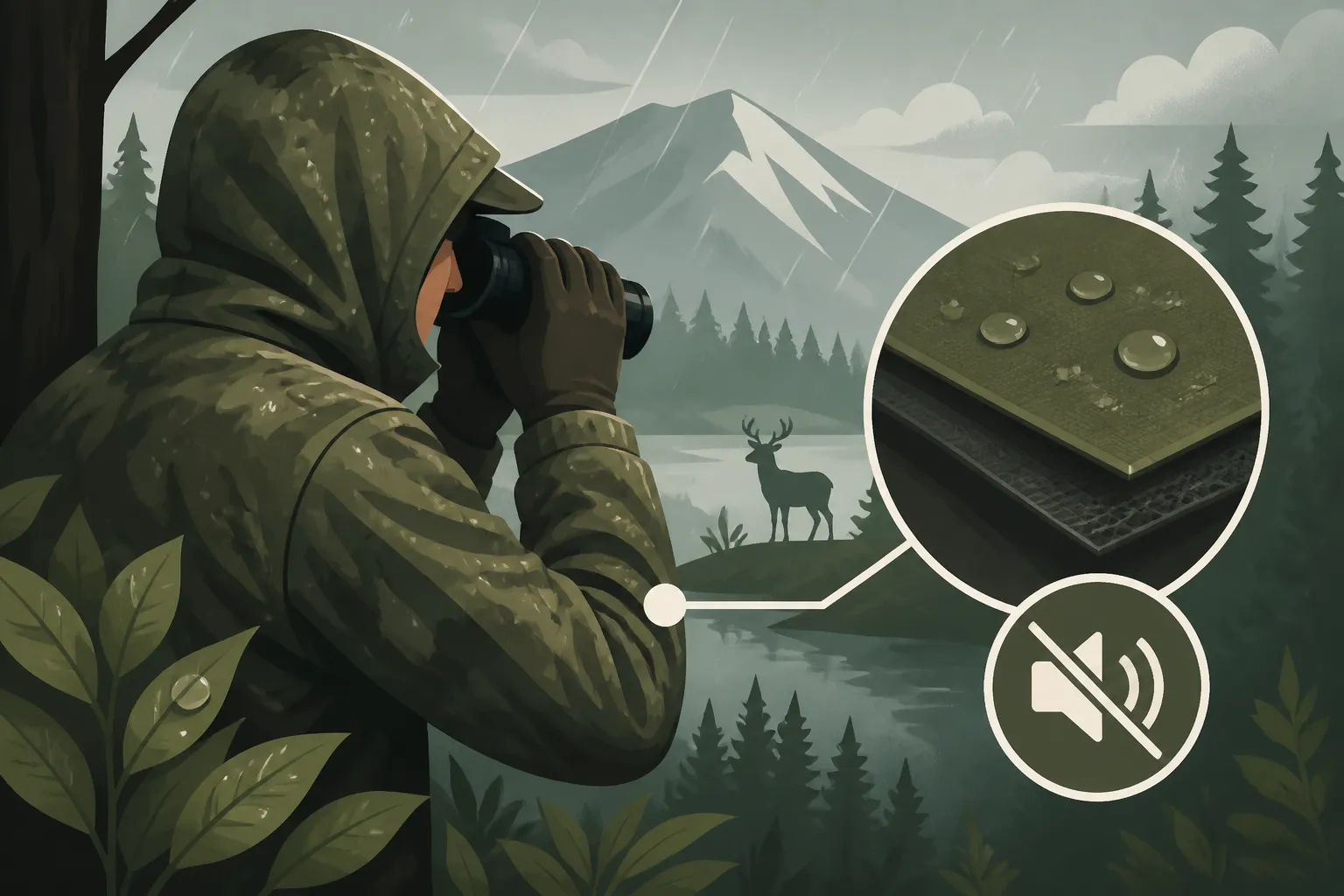
When it comes to noise, the face fabric – that outer layer you see and feel – is usually the biggest culprit or hero. Hard, smooth nylon fabrics tend to be the loudest. They rustle and crinkle, especially when cold. On the other hand, fabrics that have a brushed finish, a woven texture, or are made from softer polyester blends are inherently quieter. These materials absorb sound rather than reflecting it, and their softer drape reduces the friction that creates noise with movement.
The backer, or the fabric on the inside of the jacket, also contributes. Some jackets have a slick nylon backer that slides easily over your base layers, potentially adding a swish sound. Others use a softer, sometimes brushed, backer that can dampen internal noise. For example, some high-end hunting jackets designed for extreme silence will use a very soft, quiet knit fabric on both the face and the backer, laminated around a highly waterproof membrane. This construction is often heavier and might not pack down as small as a lightweight hard shell, but for ultimate stealth, it's a game-changer. When you're researching new gear, sites like GoHunt can be invaluable for detailed reviews that often mention these specific material choices and their impact on noise.
Top Rain Jacket Fabric Choices for Quiet Washington Hunting
Now that we understand why certain fabrics are noisy, let's talk about what to look for when you're trying to keep things quiet in the field. It’s a balance, always, between absolute waterproofness, durability, breathability, and that coveted silence. The best options lean into materials that inherently dampen sound while still providing crucial protection from the elements.
Brushed Polyester and Fleece-Backed Membranes
If silence is your absolute top priority, especially for bowhunting or still-hunting in tight cover, look for rain jackets that feature a brushed polyester face fabric. These fabrics have a slightly fuzzy or napped texture that is incredibly soft and quiet. They don't have the stiff, plastic-like feel of many traditional nylon hard shells. When rain hits them, it tends to be absorbed slightly by the fibers before rolling off, rather than drumming loudly on a taut, smooth surface. When you move, the friction between the fabric layers or against brush is significantly reduced, meaning less swish and crinkle.
Some premium hunting rain gear takes this a step further by laminating a waterproof-breathable membrane to a fleece backer. This internal fleece layer not only adds a touch of warmth but also acts as a sound dampener, further muffling any internal rustling. Jackets made with these materials are a fantastic choice for situations like Archery Elk Hunting in Washington's September Season or stalking blacktails where you need to be absolutely silent at close range. They are generally less prone to making noise even when cold, wet, or when brushing against tree trunks or thick salal.
DWR-Treated Soft Shells as a Quieter Alternative
While a true soft shell isn't inherently waterproof, many advanced soft shells now come with highly effective Durable Water Repellent (DWR) treatments that make them shed water remarkably well in light rain or snow. Paired with a wind-resistant or windproof membrane, these can serve as an excellent primary outer layer for much of Washington's hunting season, especially if the rain isn't coming down in sheets. Their flexibility and textile-like feel make them supremely quiet. The fabric stretches with your movements, reducing friction noise, and it tends to be much softer to the touch.
The trade-off, as mentioned, is that a DWR-treated soft shell might eventually "wet out" in prolonged, heavy downpours. The fabric can become saturated, though the membrane (if present) will still keep you dry underneath. However, for those drizzly, intermittent rain days that are so common, they offer a significant advantage in stealth. Consider a quality DWR-treated soft shell for situations where you anticipate more moderate precipitation and prioritize movement and silence, such as Reading Clearcuts and Reprod for Blacktail Bucks or early season deer hunts where you're constantly on the move. They're also often more breathable than full hard shells, which is a bonus for active hunters.
Considering Fabric Weight and Packability
It’s important to remember that achieving maximum quietness often comes with some compromises, particularly regarding fabric weight and packability. Generally, the softer, brushed, or fleece-backed fabrics that are designed for silence tend to be a bit heavier and bulkier than ultralight nylon hard shells. This might not be a deal-breaker for a day hunt from the truck or a spike camp where you have more room, but it becomes a factor on extended backcountry trips where every ounce and inch of pack space matters.
An ultralight, minimalist hard shell might pack down to the size of a soda can, fitting easily into a small day pack. A truly quiet, brushed fabric jacket, however, might take up significantly more space and add a pound or two to your load. You have to weigh what's more important for your specific hunt: absolute minimal weight and pack size, or the critical advantage of stealth. GoHunt's gear guides might categorize jackets by their intended use (e.g., "ultralight backcountry" vs. "silent stalker"), making it easier to find quiet options that fit your particular needs. For hunters packing an elk out of Washington's backcountry, the choice between silent movement and minimal pack weight can be a tough one.
Here’s a quick comparison of common rain gear fabric types:
| Fabric Type | Noise Level (1-5, 1=Quietest) | Waterproofness | Breathability | Durability | Best Use Case |
|---|---|---|---|---|---|
| Traditional Nylon Hardshell | 5 | Excellent | Good | Excellent | Torrential rain, extreme abrasion, less movement |
| Brushed Polyester Hardshell | 1-2 | Excellent | Good | Good | Stalking, bowhunting, close-range encounters |
| Waterproof Soft Shell (Membrane) | 2-3 | Very Good | Very Good | Very Good | Active hunting, moderate rain, varied terrain |
| DWR-Treated Soft Shell (No Membrane) | 1-2 | Good (Resistant) | Excellent | Good | Light rain/snow, high activity, quiet conditions |
| PVC/Rubber (Old School) | 5 | Excellent | None | Good | Stationary, non-active, truly foul weather (very noisy) |
Tips for Maximizing Silence (Beyond Just Fabric)
While choosing the right fabric is paramount, it's not the only factor in keeping quiet in the rain. Your overall layering system, the design of the jacket itself, and even how you prepare your gear can all contribute to reducing noise in the field. Think of it as a holistic approach to stealth in wet conditions.
Layering Strategies to Reduce Rustle
What you wear under your rain jacket can significantly impact how much noise it makes. A stiff, slick base layer or mid-layer can create more friction against the inside of your rain jacket, leading to internal rustling. Conversely, wearing soft, fleece, or merino wool layers underneath can help dampen the sound. These materials tend to "grip" the inner surface of your rain jacket slightly, preventing excessive sliding and rubbing. This is a crucial consideration for Layering Systems for Wet Cold in Washington.
Also, consider the fit of your layers. Overly baggy inner layers can bunch up, creating more bulk and points of friction. A more athletic, yet comfortable, fit across all your layers can reduce the amount of excess material that can rub and make noise. It’s about creating a system where everything works together, from your skin out, to minimize unwanted sounds. A well-designed layering system means fewer independent sources of noise, allowing you to move more freely and quietly.
Fit and Design Features That Minimize Noise
Beyond fabric, a jacket's design and features can also play a role in its quietness. First, the fit: an overly baggy jacket will snag on brush, flap in the wind, and have more excess material to rustle against itself. An athletic fit that allows for full range of motion without being overly tight or loose is ideal. This minimizes external friction and internal noise.
Look for design elements like quiet zippers—often laminated or covered with a fabric flap—and soft, adjustable cuffs and hem closures. Velcro closures, while convenient, can be notoriously loud to open and close. Snaps, if used, should be robust and well-integrated. Pockets that are well-placed and not overly bulky will also reduce noise. Even the hood design matters; a hood that moves with your head, without making significant noise when turning, is invaluable. A quality jacket designed for hunting will have these details already considered, making your life easier in the field.
Pre-Season Prep and Field Maintenance
Finally, how you treat and maintain your rain gear can affect its sound profile. New hard shell jackets can sometimes be stiff right out of the packaging. Wearing them around the house, flexing the fabric, and even a gentle wash (following manufacturer instructions for waterproof garments) can help break them in and make them more supple and less noisy. Just like you'd break in a new pair of Boots for Washington's Eastside Rock and Westside Mud, your rain gear can benefit from a little pre-season love.
Regular cleaning and reapplication of DWR are also vital. When the DWR coating on the outside of your jacket starts to fail, the face fabric will "wet out" – it absorbs water rather than shedding it. This wet fabric can become stiffer and heavier, potentially increasing noise. Keeping your DWR fresh ensures the jacket performs optimally, both in terms of waterproofness and quietness. Many outdoor gear companies offer wash-in or spray-on DWR treatments that can revitalize your jacket's ability to shed water, maintaining its factory quietness and performance. Don't forget, even for something like Keeping a Muzzleloader Dry in Washington Rain, a well-maintained, quiet rain jacket is part of your overall field readiness.
Disclaimer
This article is for general informational purposes only and does not constitute professional advice. Laws, prices and regulations vary by location and change over time. Consult a qualified professional for guidance on your specific situation.