How Much Weight a Frame Pack Carries
Alright, let's talk about the real grunt work of hunting in Washington: getting that hard-earned animal off the mountain. You've made the shot, the adrenaline is pumping, and now the monumental task of packing out begins. It’s a moment that can quickly turn from triumph to pure exhaustion if you're not prepared, especially when you're trying to figure out just how much weight your frame pack can actually handle. This guide is all about demystifying the capabilities of frame packs, helping you understand their limits, and equipping you with the knowledge to make that pack-out as efficient and comfortable as possible, even in Washington's notoriously rugged and wet terrain.
Understanding Frame Pack Design and Capacity
When you're staring down a big bull elk or even a robust blacktail buck miles from the truck, your pack is your best friend. But not all packs are created equal when it comes to hauling serious weight. The design of your frame pack plays a huge role in its weight-carrying prowess, and understanding these differences is key to choosing the right tool for the job.
External Versus Internal Frames
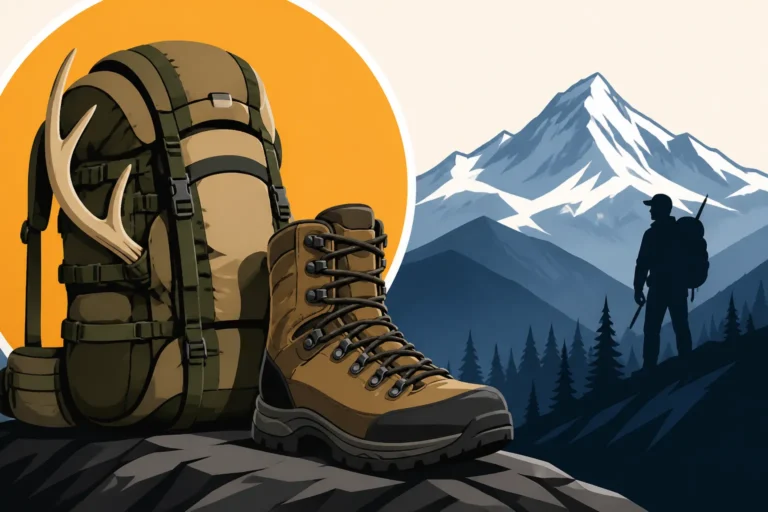
Historically, the debate between external and internal frame packs has centered on their ability to handle heavy, awkward loads. External frame packs are characterized by a rigid, exposed frame (often aluminum, though modern carbon fiber options exist) to which the bag and load are attached. This design truly shines when you're packing out substantial weight, like a boned-out elk quarter or an entire boned-in deer. The rigid frame keeps the weight off your lower back and allows for excellent ventilation, which is a blessing on a long, sweaty hike. They often have a dedicated "load shelf" where you can strap bulky items directly against the frame, separate from your main pack bag.
Internal frame packs, on the other hand, integrate the frame (typically aluminum stays or carbon fiber rods) directly into the pack body, hidden from view. This design offers a more body-hugging fit, which translates to better stability and freedom of movement, especially when navigating dense timber or scrambling over rocky slopes. While older internal frames struggled with very heavy, awkward loads, many contemporary internal frame packs have evolved significantly, incorporating robust suspension systems and load shelves that rival their external counterparts. However, an external frame still often has an edge when it comes to maximizing sheer carrying capacity and comfort with truly heavy, bulky items strapped directly to the frame. For a hunter needing to carry heavy meat plus camp gear, the ability of an external frame to manage those two distinct load types often makes it a strong contender.
Load Shelf Versus Integrated Bag
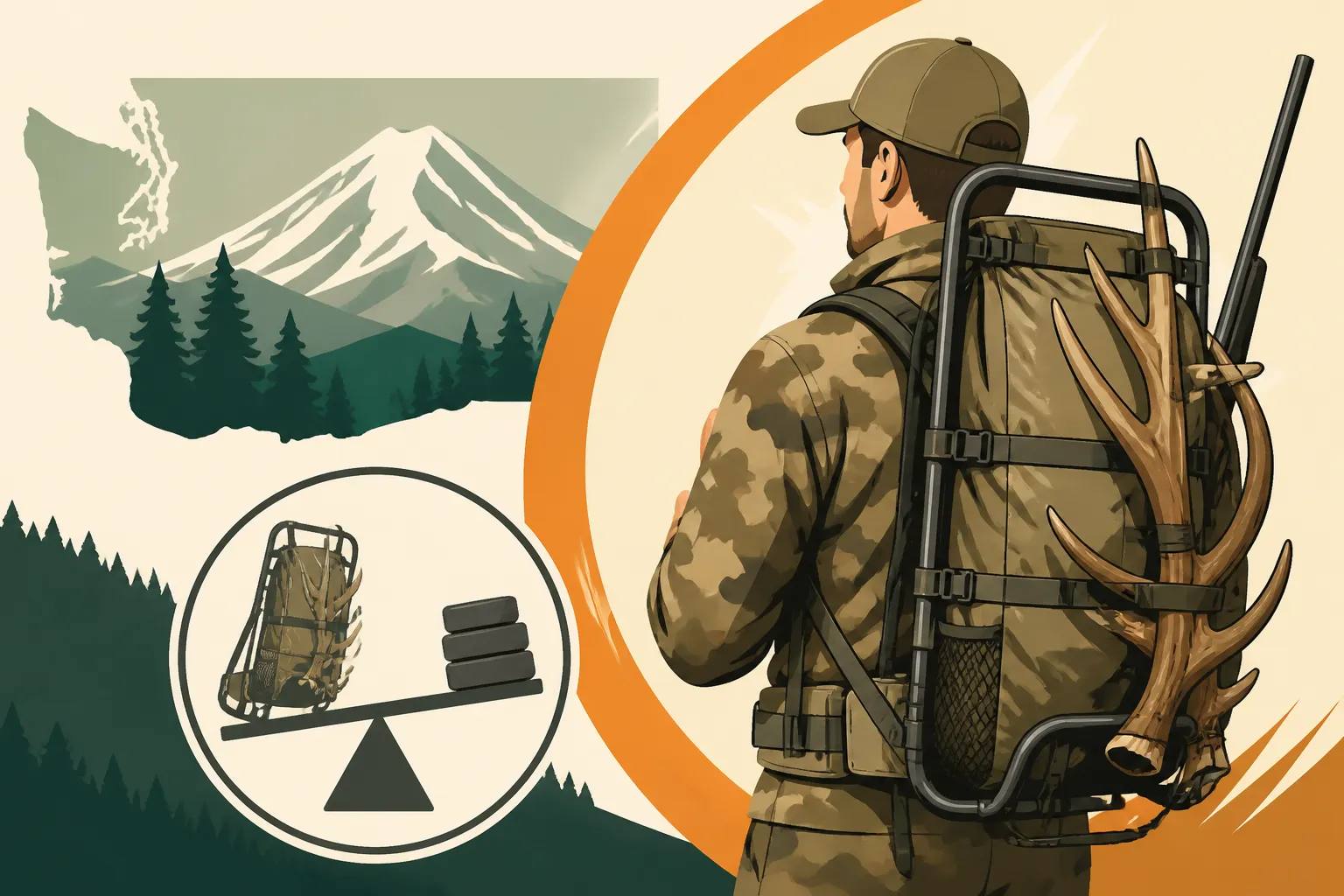
This is where the rubber meets the road for hauling meat. A "load shelf" is a feature, most commonly found on external frame packs but increasingly on heavy-duty internal frames, that allows you to sandwich bulky items—like game quarters, firewood, or a heavy dry bag of meat—between the main frame and the primary pack bag. This setup is incredibly efficient because it keeps the heaviest, often wet and oddly shaped, portion of your load separate from your dry gear and positioned very close to your back, optimizing your center of gravity. For a Washington elk hunter, this is a game-changer. Imagine boning out a Rocky Mountain elk from the Blue Mountains Elk Herd: you can strap those massive quarters directly to the frame using a robust load shelf, keeping the blood and moisture away from your sleeping bag and spare clothes.
Integrated bag designs mean the main compartment of your pack is directly attached to the internal frame. While many modern internal frame packs have excellent compression systems and even dedicated meat compartments that separate from the main bag, they don't always offer the same open, flexible space for truly awkward loads that a traditional external frame with a large load shelf does. For example, if you're packing out a whole boned-in blacktail deer, an external frame's open shelf might make it easier to secure that entire carcass or large sections of it. The key difference is often in how easily you can secure an item outside of the main pack body while still having a functional pack bag for your other essentials. Some high-end internal frames now offer a "load shelf" feature by separating the main bag from the frame, creating a gap for meat, effectively merging the best of both worlds. Understanding these nuances is crucial when you are evaluating Packs Sized for a Washington Elk Quarter.
Factors Influencing a Pack's Practical Capacity
When a manufacturer claims their pack can handle "100 pounds," that's often a theoretical maximum. The actual amount of weight you can comfortably and effectively carry in a frame pack on a real Washington hunt is influenced by several practical considerations far beyond just the pack's advertised rating.
Manufacturer Ratings and Real-World Performance
Manufacturers provide weight ratings, and while they're a useful benchmark, they don't tell the whole story. A pack might indeed be built to withstand 100 pounds of weight without tearing, but that doesn't mean it will be comfortable for you to carry that much, especially over challenging terrain. These ratings are often determined under ideal, static conditions in a lab, not on a steep, muddy trail in the Olympic Peninsula Hunting Access after a day of rain. In the real world, the pack's suspension system – the hip belt, shoulder straps, and load lifters – needs to effectively transfer that weight to your hips, which are designed to carry heavy loads, rather than letting it sag on your shoulders.
For example, a high-quality frame pack from a reputable brand designed for serious backcountry hunting might be rated for 80-100 pounds. What this means in practice is that the stitching, zippers, and fabric won't fail, and the frame won't bend under that load. However, a hunter might find that 60-70 pounds is the upper limit for comfortable, sustained travel over rugged ground. Anything beyond that can quickly become an exercise in pure agony, leading to poor balance, increased risk of falls, and unnecessary fatigue. It's less about the pack holding the weight and more about the pack carrying it well, distributing it efficiently across your body's strongest points. This distinction is vital for anyone planning to do serious Packing an Elk Out of Washington's Backcountry.
Your Physical Conditioning and Experience
Let's be brutally honest: the biggest limiting factor in how much a frame pack can carry isn't the pack itself, but you. No matter how robust your pack is, if your body isn't conditioned for hauling heavy loads, you're going to suffer. Hauling 70-80 pounds of meat out of a steep canyon requires significant strength in your legs, core, and shoulders, as well as exceptional cardiovascular endurance. This isn't just about being able to lift the pack; it's about being able to sustain that effort for hours, often uphill and downhill, through brush and over obstacles.
Experienced hunters often train specifically for this, carrying weighted packs on their hikes leading up to the season. They understand that a 60-pound load feels vastly different after ten miles than it does at the trailhead. A hunter new to backcountry elk hunting might realistically aim for pack-out loads of 40-50 pounds per trip, especially if they are going solo. A seasoned, highly conditioned hunter might push that to 70-90 pounds for shorter distances or more manageable terrain. It's a testament to the fact that the strongest component of any packing system is the hunter wearing it. Understanding this human element is often overlooked when hunters obsess over gear specs, but a good hunting resource like GoHunt often emphasizes physical preparation.
Terrain and Distance
Washington's diverse landscapes present a huge range of packing challenges. The same 60-pound load that feels manageable across a flat, old logging road in the Colville National Forest Hunting in Washington will feel utterly crushing when you're climbing out of a steep, rocky ravine in the Naneum unit, or battling through dense salal and devil's club in the Willapa Hills Elk Herd. Distance magnifies this effect exponentially. A one-mile pack-out with 70 pounds is tough, but doable for many; a five-mile pack-out with that same weight can be a multi-hour ordeal, pushing your physical and mental limits.
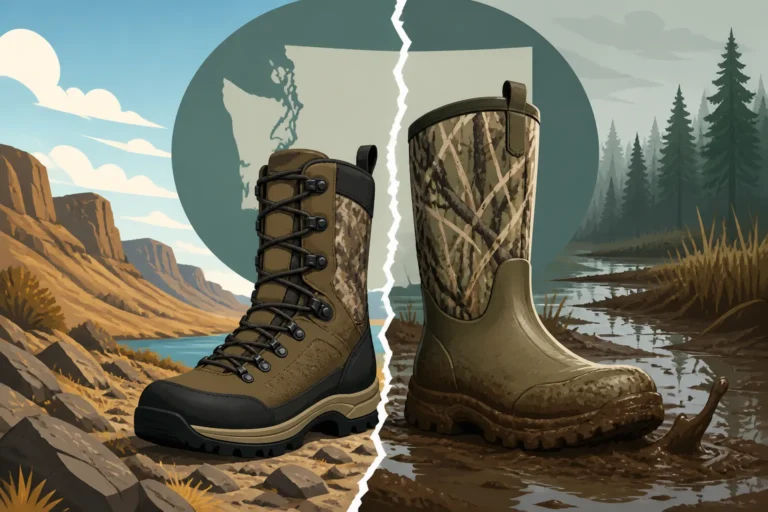
Wet, slippery conditions – a common reality in Western Washington – also drastically reduce the amount of weight you can safely carry. Muddy slopes, wet logs, and slick rocks demand more balance and stability, making a heavy, shifting load much more dangerous. A misstep with a fully loaded pack can lead to a serious injury. Therefore, what your pack can technically carry often needs to be significantly down-rated based on the real-world conditions you expect to encounter. Always factor in the elevation gain and loss, the type of ground cover, and the presence of any water crossings or steep pitches when estimating your practical carrying capacity. Boots for Washington's Eastside Rock and Westside Mud are an essential part of this equation.
Here's a quick comparison of frame pack types for heavy hauling:
| Feature | External Frame Packs | Internal Frame Packs |
|---|---|---|
| Frame Type | Rigid, often exposed, aluminum or carbon fiber | Integrated into pack body, usually aluminum stays/carbon |
| Weight Capacity | Excellent for very heavy, bulky, or awkward loads | Good to excellent, depending on suspension and design |
| Comfort with Heavy Load | Can be very comfortable due to rigid structure & weight transfer | Can be very comfortable, but some flexibility with extreme loads |
| Ventilation | Often superior due to air gap between frame and back | Varies by design, generally less than external frames |
| Mobility | Less body-hugging, can feel more cumbersome | More body-hugging, better for technical terrain |
| Load Shelf | Common, often designed for separate meat hauling | Less common as a true "shelf," but many offer meat compartments |
| Best For | Hauling large game quarters, heavy camp gear, long trips | General backcountry hunting, technical terrain, balancing weight |
Maximizing Your Frame Pack's Carrying Potential
So, you've chosen a stout frame pack. Now, how do you make sure it performs at its peak when you've got an animal down and the clock is ticking? It's all about technique, fit, and smart gear choices.
Proper Packing Techniques
Even the best frame pack can feel like a nightmare if you don't load it correctly. The golden rule for heavy loads is to put the densest, heaviest items closest to your back, centered between your shoulder blades and just above your hips. This keeps the center of gravity high and tight, preventing the pack from pulling you backward or swaying uncontrollably. When packing out meat, especially boned-out quarters, use game bags to keep everything clean and contained, then either place them directly against the frame (if using a load shelf) or in a dedicated meat compartment. Fill any empty spaces with lighter, compressible items to prevent shifting.
Utilize all your pack's compression straps. Cinch them down tight to minimize any movement of the load inside. A shifting load is an unstable load, and instability quickly leads to fatigue and potential loss of balance, especially on uneven ground. Imagine trying to navigate a blowdown with 80 pounds of elk meat that's constantly jostling around – it's a recipe for disaster. If you're using The Gutless Method on an Elk, you'll have specific pieces to manage, and understanding how to secure them within your pack's system is paramount. Many hunters will even carry an extra roll of duct tape or some parachute cord to help secure any particularly unruly parts of a carcass against the frame.
The Role of Fit and Adjustment
A properly fitted frame pack is paramount to comfortably carrying heavy loads. Before you even think about putting meat in it, make sure your pack is adjusted to your torso length and that the hip belt sits squarely on your iliac crest (the top of your hip bones). The hip belt is the foundation of your pack's suspension system; it should bear 70-80% of the load, not your shoulders. Once the hip belt is snug, adjust the shoulder straps so they wrap comfortably over your shoulders without gaps or pinching. Finally, use the load lifter straps (the straps that go from the top of your shoulder straps to the top of the pack frame) to pull the top of the pack in closer to your body, transferring more weight to your hips and preventing the pack from leaning back.
Don't just set it and forget it. As you hike, especially with a heavy, dynamic load like meat, your pack may shift. Periodically adjust your straps to maintain optimal comfort and weight distribution. A pack that starts off feeling great can quickly become uncomfortable if you don't fine-tune it as you move. It’s also wise to test your pack with weight before the season. Load it up with dumbbells or sandbags equivalent to the weight of an elk quarter, and go for a hike. This will not only condition your body but also help you dial in the fit and identify any hot spots or areas needing adjustment. Resources found on sites like GoHunt often offer detailed guides and videos on proper pack fitting techniques.
Essential Gear for Heavy Loads
Carrying heavy loads isn't just about the pack; it's about the entire system you employ. Trekking Poles for Heavy Loads are absolutely non-negotiable for serious pack-outs, especially in Washington's steep and often slippery terrain. They provide crucial stability, reduce strain on your knees, and help you maintain balance, which is vital when you have a 70-pound quarter strapped to your back. Good quality hiking boots with excellent ankle support and traction are also paramount; a twisted ankle miles deep in the backcountry with a heavy pack is a disastrous scenario.
Hydration is another critical factor. Hauling weight is incredibly dehydrating. Ensure you have an easily accessible water source and a way to purify more if needed. A satellite messenger or two-way radio like those discussed in Two-Way Radio Use While Hunting is also important, especially if you're solo, in case of an emergency. Finally, reliable headlamps with fresh batteries are crucial if your pack-out extends into the dark, which it often does when you're dealing with big game. You'll need to see every step you take, especially when navigating uneven ground with a substantial burden on your back. Getting Meat Off the Mountain Before Dark is a priority, but sometimes darkness catches up, and you need reliable light.
Practical Weight Guidelines for Washington Hunters
Let's get down to the brass tacks: what's a realistic expectation for how much you'll actually carry, and how do you plan for it? It comes down to the animal, your strength, and your plan.
Realistic Expectations for Deer and Elk
When it comes to Washington deer, a boned-out blacktail buck can often be packed out in a single trip by a strong, well-conditioned hunter. Depending on the size of the deer, you're looking at a load anywhere from 40 to 70 pounds, plus your day gear. This is a very manageable weight for a quality frame pack and a prepared hunter. For many, this is the ideal scenario: one trip, all the meat, and back to the truck.
Elk, however, are a different beast entirely. Even a cow elk is a massive animal, and a bull will challenge anyone. A boned-out elk quarter can weigh anywhere from 60 to over 100 pounds, depending on the size of the animal and whether you've left the bone in (which most backcountry hunters don't do for packing, unless required by regulation or special circumstances). Add the backstraps, tenderloins, neck meat, rib meat, and possibly the head and cape for a trophy, and you're talking about 200-300+ pounds of meat and bone. For virtually every hunter, even the strongest, packing out an entire elk will require multiple trips. A realistic load for a single trip might be one large quarter (70-90 lbs) plus some additional meat and your essentials. This means you’re likely looking at three to five trips to get all the meat off the mountain, depending on your strength and the terrain. This is where Quartering and Packing an Elk Solo truly becomes an epic feat.
Planning for Multiple Trips or Partner Assistance
Given the sheer mass of an elk, planning for multiple trips is not just recommended, it’s practically mandatory. Even with the best frame pack designed to handle How Many Trips an Elk Takes, you're going to be making more than one journey. If you're hunting with a partner, you can significantly reduce the number of trips, potentially cutting it in half. Two hunters, each carrying 70-80 pounds per trip, can usually get an elk out in two trips each, assuming they have adequate packs and are in good physical shape. This is a huge advantage and underscores the benefit of hunting with a reliable partner.
If you're hunting solo, as many brave Washington hunters do, accept that you'll be making several trips. This means caching your meat in game bags, hanging it in a tree to keep it cool and away from scavengers, and marking its location carefully on your GPS or map. Then you make one trip out, drop your pack, hike back in with a lighter day pack, load up another quarter, and repeat. This process can easily take a full day or even longer, especially if you're deep in a wilderness area. Factor in this time when you're planning your hunt, and always bring enough food, water, and emergency gear to cover potential overnights if the pack-out takes longer than expected.
What to Prioritize When Weight Is Critical
When you're faced with a heavy pack-out, especially from a remote area, you need to be ruthless about prioritizing. The absolute first priority is the meat. It’s the reason you're out there, and it's perishable. Get every usable pound of meat off the mountain first. This often means making initial trips with nothing but meat in your pack, leaving behind non-essential camp gear, extra clothes, or even your weapon in a secure, hidden spot if absolutely necessary (though most prefer to keep their weapon with them).
After the meat, it's your essential safety gear: first aid kit, water filter, fire starter, knife, and navigation tools. Only after the meat and critical safety items are secured should you worry about things like the head and cape for a trophy. While a trophy is a huge part of the experience, it's not worth compromising the meat or your safety. Many hunters will even bone out the head and cape to reduce weight if the pack-out is particularly brutal. Making these tough decisions about what to carry and what to leave is part of the challenge of backcountry hunting. You might consider packing lighter overall by leaving behind some comforts, as detailed in Gear to Skip on Your First Elk Hunt, ensuring more capacity for the prize. Remember, a good cooler back at the truck, like one sized for a Cooler Size for a Bull Elk, is ready and waiting for your payload.
Disclaimer
This article is for general informational purposes only and does not constitute professional advice. Laws, prices and regulations vary by location and change over time. Consult a qualified professional for guidance on your specific situation.